
Blonde is a spectrum, not a single shade. The pivot for 2027 is away from flat, uniform color and toward dimension: root shadows, babylights, and balayage that let a single head hold several tones at once.
This collection of 22 ideas spans that spectrum, from nearly-white platinum bobs to warm honey butterscotch lengths, and every look answers a real problem: fine hair that falls flat, a grow-out line that shows at week three, or a fringe that won’t sit without a fight. Aesthetic Blonde Hair here means color that works with your texture and your schedule, not against them.
1. Sleek Chin-Length Platinum Blonde Lob
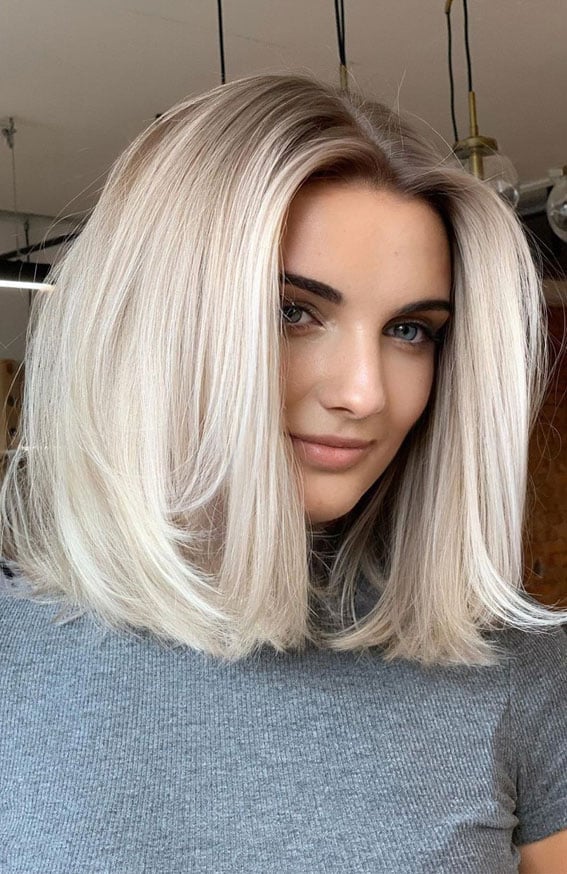
Who can actually wear a chin-length platinum lob without it looking like a helmet? Fine, straight textures, for starters. The blunt cut and middle parting add density to hair that tends to lie flat, and the uniform platinum keeps the line sharp rather than streaky. Ask your colorist for a chin-length blunt lob and clean platinum blonde. A flat iron seals the sleek finish, and a trim every six weeks prevents the edge from softening into a rounded bob.
2. Voluminous Honey Blonde With Root Shadow
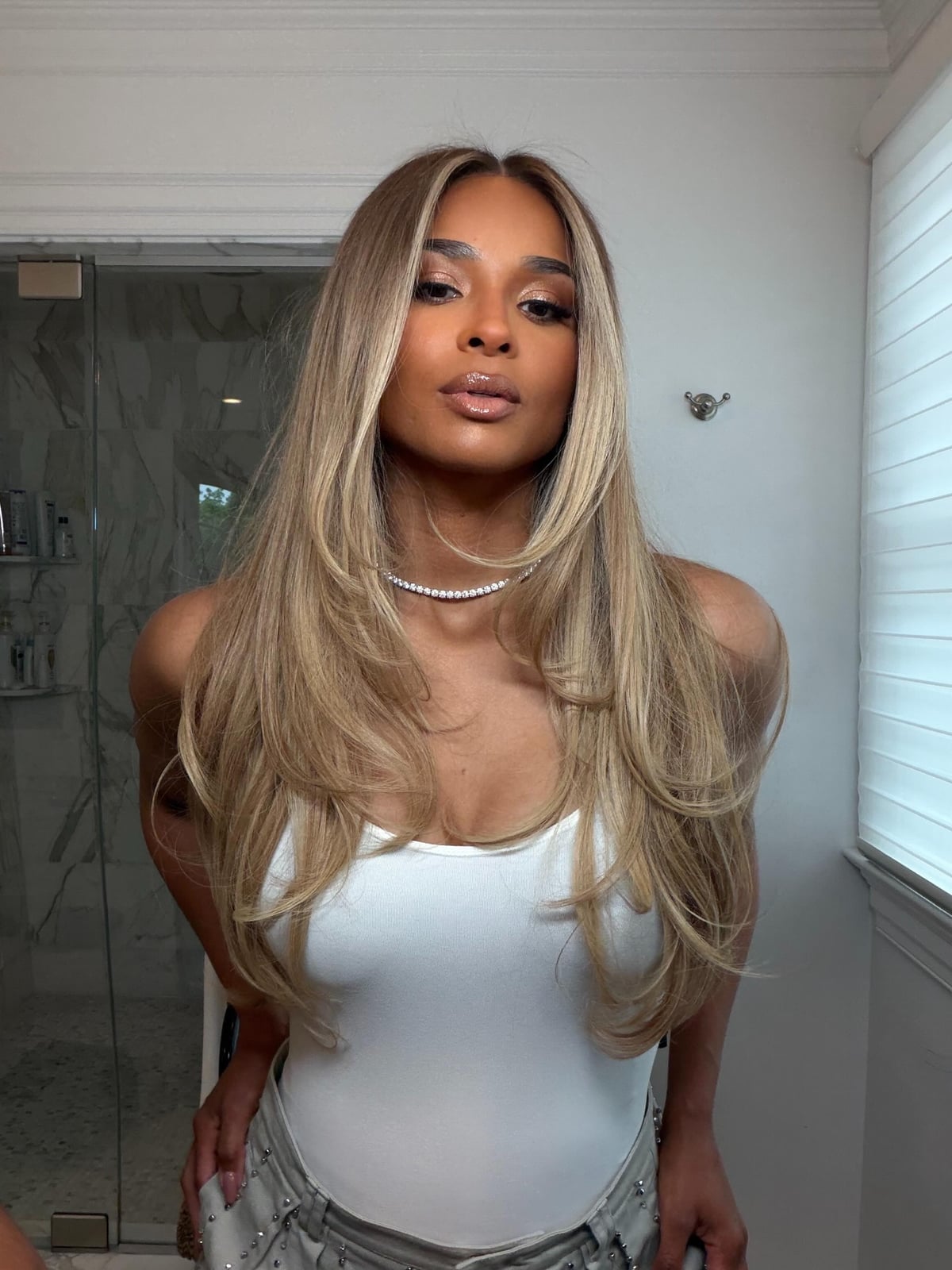
The root shadow does most of the work here. A darker base at the scalp blends into warm honey blonde and subtle highlights through the mid-lengths, so the grow-out line stays soft for weeks. Ask your colorist for shoulder-length layers, a voluminous blowout, and honey blonde with root shadow. A large round brush builds the lift at the crown, and a gloss toner every four to six weeks keeps the honey tone from pulling brassy.
3. Toasted Beige Blonde With Curtain Bangs
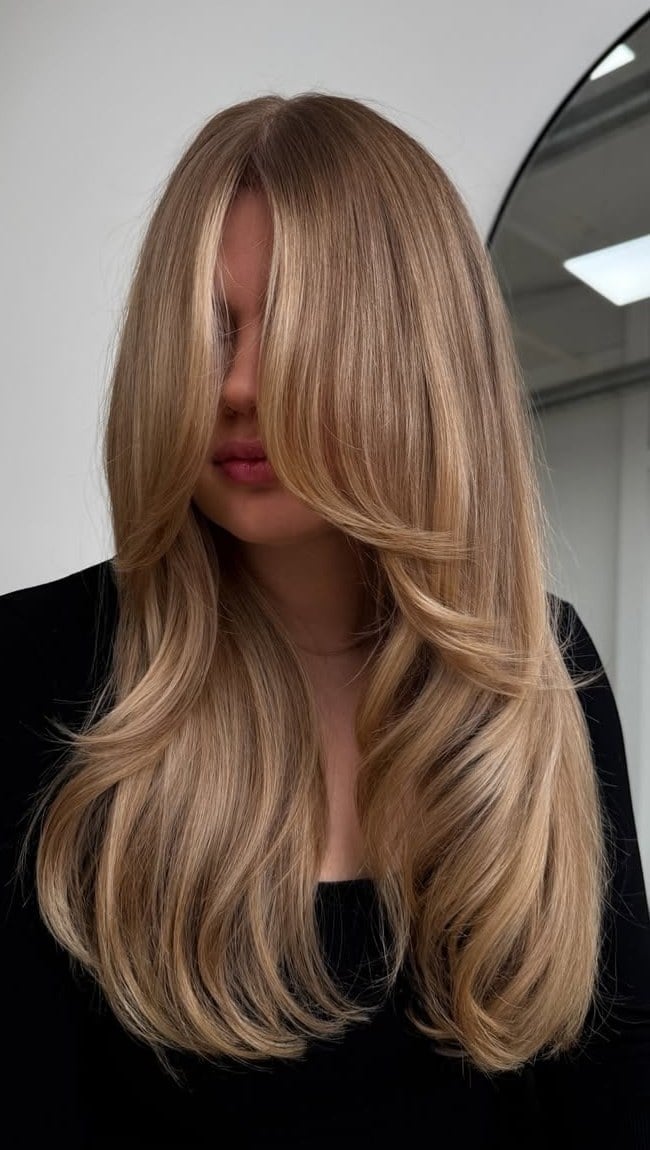
What exactly is toasted beige blonde and how do you ask for it without a color swatch? It is a warm neutral blonde that sits between honey and beige, with a root shadow that darkens toward the scalp. The curtain bangs frame the face without committing to a full fringe. Ask your colorist for mid-back layers, toasted beige blonde with root shadow, and curtain bangs. The soft blowout uses a round brush to tuck the bangs outward.
4. Ash Blonde Collarbone Lob With Curtain Bangs
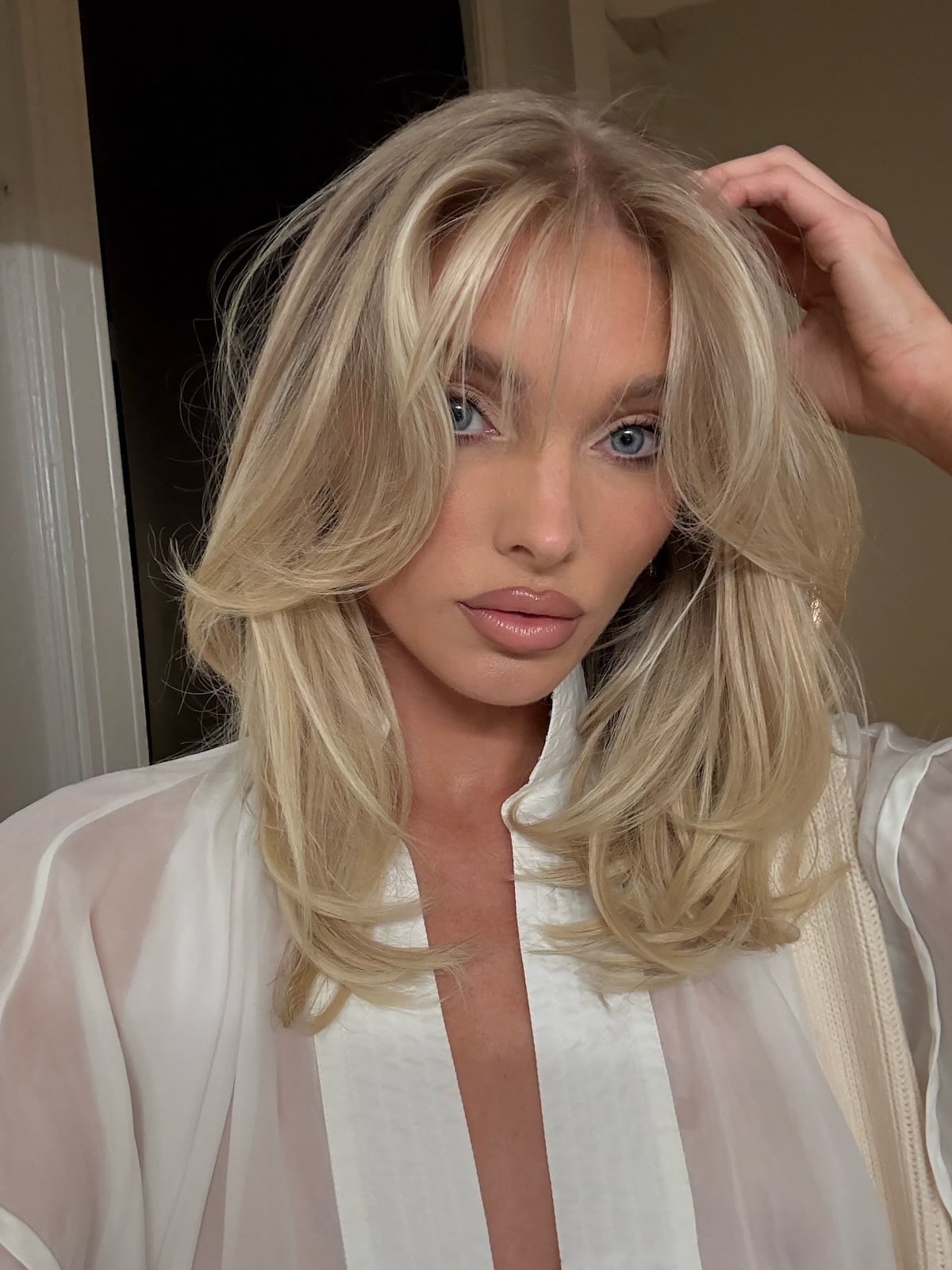
Ash blonde versus warm blonde is less about skin tone and more about how much contrast you want near your face. Ash blonde reads cooler and softer, while warm tones create more separation. This collarbone lob keeps the ash base and adds subtle lighter highlights for dimension without shifting into gold. Ask your colorist for a collarbone-length lob, ash blonde with subtle highlights, and curtain bangs.
5. Platinum Blonde Lob With Soft Waves
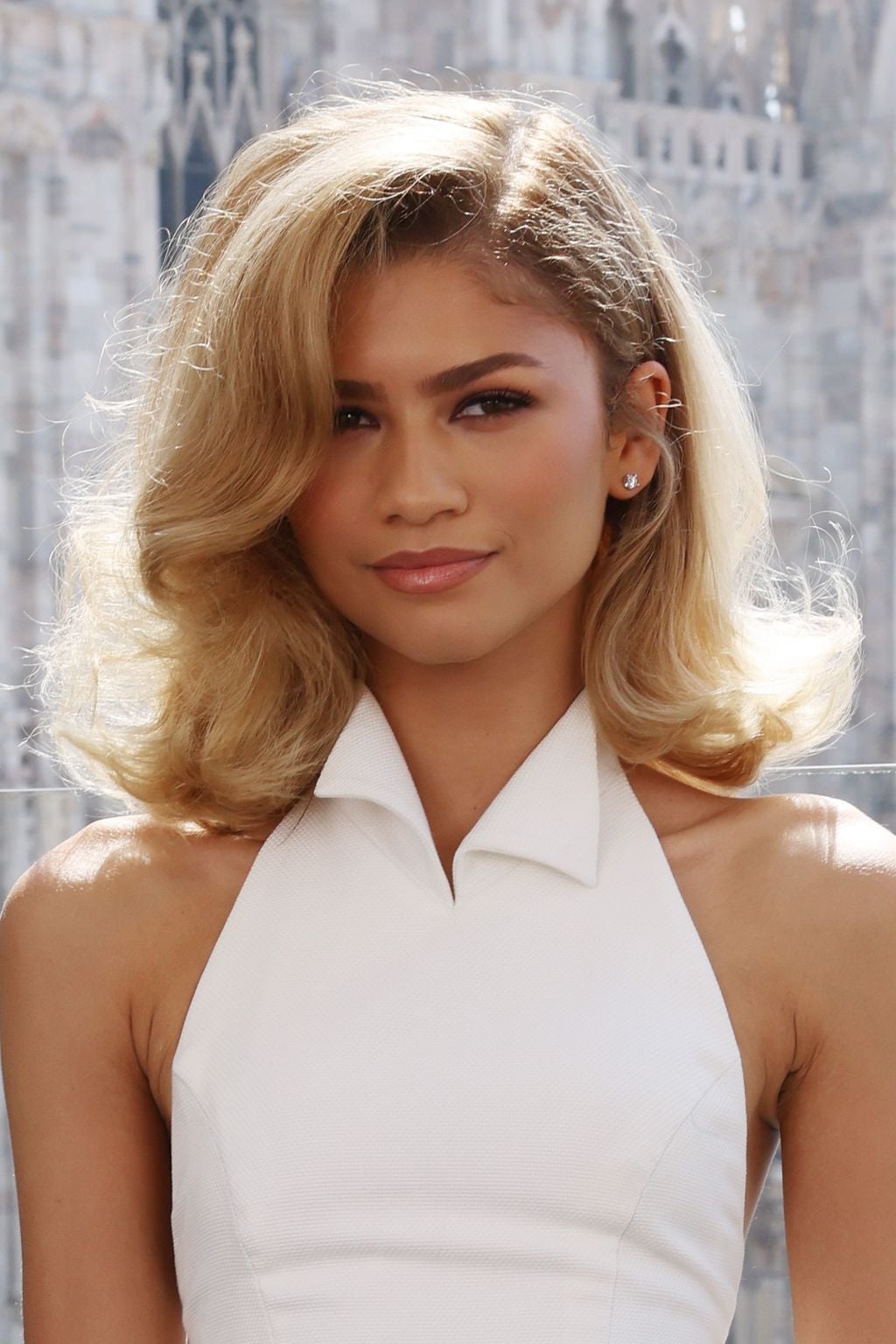
Platinum blonde is high maintenance by default, but a root shadow buys you about six extra weeks between salon visits. The darker base at the scalp grows out gradually rather than leaving a glaring white line. This collarbone lob uses soft waves to soften the contrast between the platinum lengths and the root shadow. Ask your colorist for a collarbone lob, platinum blonde with root shadow, and curtain bangs. A texturizing spray refreshes the wave pattern between washes.
6. Bright Platinum Blonde Bob With Curtain Bangs
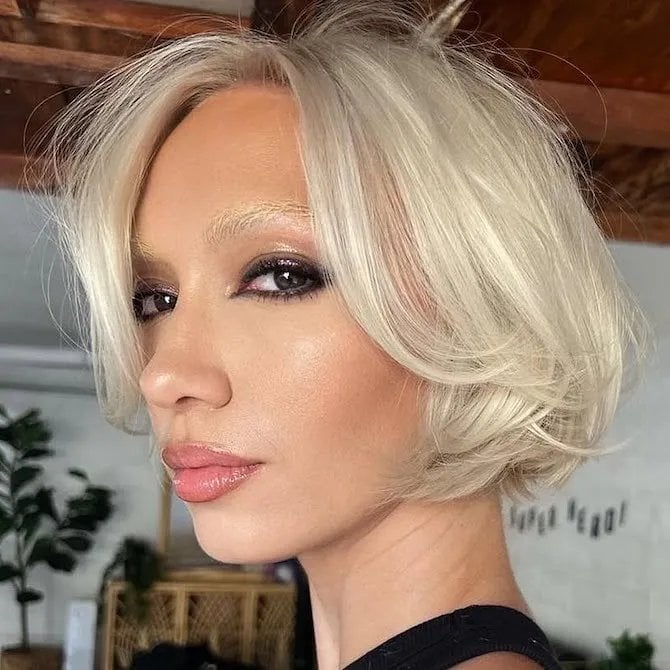
A chin-length bob with curtain bangs and soft layers gets its dimension from a bright platinum blonde shade that shifts with every head turn. This cut is a smart pick for fine, straight hair, since the blunt line and the lighter color create the illusion of more density without adding bulk. Curtain bangs soften round and heart faces, and the middle part keeps the shape balanced. Ask your colorist for: chin-length bob, curtain bangs, bright platinum blonde. Use a round brush to direct the bangs away from the face while blow-drying, and plan a trim every four to six weeks to keep the line sharp.
7. Cool Ash Blonde Bob With Babylights
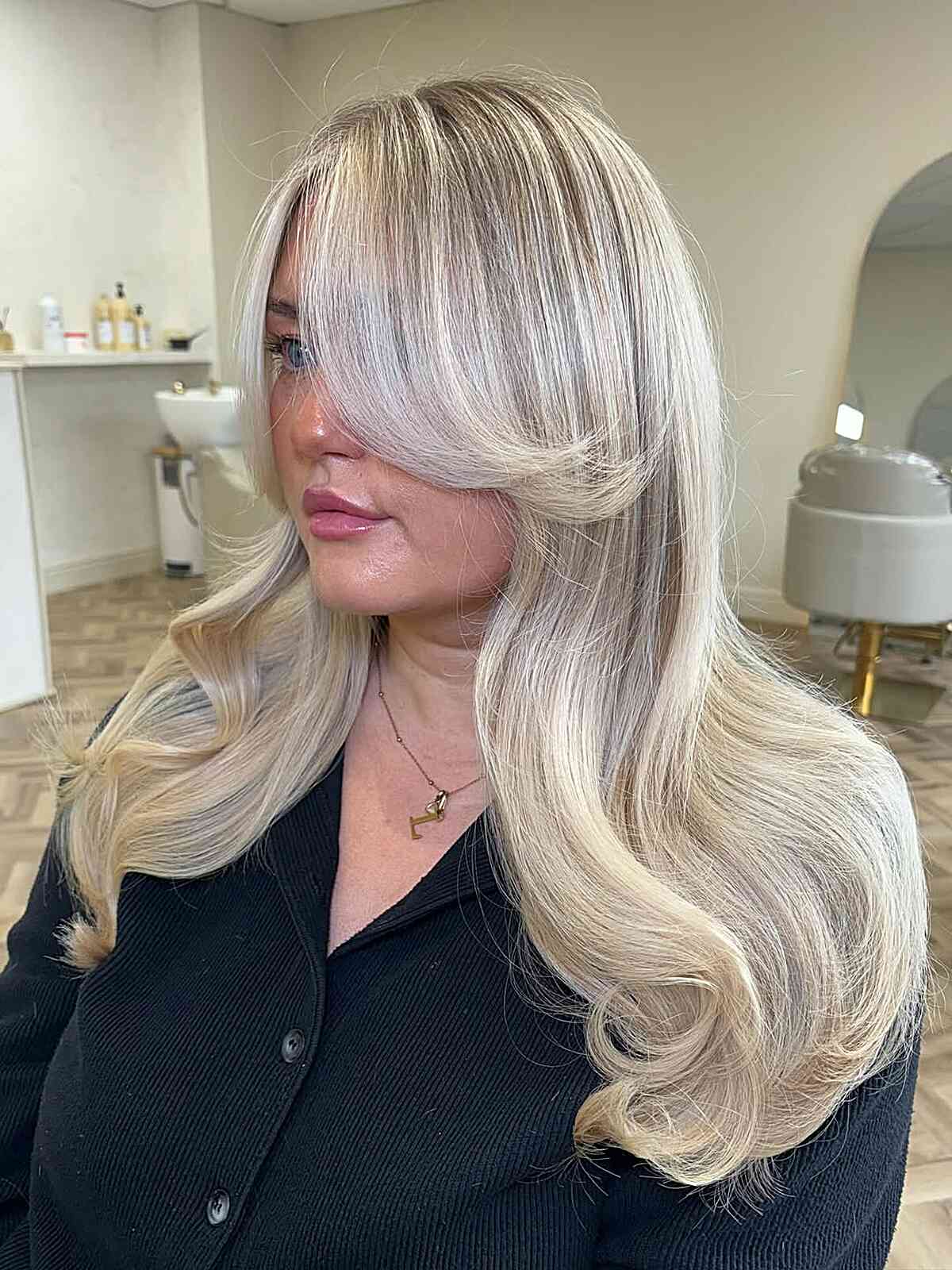
The babylights technique paints ultra-fine ribbons of lighter color through a cool ash blonde base, so the dimension reads as natural and not striped. On collarbone-length layers with prominent curtain bangs, the effect is subtle but visible, giving medium-density wavy hair a soft, glossy lift. The middle parting lets the face-framing pieces fall where they should, which works well on round and heart faces. Ask your colorist for: collarbone length bob, cool ash blonde with babylights, curtain bangs. Shape the curtain bangs with a small round brush while blow-drying, and expect to tone every four to eight weeks to keep the ash from warming up.
8. Golden Blonde Collarbone Layers With Highlights
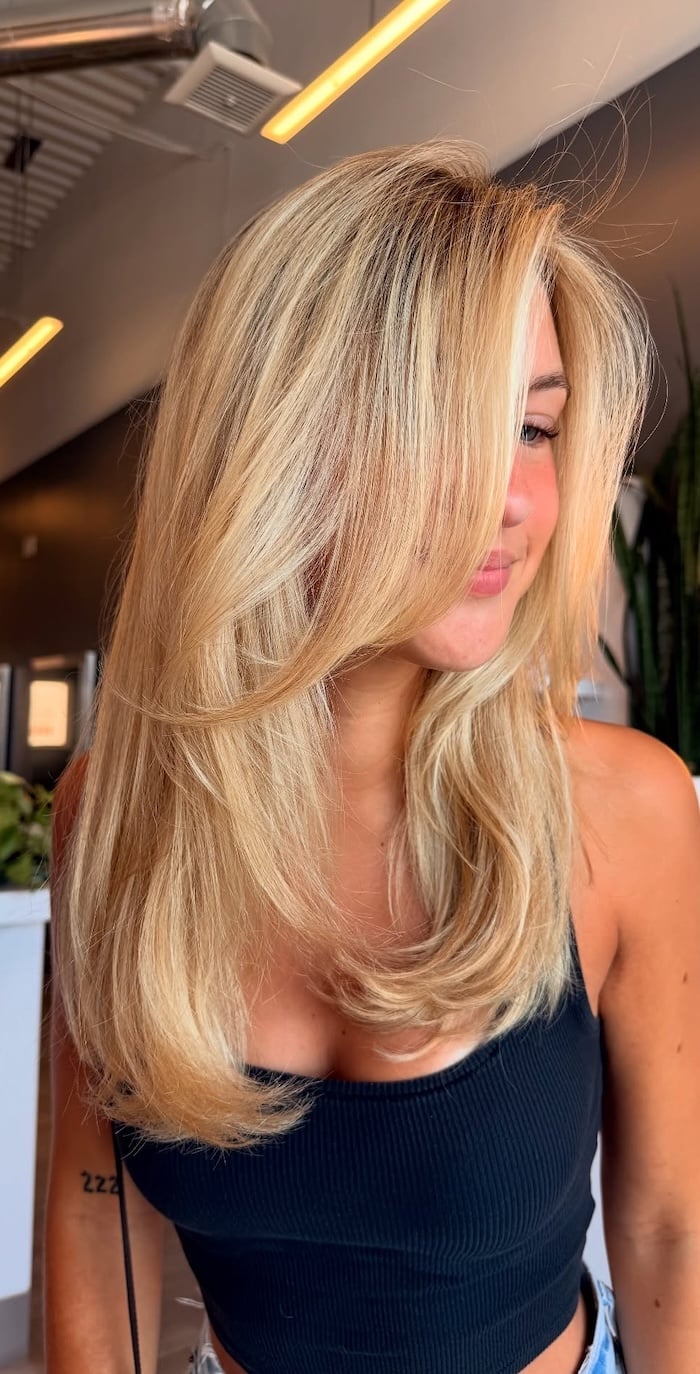
Wondering how to get that lit-from-within golden blonde without going full brass? Ask for face-framing highlights that sit a shade or two lighter than your base, so the collarbone-length layers catch the light around your face while the rest stays rich and glossy. This works especially well on thick, straight to wavy hair, where the soft layers and curtain bangs have enough weight to hold a voluminous blowout. The middle parting keeps the face-framing pieces symmetrical. Ask your colorist for: collarbone length layers, golden blonde with face-framing highlights, curtain bangs. Use a volumizing mousse at the roots before drying, and refresh the highlights every eight to ten weeks to keep the contrast alive.
9. Dishwater Blonde Mid-Back Layers With Blunt Bangs
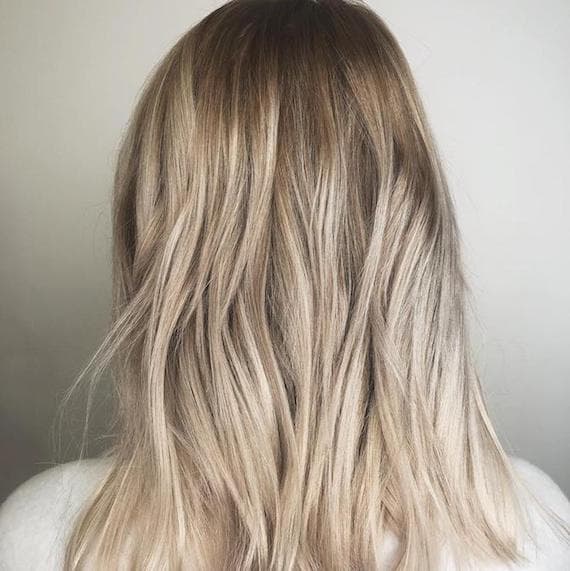
Dishwater blonde is the rare color that looks intentionally undone, a muted, natural shade with subtle highlights that keep it from reading flat. On mid-back length layers with blunt bangs, the effect is lived-in and a little bit cool, with a glossy finish that stops it from looking dull.
The trade-off is the bangs. Blunt bangs need a trim every four to six weeks, and they will show every bit of your natural wave pattern, so be ready to style them most mornings. They do suit oval and long faces well, and the thick, wavy texture here gives the fringe enough body to sit properly. Ask your colorist for: mid-back length layers, blunt bangs, natural dishwater blonde.
10. Shoulder Length Blonde Balayage
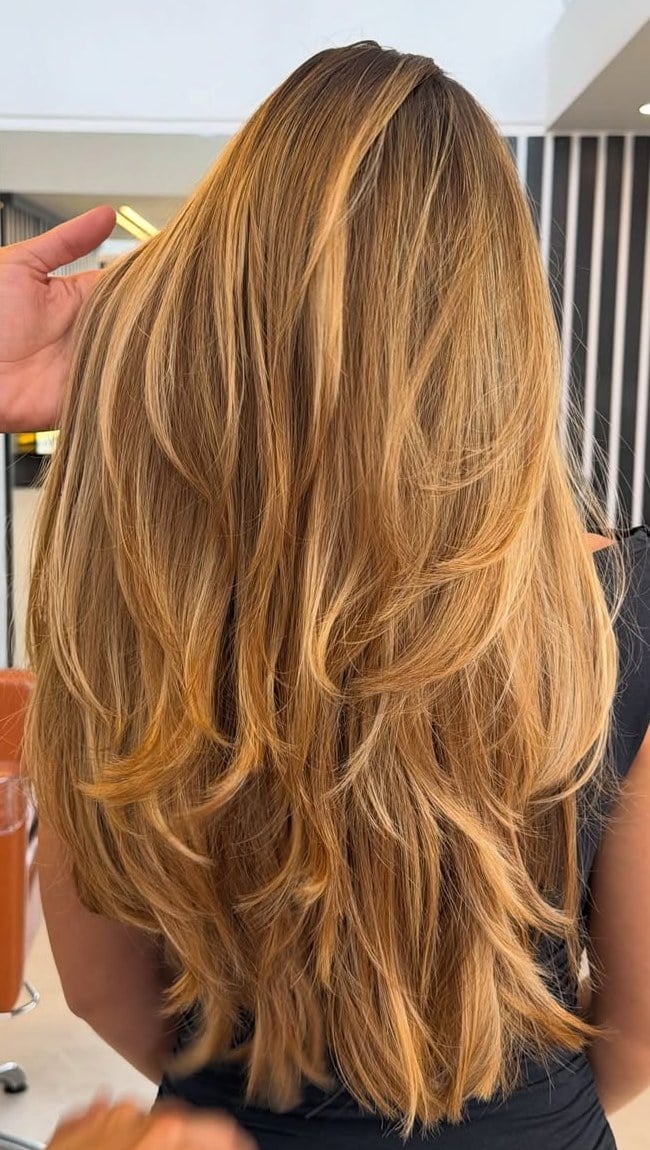
Balayage works on a simple rule: darker at the roots, lighter at the ends, with no obvious line in between. On shoulder-length wavy hair with a middle parting, the technique creates a lived-in transition that grows out without a hard demarcation, which is why it stays low-maintenance. The air-dried texture here means you can skip the heat styling most days, letting the natural wave carry the dimension. Ask your colorist for: shoulder-length hair, blonde balayage with dark roots. This approach suits most face shapes, and it looks especially natural on thick, wavy hair. Refresh the balayage every ten to twelve weeks to keep the ends from losing their brightness.
11. Honey Butterscotch Butterfly Cut Lob
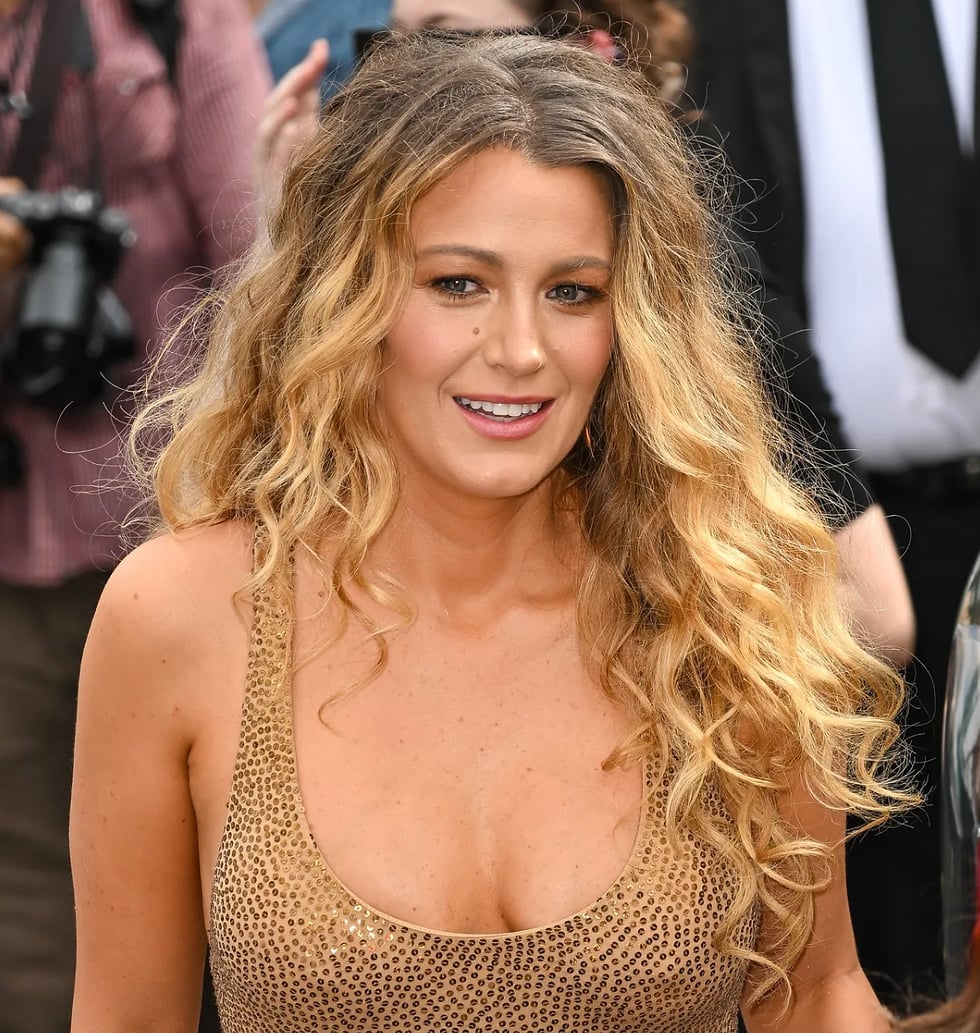
A butterfly cut is not a standard layered lob; the difference is in the architecture. The layers are cut shorter on top so the longer face-framing pieces below create a stacked shape that stays wide rather than pointy. This works best on thick, wavy hair starting at mid-back, since the internal weight is what holds the silhouette. The honey butterscotch blonde base keeps the warm tone from reading flat, even with the density. Ask your stylist for: mid-back butterfly cut, honey butterscotch blonde.
Round faces get the most out of the face-framing layers, which sit past the jaw and pull the eye downward. Square faces also benefit, the soft edges breaking up a strong jaw line without adding bulk at the sides. A texturizing spray on the mid-lengths defines each layer and keeps the shape from looking too precise. A trim every eight to ten weeks prevents the shorter top layers from growing into the longer ones.
12. Thick Curly Honey Blonde With Highlights
Does honey blonde work on thick, curly hair, or does it get swallowed by the texture? The answer depends on placement. Mid-back length, thick, curly hair with a middle parting takes lighter highlights woven through the honey blonde base, so each curl catches one shade on its curve and another inside the fold. The result is dimension without the stripes that high-contrast highlights leave on straight hair. Ask your colorist for: mid-back length curly hair, honey blonde with highlights.
This genuinely flatters most face shapes because the middle part and long layers mirror the head’s natural symmetry. Coarse or high-density curls benefit most; low-density curls may find the weight of the honey base too heavy, and fine curls risk looking weighed down. A curl-defining cream applied to wet hair and air-dried preserves the shape without heat. The highlights need a refresh every eight to ten weeks to keep the dimension from fading into a single flat tone.
13. Air-Dried Ash Blonde Waves
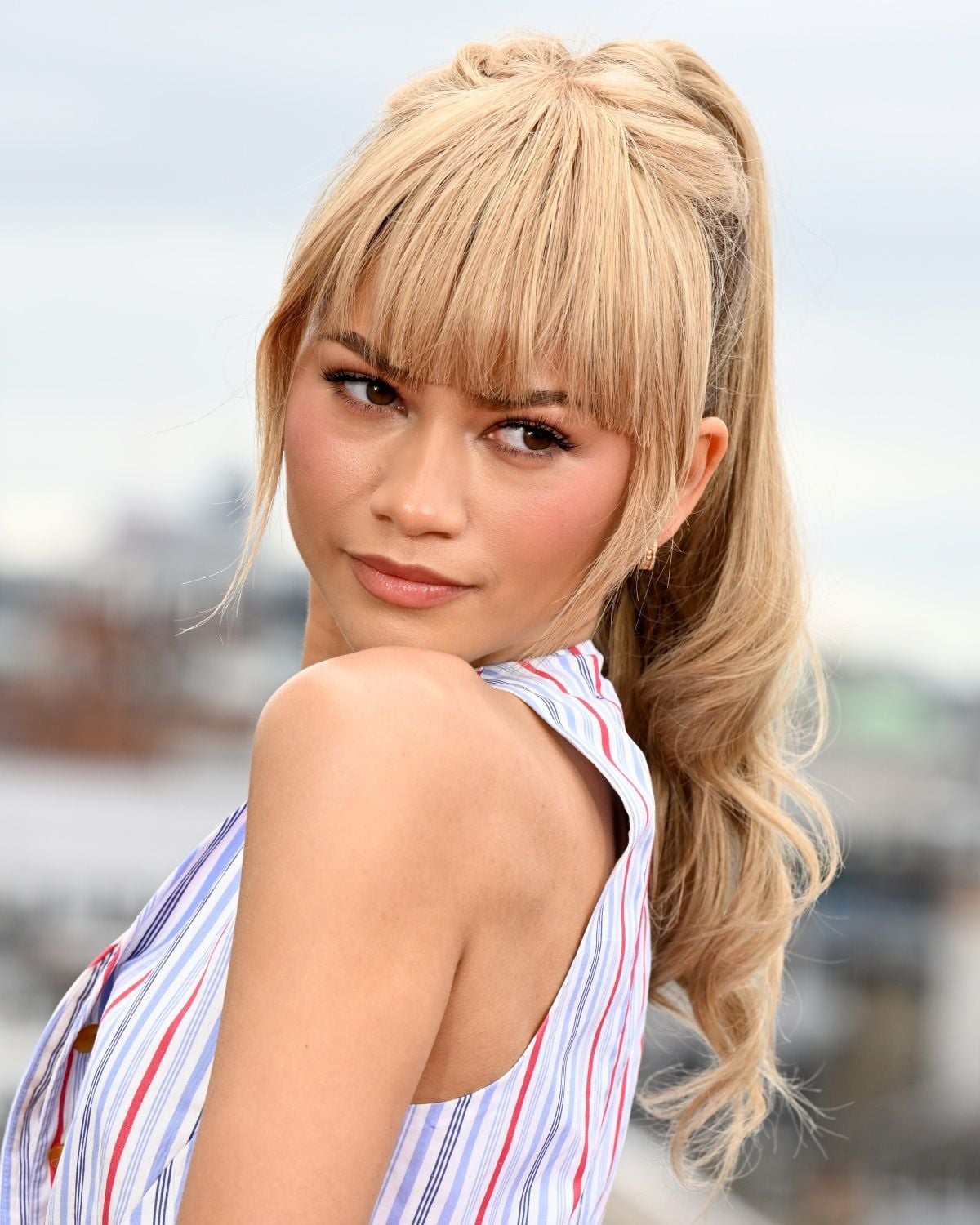
Ash blonde fades faster than warm blonde, so the air-dried finish is also practical: less heat means fewer toning sessions. Mid-back length, thick, wavy hair with subtle highlights on an ash base holds the cool tone best on natural wave patterns, since the texture scatters light and hides the root line as it grows. Ask your colorist for: mid-back length wavy hair, ash blonde with highlights, air-dried finish. A leave-in conditioner and a quick scrunch with the hands is all the styling requires. Plan on a toning appointment every four to six weeks; skip it and the ash shifts green instead of silver.
14. Beige Blonde Balayage With Side Part
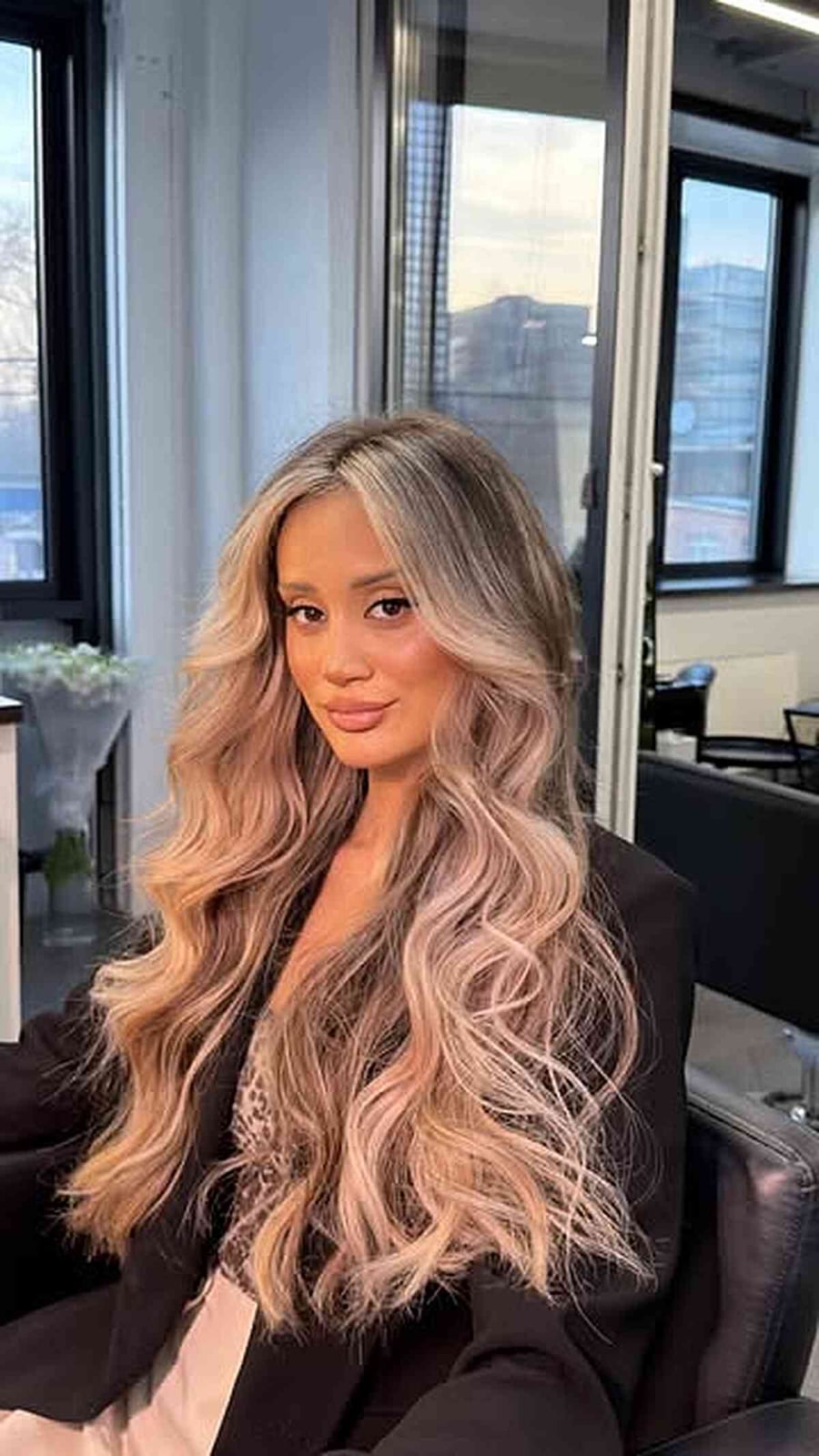
Balayage is a freehand painting technique, not a foil highlight, which means the beige blonde transitions are soft and not striped. Mid-back length, thick, wavy hair with a side parting and loose waves shows the balayage effect best because the color is painted onto the surface of each section, leaving the underside darker. The side part adds volume on top, which suits round faces by breaking the symmetry. Ask your colorist for: mid-back length, beige blonde balayage, side part. This is strictly a salon job. DIY balayage from a box kit creates hard lines at the part because the product sits on top of the strand instead of being painted into the mid-lengths. A professional refresh every ten to twelve weeks keeps the lived-in look from becoming a solid root line.
15. Voluminous Platinum Blonde With Babylights
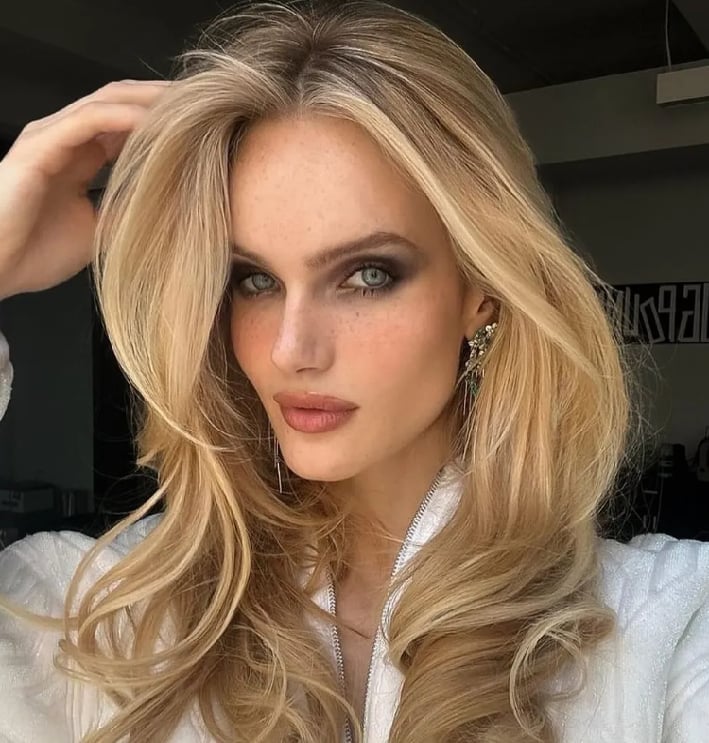
How do you request platinum that has depth instead of a flat white sheet? The phrase to use is babylights, not highlights. Babylights are ultra-fine sections woven from root to tip, so the collarbone-length, wavy, thick hair in a polished blowout looks bright platinum while keeping subtle variation that prevents the solid marshmallow effect. A middle part and voluminous layers add lift at the crown without backcombing. Ask your colorist for: collarbone length voluminous layers, platinum blonde with babylights. Fine hair benefits from the volume layers, which add shape without removing density. A volumizing spray at the roots on damp hair holds the blowout shape for two days. Toning every four to six weeks is required; babylights grow out softer than chunky highlights but still need the cool tone refreshed to avoid yellow.
16. Fine Wavy Beige Blonde With Face-Framing
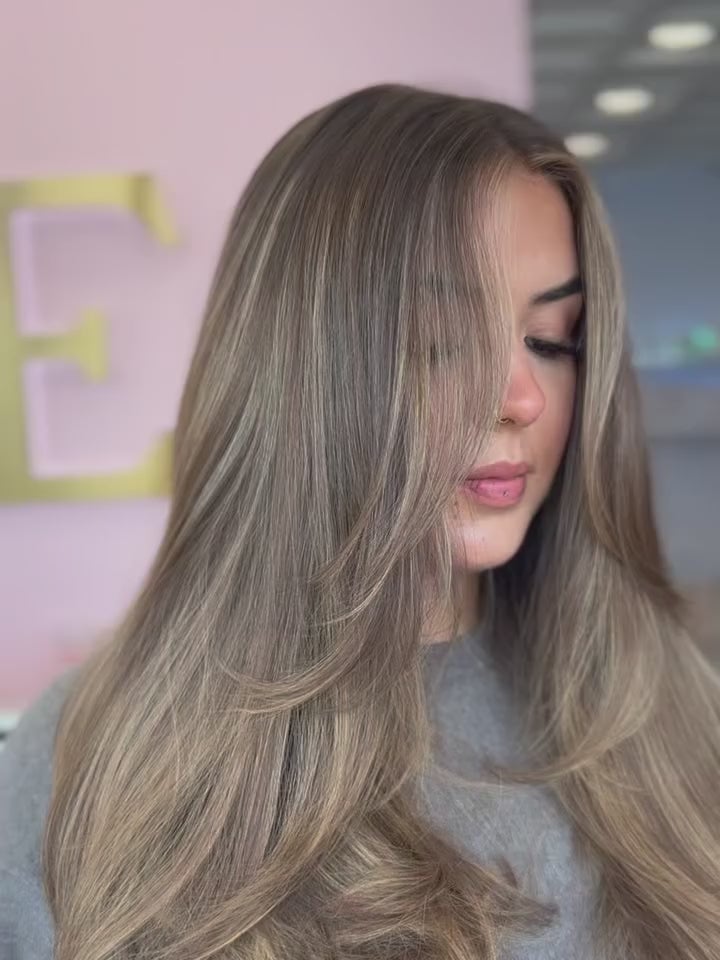
Face-framing pieces cut to collarbone length do the most work on fine, wavy hair, because a single layer through the front adds width where the eye lands first. The beige blonde base with subtle highlights keeps the tone neutral, so the wave pattern shows instead of competing with warmth. Ask your stylist for: collarbone length layers, beige blonde with face-framing. Fine hair benefits from this shape; thin density does not, since a soft layer through fine strands can look flat instead of full. Round and heart faces get a softer jawline from the front pieces. A middle part suits the collarbone length, and a texturizing spray scrunched through damp ends gives the waves something to hold. Tone every six to eight weeks to keep the beige from drifting yellow.
17. Mid-Back Platinum Blonde With Side-Swept Bangs
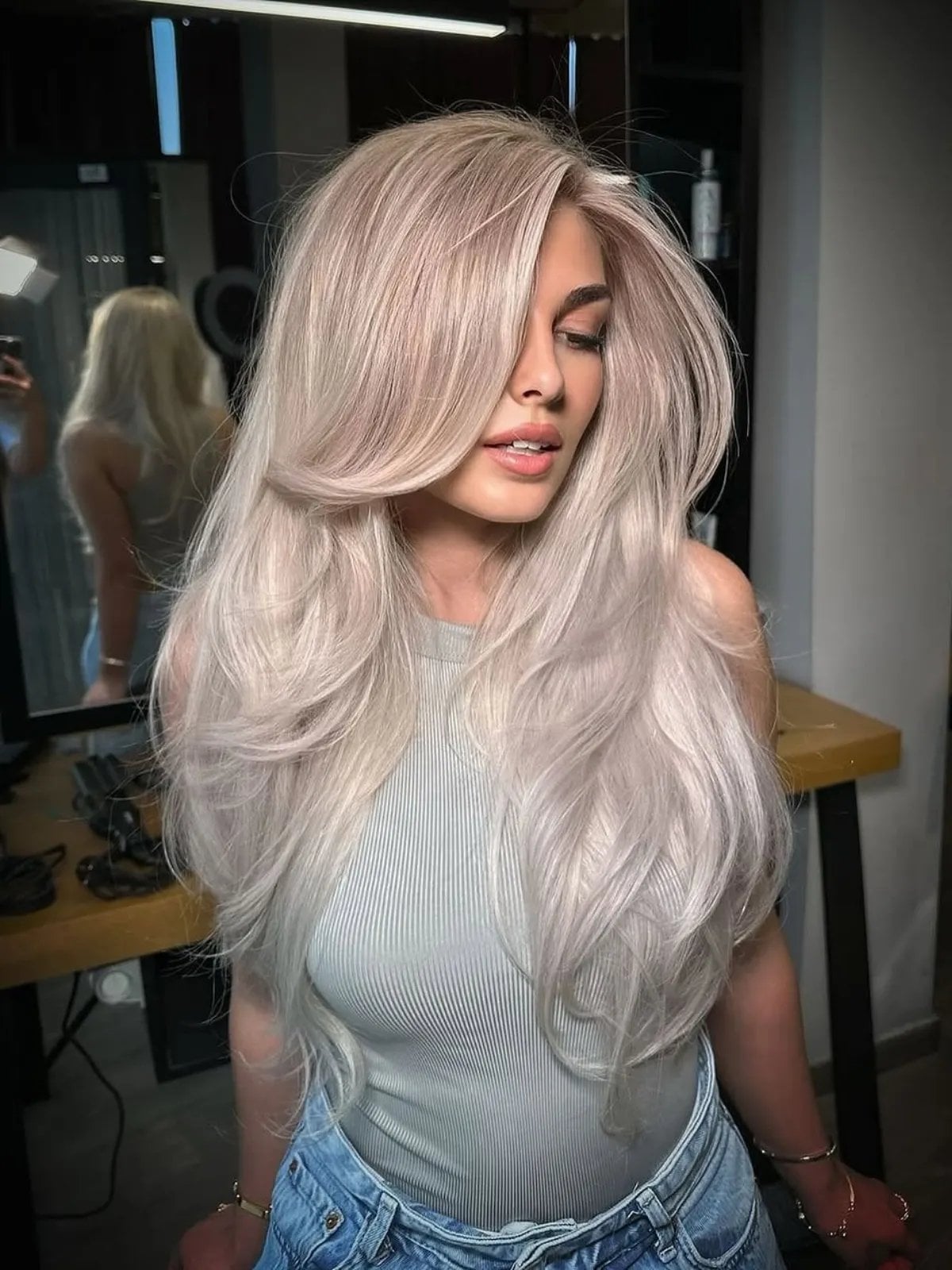
Platinum at mid-back length is a commitment measured in appointments, not weeks. The lift has to be even along the whole run of thick, straight hair, and the toner has to land cool without going lavender. Ask your colorist for: mid-back platinum blonde, side-swept bangs. A side part with bangs swept across one brow softens a square or long face, and the volume in the blowout keeps the length from hanging heavy.
Daily wear is the real cost. A voluminous blowout on thick straight hair means rough-drying to about eighty percent, then a round brush section by section, and it holds shape better on second-day hair than freshly washed. Side-swept bangs need a quick pass with a brush to sit right, or they collapse into the part. A smoothing serum on the ends keeps the finish polished. Roots show at around four weeks on platinum, so plan a root touch-up between full toning visits, and book a trim every six to eight weeks to keep the ends looking as clean as the color.
18. Creamy Vanilla Blonde Mid-Back
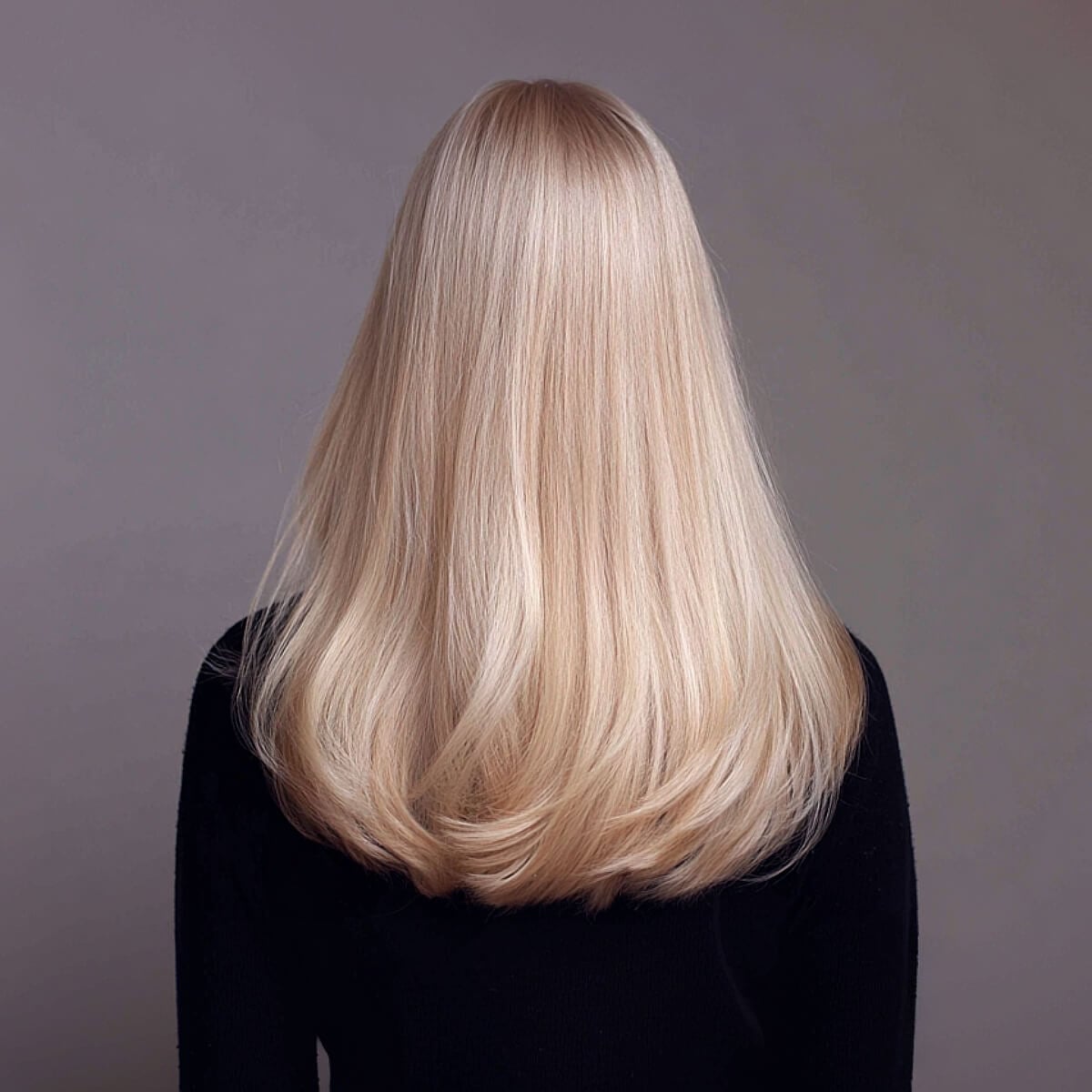
Uniform color across mid-back length is harder to pull off than dimension, because there is nowhere for a patchy lift to hide. Creamy vanilla blonde sits in that narrow band between warm and cool: enough beige to kill yellow, not so much ash that it turns gray. The usual route is a full lightening pass followed by a toner mixed toward neutral, with a second toner application at the bowl to even the mid-lengths against the ends. Ask your colorist for: creamy vanilla blonde, mid-back length. Thick, straight hair carries a flat shade well, and subtle long layers cut into the perimeter give the blowout somewhere to bend.
The tone is the fragile part. Vanilla reads creamy for roughly four to six weeks before the underlying warmth creeps back, so a toner refresh every six weeks keeps it honest. At home, a purple shampoo once a week is enough; more than that pushes the shade toward gray. A boar bristle brush through a smooth blowout adds shine without product, and a trim every eight to ten weeks keeps the blunt-ish ends from feathering.
19. Long Vanilla Blonde With Subtle Highlights
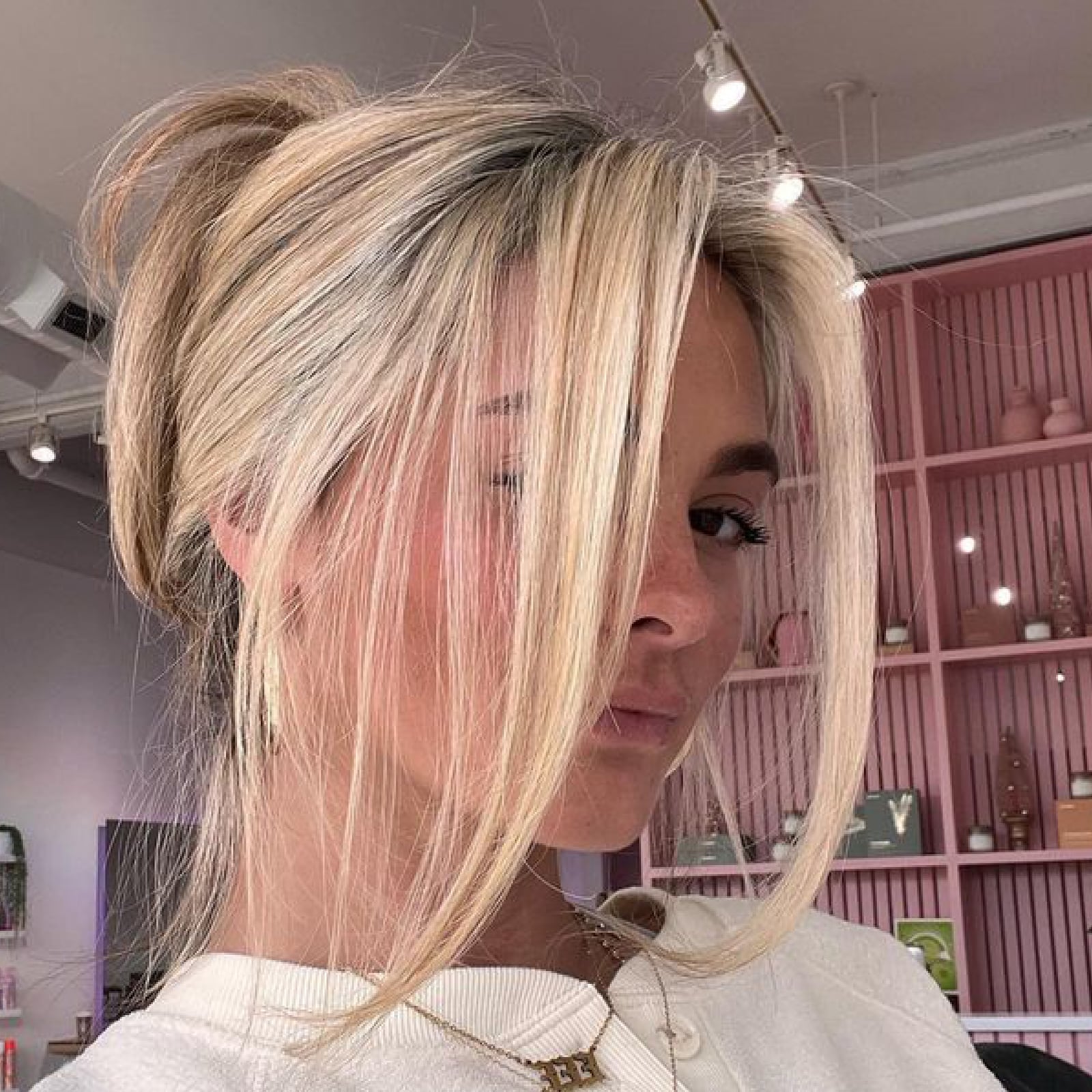
How do you ask for highlights that look like light in the hair and not stripes? Keep the request small and specific. Ask your colorist for: long vanilla blonde, subtle highlights, face-framing pieces. The base stays creamy vanilla, and the highlights sit a shade or two lighter, woven fine enough that they blend at the root instead of starting below it. On thick, wavy hair at long length, that soft dimension gives the blowout movement and avoids a visible grow-out line. Face-framing pieces cut around the jaw soften oval and long faces, and a middle part keeps the front section symmetrical. Highlights of this kind typically need a refresh every eight to ten weeks, with a toner at the same appointment to keep the vanilla from tipping warm.
20. Radiant Golden Blonde With Sun-Kissed Highlights
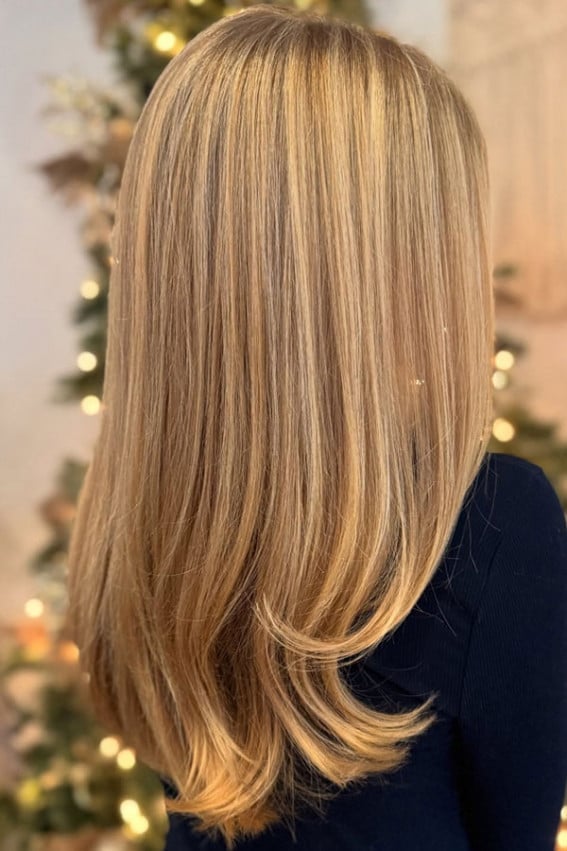
Set this next to a beige or vanilla blonde, and the temperature changes: golden with bright highlights runs warm and reflective, while cooler shades stay quiet. Both work on long, thick, wavy hair, but they do different jobs. Golden brightens the whole head and shows up in photographs and daylight; neutral shades disappear into a room and look more understated at a desk. Ask your colorist for: radiant golden blonde, bright highlights, curtain bangs. Curtain bangs swept to the sides soften square and round faces, and the middle part keeps the length below the chin working to elongate.
This is a summer shade by instinct, and it earns its keep at outdoor events, weddings and anything photographed in sun. The trade is upkeep: golden highlights go brassy faster than cool ones, so a toning gloss every six weeks holds the brightness, and a purple shampoo once a week between visits keeps the yellow in check. A heat protectant before a curling wand, and a trim every eight to ten weeks, keeps the wavy blowout from turning frayed at the ends.
21. Golden Blonde Mid-Back Layers
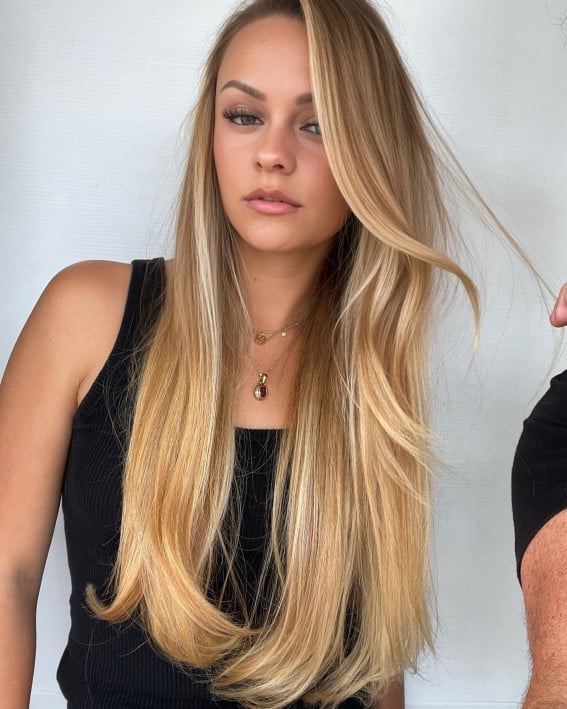
Golden blonde with face-framing highlights is the rare color that looks better as it grows out, because the lighter pieces sit where the sun would hit them anyway. It works best on thick, wavy hair that starts at mid-back, where the soft layers and smooth blowout have enough heft to hold their shape. Ask your colorist for: mid-back length layers, golden blonde with face-framing highlights. A smoothing serum keeps the shine in check, and a highlight refresh every eight to ten weeks is plenty to keep the dimension going.
22. Fine Platinum Blonde Ear-Length Bob
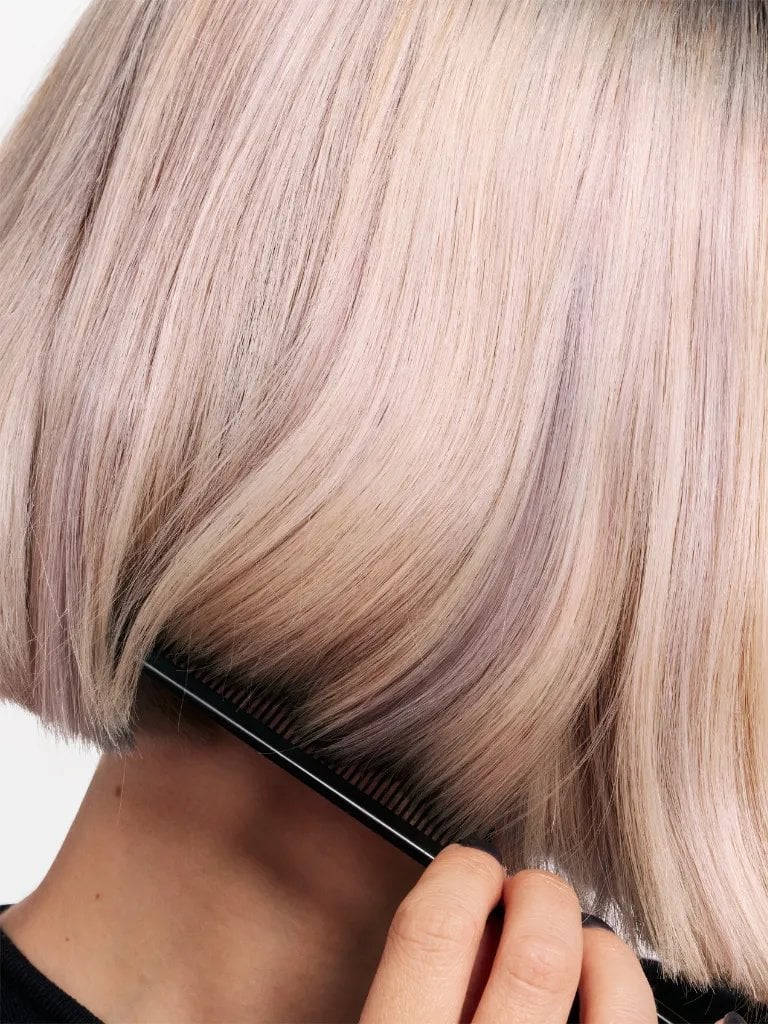
A uniform, bright platinum blonde on a fine, straight ear-length bob is a high-risk, high-reward move. The side parting keeps the line clean, and the air-dried texture saves you ten minutes with a round brush. Ask your colorist for: ear-length bob, uniform platinum blonde. Fine hair shows every hint of brassiness, so a purple shampoo is essential from week three onward.
23. Final Thoughts
Fine hair benefits from a blunt baseline and a root shadow for depth. For a round face, let the length fall below the chin instead of stopping at the jaw. Cool ash tones need a purple shampoo every two weeks; warmer honey shades can go a month between toning sessions.
- Toning: Use a purple shampoo or toner every 2-4 weeks to keep cool blondes bright and prevent brassiness.
- Trims: Schedule trims every 6-10 weeks, depending on the cut, to maintain shape and health.
- Heat Protection: Always use a heat protectant spray before styling to shield blonde hair from damage.
- Washing: Wash blonde hair 2-3 times a week with color-safe, sulfate-free shampoo and conditioner.
Find your signature blonde, from bright to dimensional.

