
Asian haircuts in 2027 lean toward soft face-framing layers, curtain bangs, and lived-in color that grows out without a fight. The sharp blunt era is loosening its grip: edges now move, and glossy natural texture beats flat-ironed straight.
This list of 20 Asian Haircuts runs from long layered cuts to a chin-length bob and a pixie, with trim rhythms from four weeks to twelve. It suits fine hair that falls flat, thick hair that puffs at the first sign of layers, and anyone tired of a fringe that will not sit. Find your length, then your layer pattern.
1. Long Layered Cut With Curtain Bangs
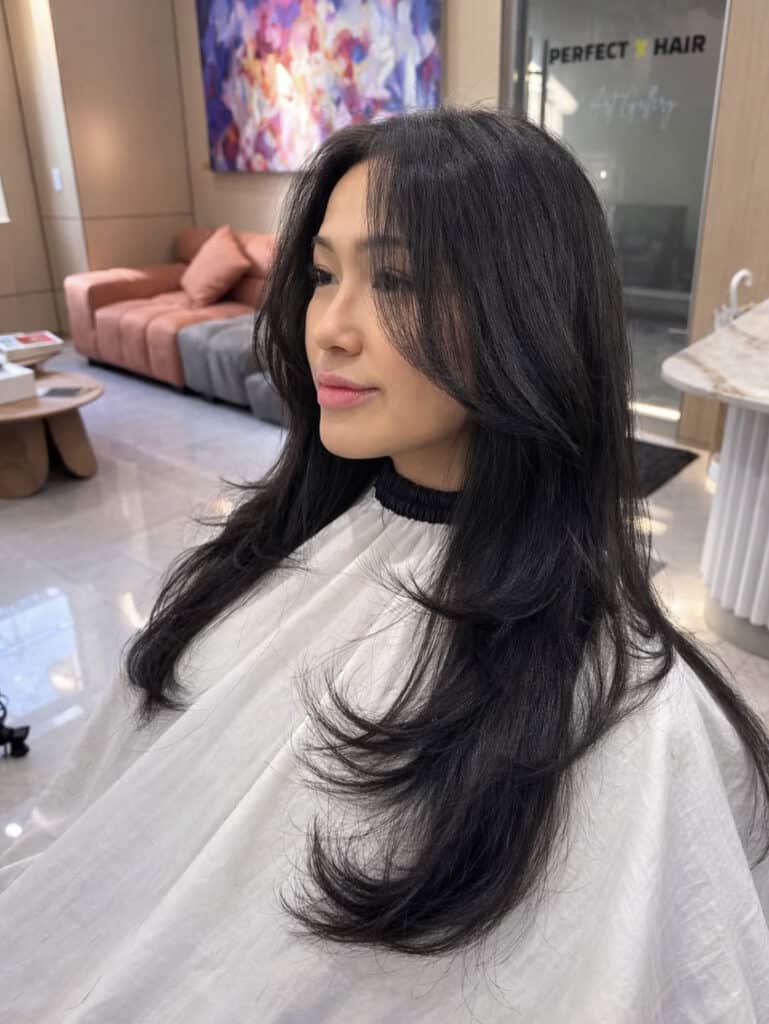
This long layered haircut with bangs keeps volume in check: the black, wavy hair falls to mid-back with face-framing pieces that soften the jaw without a blunt edge. The curtain bangs are parted to the side, which draws the eye outward. Thick hair carries the layers well, but finer textures can still join in if the stylist keeps the layers longer and lighter, so the ends do not disappear.
Ask your stylist for: long layers, soft face-framing pieces, curtain bangs. The blowout sets the shape here, so expect to spend fifteen minutes with a round brush, directing the fringe away from the face to set that curtain curve. A trim every eight to ten weeks keeps the layers from collapsing into a shapeless triangle, especially if your hair grows fast.
2. Mid-Back Layers With Soft Face-Framing
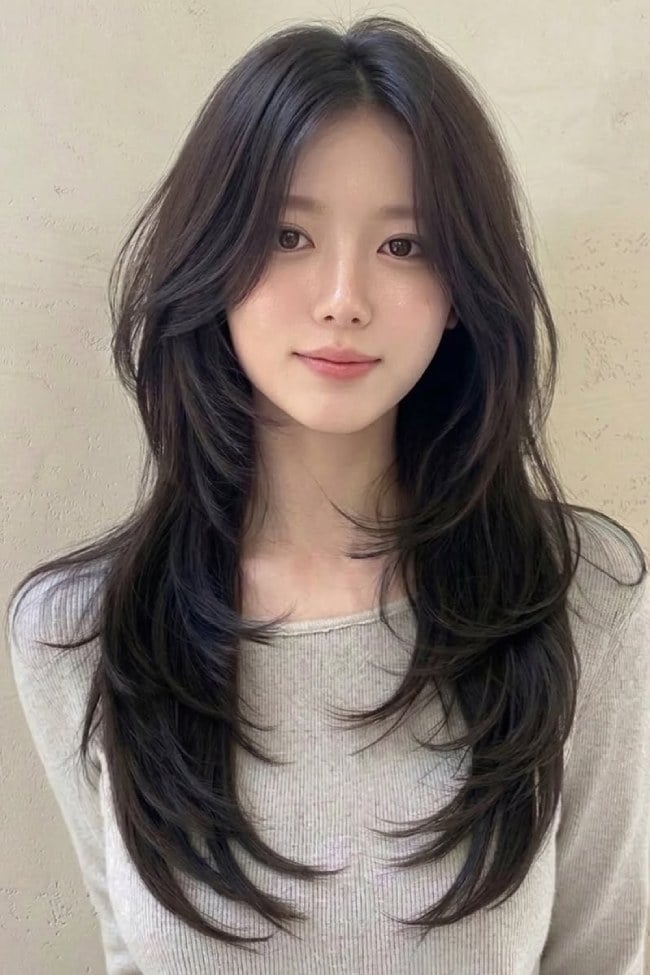
Wondering what to ask for when you want movement without losing length? The key is in the phrasing. This cut keeps the hair at mid-back, with multiple layers that start around the cheekbones and blend downward, so the ends stay thick while the face gets a soft, feathered frame. The dark ash brown shade adds depth, and the side part means the layers fall asymmetrically, which suits most face shapes by adding a little visual interest on one side.
Ask your stylist for: mid-back length, multiple layers, soft face-framing pieces. Specify that the face-framing layers be cut dry, so they land exactly where you want them, and keep them long enough to tuck behind your ears. A smooth blowout with a large round brush will show off the blend, but air-drying with a bit of leave-in conditioner works too, giving a more relaxed finish that still holds the shape.
3. Voluminous Blowout With Face-Framing Layers
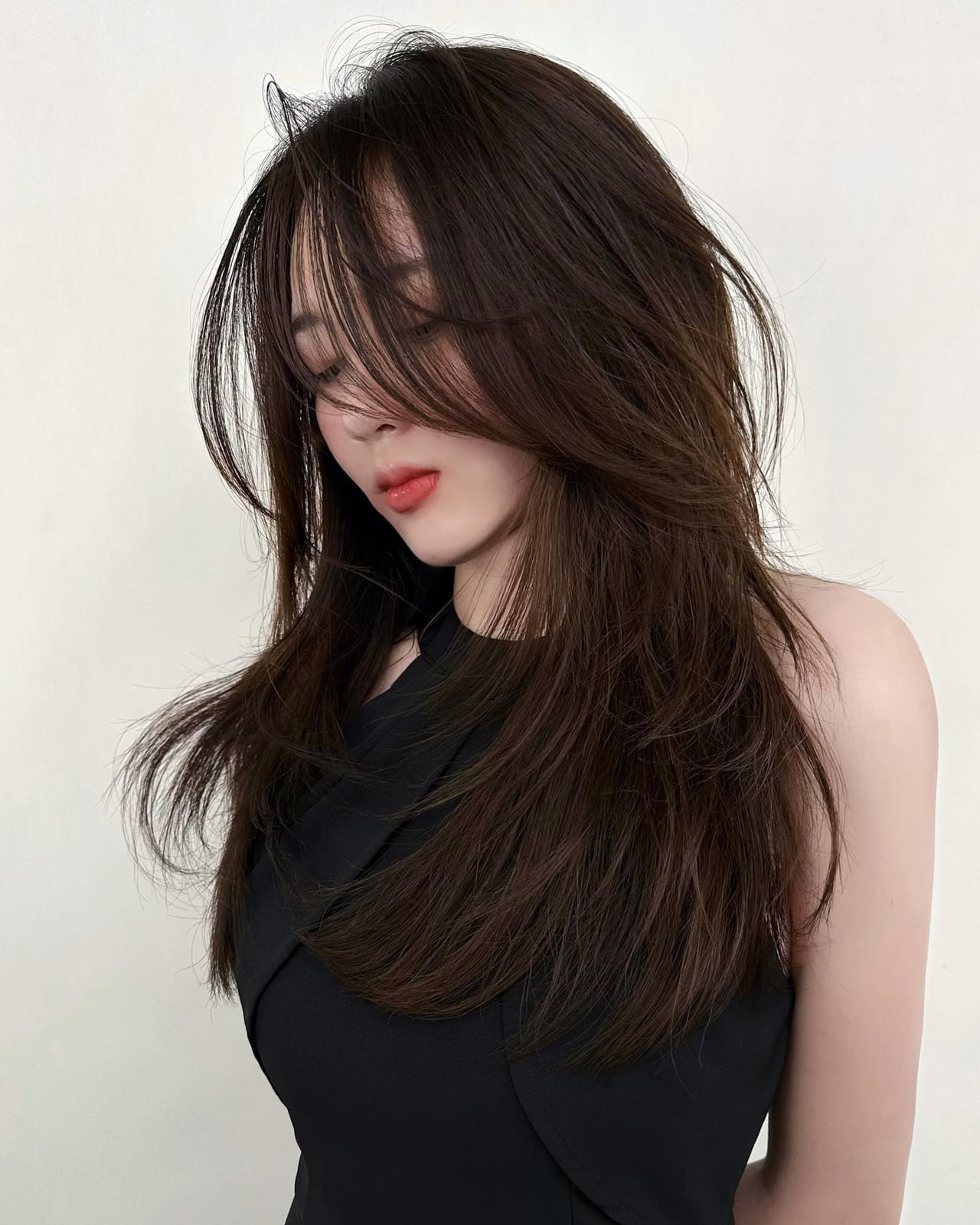
A voluminous blowout is a commitment, not a happy accident: the long layers here are cut to lift at the root, and the curtain bangs are styled to sweep outward, creating that full, rounded silhouette around the face. The dark brown base with subtle lighter highlights adds dimension that makes the layers read clearly, even when the hair moves. This is an everyday-work look, but it also carries into evening events without much adjustment.
Ask your stylist for: long layers, soft curtain bangs, voluminous blowout. Expect to spend twenty minutes with a large round brush, lifting at the roots as you dry, and finish with a cool shot to set the curve. The highlights will need a toning appointment every six to eight weeks to keep them from going brassy, especially if you style with heat often.
4. Textured Wavy Shag With Full Bangs
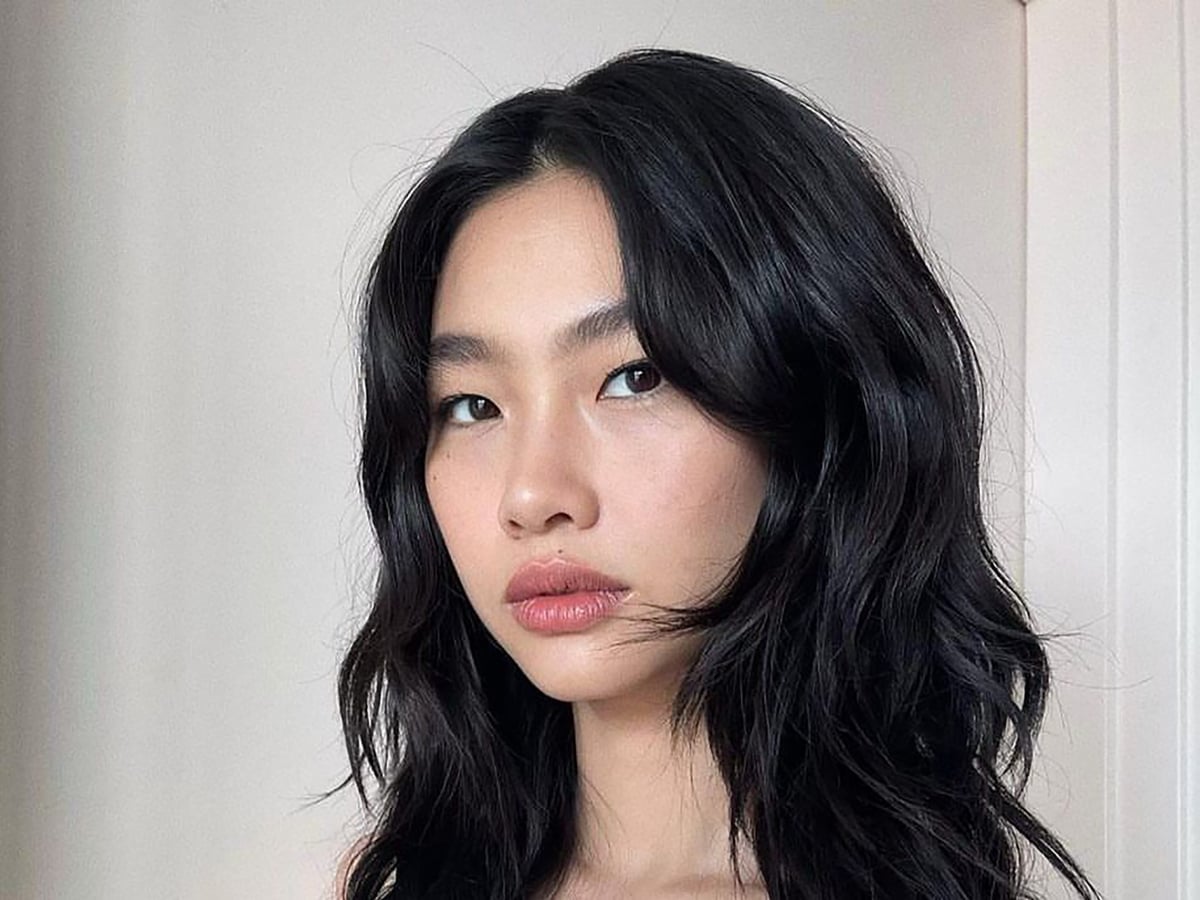
If you have been eyeing curtain bangs but want more of a statement, this textured wavy shag with full bangs is the bolder sibling. The mid-back length keeps it wearable, but the prominent layers throughout create a shaggy, lived-in texture that does not rely on perfect styling. Full bangs, cut straight across the forehead, suit longer face shapes by visually shortening the length, and they add a retro edge that curtain bangs cannot quite match.
Ask your stylist for: mid-back shag, full bangs, prominent layers. The trade-off is maintenance: full bangs need a trim every four to six weeks, or they start poking you in the eye and losing their shape. To enhance the natural wave, scrunch in a sea salt spray after washing and let it air-dry, which gives the shag its signature tousled finish without heat damage.
5. Modern Wolf Cut With Shaggy Layers
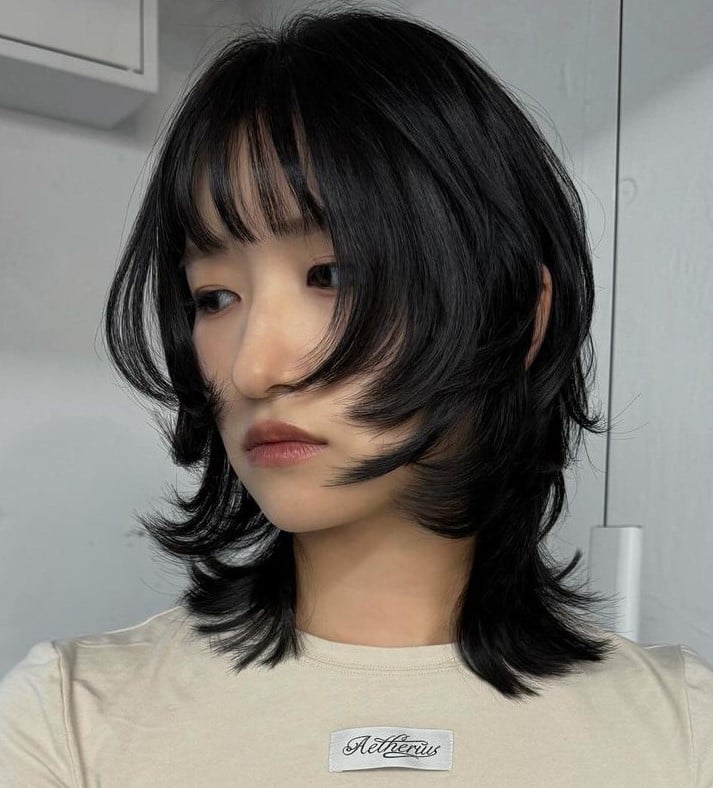
The modern wolf cut is built on contrast: heavy, shaggy layers that start high at the crown and taper down to mid-back, with a full fringe that keeps the front from feeling too heavy. On thick, straight black hair, the layering technique removes bulk while leaving enough weight to hold the shape, creating that slightly wild, textured silhouette. A middle parting is essential here, as it lets the layers fall symmetrically and frames the face evenly.
Ask your stylist for: mid-back wolf cut, shaggy layers, full fringe. The texture comes from the cut itself, but a dab of texturizing paste worked through the ends sharpens the effect and keeps the layers from blending into one another. Plan on a trim every eight to ten weeks, because the shaggy shape relies on precise points that grow out fast, especially around the fringe.
6. Long Layers With Wispy Bangs
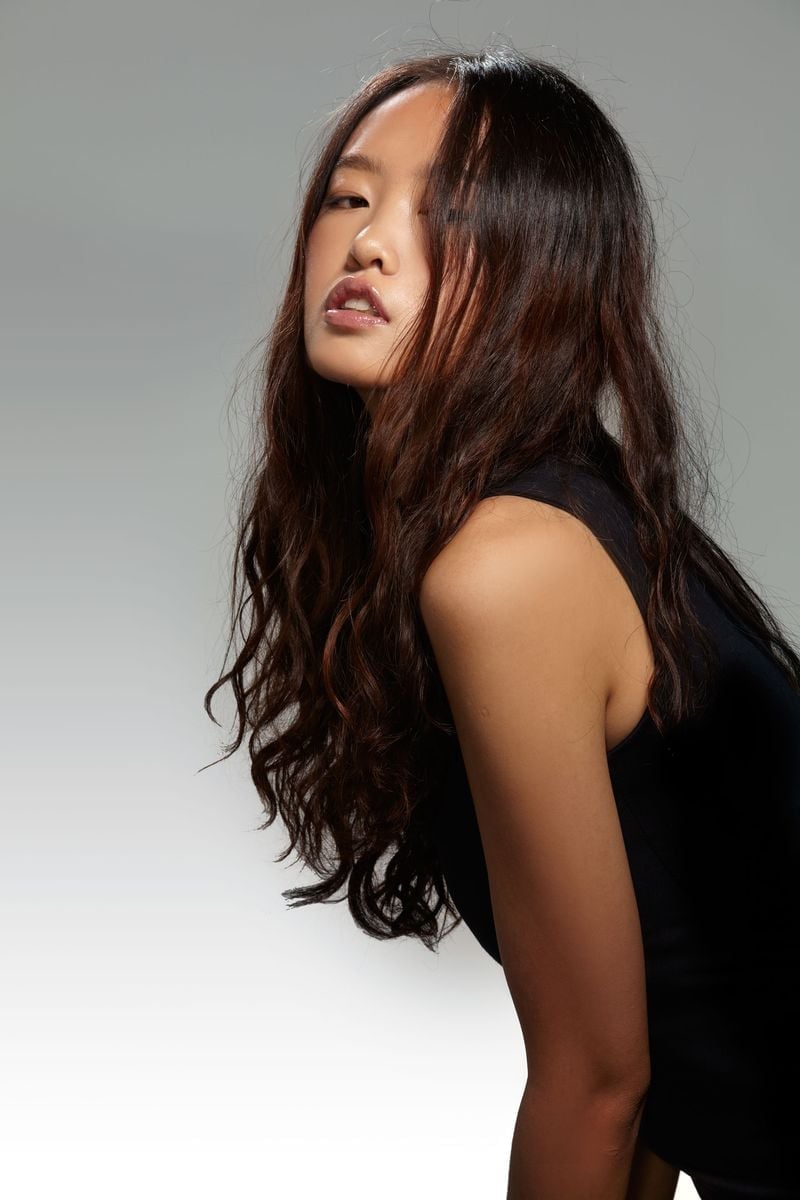
Getting wispy bangs that actually look wispy (and not like you sneezed into a hedge trimmer) is a precision job. The cut keeps the length at mid-back with visible layers through the ends, then feathers the bangs so they land softly instead of bluntly. Ask your stylist for: long layers, wispy bangs, natural wavy texture. Thick, wavy hair does most of the work here; the layers prevent the weight from pulling the waves straight. Skip the salon at your own risk, because a DIY snip on wispy bangs usually ends in a micro-fringe you didn’t ask for.
7. Mid-Back Wavy Hair With Curtain Bangs

Can you air dry wavy hair into that glossy, defined shape? Sometimes, but not always. The cut relies on soft layers through the mid-back length and a side part that lets the curtain bangs fall forward instead of parting on their own. Ask your stylist for: mid-back length, loose waves, curtain bangs, side part. Thick, wavy hair types get the best results here, though the reality is that air drying can produce more volume than polish. One real drawback: if your natural wave pattern is uneven, the curtain bangs may need a quick blow-dry to sit evenly.
8. Collarbone Shag With Wispy Curtain Bangs
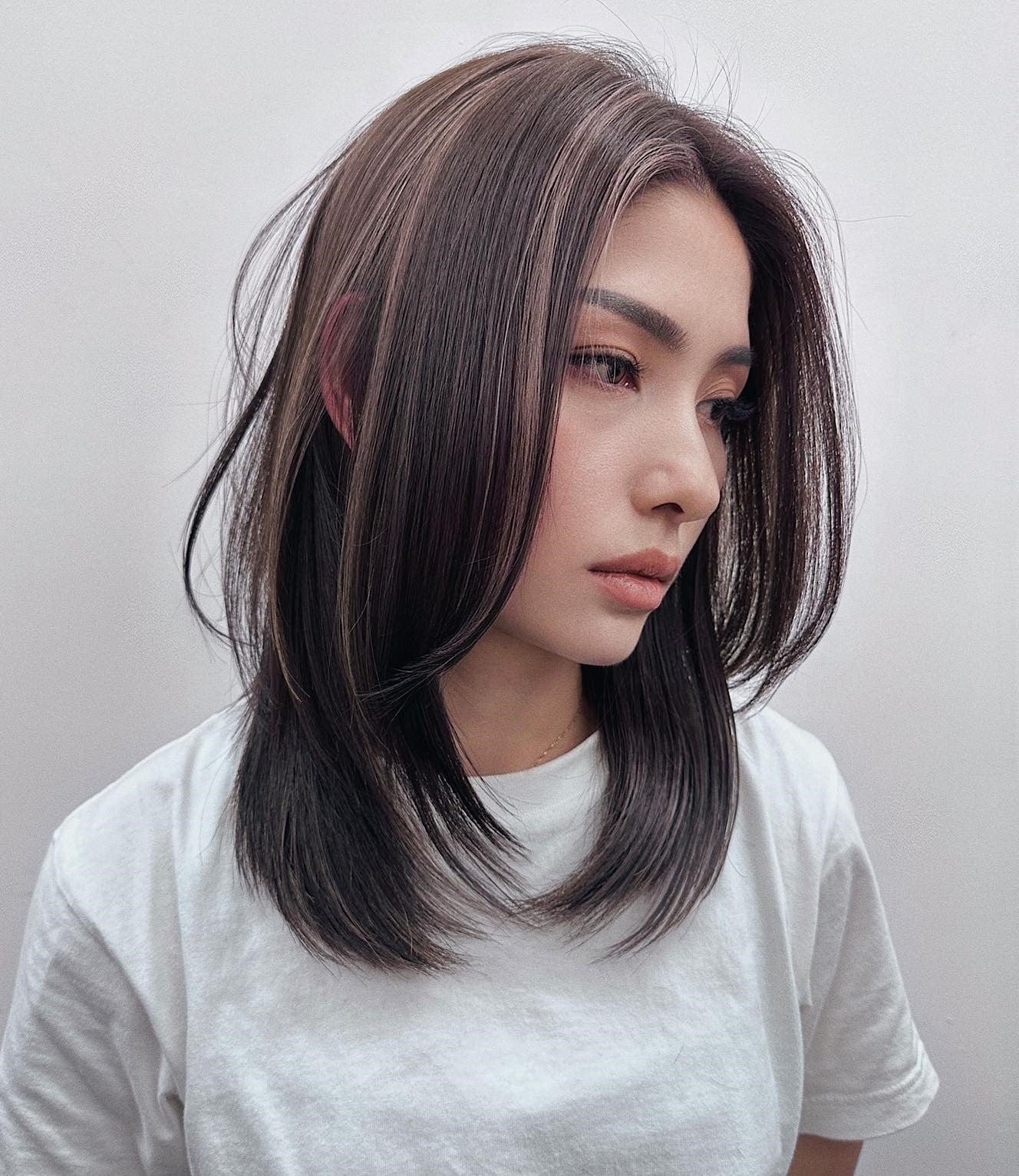
The shag is a shape that works best when the hair has enough wave to hold the layers open, and this version keeps the length at the collarbone so it doesn’t lose its structure. Wispy curtain bangs taper at the edges, blending into the face-framing layers rather than sitting as a separate piece. Ask your stylist for: collarbone length, face-framing layers, wispy curtain bangs. Medium density, wavy hair starting at the shoulders benefits most; the shag layers add movement without thinning the hair to nothing. This cut suits fall and spring, when you want a blowout that still looks like hair and not a helmet.
9. Layered Shag With Ash Brown Highlights
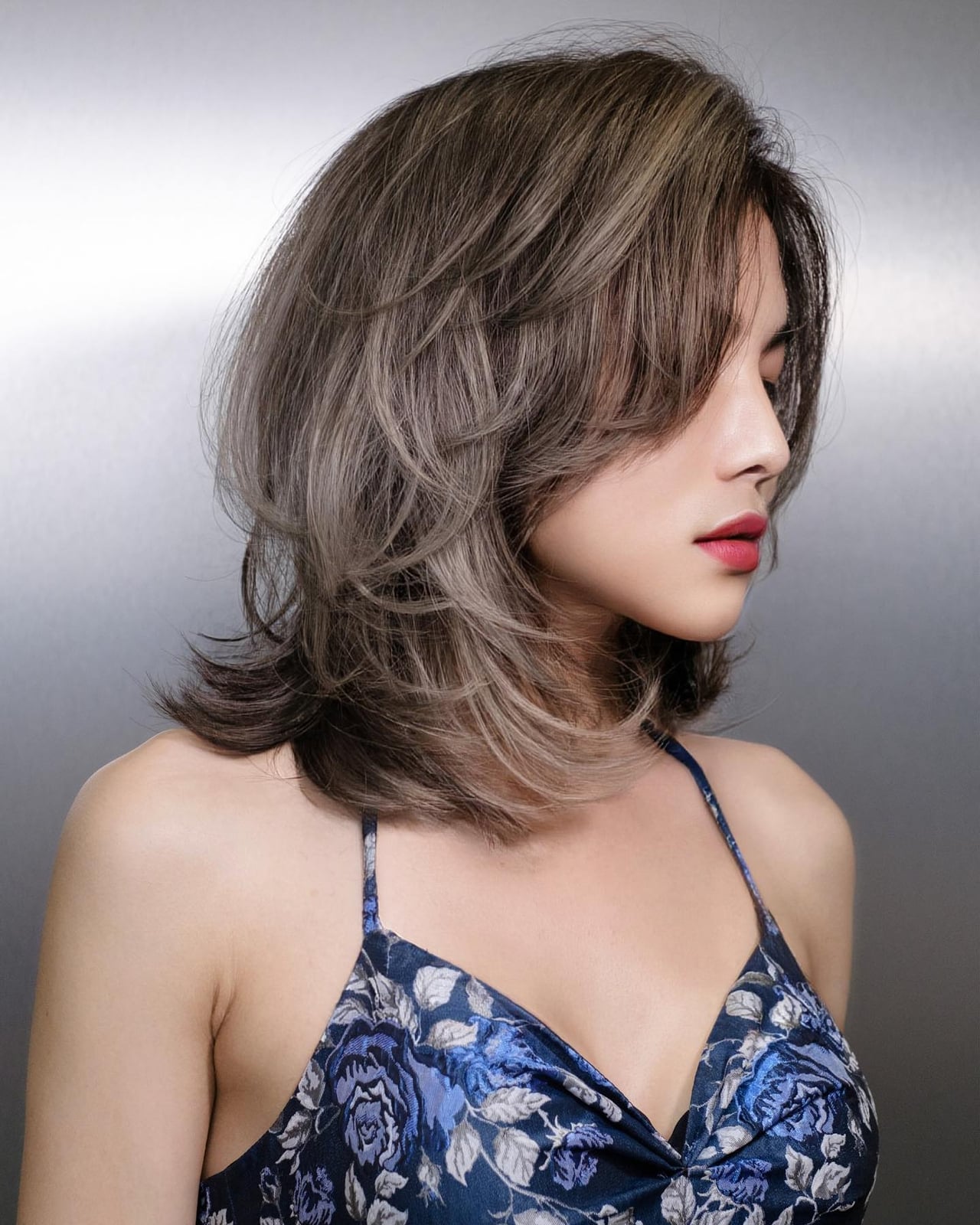
Ash brown with blonde highlights relies on a balayage technique, where the lighter pieces are painted freehand so they land on the surface layers rather than starting at the root. The collarbone-length shag uses curtain bangs and wavy texture to show off the contrast between the cool base and the lighter strands. Ask your stylist for: collarbone layered shag, curtain bangs, ash brown with blonde highlights. Fine, wavy hair gains volume from the layering, and the highlights add the dimension that fine hair often lacks. A toning gloss every six to eight weeks keeps the ash tone from warming up.
10. Collarbone Shag With Choppy Layers
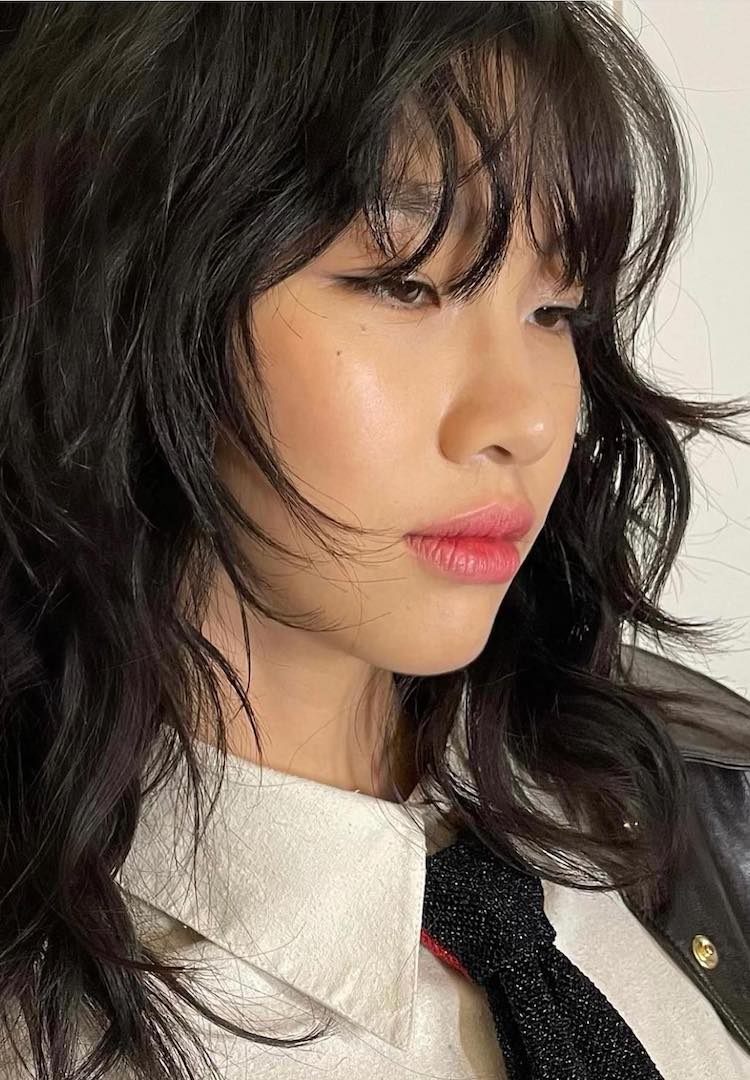
Choppy layers mean the ends are cut at different lengths, which gives the collarbone-length shag its textured, slightly jagged silhouette. The curtain bangs sweep to the side, and the dark brown base carries a balayage that lightens the ends without a visible grow-out line. Ask your stylist for: collarbone length shag, choppy layers, curtain bangs, balayage. Thick, wavy hair takes the choppy texture well, but the trade-off is that the balayage placement needs to be precise. If the lighter pieces start too high, they create a stripe effect as the hair grows, and that takes about three months to fix.
11. Collarbone Shag With Choppy Bangs and Dark Brown With Lighter Pieces

Wondering how to make a shag feel current? The trick is the bangs. This collarbone-length shag keeps the classic layered shape but swaps a heavy fringe for choppy bangs that fall across the forehead with a middle part. The dark brown base has subtle lighter pieces woven through, giving depth without looking streaky. It works best on fine, wavy hair that air-dries quickly. Ask your stylist for a collarbone shag with choppy bangs and an air-dried texture. A sea salt spray helps separate the layers, and plan to trim those bangs every four to six weeks to keep the shape readable.
12. Collarbone Lob With Ash Blonde Highlights
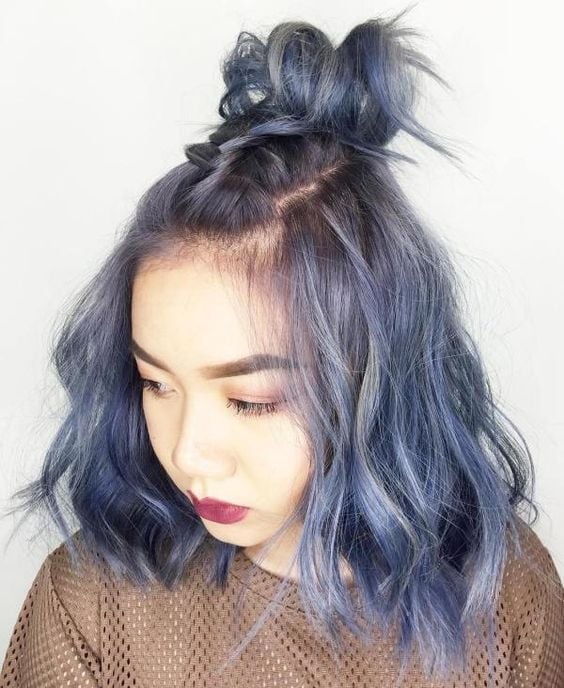
Ash blonde highlights sit cooler on dark brown hair than warm tones do, which makes them a smart choice for a lob that needs dimension without brass. This collarbone-length cut stays low on layers and skips bangs entirely, so the color does the work. To style, apply a texturizing spray to damp hair, then wrap sections around a large-barrel iron for loose waves. The middle parting keeps the shape balanced. Ask your colorist for a collarbone lob with subtle layers and ash blonde highlights. Expect a toning appointment every six to eight weeks to keep the highlights from shifting yellow.
13. Smooth Collarbone Bob With Layers
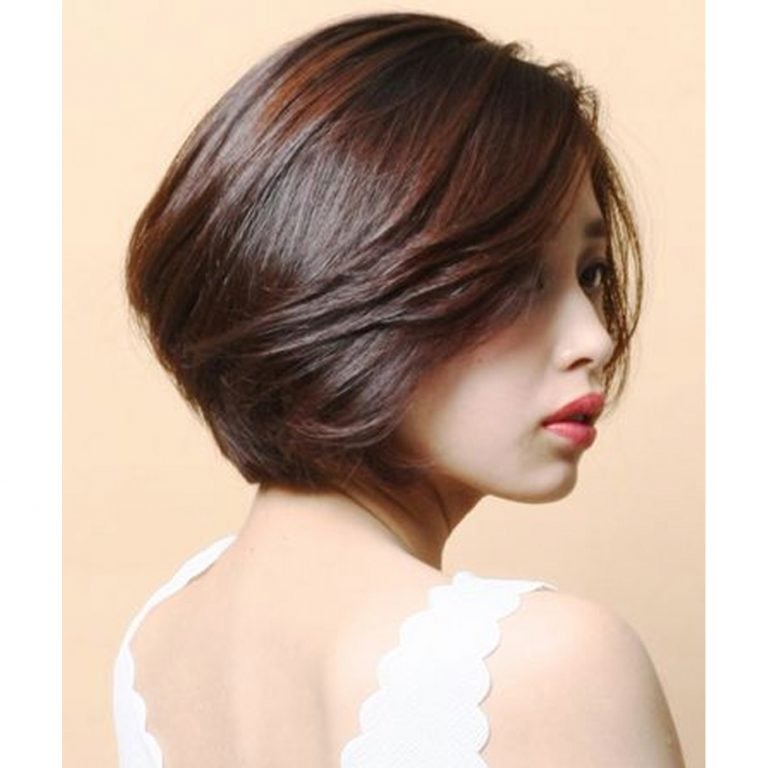
A textured shag demands movement; this collarbone bob takes the opposite route. Soft, blended layers are cut into straight, fine hair, then styled smooth with a side parting for a polished finish. Every split end and uneven section shows on sleek hair, so a trim every six to eight weeks keeps the shape clean. A smoothing serum and a paddle brush during blow-drying keep the surface glossy. Ask your stylist for a collarbone bob with soft blended layers and a side parting. It is less forgiving than a textured cut, but it delivers a clean silhouette that holds its shape all day.
14. Shoulder-Length Wolf Cut With Blunt Bangs

The wolf cut blends a shag’s volume on top with a mullet’s tapering through the back, and shoulder length gives it room to breathe. Blunt bangs cut straight across the forehead anchor the look, while wavy, medium-texture hair keeps the shaggy layers from falling flat. This cut suits round and square face shapes because the height at the crown and the narrower sides create a lengthening effect. Ask your stylist for a shoulder-length wolf cut with blunt bangs and a middle parting. A quick scrunch with your hands is all the styling this cut needs.
15. Chin-Length Bob With Blunt Bangs

How do you get a bob that looks deliberate? The answer is the bangs. A chin-length bob with blunt bangs that hit just above the brow line creates a graphic line. The dark brown hair is styled straight with a slight inward curve at the ends, and the middle parting keeps the shape symmetrical. It works best on fine, straight hair that does not fight the sleek finish. Ask your stylist for a chin-length bob with blunt bangs and a polished straight style. A flat iron and a smoothing serum are your tools, and the bangs need trimming every four to six weeks to stay sharp.
16. Short Copper Bob With Wispy Bangs

An ear-length bob with wispy bangs and a middle part is a relaxed, air-dried cut, not a precision style. The warm copper color turns a simple shape into a standout look. Fine, wavy hair starting at ear length suits this cut; the bob is easy to manage, and wispy bangs are low-maintenance. Ask your stylist for: short bob, wispy bangs, copper color.
This cut can air dry with a texturizing spray. The color needs regular care: copper fades fast, so a color-depositing conditioner every other wash buys you a week or two. A trim every six to eight weeks keeps the bob from losing its shape. A true copper tone is tricky to achieve at home, so a salon visit for the initial color is worth booking.
17. Short Textured Dark Brown Pixie
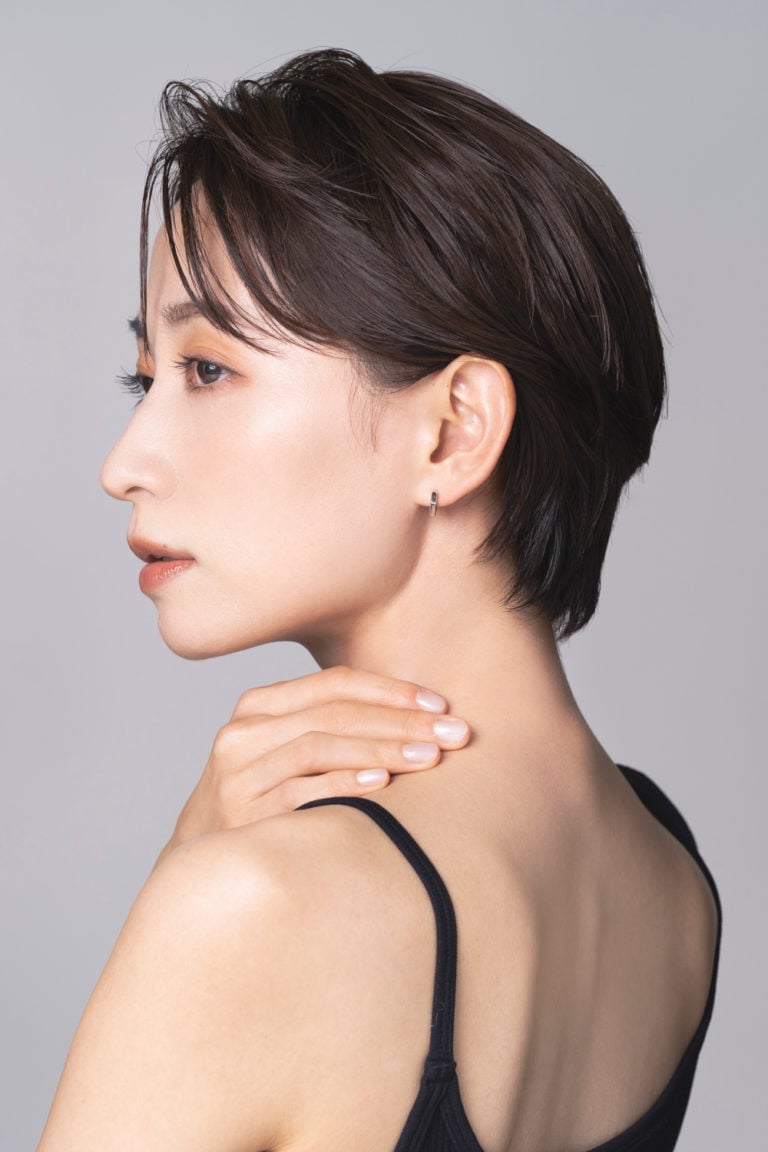
A dark brown pixie cut ending around the ears with short bangs and side-swept texture sounds simple, but the daily styling is where the work lives. Fine, straight hair of ear length is the right canvas; the pixie suits oval and square faces well. Ask your stylist for: short pixie, textured styling, short bangs. A wax or paste gives the piecey finish that keeps it from looking like a uniform helmet. The drawback: this cut needs a trim every four to six weeks or the shape goes soft fast, and there is no ponytail to hide behind.
18. Edgy Pixie With Choppy Spiky Styling
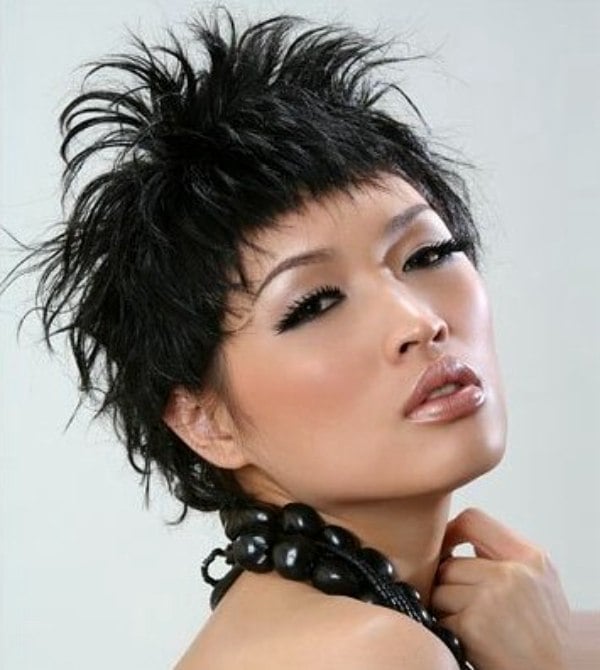
The effect lands as bold and modern, but it is a look that wears you. Ask your stylist for: edgy pixie, choppy spiky styling, short choppy bangs. A strong hold gel or wax is essential for the spikes, and a trim every four to six weeks keeps the shape. If your hair is fine or your mornings are rushed, this one is best left on the mood board.
19. Chin-Length Bob With Micro Bangs, Black
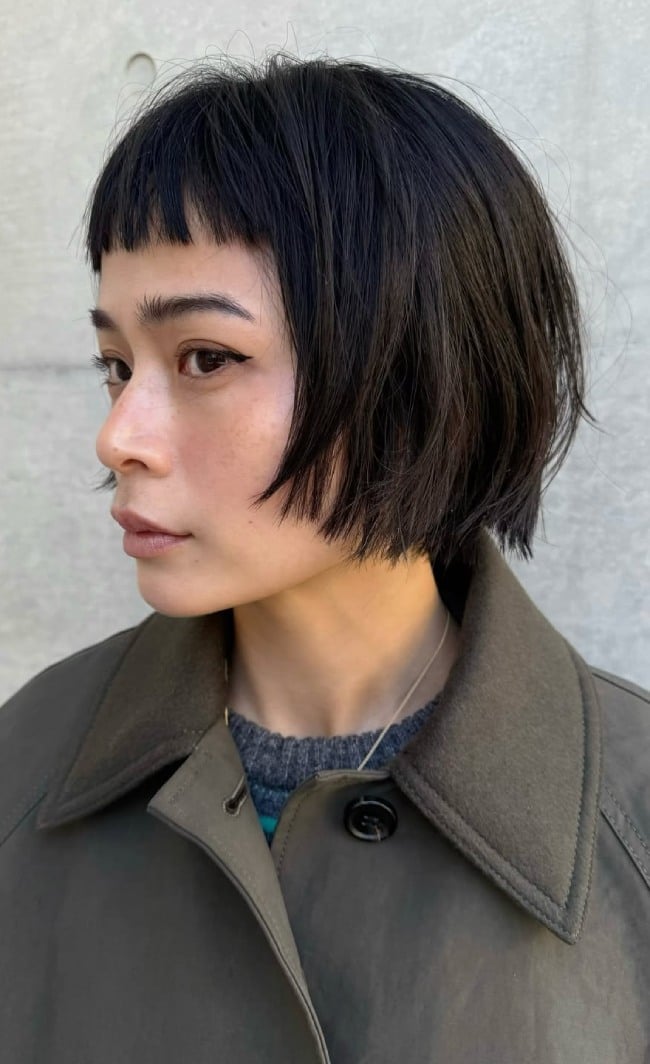
Fine, straight black hair of chin length is the natural fit, and the micro bangs work best on oval or heart face shapes. Ask your stylist for: chin length bob, micro bangs, side parting. This is a salon-only proposition: micro bangs are notoriously difficult to cut perfectly at home, and one uneven snip ruins the whole line. Air drying is fine, or a small round brush smooths the bob. Bangs need a trim every three to four weeks, so factor that rhythm into your calendar.
20. Undercut Bob With Blunt Bangs
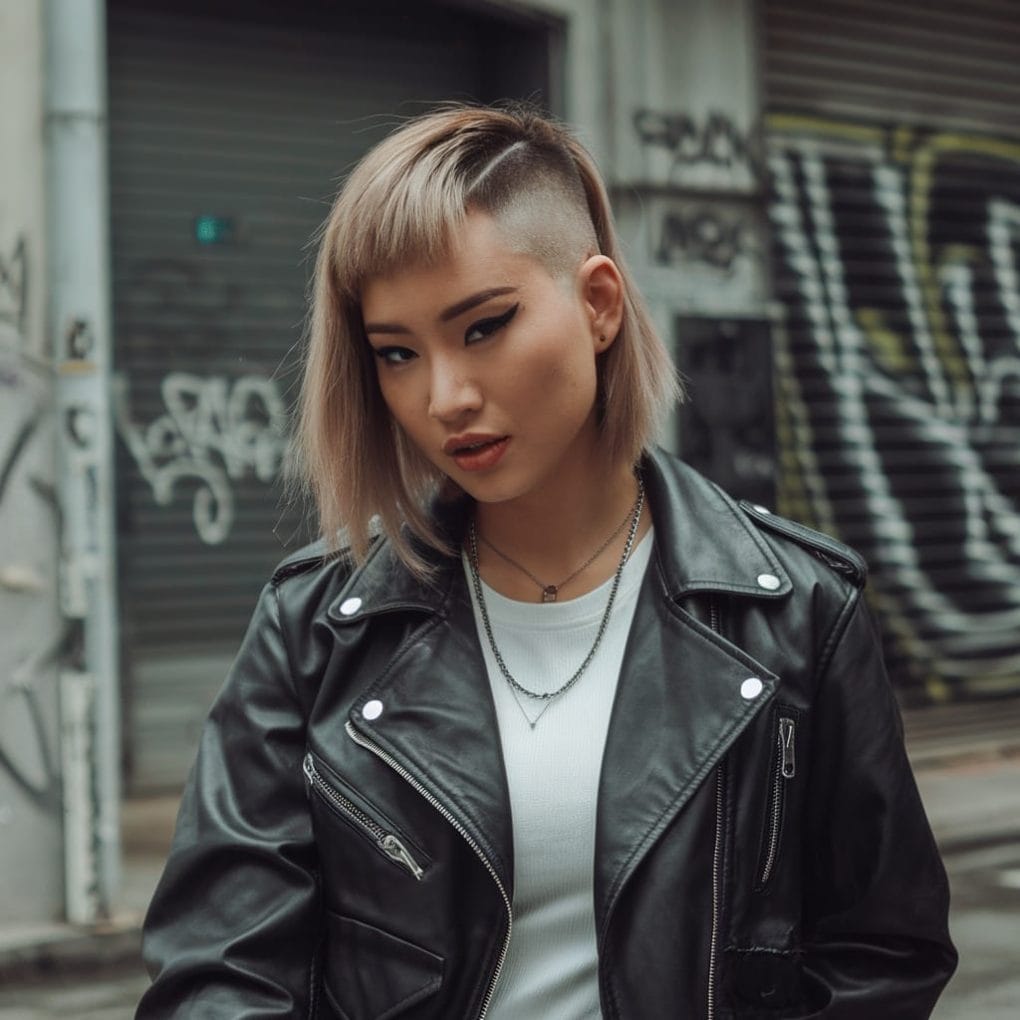
A collarbone-length blunt bob with an undercut on one side and blunt bangs creates a strong contrast: the bob is smooth and polished, while the undercut adds a hidden edge. The ash blonde base with dark roots and subtle lighter highlights emphasizes the cut’s sharp lines. Fine, straight hair of collarbone length suits this design, and the undercut adds an edgy element that works for most face shapes.
Ask your stylist for: undercut bob, blunt bangs, collarbone length. Style the bob with a blowout for a clean, sharp finish. The undercut requires regular trimming every four to six weeks to maintain the contrast, and the blunt bangs need a trim every three to four weeks to stay precise. The payoff is a fashion-forward look that needs no daily styling on the top layer.
21. Final Thoughts
Fine hair: keep one blunt baseline and skip heavy all-over layers. Thick hair: go layered and texturized so volume has somewhere to go.
- Trim blunt lines every six to eight weeks.
- Refresh layered cuts every ten to twelve weeks.
- Use texturizing spray on wavy or layered styles.
- Apply heat protectant before blow-drying or hot tools.
Find the cut that suits your hair’s natural texture and your lifestyle.

