
Auburn highlights are a warm, dimensional color technique that layers lighter copper or red tones over a darker base, giving hair depth without a full color commitment. The current shift is toward lived-in color: softer, face-framing placement and glossy natural texture, not chunky stripes.
This collection pairs 18 Auburn Highlights ideas with practical notes on base shade, technique, and tone, so you can find the right match for your length and texture. Whether your hair is fine and falls flat or you’re managing a visible grow-out line, there’s a version here that fits your routine and your stylist’s chair time.
1. Deep Dark Auburn With Subtle Lighter Highlights
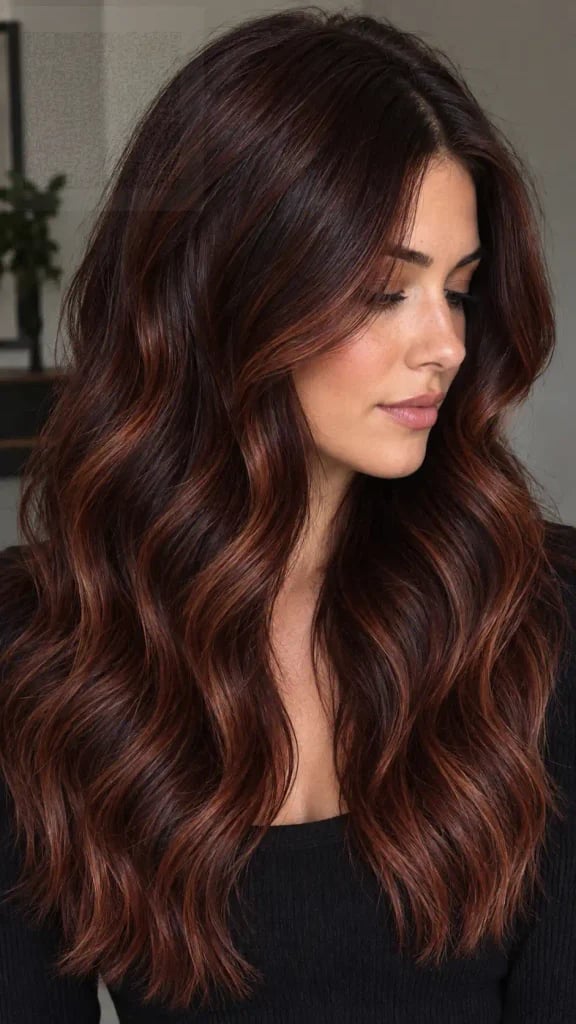
A rich dark auburn base does most of the work here, and the lighter auburn highlights stay close enough to the base that they read as depth instead of stripes. That is a placement decision, not an accident: the lighter pieces sit in a fine weave through the mid-back length, so the shift shows up in a middle part and in movement. Thick, straight hair carries this well because the cut is layered, which gives the blowout something to turn. Fine hair can take the same color but wants fewer, wider pieces. Ask your colorist for: dark auburn base with subtle lighter auburn highlights, layered cut. Book a toner refresh every six to eight weeks to keep the auburn from drifting warm-orange, and a trim on the same rhythm.
2. Soft Copper Base With Golden Auburn Tones

Does a copper base commit you to looking like a penny for six months? Not with golden auburn highlights running through it. The gold pieces break up the copper so it reads warm and lit rather than flat, and thick, wavy hair at mid-back gives both tones room to show in loose waves. A middle part suits most face shapes, and the length below the chin helps elongate a round face. Fine hair can wear the same color, but keep the highlights fine so they do not swallow the base. Ask your colorist for: soft copper base with golden auburn highlights, loose waves.
Styling is where copper earns its keep: a sea salt spray on damp hair, scrunched, then left alone. A trim every six to eight weeks keeps the layered shape from collapsing into a triangle, and a toning gloss every six weeks holds the gold from turning brassy.
3. Dark Brown With Striking Auburn Highlights
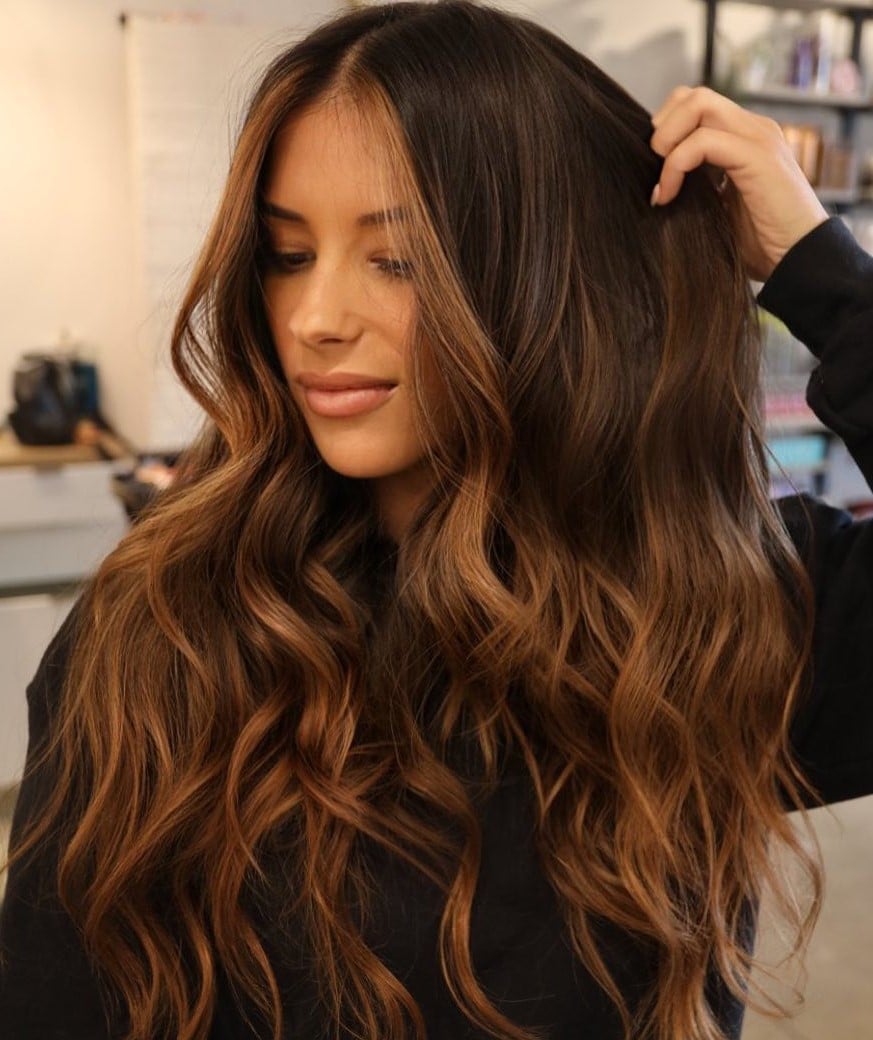
Striking auburn against a dark brown base is a contrast play, and the placement is what sells it: pieces woven through face-framing layers so the warmth shows at the front, then carried through mid-back length on thick, wavy hair styled in a wavy blowout. The middle part keeps it balanced. Ask your colorist for: dark brown base with striking auburn highlights. Bring these three things to the consultation:
- Show where you want the auburn to start, whether at the root or a few inches down.
- Say how strong you want the contrast against the dark brown base.
- Confirm the tone: red-leaning auburn or copper-leaning auburn.
4. Dark Brown With Visible Auburn Highlights
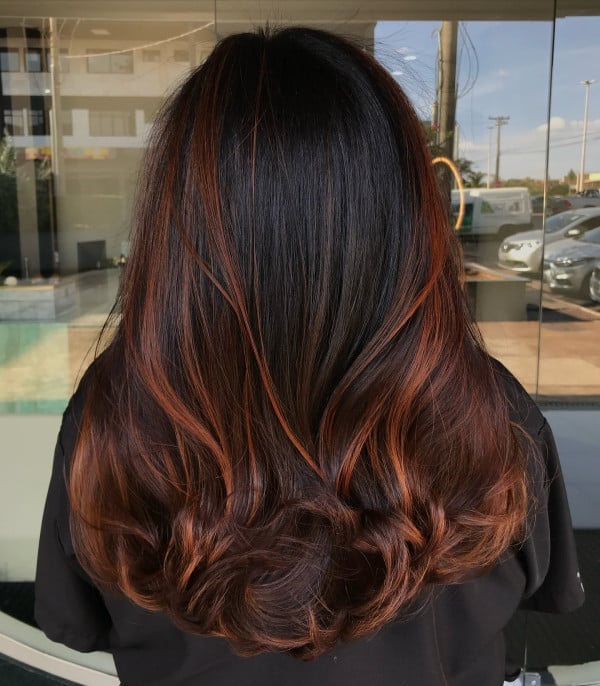
Visible auburn highlights through a dark brown base read as one warm dimension across mid-back length rather than a set of streaks, especially from the back. Thick, wavy hair holds this well because the loose waves break up the highlight lines as they move. Fine hair can carry the same color with fewer, softer pieces. Ask your colorist for: dark brown base with visible auburn highlights, layered cut.
Upkeep is mostly about tone. Auburn shifts warm as it fades, so a toning gloss every six to eight weeks keeps the red from going rusty. Styling is a choice between a diffuser on damp hair for texture or a round brush for a smooth blowout, and a trim every six to eight weeks keeps the layered ends from looking thin.
5. Brunette With Prominent Auburn Highlights
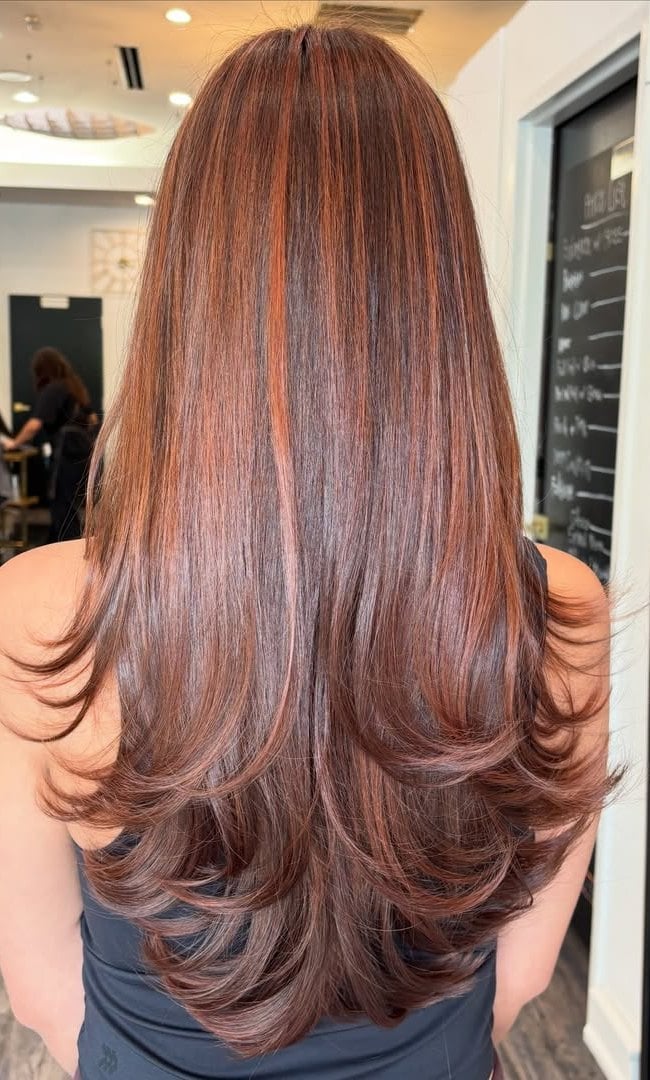
Prominent auburn highlights are the louder sibling of the subtle version: same brunette base, but the pieces are wider and the contrast is meant to be seen from across a room. On thick, wavy hair at mid-back, long textured layers give the color somewhere to travel, and a middle part keeps the whole thing symmetrical. For a hint of warmth, ask for fine pieces and let the base lead. Ask your colorist for: brunette base with prominent auburn highlights, long textured layers.
Long layers and prominent color need the same schedule: a trim every six to eight weeks to keep the shape, and a toning gloss every six to eight weeks to keep the auburn from drifting orange. A volumizing mousse at the roots gives the blowout lift without weighing down the mid-lengths.
6. Auburn Base With Lighter Auburn Highlights
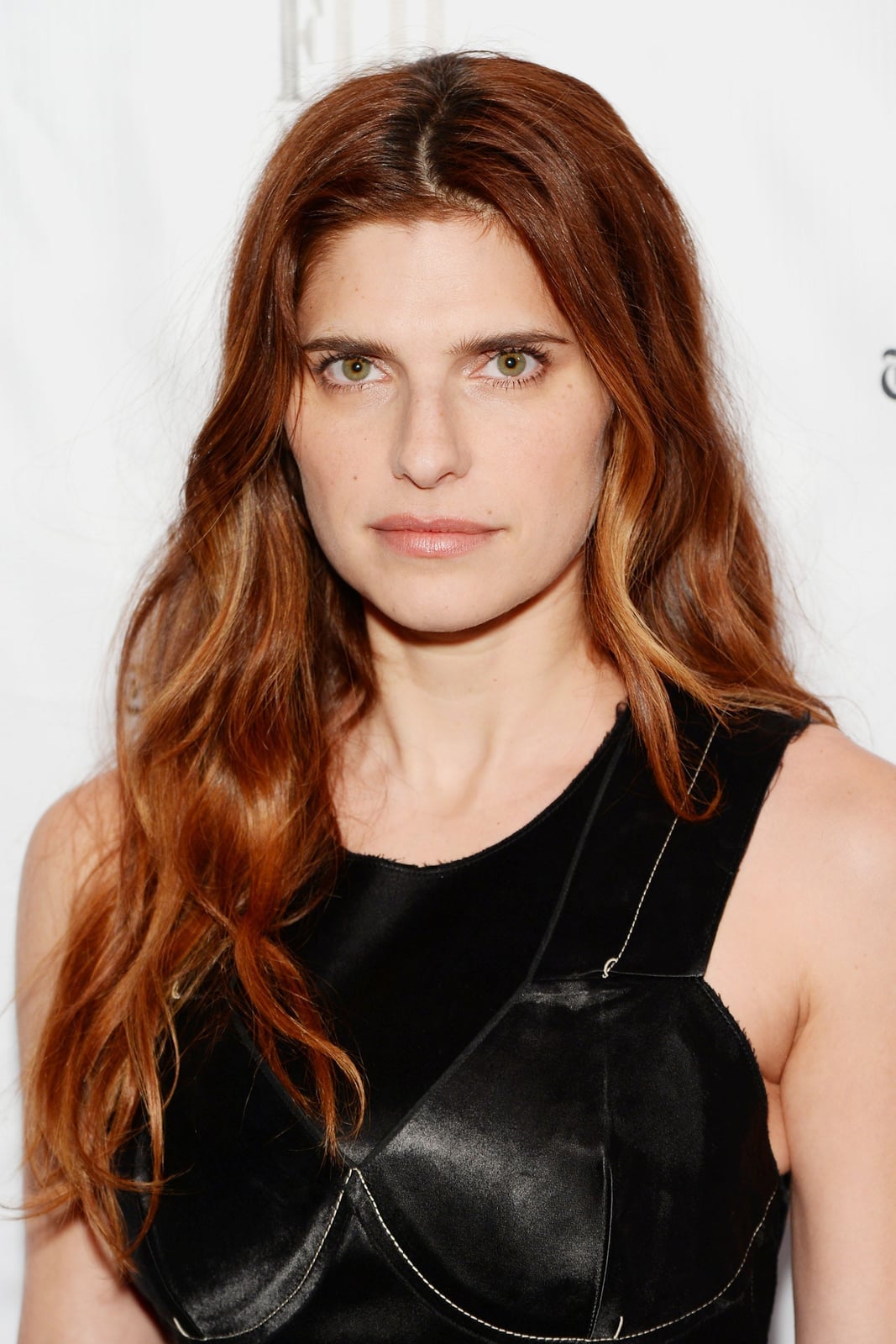
What makes auburn read warm instead of muddy? Contrast, and this mid-back cut has it: a rich auburn base with lighter auburn highlights running through thick, wavy hair worn in loose waves from a middle part. The lighter pieces do the lifting, so the base stays deep instead of flat. Ask your colorist for: auburn base with lighter auburn highlights. It lands hardest in fall and winter, when the warmth has somewhere to go against gray light and dark coats. Thick, wavy hair at mid-back carries the dimension best; finer hair can take the same tones in a softer placement. Middle parts and loose waves suit most faces. Work a texturizing spray through damp waves, and book a trim every six to eight weeks.
7. Rich Auburn With Glossy Finish
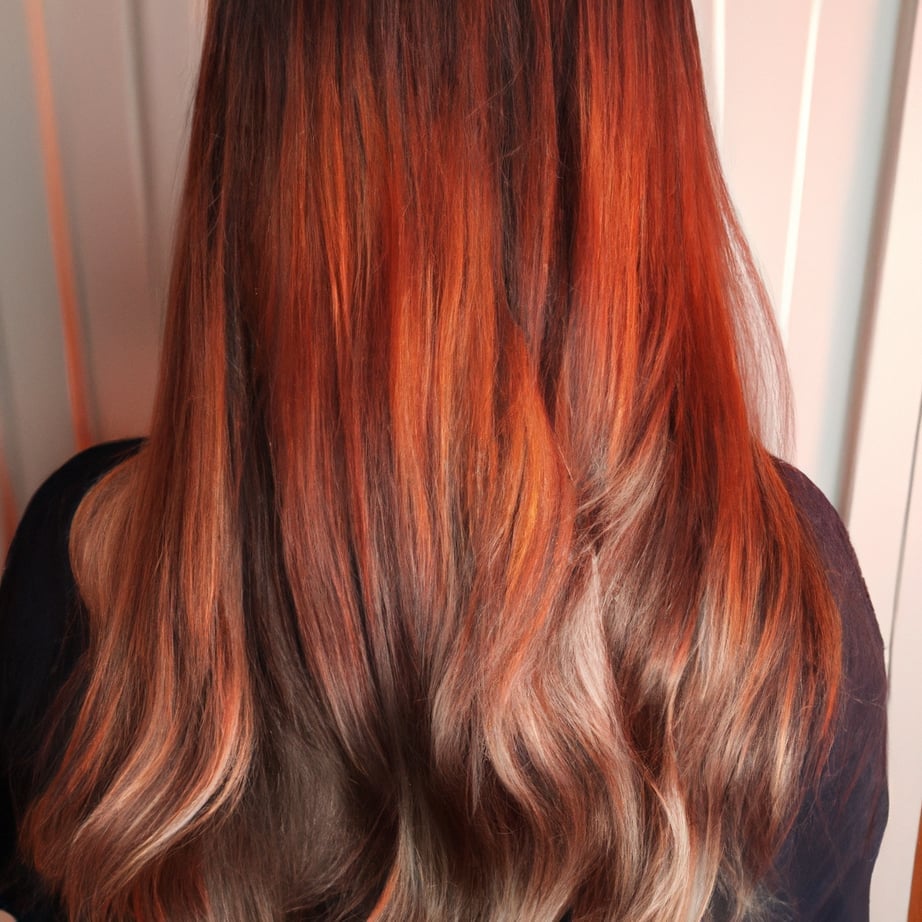
The shine is the point here, and shine is the first thing to go when the color starts to dull. This is a rich auburn base with lighter auburn highlights, cut in face-framing layers with curtain bangs and blown out glossy over thick, wavy mid-back length. Ask your colorist for: rich auburn base with lighter auburn highlights. Ask your stylist for: face-framing layers, curtain bangs. A round brush and a shine serum get you close at home, but the mirror finish is a salon blowout’s work. The trade-off: gloss fades fastest on the mid-lengths, so plan a toning gloss every six to eight weeks to keep the reflection. Skip it if you want low-maintenance hair you can air-dry and forget; curtain bangs need a blow-dryer and a round brush most mornings.
8. Dark Auburn Base With Dimensional Highlights
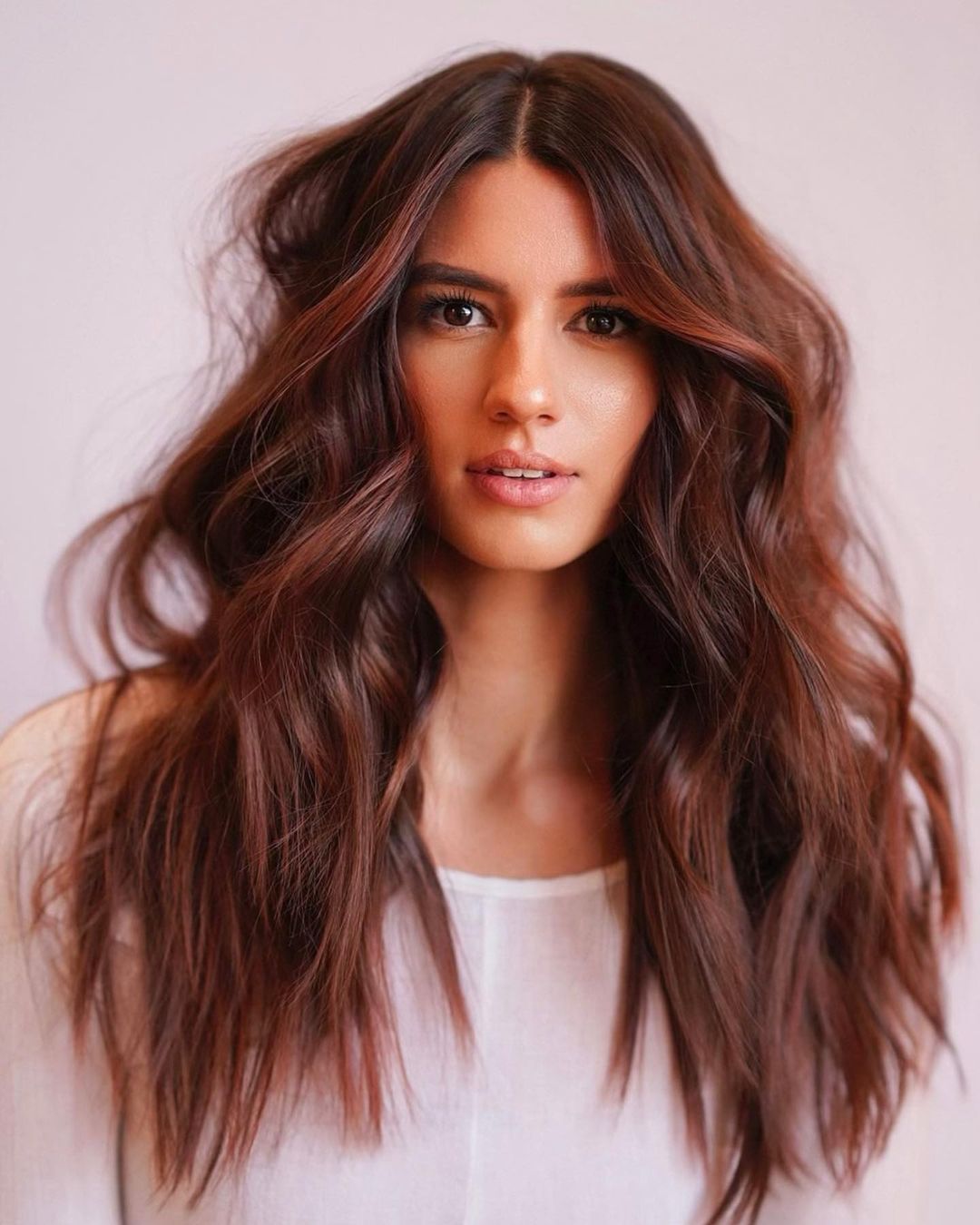
Depth comes from the gap between the base and the highlights, and this pairing keeps that gap wide: a dark auburn base with lighter auburn highlights, mid-back length, thick and wavy, blown out into soft waves from a middle part. Ask your colorist for: dark auburn base with lighter auburn highlights. Ask your stylist for: a wavy blowout.
It suits thick, wavy hair that already holds volume, and the middle part plus length below the chin works on a round face. Finer hair can take the same tones, though the highlights may need a lighter hand so the dimension does not overwhelm density. Upkeep is the usual rhythm: a trim every six to eight weeks, a heat protectant before any blow-dryer, and a toning gloss when the lighter pieces start drifting brassy.
9. Mid-Back Layers With Dark Auburn Dimension
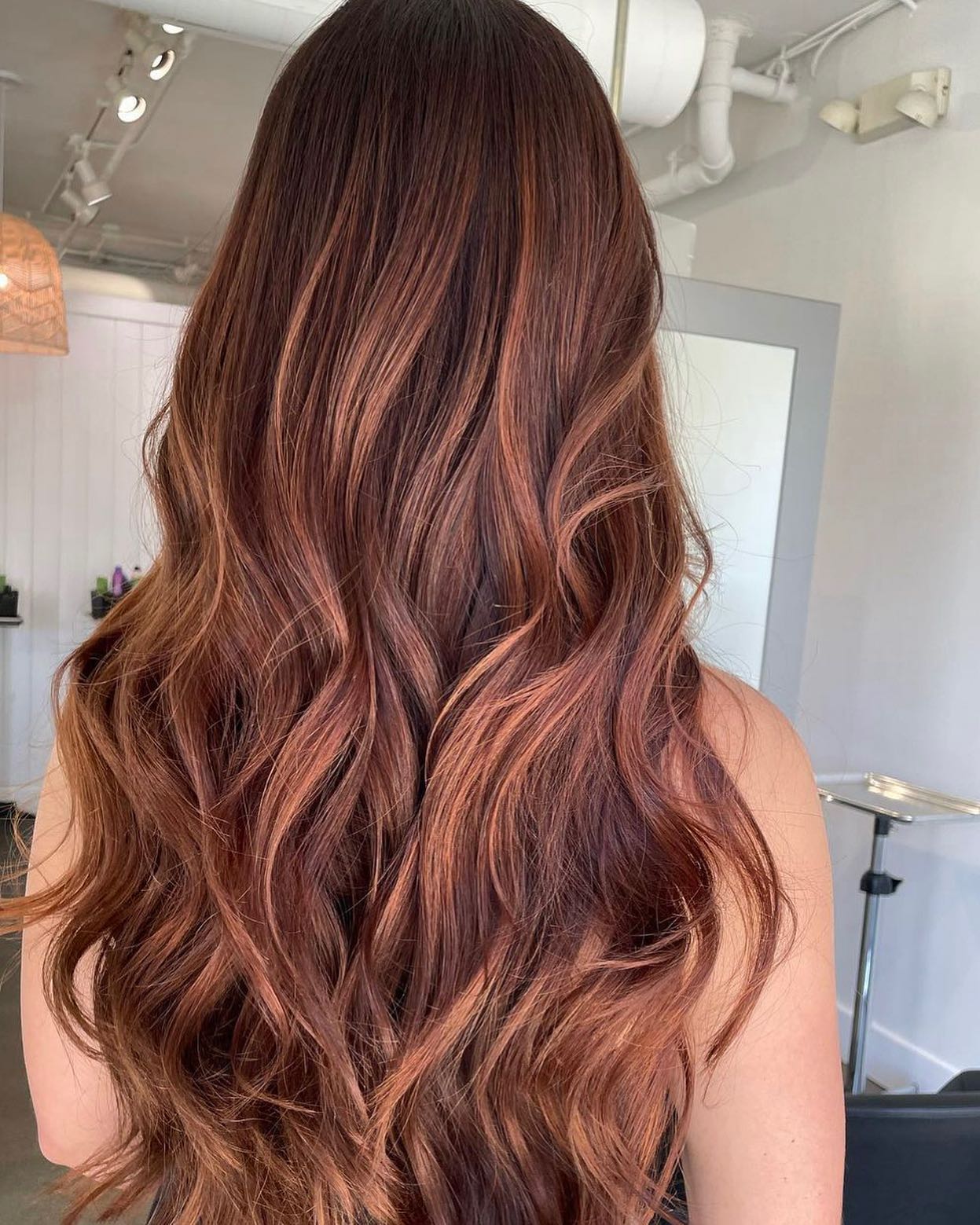
Dimension like this is built in sections, not painted on top. The colorist weaves lighter auburn highlights through a dark auburn base, working in fine slices so the two tones sit side by side on thick, wavy mid-back hair. Ask your colorist for: dark auburn base with lighter auburn highlights. The layered cut does the rest: a wavy blowout pushes the lighter pieces forward so the dimension shows from the back as clearly as the front. Layers need a trim every six to eight weeks to stay shaped, and a lightweight spray keeps the waves separated between appointments.
10. Dark Auburn With Warmer Auburn Highlights
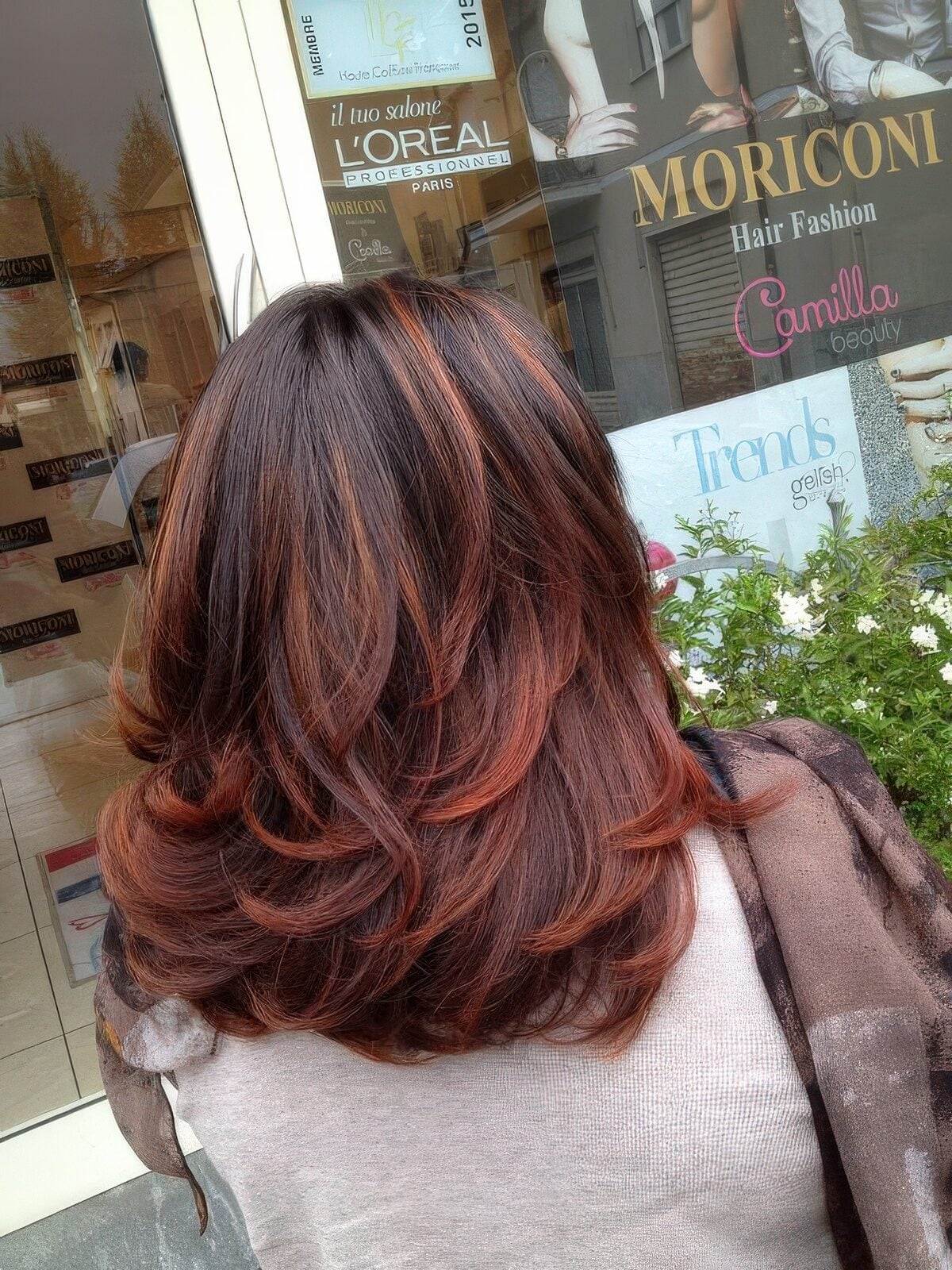
How long will warm auburn highlights actually stay warm? Longer than most reds, shorter than you would like. This is a dark auburn base with lighter, warmer auburn highlights through layered, thick, wavy mid-back hair worn in loose waves. Ask your colorist for: dark auburn base with lighter warmer auburn highlights. The warmer pieces sit on top of a cool-leaning base, so when they fade they drift toward orange before they go flat. A toning gloss every six to eight weeks pulls them back in line, and a color-safe wash schedule slows the slide. Layers need a trim on the same rhythm. A curl cream on damp hair defines the waves without weighing them down.
11. Deep Auburn Base With Dimensional Highlights
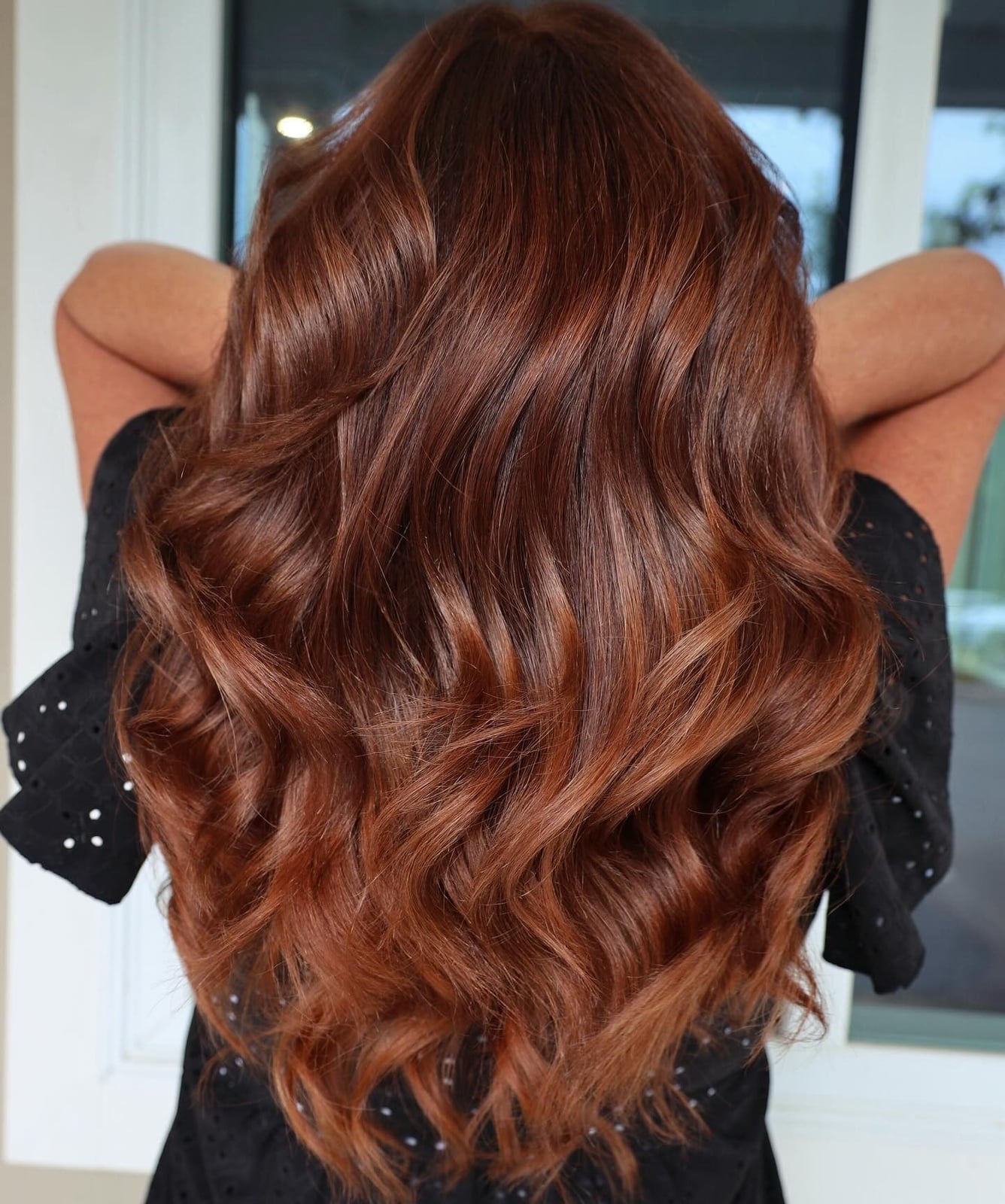
A deep auburn base with lighter auburn pieces running through the mid-back length gives the color its depth: the lighter strands sit a shade or two above the base, no more, and that restraint is the whole design. Thick, wavy hair in an air-dried finish holds that dimension without any styling help. It works on most face shapes, and it needs mid-back length to show the gradient at its best. Ask your colorist for: deep auburn base with lighter auburn highlights, air-dried waves. A few things worth saying out loud at the consult:
- Lighter pieces kept within two shades of the base
- Placement through the lengths, not just the top layer
- Enough depth at the root to carry the dark auburn
12. Auburn Base With Blonde Highlights
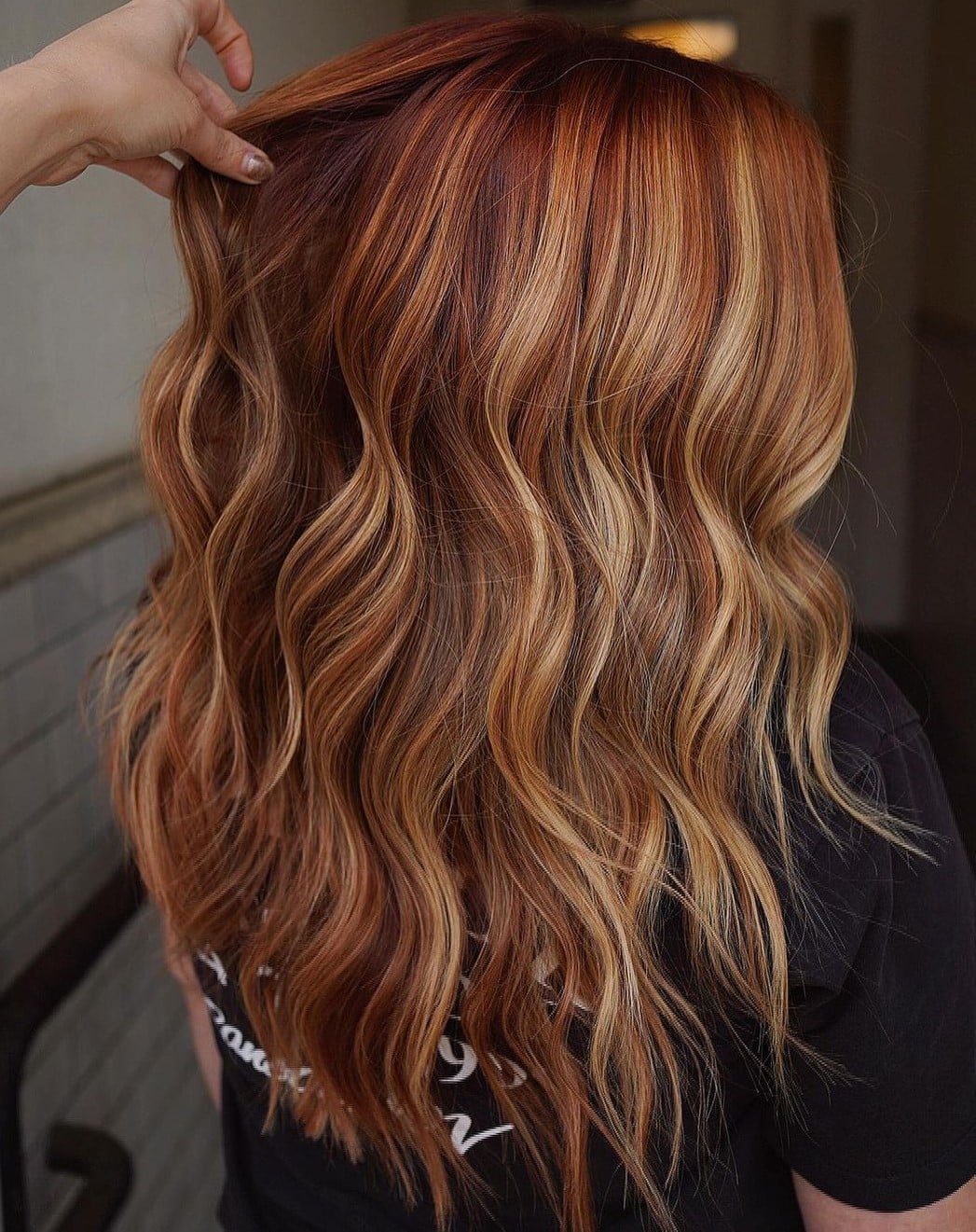
All-over auburn keeps every strand in one family; an auburn base with blonde highlights does not, and that is the point. The blonde pieces sit far enough from the base to read clearly against it, which gives thick, wavy hair at mid-back more contrast than a single-tone auburn ever will. Pick this if you want visible lift through a wavy blowout and a middle parting. Stay with all-over auburn if you would rather the color blend quietly and the cut do the talking. Ask your colorist for: rich auburn base with blonde highlights, wavy blowout.
13. Shoulder Length Auburn With Copper Highlights
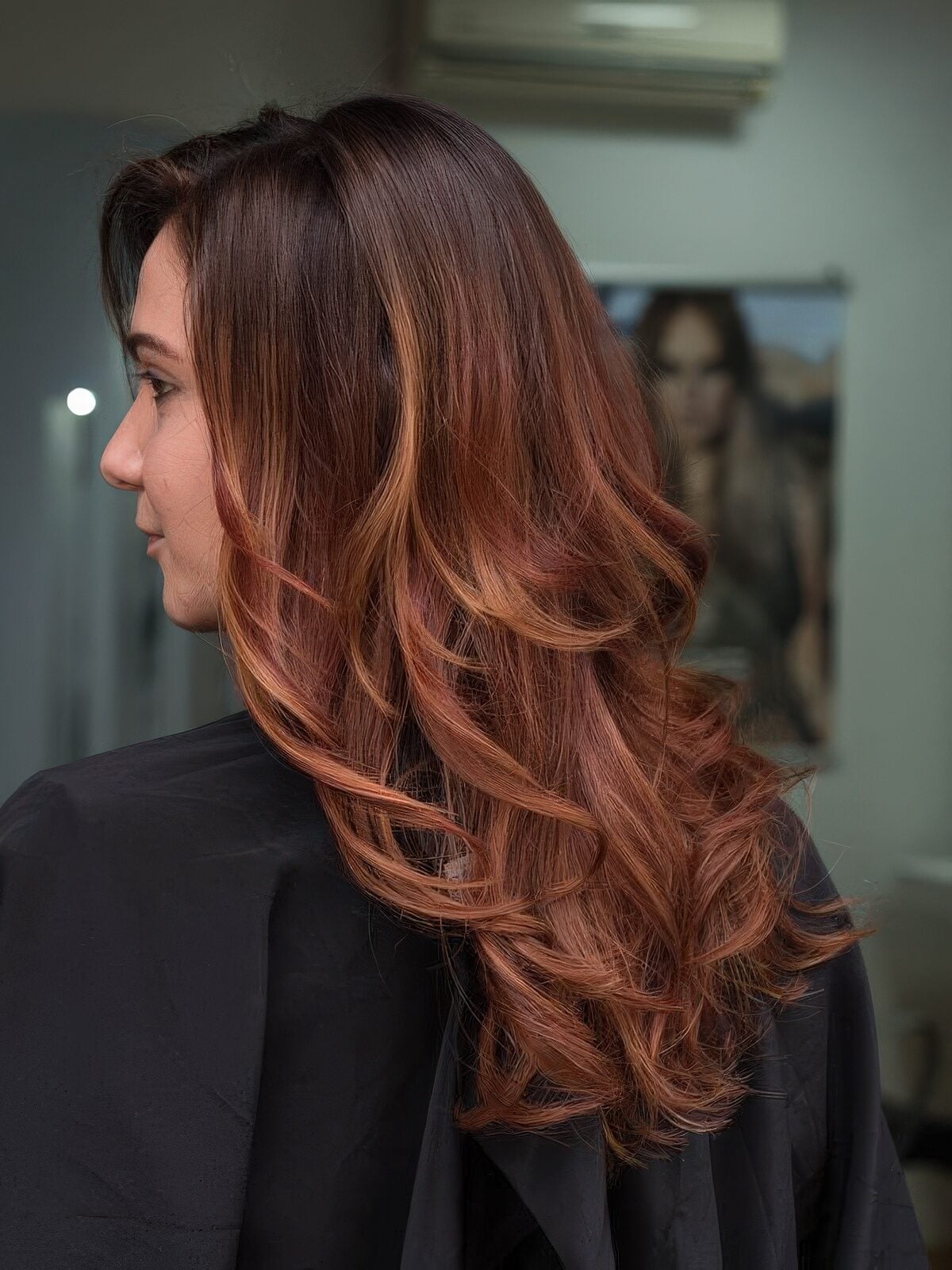
Will copper pieces fight an auburn base? Not when the base is warm already. Copper highlights sit close to auburn on the color wheel, so the two blend into one family with extra glow, and shoulder-length wavy hair in a blowout carries that glow around the head. A side parting gives oval and heart shapes a clean line from the layers falling past the jaw. Skip it if you want zero warmth in your color. Ask your colorist for: auburn base with copper highlights, shoulder length layers.
14. Collarbone Length Auburn With Curtain Bangs
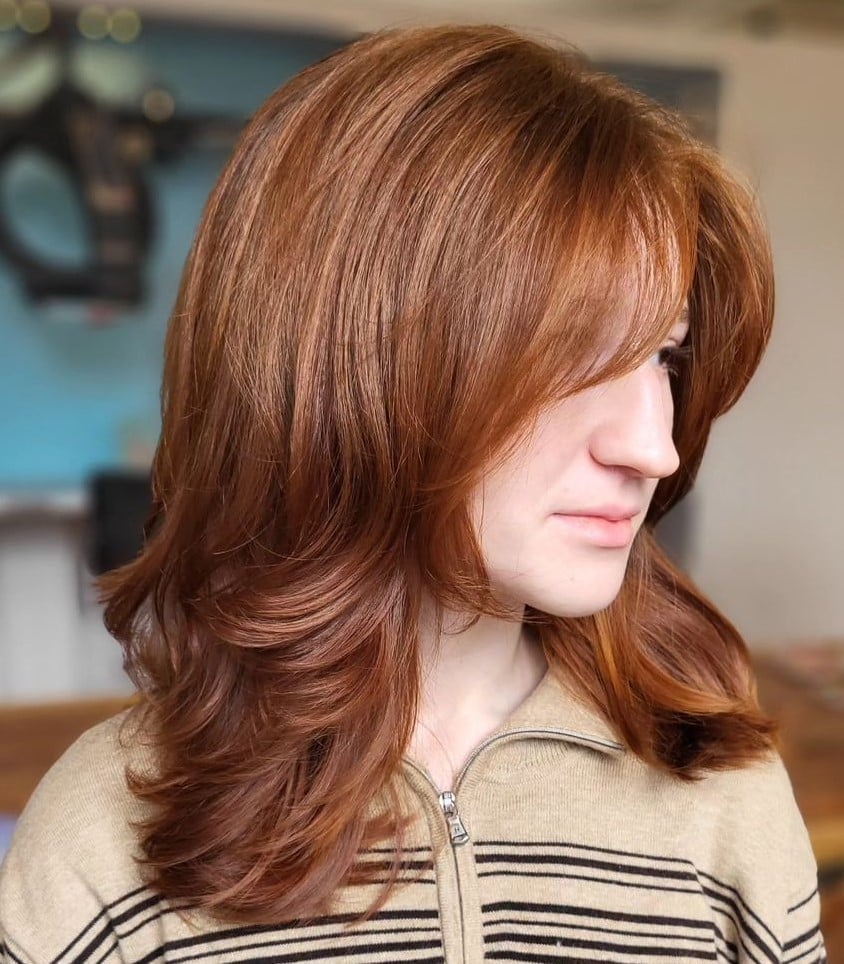
Subtle lighter auburn highlights on a rich auburn base do their best work on medium-density wavy hair cut to the collarbone, because the color sits close enough to the base to look painted on rather than placed. The technique is a foil or balayage service that leaves the root area a shade deeper, then a gloss over everything to marry the pieces. Curtain bangs get cut last, once the color is done, so the stylist can see where the lighter pieces land around the parting. A middle parting splits them evenly and softens round and heart faces.
Ask your colorist for: auburn base with lighter auburn highlights, collarbone length layers, curtain bangs. Expect roughly two to three hours for the color and gloss, plus the cut. Wavy hair at this length usually needs a trim every six to eight weeks to keep the bangs from dragging, and a round brush is the tool that keeps them swept back instead of hanging straight.
15. Medium Brown With Face-Framing Auburn Highlights
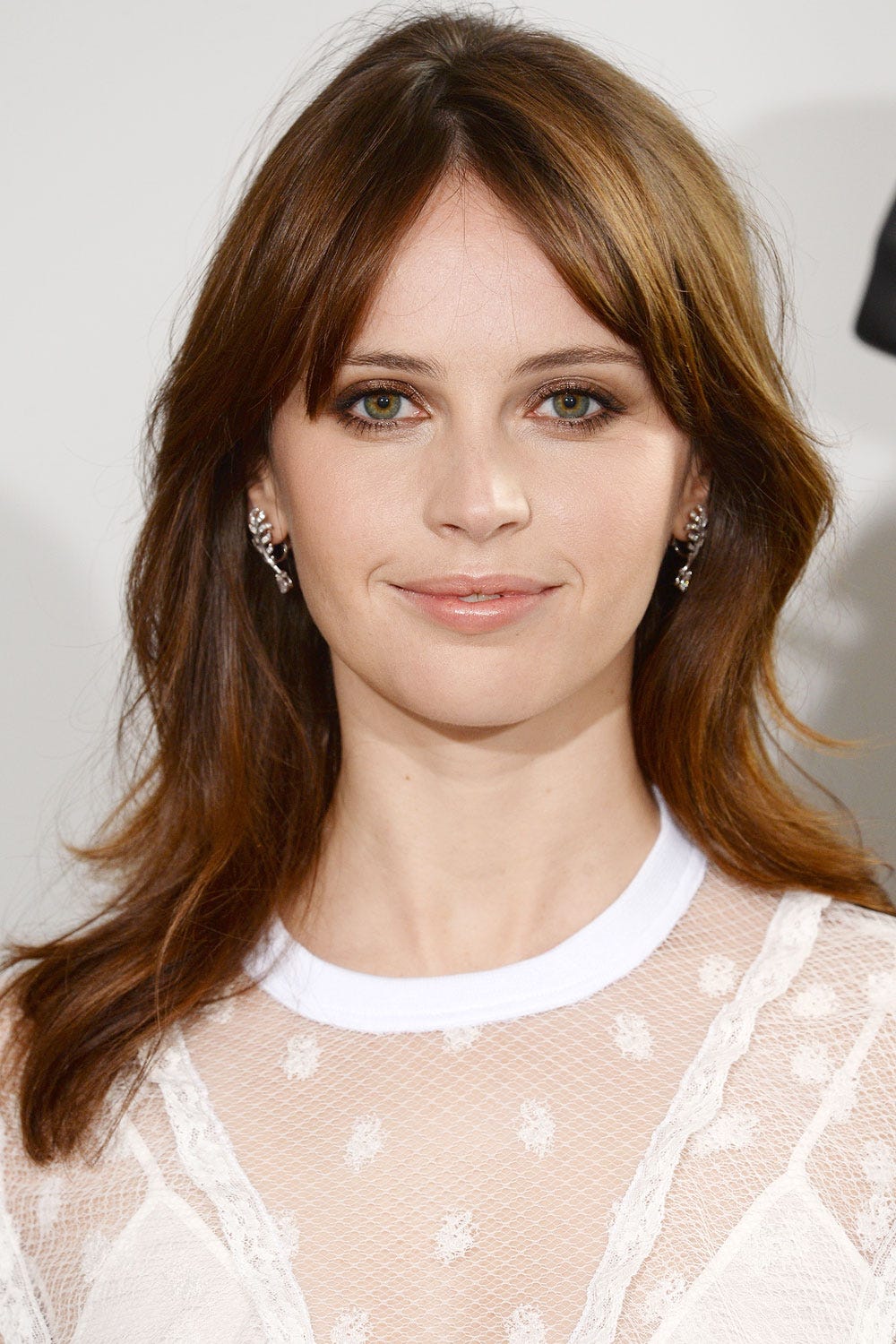
Face-framing auburn highlights on a medium brown base earn their keep from September onward: the warm pieces catch low afternoon light, and fine wavy hair at the collarbone gets visible dimension without going lighter all over. Curtain bangs and soft layers keep the front from looking heavy, and a middle parting suits most face shapes. This is the version to book before a fall event, when you want the color noticed in photographs. Ask your colorist for: medium brown base with auburn highlights, collarbone length layers, curtain bangs.
16. Chin Length Bob With Dark Brown Auburn Highlights
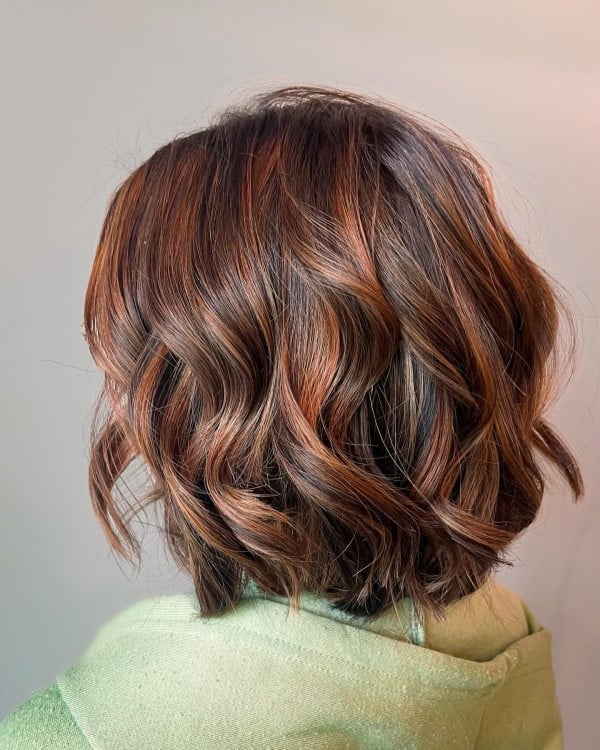
A chin-length bob with a dark brown base and auburn highlights lives or dies by its color dimension, because the cut itself gives you nowhere to hide. Medium density waves need a cream or mousse worked through damp hair and a diffuser to keep the loose pattern from collapsing into a pyramid by lunch. Ask your colorist for: dark brown base with auburn highlights, chin length wavy bob. The auburn pieces sit close to the base, so they fade quietly and unevenly over six to eight weeks, and a chin bob needs a trim every four to six. Salon work both times.
17. Ear Length Wavy Auburn Bob
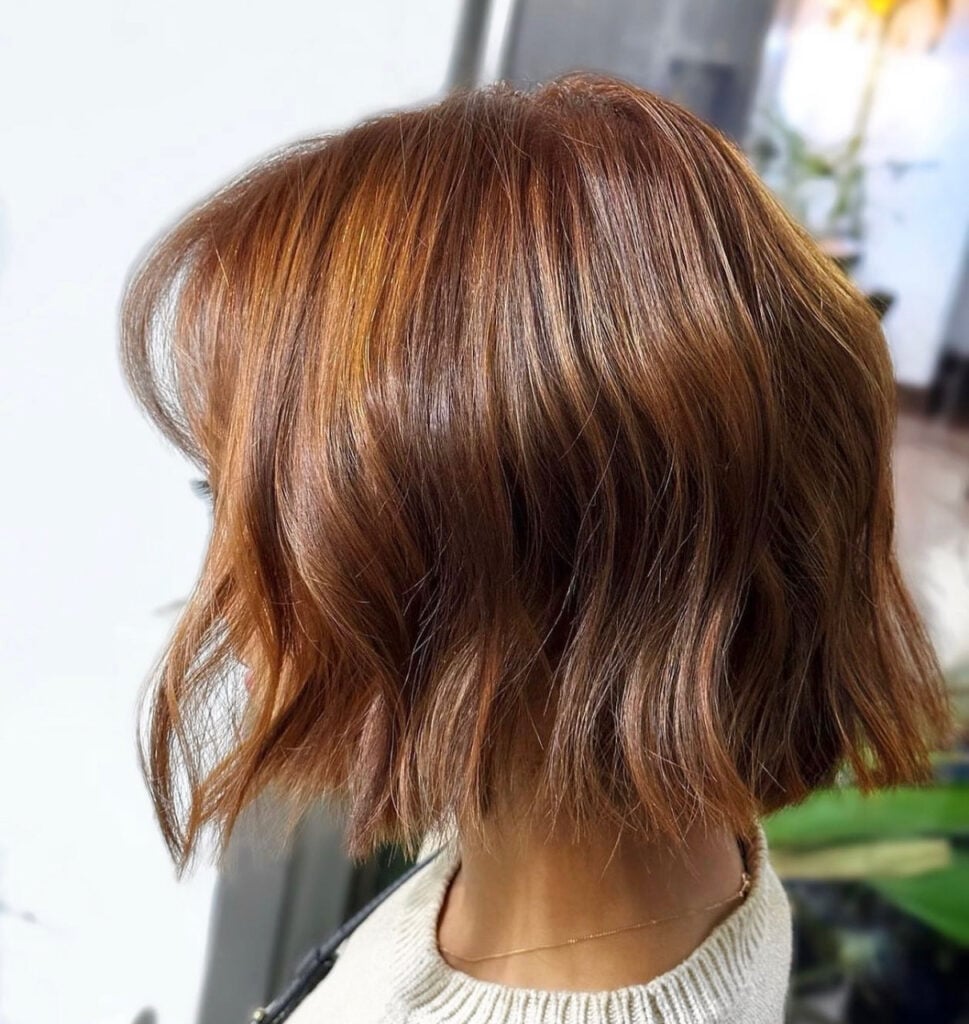
How long does auburn hold at ear length before the tone shifts? Shorter hair grows out fast, and a bob this short puts the color line where it shows. An auburn base with lighter auburn highlights woven through medium wavy texture keeps the surface moving, so grow-out blends in as depth instead of a stripe. Ask your colorist for: auburn with lighter auburn highlights, ear length wavy bob.
Plan on a toning gloss every six to eight weeks to keep the auburn from drifting orange, and a trim every four to six weeks to hold the ear-length line. A texturizing paste on damp waves gives the textured finish without weighing it down. The cut is the demanding part: half an inch of growth changes the silhouette, so the salon rhythm is real.
18. Chin Length Auburn Bob With Curtain Bangs
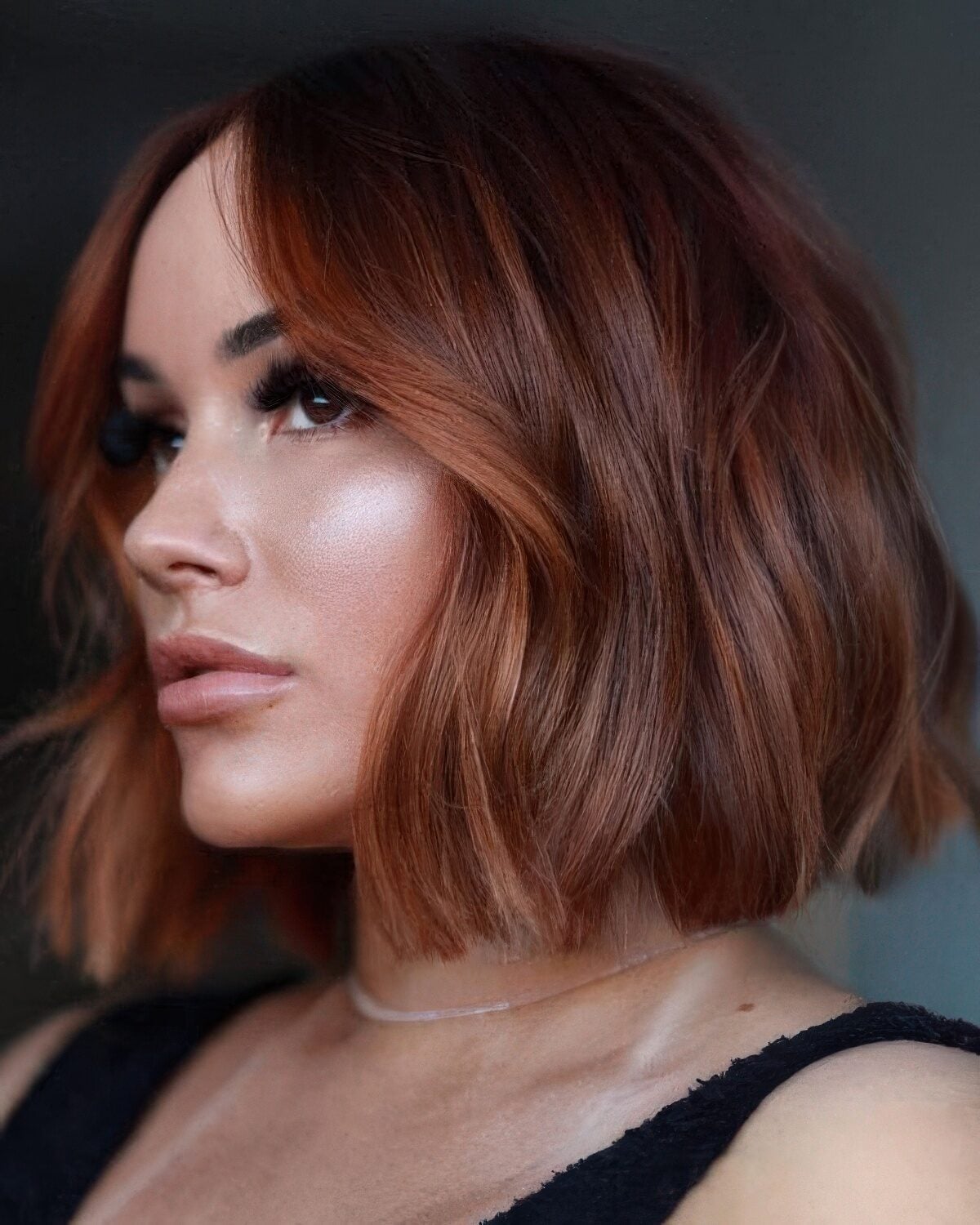
A chin-length bob in an auburn base with lighter auburn highlights gets its dimension from the contrast between the two, and the curtain bangs give that contrast a place to show. Fine wavy hair holds the soft blowout shape with a round brush and a little heat protectant. Ask your stylist for:
- auburn base with lighter auburn highlights
- chin length bob
- curtain bangs
Book the bob and bangs trim every four to six weeks, and ask the colorist to keep the lighter pieces below the root line.
19. Final Thoughts
For a natural, blended effect, choose highlights that are only 1-2 shades lighter than your base. For more contrast, go up to 3-4 shades lighter, especially with darker bases. And remember, the right auburn highlight is the one that makes you feel like yourself, just with a bit more fire.
- Maintain color vibrancy with sulfate-free shampoos and conditioners.
- Use a color-depositing conditioner weekly to refresh auburn tones.
- Protect hair from heat styling with a thermal protectant spray.
- Schedule salon toning appointments every 6-8 weeks to combat fading.
Auburn highlights add warmth and depth year-round.

