
Feed-in braids are a protective style where synthetic or human hair is fed into natural hair as the braid progresses, creating a seamless, natural-looking result. The trend for 2024-2028 leans into soft face-framing layers, curtain bangs, lived-in color, and glossy natural texture, moving away from flat-ironed poker-straight ends and chunky highlights.
This collection of 20 feed-in braids covers the range from low-upkeep shoulder-length styles to high-drama long looks with contrasting curly ends. It is for anyone with natural hair from fine to coily who wants a protective style that does not sacrifice personality. If your biggest struggle is a visible grow-out line or a fringe that will not sit, these ideas offer a solution.
1. Long Black Feed In Braids With Curly Ends
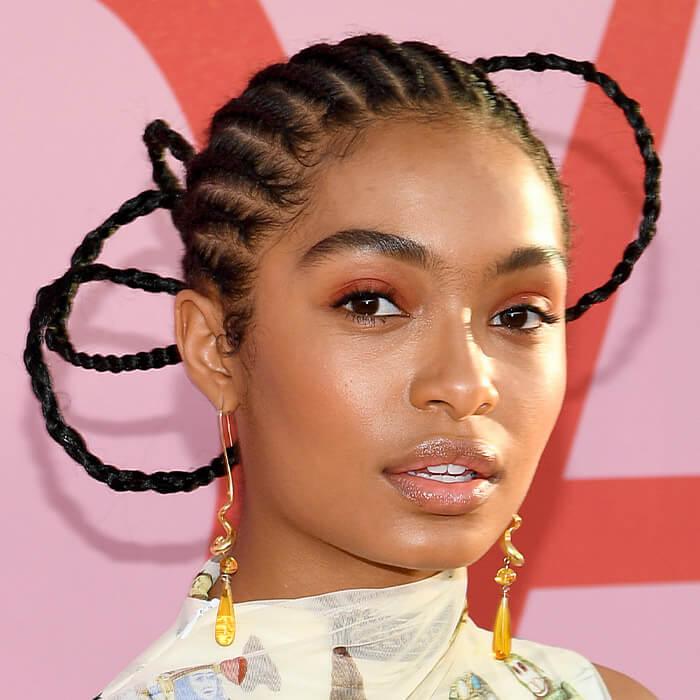
The side parting and the curly ends do most of the talking here, softening what is otherwise a very structured braid pattern. Long black feed in braids with curly ends suit anyone with thick, wavy hair and an oval or heart-shaped face, and the style needs at least mid-back length to let those tendrils swing properly. Ask your stylist for: long feed-in braids, side part, curly ends, baby hairs. The baby hairs are the detail that pulls the whole thing together, so keep them defined with a light pomade, and plan to trim the curly ends every four to six weeks so they stay springy rather than frayed.
This is a salon-only style, and the braiding alone can take several hours depending on how intricate you want the feed-in pattern to be. The result is a look that stays neat without being rigid, which is why it works for both everyday wear and special occasions. The wavy texture of the ends gives it movement that straight braids simply do not have, and the black color keeps it versatile enough to pair with anything.
2. Curved Feed In Braids Into High Ponytail
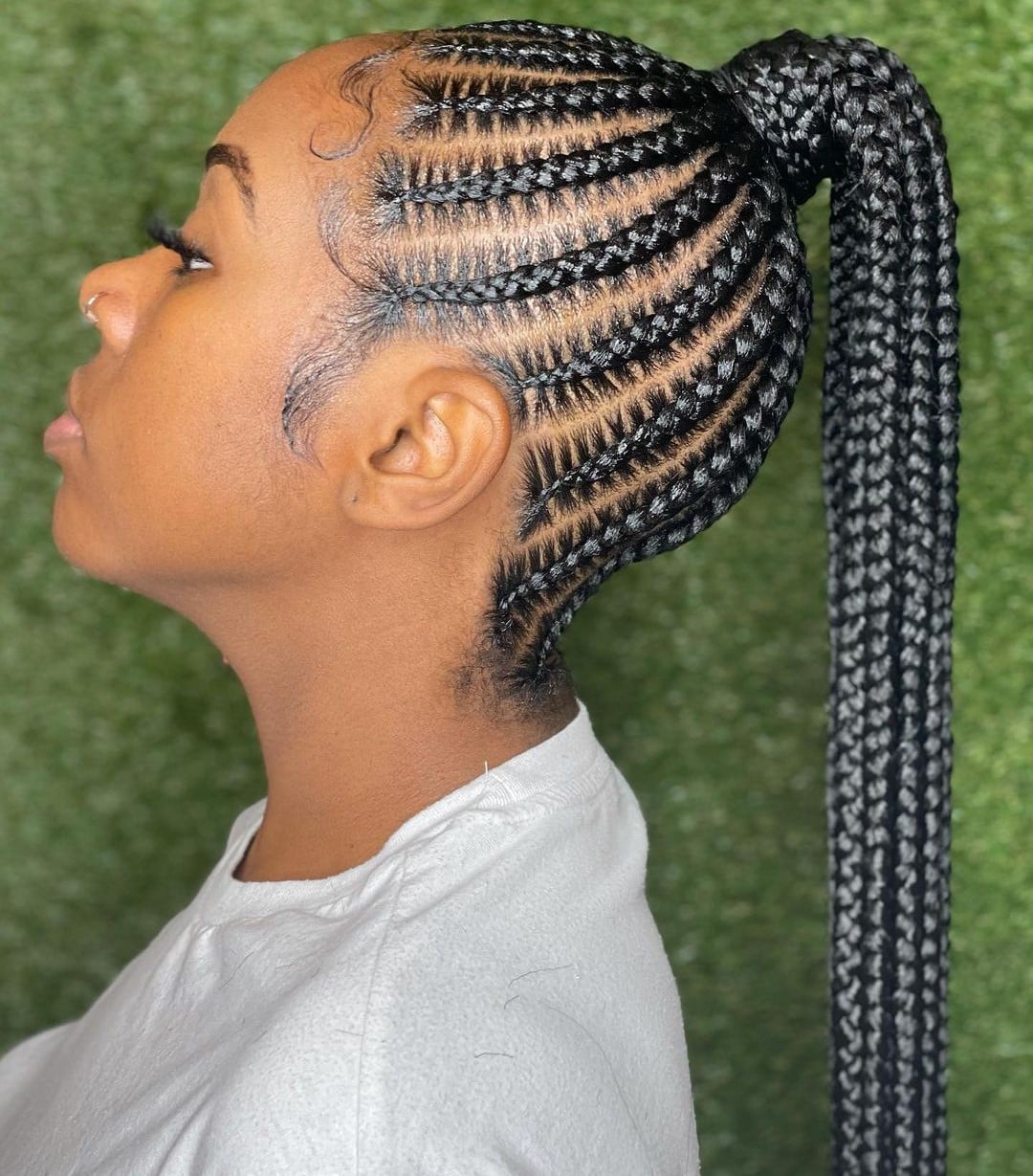
The curved feed-in braids sweep from the forehead toward the nape, then gather into a high ponytail that keeps every line clean and deliberate. Built on a middle parting, the black braids carry grey streaks that add depth without turning the style busy, and the straight, thick texture holds the curved shape well. Ask your stylist for: feed-in braids in a curved pattern into a high ponytail, black with grey streaks. The ponytail needs extra security, so have additional braids or hair ties wrapped around the base to keep it from drooping through the day. The grey streaks will fade with washing, so touch them up at the salon when they start looking dull, usually every few weeks depending on how often you cleanse.
3. Mid-Back Platinum Blonde Box Braids
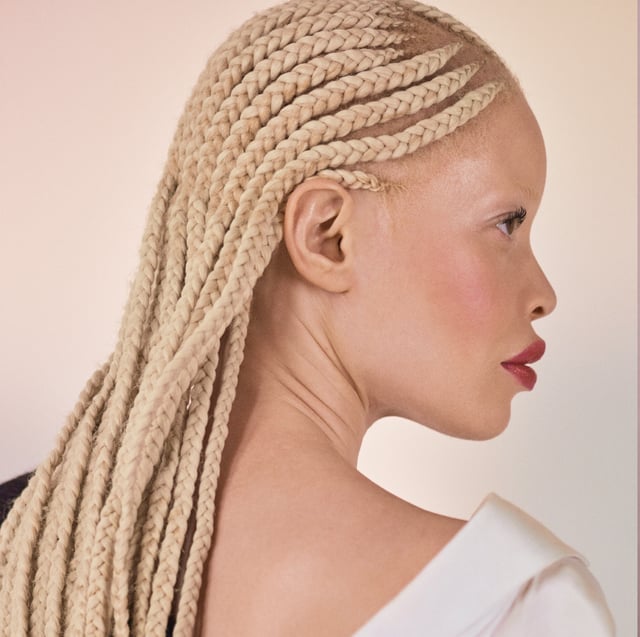
Platinum blonde box braids are not the low-key cousin of black braids; they are the loud, high-maintenance version that demands attention and a color-safe routine. The mid-back length and uniformly thick, straight braids give it a clean, precise line, and the middle parting keeps the scalp looking neat. Ask your colorist for: mid-back length platinum blonde box braids, middle part. If you are going to do this, be ready for the upkeep: a color-depositing conditioner keeps the blonde from turning brassy, and the ends need trimming every six to eight weeks to avoid fraying. This is a fashion-forward choice for events and everyday wear, though the bright tone will show every bit of dust and product buildup, so plan for more frequent washing than you would with darker braids.
4. Ombre Feed In Braids With Decorative Rings
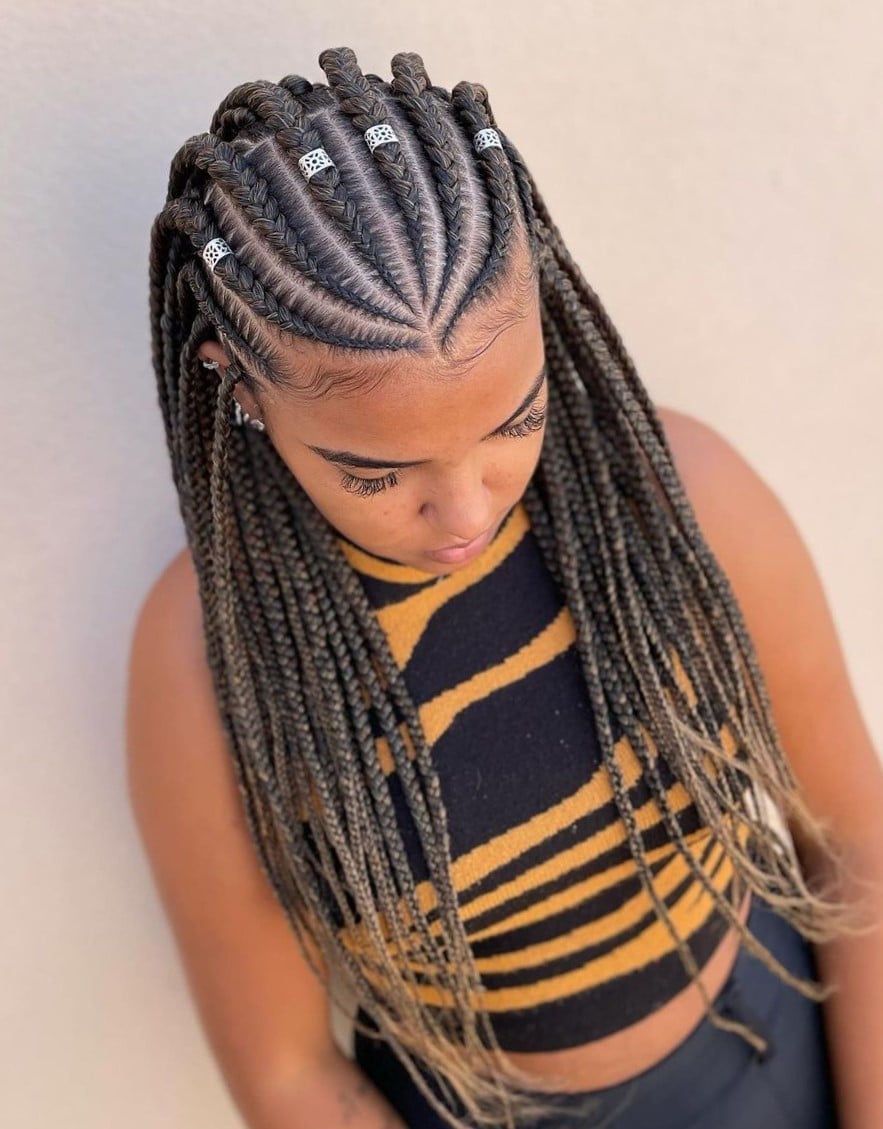
The brown to blonde ombre on these feed in braids adds dimension without constant root touch ups, because the darker roots mean regrowth is not a problem for months. The middle parting and straight, thick braids keep the overall shape tidy, while the small decorative rings scattered through the length add a bit of shine. Ask your stylist for: feed in braids with brown to blonde ombre, middle part, decorative rings. The rings are the one drawback: they can snag on clothing or pillows, so remove them before sleeping and reapply carefully after washing. This style holds well for casual days and festivals, and the ombre effect means you can let the grow out go longer than you would with a solid color.
5. Long Black Feed In Braids With Neat Scalp Cornrows
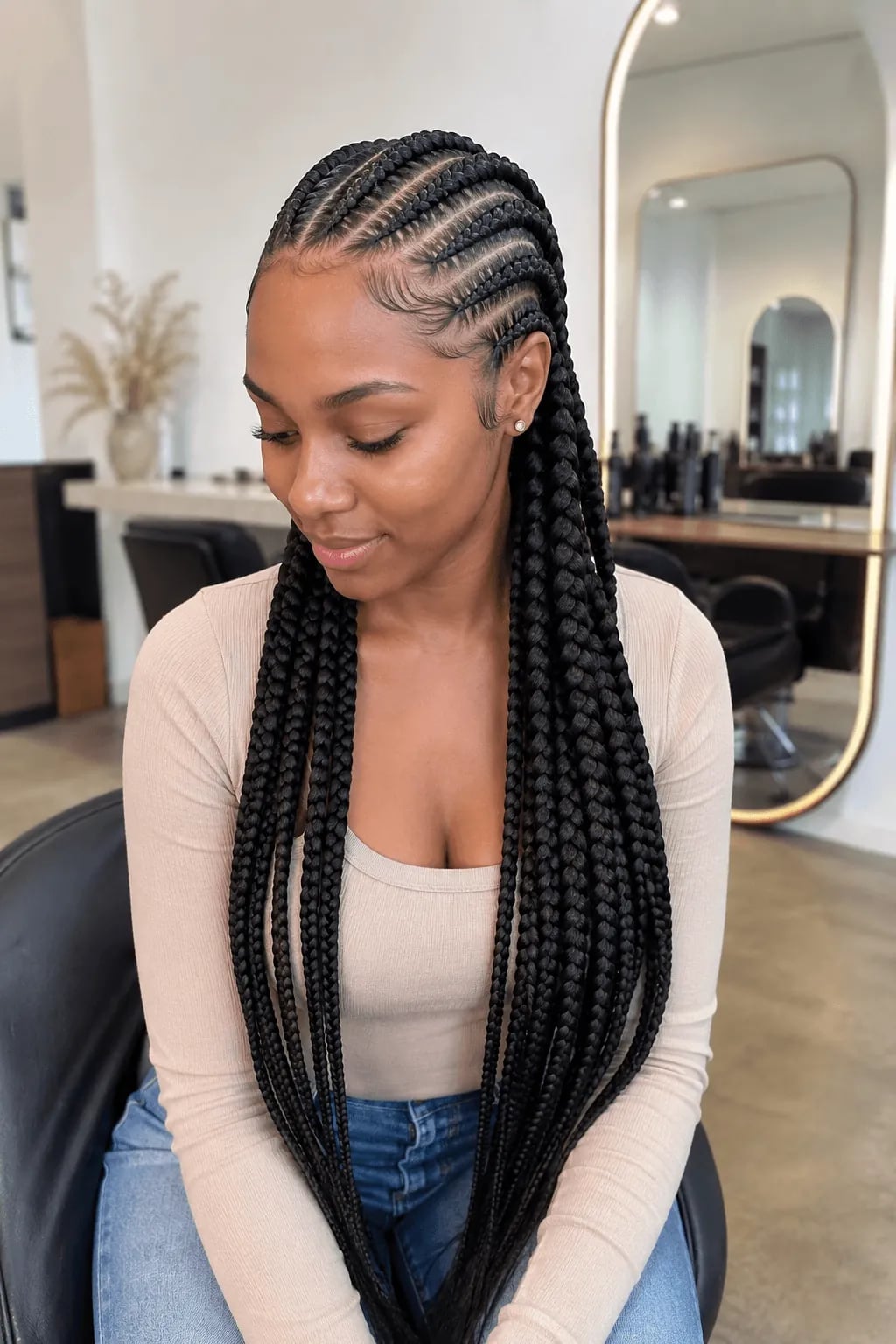
The neat scalp cornrows are what set this apart from a standard feed in braid style, because they require a steady hand and a serious block of time to get the parting and braiding that precise. The long, thick black braids fall to mid back, and the middle parting gives the whole style a symmetrical, almost architectural quality. Ask your stylist for: long feed in braids with neat cornrows at the scalp, middle part. This suits most face shapes, and the straight, thick texture holds the cornrow lines crisply. The time investment is significant: a style this exact can take several hours in the chair, and the scalp cornrows will loosen as your hair grows, so plan to have them re braided every two to three weeks if you want to keep the clean look. Keep the scalp moisturized to avoid tightness and flaking.
6. Long Black Feed In Braids With Stitch Details
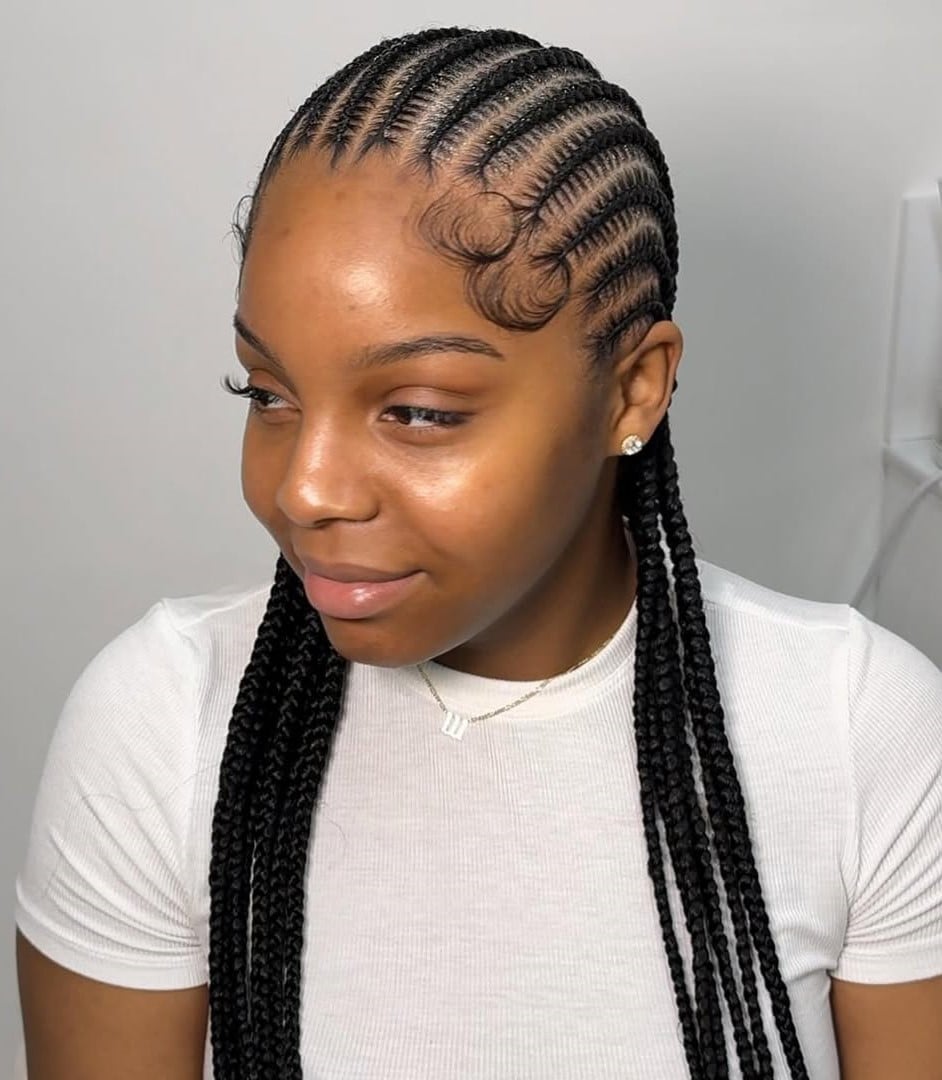
Stitch braids do not mean the same thing as classic feed-in braids, and the difference matters. Standard feed-ins hide the thread that attaches the extension, while stitch braids show a visible, repeating line of thread along each braid. This creates a cleaner, more precise finish that holds its shape longer. Ask your stylist for: long feed-in braids with stitch details, middle part. Thick, straight hair works best for this style, and you need at least shoulder length for the detail to read clearly.
This is a salon-only project. The stitch technique takes about twice as long as standard feed-ins because each braid requires individual thread placement. The precision lasts about four to six weeks before the thread tension loosens and the braids need a reset. A silk scarf or bonnet at night keeps the stitch lines sharp and prevents the thread from pulling against cotton pillowcases.
7. Mid-Back Black And Grey Box Braids
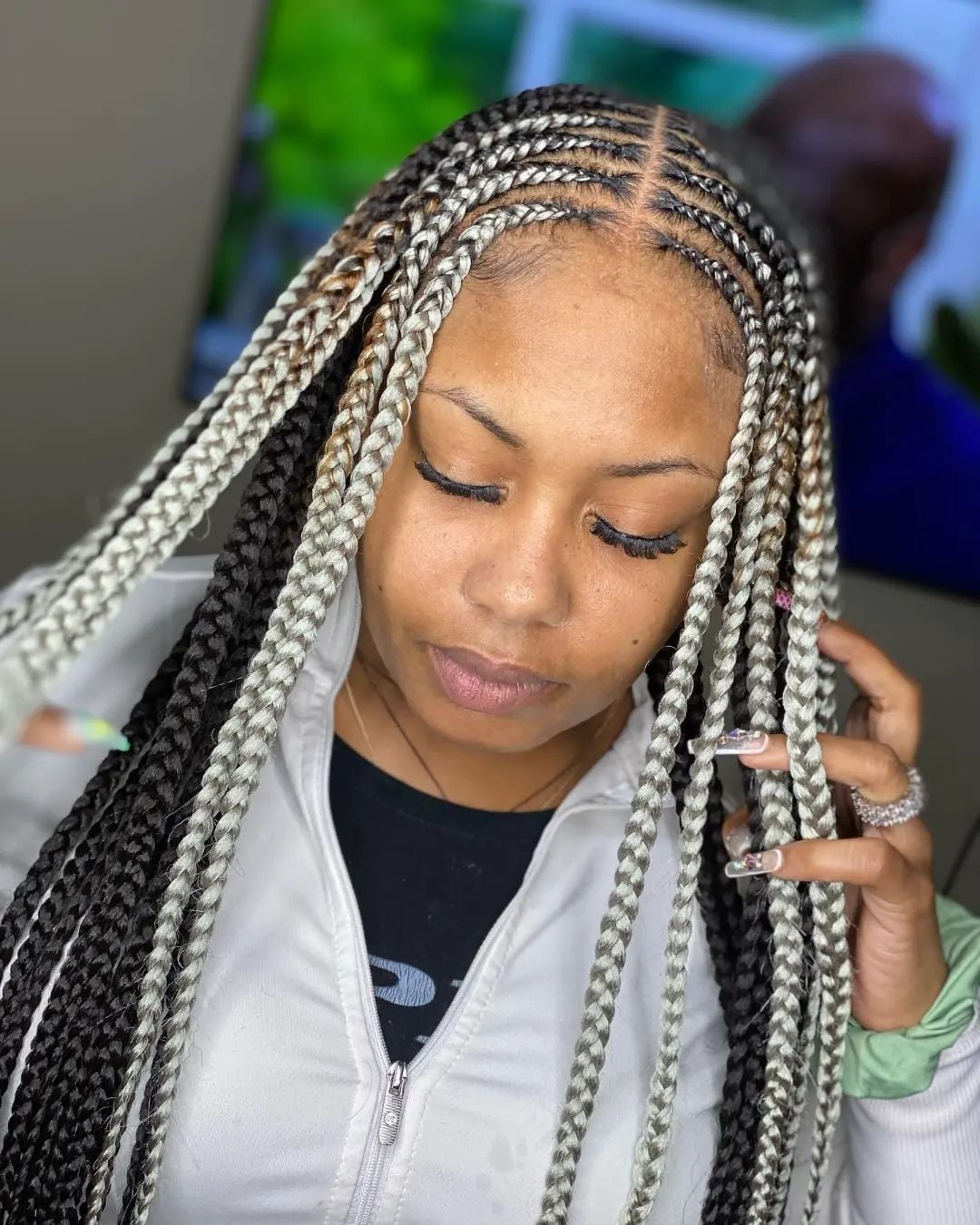
Can you get that two-tone color at home without it turning into a muddy mess? The trick is to pre-color the Kanekalon hair before braiding, not after. Ask your colorist for: mid-back box braids, black and grey mix, middle part. The grey should be a cool, ashy tone, not a warm silver, and the black should be a true jet, not a faded brown. Blend the two shades in alternating sections rather than one solid block of each color.
The drawback is that grey extension hair shows dirt and product buildup faster than black. A weekly spritz with a diluted apple cider vinegar solution helps remove residue without stripping the color. Plan on a trim every eight weeks to keep the ends from splitting, because split ends on grey braids look especially frayed.
8. Mid-Back Feed In Braids With Blonde Highlights
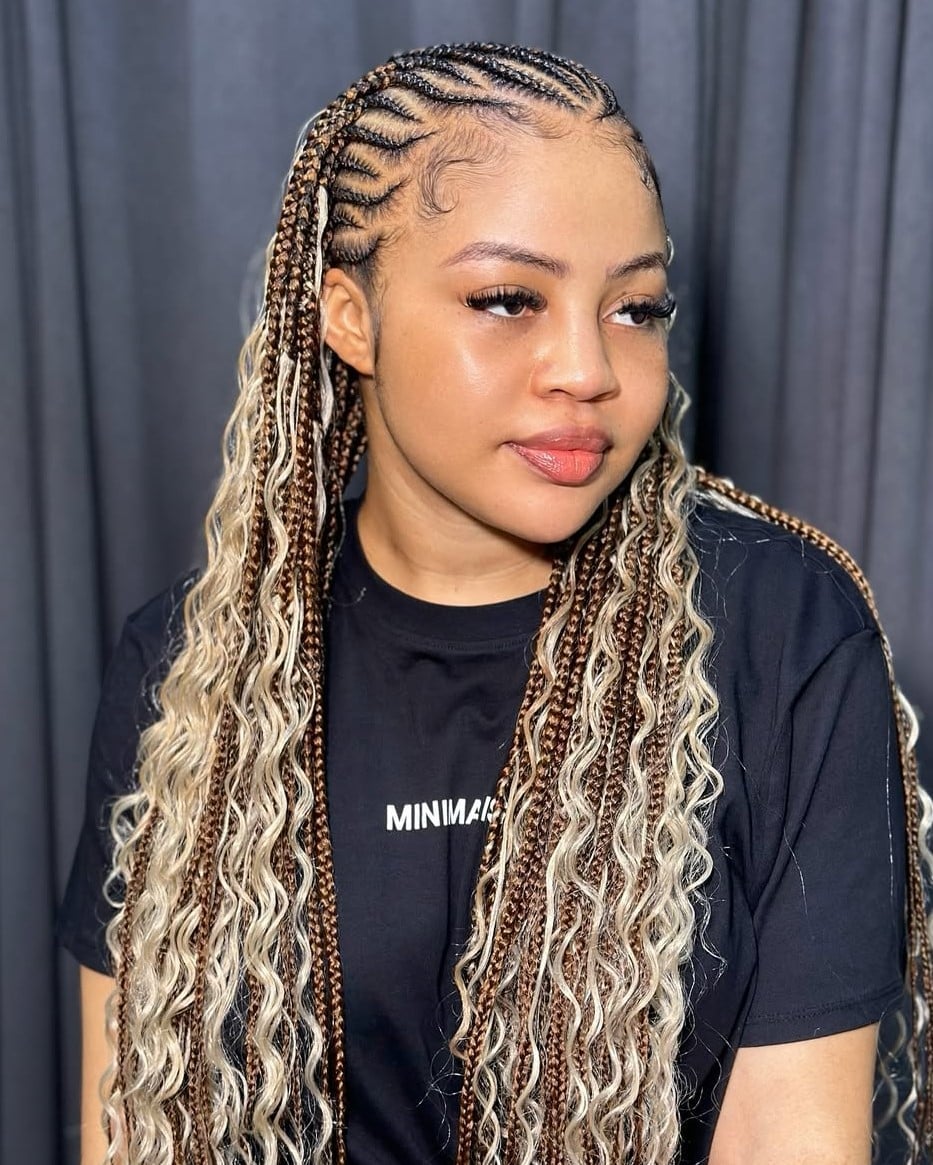
The most common mistake with blonde highlights in feed-in braids is letting the base color go too dark, which makes the blonde look yellow instead of bright. A warm brown base, not a deep black-brown, keeps the contrast clean. Ask your colorist for: feed-in braids with blonde and brown highlights, wavy ends, middle part. The curly ends need a loose wave at the bottom, not a tight curl, so the highlight color shows up most at the ends. This style works for everyday wear and holds up well on vacation, where the wavy ends move in humidity without frizzing.
9. Mid-Back Black Coily Feed In Braids
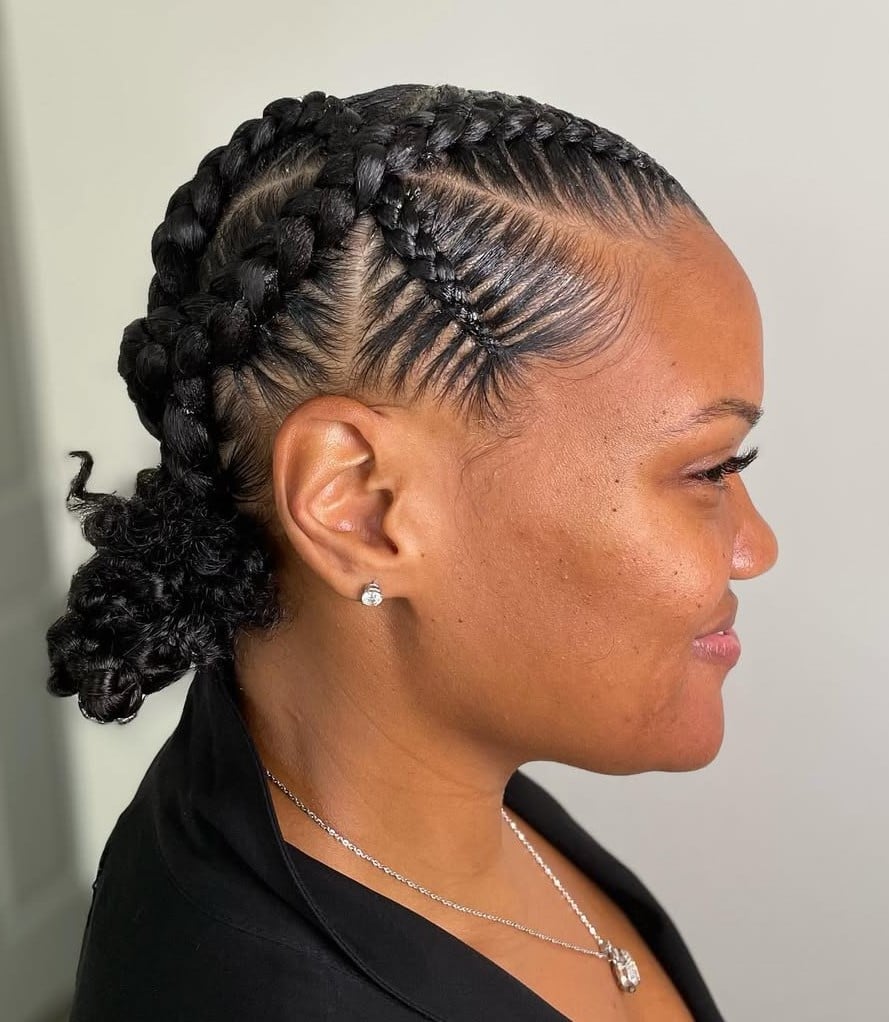
The pattern on these braids is not random. The braider creates a consistent diagonal stitch that runs the length of each braid, visible only because the coily texture gives the thread something to grip. Ask your stylist for: mid-back feed-in braids on coily hair, middle part, intricate pattern. The key is to specify that you want the braid pattern visible, not hidden under a smooth finish. Coily hair holds this kind of detail better than straight hair because the natural texture anchors the thread. The styling steps are simple but specific: start with a water-based moisturizer on the scalp, braid while the hair is damp, and finish with a light oil on the edges only, not the braid body.
10. Collarbone Feed In Braids With Curtain Bangs
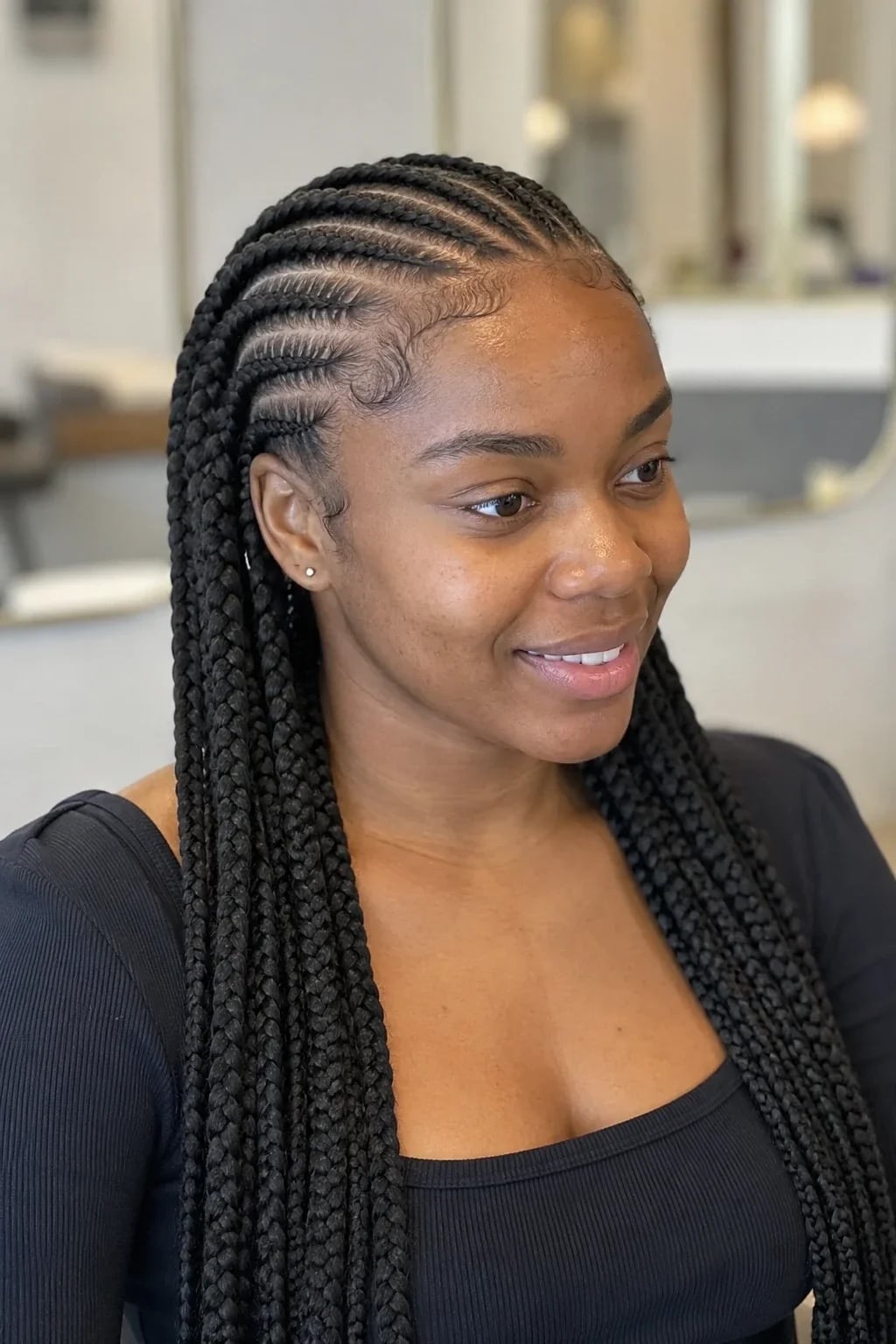
Are curtain bangs a good idea with feed-in braids? Yes, if your face shape benefits from softness at the cheekbone. The curtain bangs here are cut into the natural hair before braiding, so they fall wavy and loose around the face while the braids stay neat behind them. Ask your stylist for: collarbone length feed-in braids, side part, curtain bangs, soft wisps. This is a salon-only setup because the bangs need to be cut precisely to blend with the braids, and the wisps along the hairline require a hand that knows how to leave out the right amount of natural hair. Round and oval faces get the most from this shape because the curtain bangs shorten the visual length of the face without widening it.
11. Shoulder Length Straight Feed In Braids
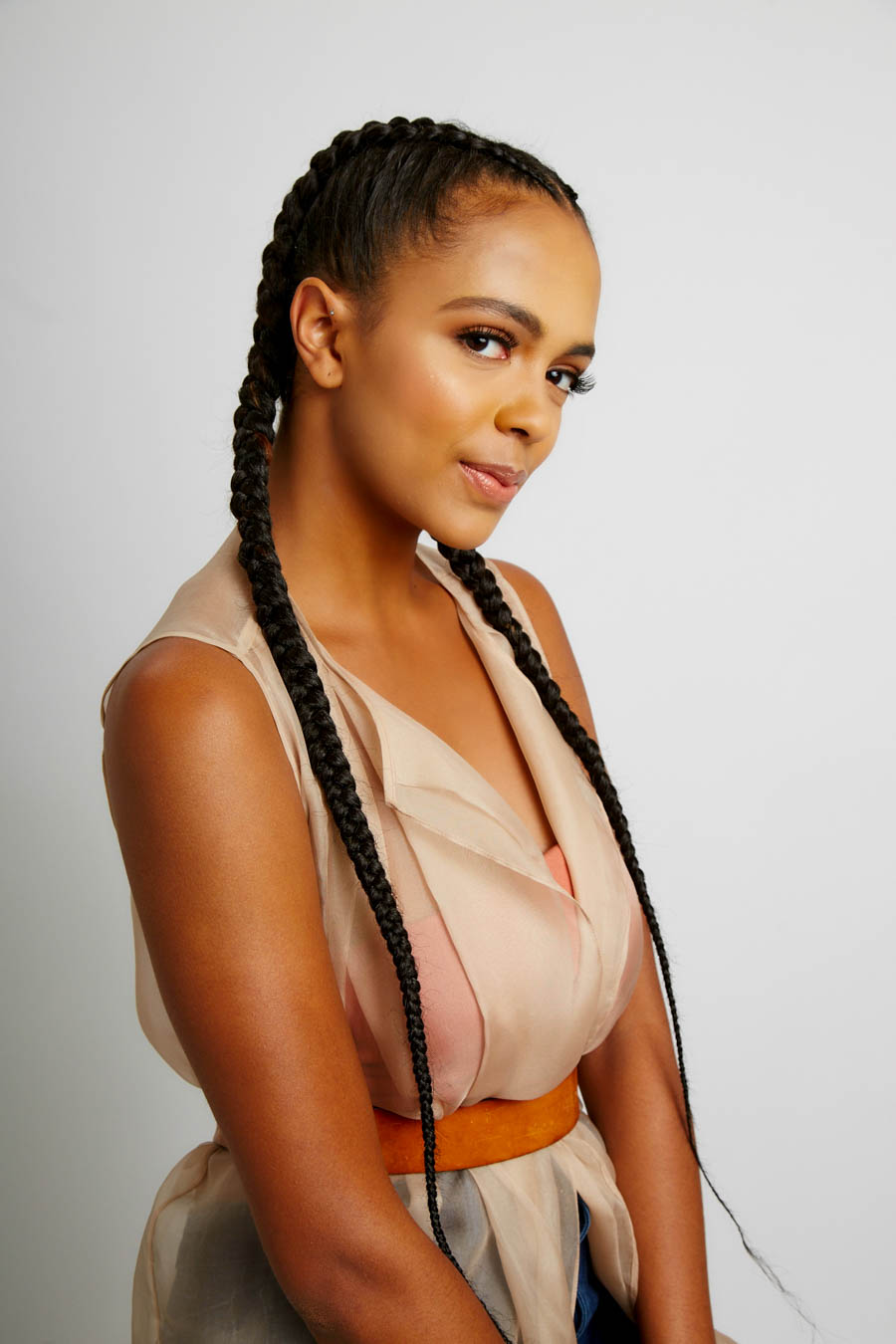
A clean middle parting and uniform braids create a polished, professional finish that lands right at the shoulders. The straight texture keeps the silhouette neat rather than voluminous, which makes this a strong option for office settings or any occasion where you want the hair out of the way without looking severe. Thick hair types get the most defined part lines here, and the shoulder length means the weight stays manageable.
Ask your stylist for: shoulder length straight feed-in braids, neat middle part. A light serum patted over the braids tames any flyaways and adds a subtle gloss. To keep the ends sharp and prevent fraying, schedule a trim every six to eight weeks.
12. Mid-Back Feed In Braids With Grey Ombre
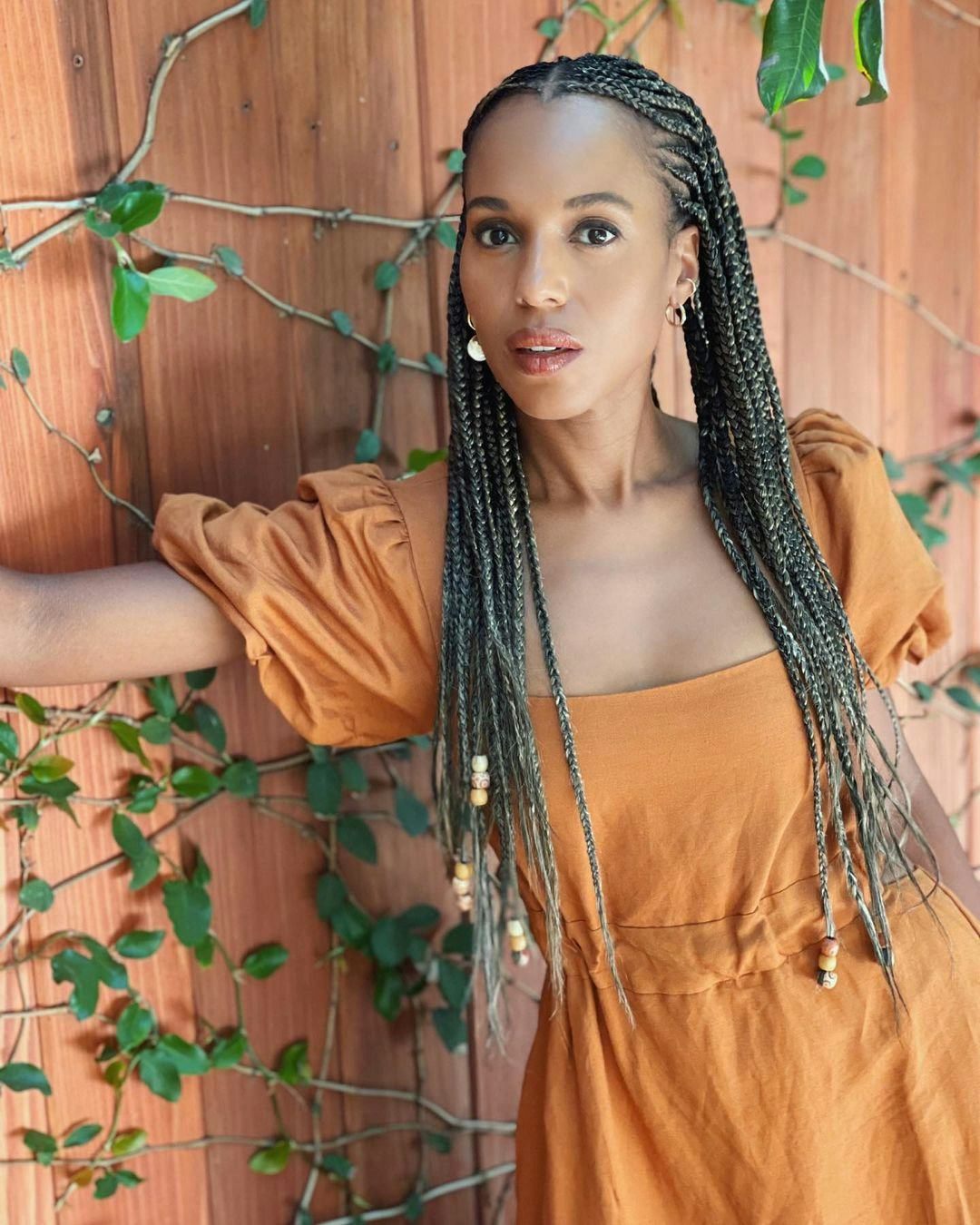
A black-to-grey ombre reads as subtle next to a stark platinum or pastel fade, which is the point: the transition happens gradually, so the grow-out feels less urgent. Wooden beads threaded onto a few braids add a bohemian accent without overwhelming the color work. The wavy texture at the ends softens the overall shape, keeping it from looking too rigid. Thick, wavy hair carries the blend best, and mid-back length gives the gradient enough room to breathe. The real drawback is the beads: they snag on clothing and can slip off during sleep if not secured tightly, so check them before bed.
13. Mid-Back Feed In Braids With Balayage
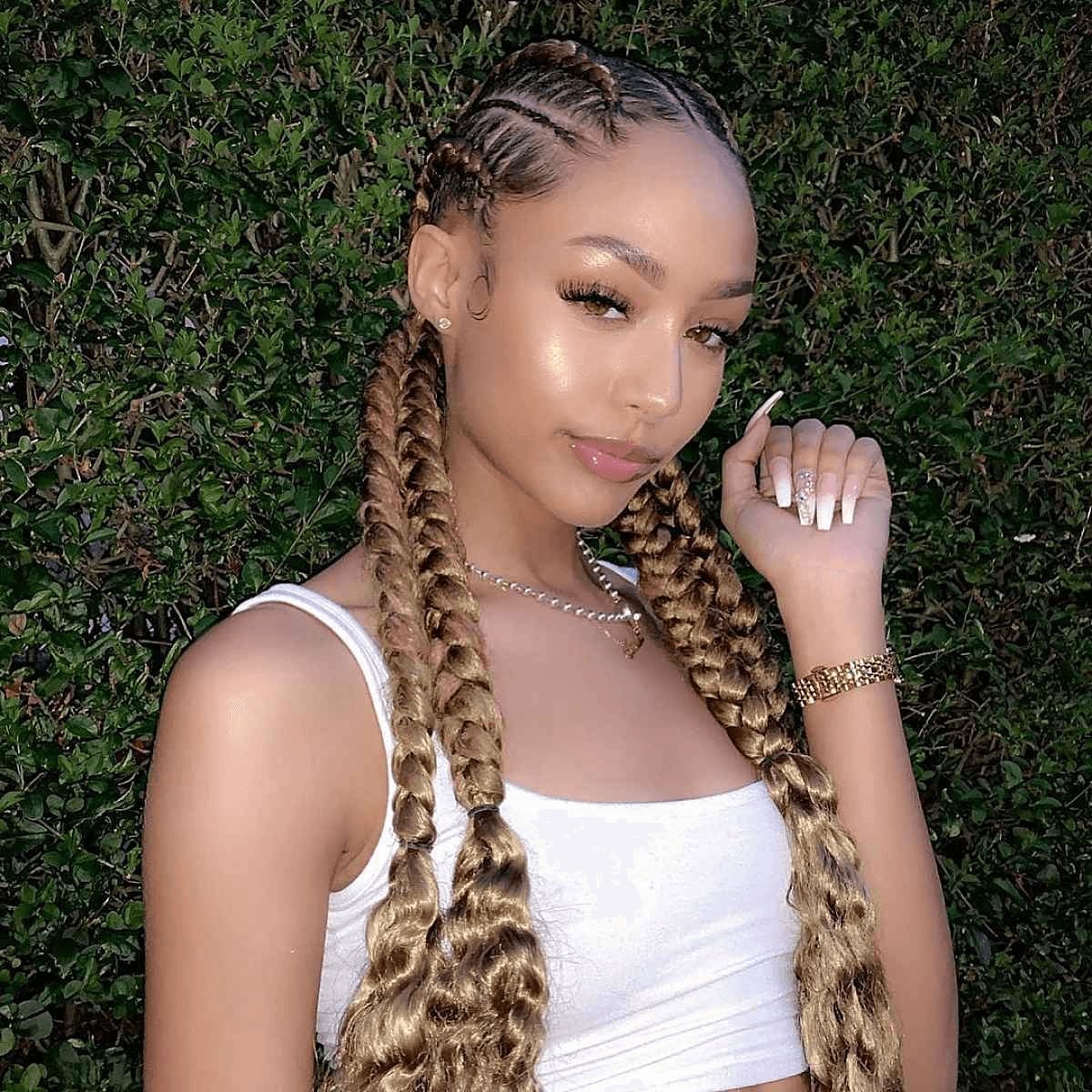
A balayage on feed-in braids works because the color is painted onto the hair before braiding, so the transition from brown roots to blonde ends looks lived-in rather than stripey. The loose braiding and wavy ends here add volume, which keeps the mid-back length from hanging flat.
Ask your stylist for: mid-back feed-in braids with blonde and brown balayage, loose wavy ends, middle part. A sea salt spray on the wavy sections enhances the texture without weighing them down. This is a strong vacation style: the color masks sun exposure, and the braids hold up to salt water and humidity better than loose hair.
14. Mid-Back Black Braids With Contrasting Curly Ends
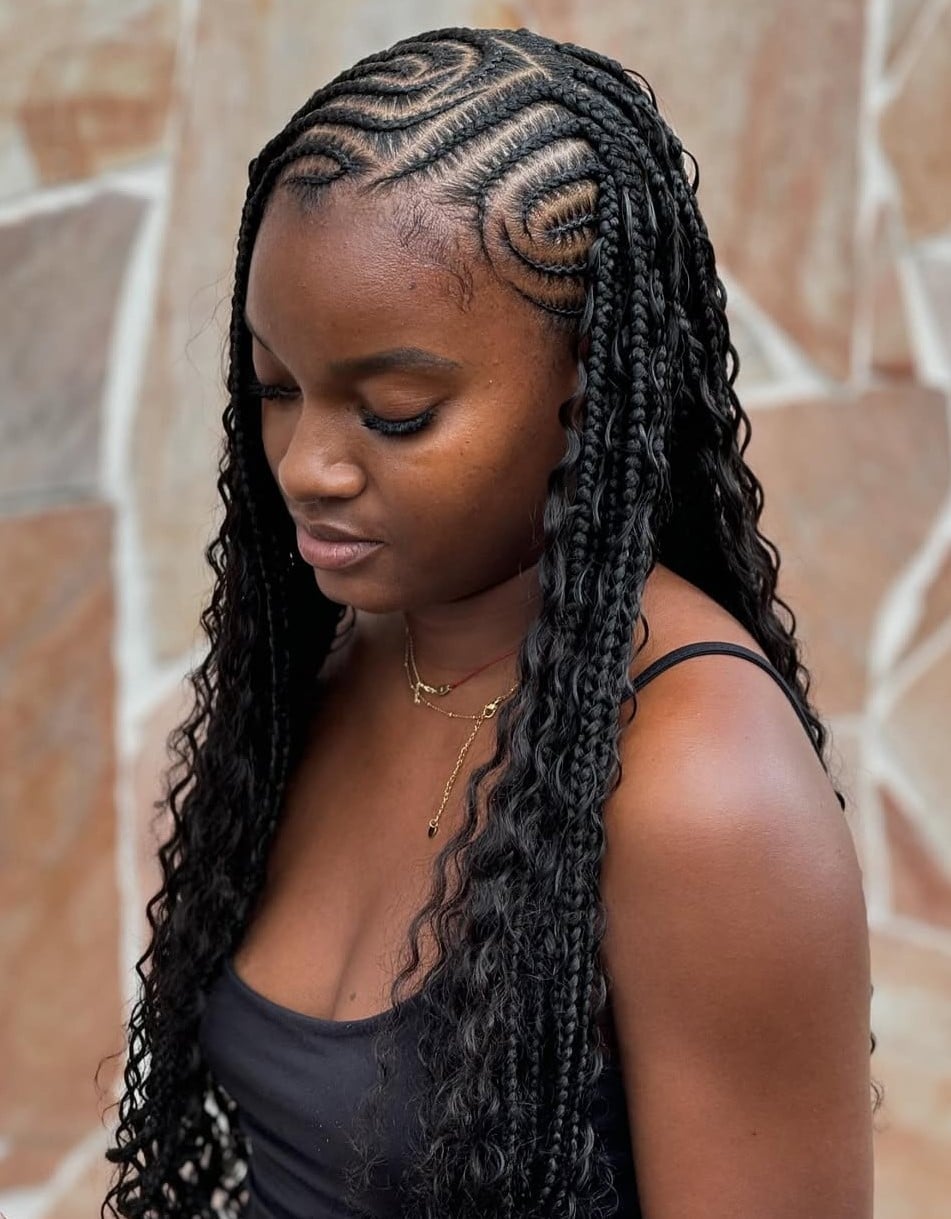
Straight black braids that end in long, curly extensions create a texture contrast because the two finishes are distinct. A middle parting keeps the look symmetrical, and the side view shows how the weight shifts from sleek at the scalp to bouncy at the ends. Thick hair types get the best hold at the transition point, and mid-back length gives the curls room to move. Curly extensions tangle faster than straight ones, especially where the straight braid meets the curl. Detangling with a wide-tooth comb every few days prevents matting at that junction.
15. Shoulder Length Black Feed In Braids

Shoulder length black feed-in braids with a neat scalp pattern require small, even parts and consistent tension as you braid. Thick hair holds the shape better, and a middle parting keeps the symmetry manageable for beginners. Ask your stylist for: shoulder length black feed-in braids, neat scalp braids, middle part. The shoulder length shortens installation time compared to longer sets, and a silk scarf at night preserves the part lines. For a first attempt, expect the process to take longer than a salon visit would.
16. Mid-Back Black Cornrows Geometric Pattern
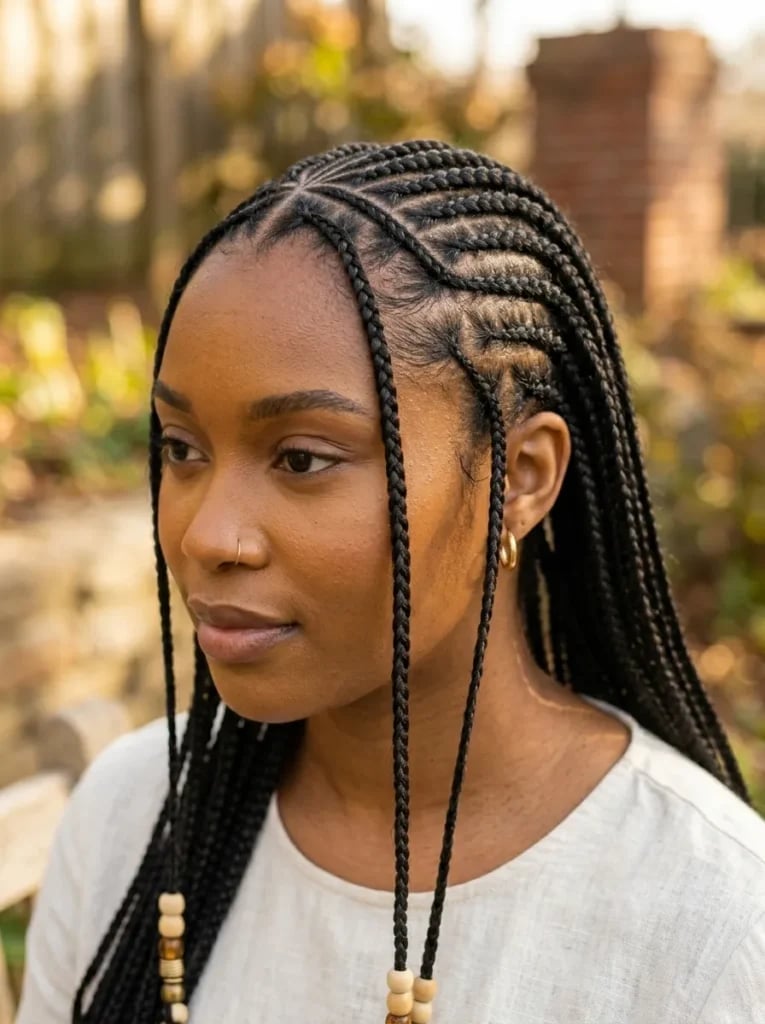
A geometric parting pattern turns cornrows into a deliberate design statement. The symmetry of the pattern suits angular face shapes, as the clean lines echo sharp jawlines and high cheekbones. Ask your stylist for: mid-back black cornrows with a geometric parting pattern. Thick hair holds the crisp parts best, and the straight texture keeps the lines from blurring. The front view shows every angle of the braids, which is the point: the geometry only works when the parting is precise. A scalp that stays clean and moisturized is essential here, and re-braiding every two to three weeks keeps the pattern from looking fuzzy.
17. Mid-Back Black Double Feed In Braids, Straight
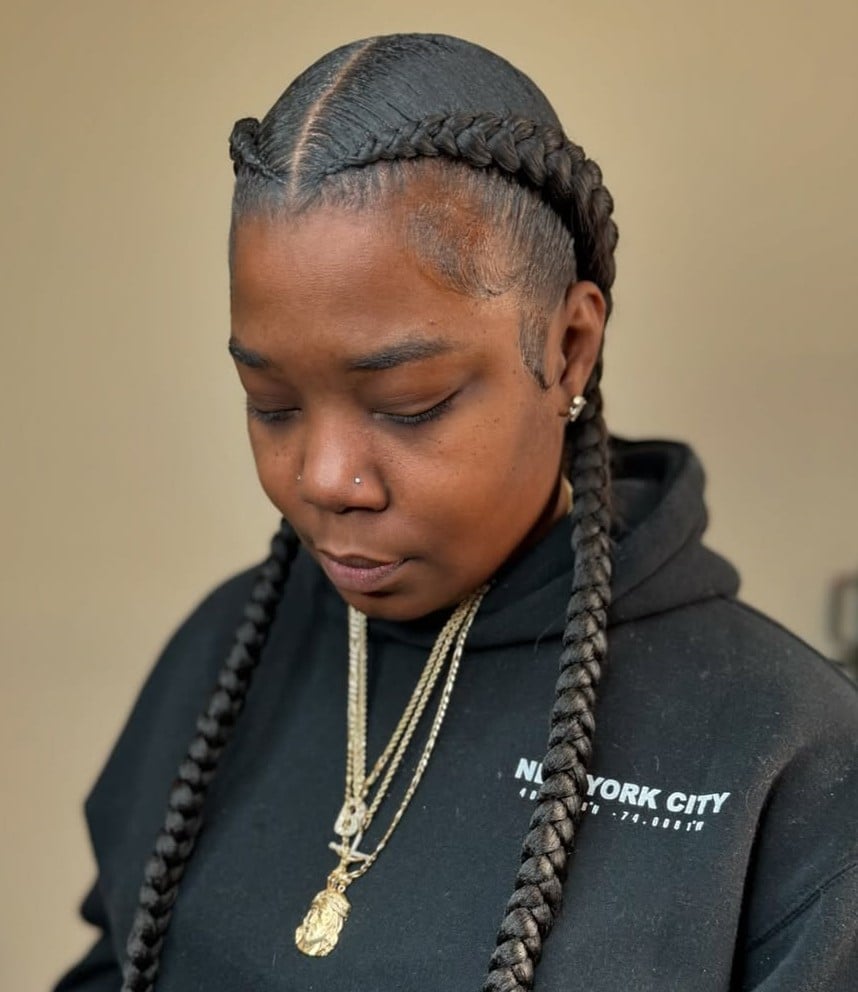
Two prominent feed-in braids, parted down the middle and falling to mid-back, rely on even tension for their clean structure. The straight, thick texture here means the braids lie flat and the part stays sharp, which is exactly what you want for fall and winter events where a polished silhouette matters.
Ask your stylist for: two prominent mid-back length feed-in braids with a middle part. The symmetry looks deliberate, so check the braid thickness in the mirror before you leave the chair. Trim the ends every six to eight weeks to prevent fraying, and keep a wide-tooth comb on hand for the roots if you wear the style for more than a week straight.
18. Long Black Feed In Braids With Wavy Ends and Baby Hairs, Close-Up Take
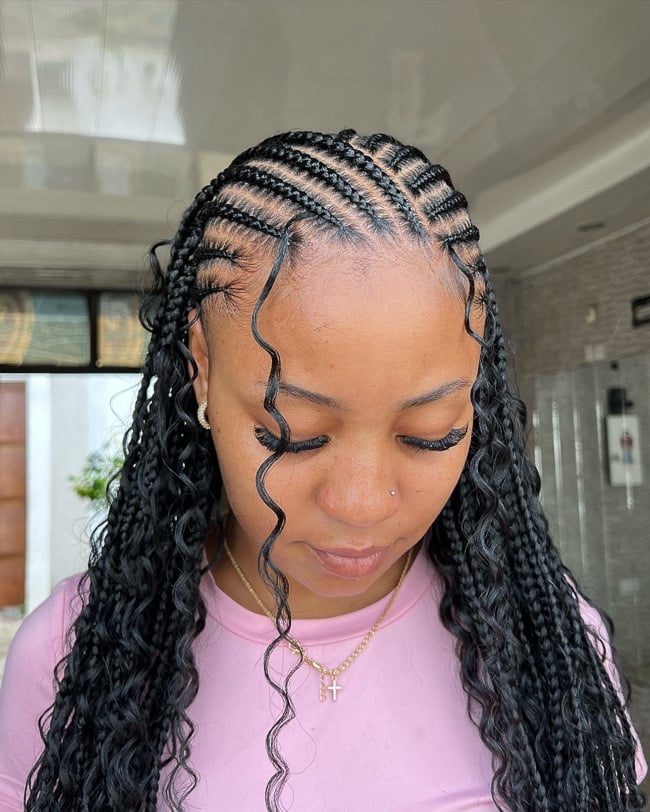
Ever wonder how those wispy baby hairs stay put without turning into a frizzy halo by noon? The side parting and the curly ends are what give these long black feed in braids their soft, lived-in finish, but the baby hairs along the hairline are the part that needs the most attention. Thick, wavy hair takes to this style best, and the length needs to reach at least mid-back for the wavy ends to swing properly. Ask your stylist for: long feed-in braids, side part, wavy ends, baby hairs.
This is a salon-only style, because the feed-in technique requires a steady hand to keep the braids flat at the scalp while the wavy ends stay uniform. Daily upkeep means smoothing the baby hairs with a soft brush and a dab of styling cream to keep them defined, and the wavy ends benefit from a light mist of water and a re-scrunch to revive the curl. The braids themselves hold their shape for weeks, but the baby hairs are the tell-tale sign of how well you’ve kept up with them. A silk scarf at night keeps the edges neat, and a quick touch-up with a toothbrush and gel in the morning takes less than five minutes.
19. Shoulder Length Black Feed In Braids With Neat Scalp
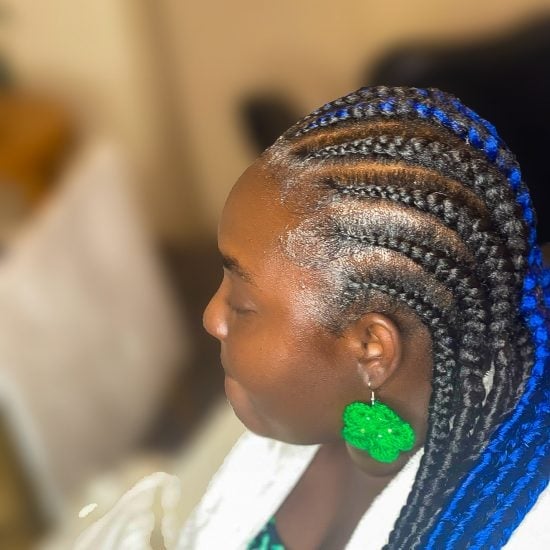
The neat, parallel braids along the scalp are the selling point here, but the common mistake is asking for them too tight. Tight cornrows at the scalp can cause tension headaches and irritation, especially on the first few days. Ask your stylist for: shoulder length feed-in braids with neat scalp braids and a middle part. Thick hair holds the parallel lines best, and the shoulder length keeps the style from feeling heavy. A light spray for scalp hygiene between washes helps, and re-braiding every two to three weeks prevents the neat lines from going fuzzy.
20. Mid-Back Black Feed In Braids With Cornrow Scalp
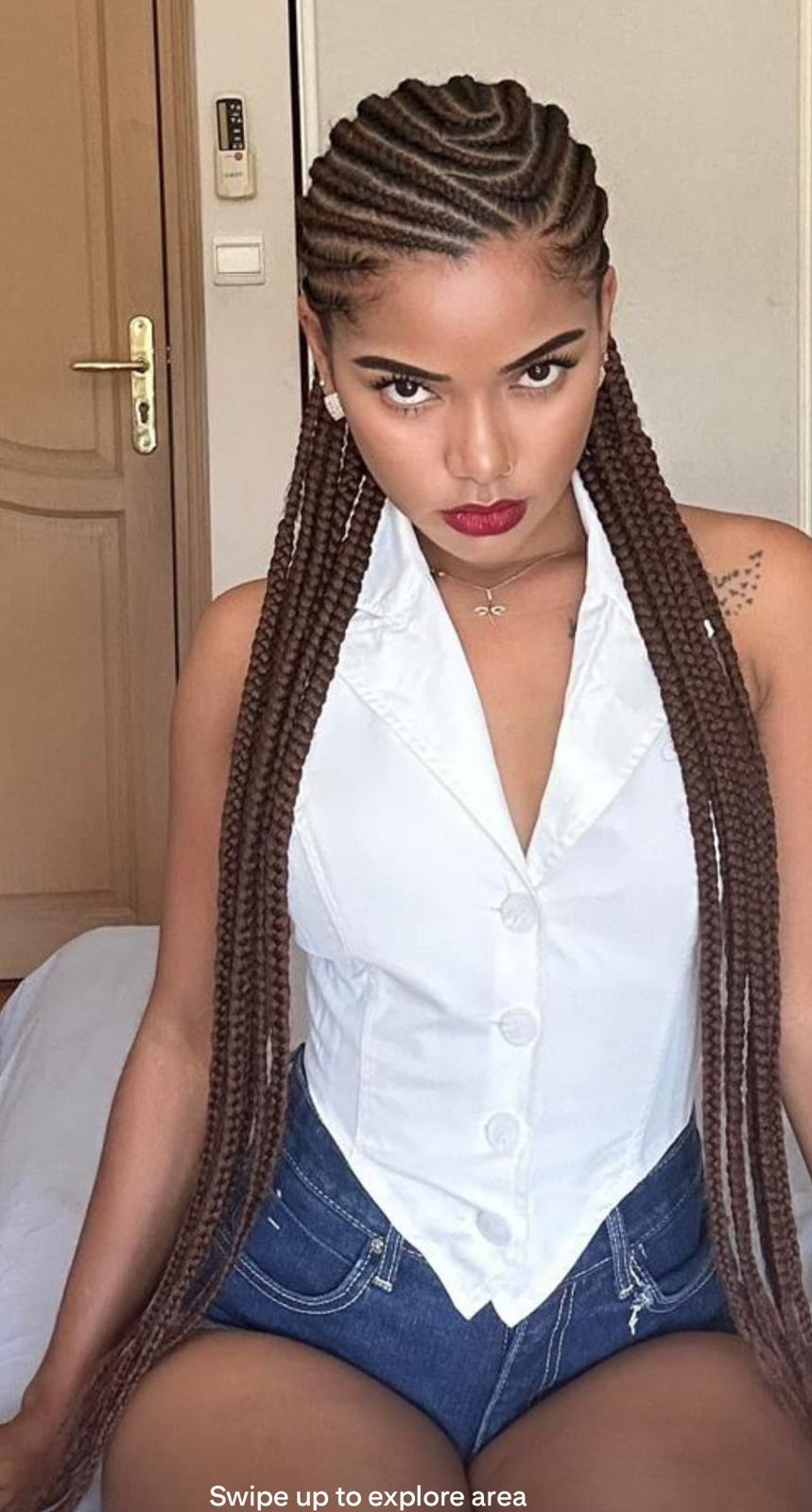
Feed in braids with a cornrowed scalp create a clean, uniform look that holds its shape for weeks. The middle parting and straight, thick texture keep the part lines sharp, unlike freeform braiding where the part can drift. Ask your stylist for: mid-back feed-in braids with cornrow scalp detail and a middle part. This style suits most face shapes and works well for everyday wear or a professional setting. The scalp braids need re-braiding every two to three weeks to stay neat, and the initial installation takes several hours in the chair.
21. Final Thoughts
For a low-maintenance look, opt for straight, mid-back length feed-in braids with a middle part. For added flair, consider incorporating wavy or curly ends and subtle color highlights.
- Trim and moisturize ends every 2-4 weeks to prevent dryness.
- Refresh the scalp with a light oil or spray as needed.
- Protect braids from excessive moisture and friction when sleeping.
- Allow braids to breathe for at least 2-3 weeks between installations.
Feed-in braids offer a canvas for creativity and protection.

