
Fine hair doesn’t have to mean flat hair. The right cut, think strategic layering, a well-placed bang, or a blunt line, can create the illusion of density without adding weight. Curtain bangs and soft face-framing layers are the current go-to moves, replacing heavy side-swept fringes that can drag fine textures down.
This collection covers 20 haircuts, from quick pixies to collarbone shags, that work with fine hair instead of against it. Whether your struggle is a middle part that goes limp by noon or bangs that won’t stay put, each option is built around shaping that adds volume and movement. Expect blunt bobs, textured layers, and lived-in finishes that keep fine hair looking full.
1. Chin Length Shag Bob With Wispy Bangs
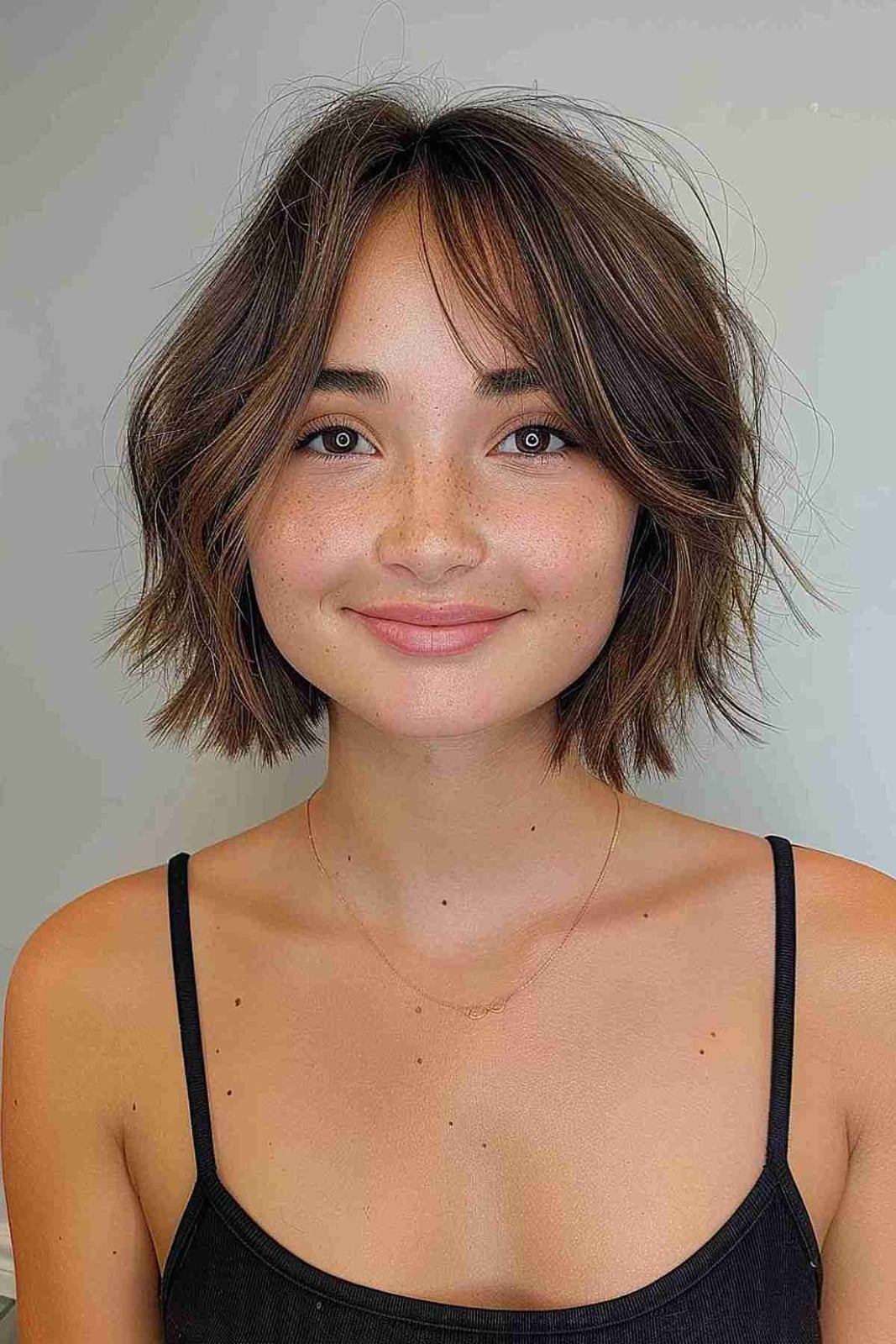
What do you ask for when fine hair needs volume but you still want a soft, textured shape? Start with a chin length shag bob with wispy bangs, then let the stylist work the layers so the ends feather instead of hanging flat. Fine wavy hair holds this kind of shag bob best, especially when the cut starts at chin length and the bangs stay light enough to move. Ask your stylist for:
- chin length shag bob
- wispy bangs
- textured air-dried finish
- soft face-framing layers
2. Layered Chin Bob With Side Swept Bangs
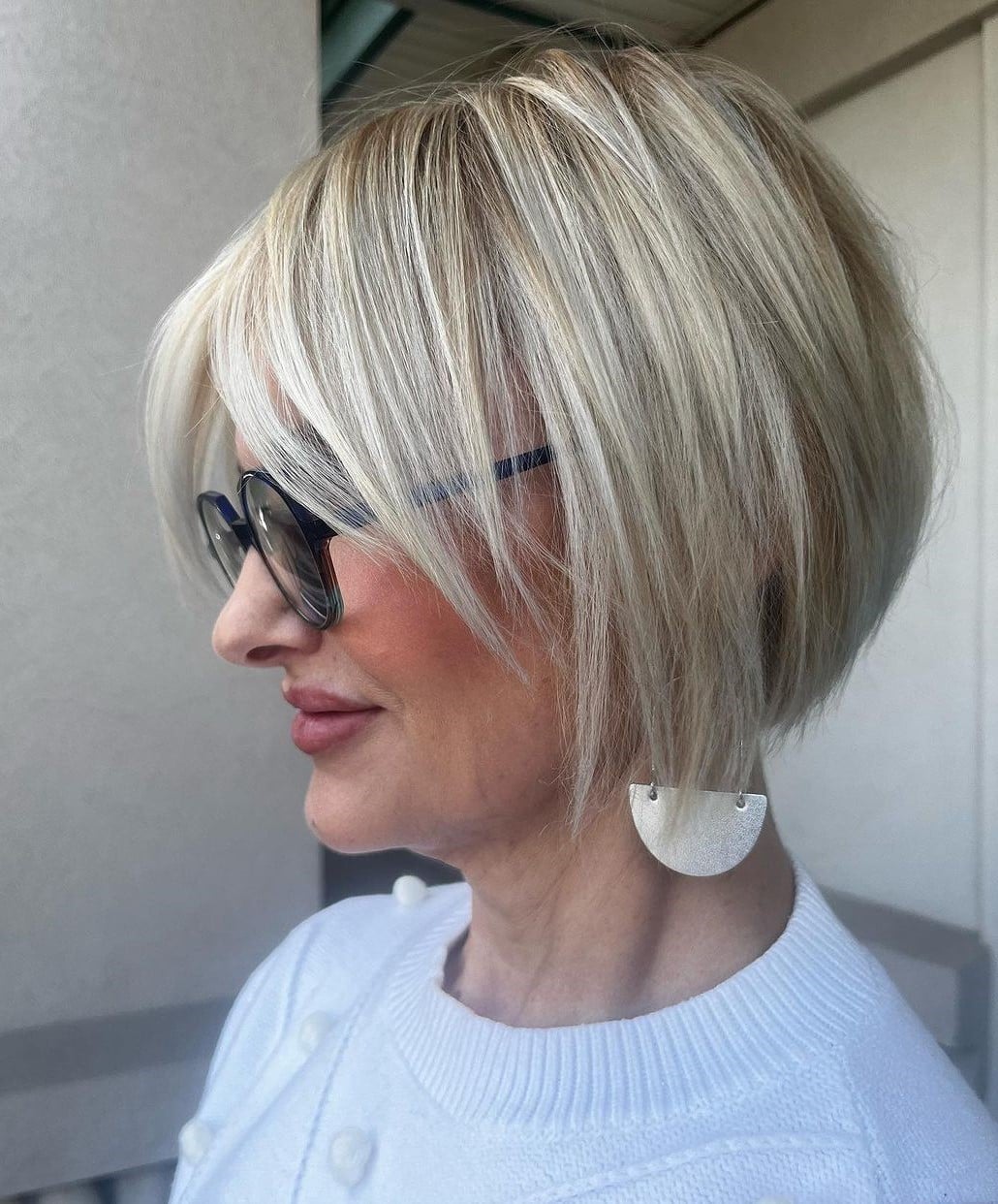
A chin length layered bob gets its movement from the way the layers are stacked at the back, and side-swept bangs add shape at the front. Fine, straight hair takes to this shape well because the cut does the work the texture cannot. Side-swept bangs soften a square or heart-shaped face. Ask your stylist for: chin length layered bob, side-swept bangs, subtle blonde highlights. Plan on a trim every six to eight weeks to keep the baseline sharp.
3. Blunt Chin Bob With No Bangs and Styled In A Smooth Blowout

If you are weighing this against a layered bob, know that the blunt chin bob is the one that will betray you fastest between trims. The clean line that makes it look so sharp on day one turns ragged on fine, straight hair once the ends start to split, usually around week six. That polished blowout, with the middle parting and subtle highlights, is what you are really paying for. Ask your stylist for: chin length blunt bob, no bangs, middle part. Plan on a trim every six to eight weeks, and skip this cut if you cannot keep that appointment.
4. Textured Pixie With Side Swept Bangs

Texture in a pixie comes from the cut itself, not from the styling wax. A stylist working with fine, wavy hair usually point-cuts the ends and slides the layers shorter at the crown so the pieces separate on their own. Side-swept bangs are cut longer at the temple and shorter toward the brow, which keeps them sweeping instead of dropping straight. The brown base with blonde highlights adds dimension that a single flat shade would hide. Ear length is the working zone here, short enough that the waves can actually lift. Ask your stylist for: textured pixie cut, side-swept bangs. A texturizing paste defines the pieces, and the shape holds for four to six weeks before the crown starts to sag.
5. Short Textured Pixie In Grey

The tousled finish on a short pixie is built in the morning, not at the salon. Fine, straight grey hair needs a matte wax worked through the ends and a quick finger-scrunch to break up the crown, and short textured bangs swept to the side take about a minute more. Without that step the cut lies flat within an hour. Ask your stylist for: short textured pixie, side-swept short bangs. Book a trim every four to six weeks, since ear length loses its shape fast.
6. Platinum Short Layered Cut
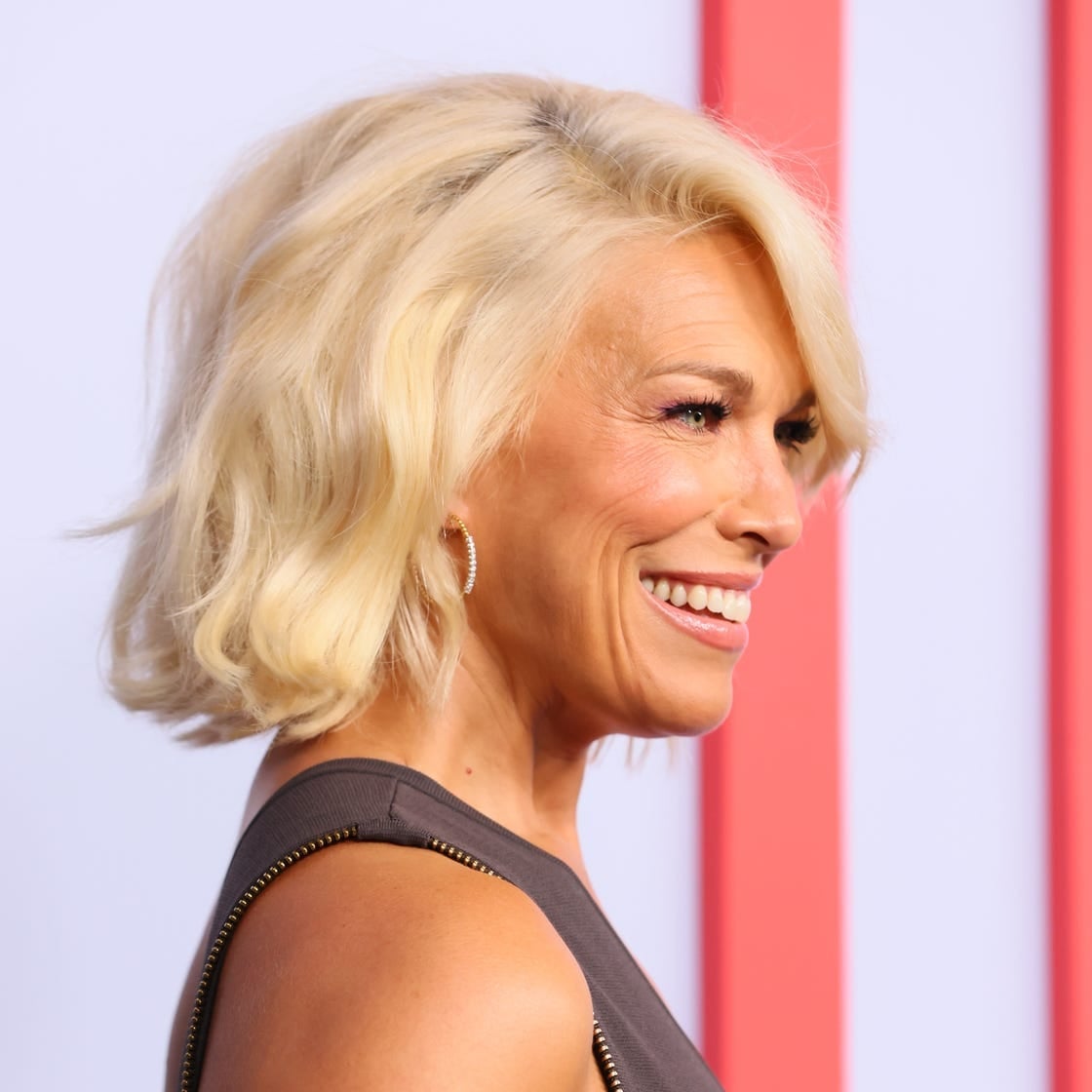
A short layered cut ending around the ear in platinum blonde usually looks less like a bold experiment and more like a commitment when you compare it to a darker pixie. Going platinum on fine, wavy hair requires multiple salon sessions for lightening, and the texture you see comes from a blowout with a round brush, not from a box at home. Ask your stylist for: short layered cut, textured waves, side-swept bangs. The layers give fine hair movement that a one-length crop simply cannot hold, but the grow-out line on platinum shows fast, so plan on a root touch-up every four to six weeks.
7. Textured Pixie With Crown Volume
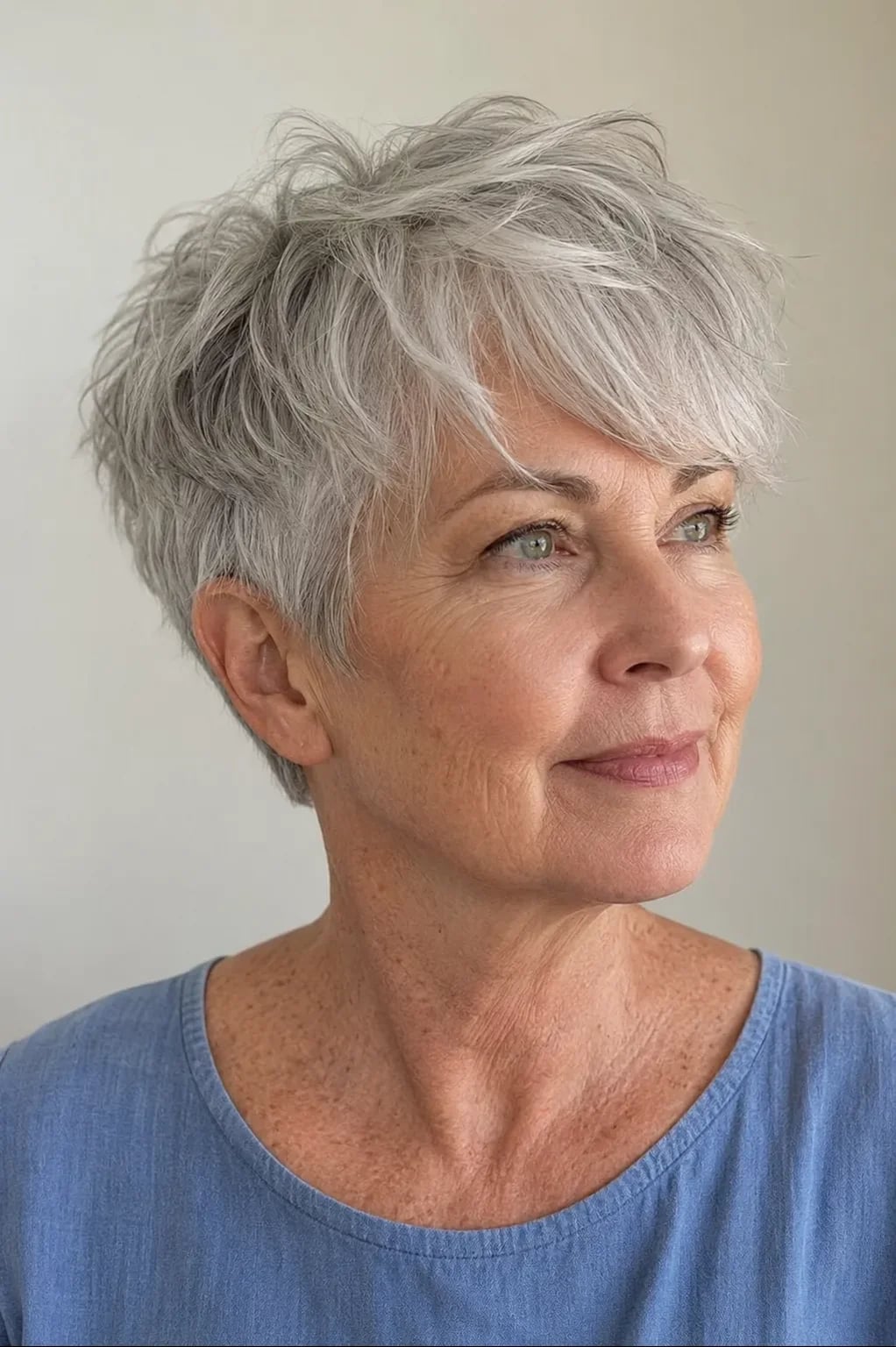
Why does crown volume vanish by noon on fine hair? Because the weight of the strands pulls them flat against the scalp, and a pixie cut alone does not fix that. This textured pixie, cut short to ear length in grey with side-swept bangs, builds height at the crown so the shape holds its own silhouette. Ask your stylist for: textured pixie with crown volume, side-swept bangs. The trade-off is the upkeep: a pixie needs a trim every four to six weeks to keep that precise shape, and skipping one lets the crown fall flat again. Volume at the crown also suits longer faces by balancing the proportions.
8. Textured Pixie With Wispy Layers
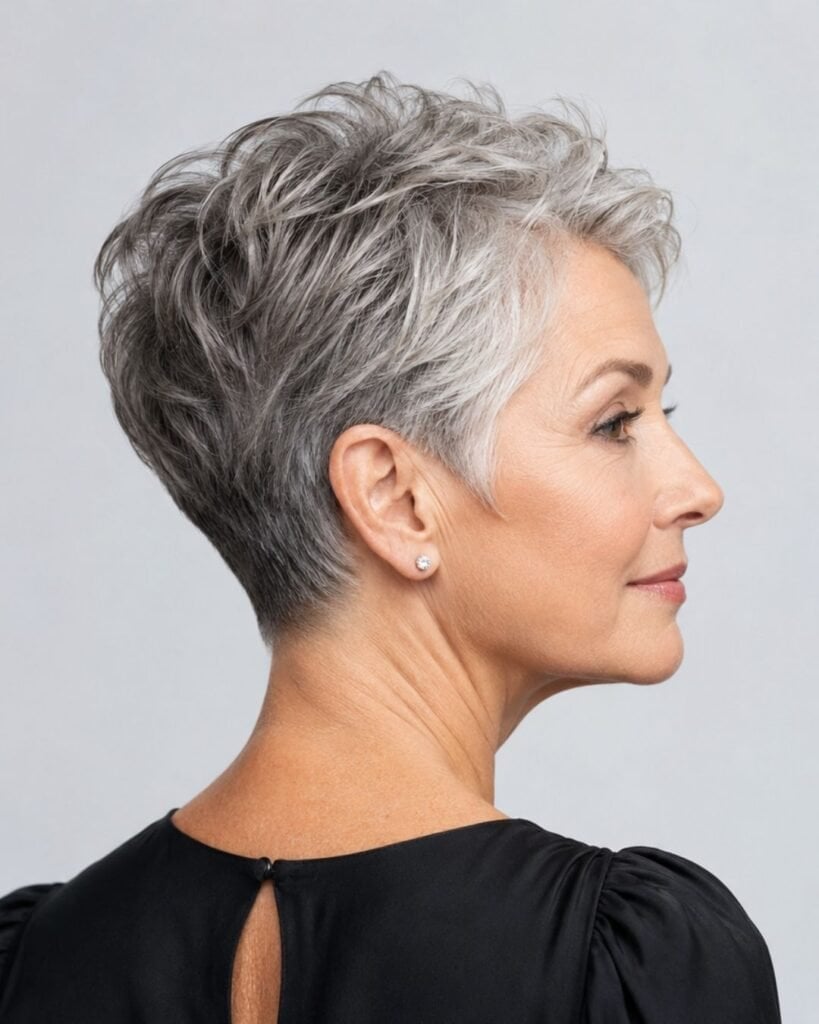
The design trades density for deliberate lightness: wispy layers around the ears on a short silver pixie give fine, wavy hair the movement it cannot get from a solid block of length. This genuinely suits fine hair that starts at ear length, where the cut removes bulk without exposing the scalp. Ask your stylist for: short silver pixie with wispy layers. Pass on it if you want to grow out to a bob, because the layering makes the transition awkward for months. The pixie needs a trim every four to six weeks to keep the shape defined.
9. Chin Length Layered Bob With Curtain Bangs

How do you describe the exact bob you want without getting a helmet? Start with the words that matter: a chin-length layered bob with soft curtain bangs, styled with a blowout for volume. The ash blonde base with subtle lighter highlights adds dimension that fine, wavy hair needs, since flat color can read as flat texture. Ask your stylist for: chin length layered bob, soft curtain bangs, face-framing layers. The curtain bangs soften a square jaw, and the face-framing layers keep the bob from looking like a solid wedge. The bob baseline needs a trim every six to eight weeks, but the curtain bangs can stretch a bit longer between trims.
10. Shoulder Length Layers With Wispy Bangs
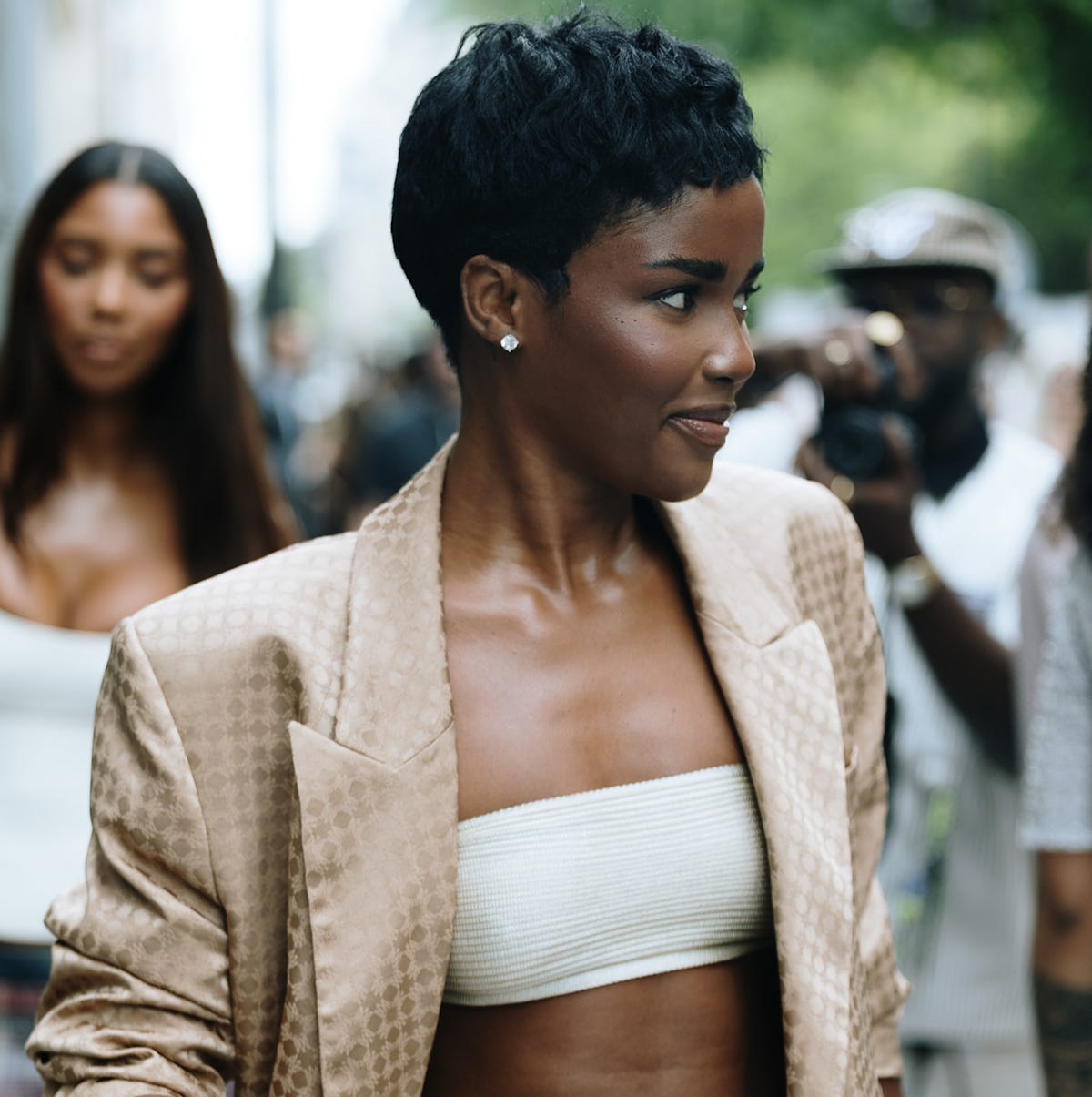
Subtle layers on a shoulder-length cut in dark brown keep the focus on shape, which suits fine hair that needs styling options. The wispy bangs frame the face and stay light at the edges, and the fine, wavy texture takes well to a loose updo when you need it off your neck. Ask your stylist for: shoulder length with subtle layers, wispy bangs. A texturizing spray gives the updo grip so it holds through the evening. The layers need a trim every eight to ten weeks, and the wispy bangs can be shaped at home in between if you are comfortable with scissors.
11. Collarbone Copper Red Long Bob
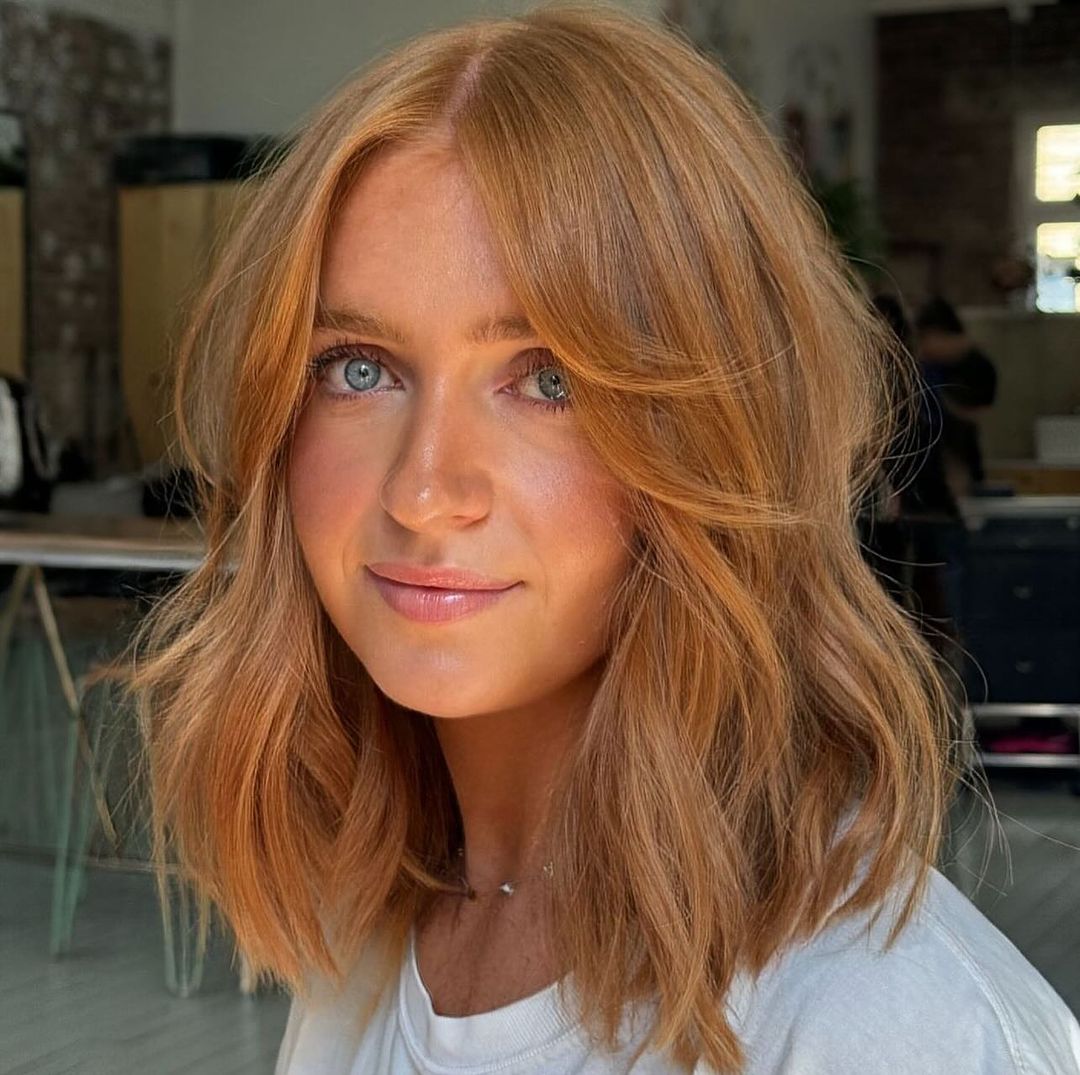
A collarbone long bob is the safe bet. Copper red with lighter pieces is the one that gets noticed across a room. On fine, wavy hair the color does the volume work that the cut alone cannot, and a blowout with soft waves gives the collarbone length enough bend to look fuller than it is. Curtain bangs split at a middle part and finish the shape without closing it off.
Autumn is where this shade earns its keep: warm, low sun, wool collars, a color that answers the season instead of fighting it. Fine hair holds the copper well because the lighter pieces sit close to the base shade and never look striped. It suits wavy textures that already have movement; hair that falls flat needs the blowout more than the color. Curtain bangs soften a round or square face by breaking the jaw line at an angle. Ask your stylist for: collarbone length long bob, copper red, curtain bangs. Use a heat protectant before any blowout, and book a trim every six to eight weeks to keep the baseline clean. The copper fades fastest at the ends, so a color refresh at the same interval keeps the lighter pieces from going brassy.
12. Angled Bob With Face Framing Bangs

The angle is the whole trick: shorter at the back, longer at the front, so the cut builds a diagonal line toward the collarbone and the curtain bangs pick that line up at the cheekbone. On fine, wavy hair that geometry matters more than volume, because the eye follows the slant and reads fullness where there is only shape. Dark blonde with lighter highlights keeps the surface from going flat under a blowout. Ask your stylist for: collarbone length angled bob, curtain bangs. A side part lets the bangs sweep across rather than sit square, which suits angular faces by rounding the corner at the temple. Fine hair needs the layers cut deep enough to move but not so deep that the ends thin out. Blow-dry the bangs with a round brush to send them outward, and keep the baseline trimmed every six to eight weeks or the angle grows out into a straight bob.
13. Collarbone Shag With Curtain Bangs
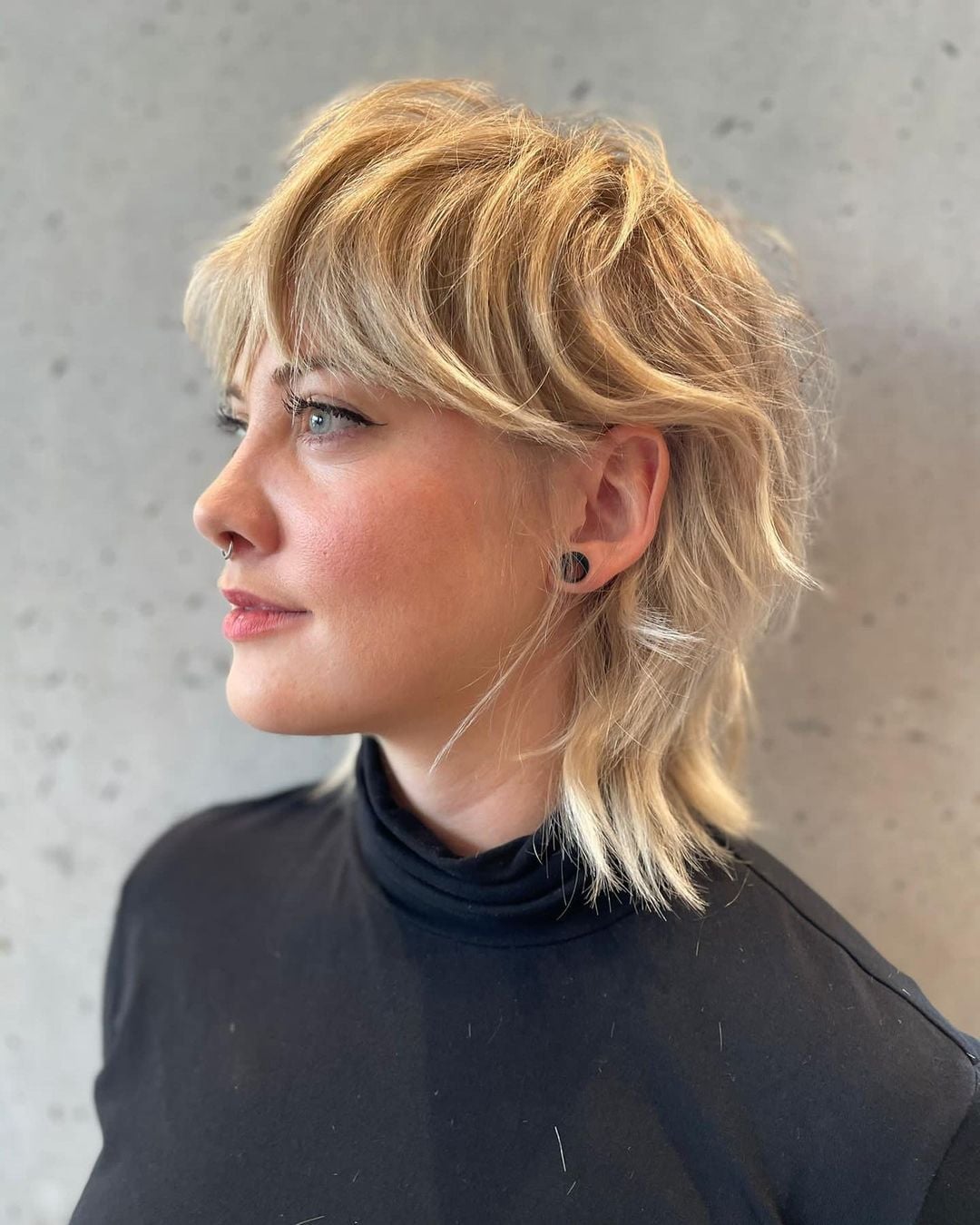
What separates a shag from a layered bob is where the shortest pieces sit: here they start around the cheekbone and graduate down to collarbone length, so the cut has a built-in ladder of movement. Fine, wavy hair is the texture this was made for. The natural bend does the styling, and curtain bangs at a middle part add softness around the face without a heavy fringe. Ash blonde with highlights gives the layers something to catch, since dimension shows the shape better than a single flat shade. Ask your stylist for: collarbone length shag, prominent curtain bangs. Round and square faces get the most from the bangs; long faces should keep them wider at the sides. Hair that is very straight or very fine at the root can look stringy in a shag this layered, so pass if your texture has no bend at all. Trim the layers every eight to ten weeks to keep the shape from collapsing.
14. Layered Lob With Face Framing Bangs
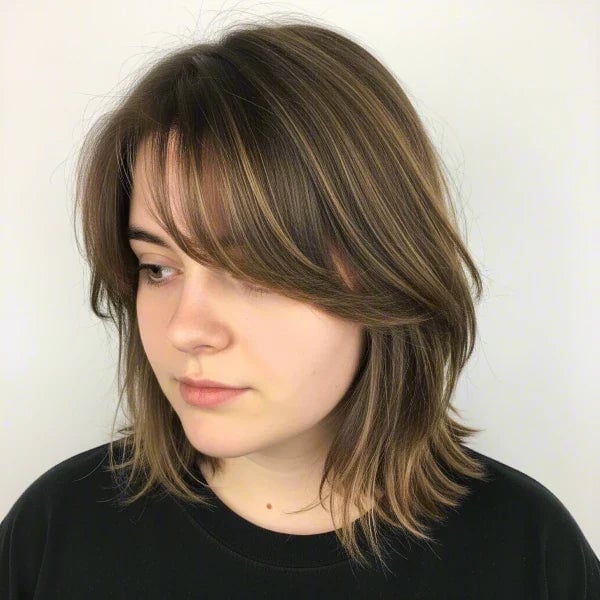
Wondering what to say so the bangs blend into the cut instead of sitting on top of it? The answer is in the wording. Face-framing bangs are cut to merge with the layers beside them, not to hang as a separate block, and on a layered lob that join is the entire point. Fine, wavy hair benefits most, because a hard line between fringe and length is exactly what makes thin hair look thinner.
Go in with a short list. Ask your stylist for: collarbone length layered lob, face-framing bangs. Add that you want the bangs to connect to the layers at the cheekbone, and that the layers should start below the chin so the ends keep their weight. Mention the side part, since it changes how the bangs fall. Blonde highlights are worth raising too: they add dimension to a fine texture without asking the cut to fake density. Ask for soft waves in the finish so you can see how the shape behaves once it moves. If the stylist reaches for a razor, say no; a blunt-edged scissor cut holds fine hair together better.
15. Collarbone Shag With Wavy Blowout

A wavy blowout on a collarbone shag is a styling job, not a wash-and-go, and knowing that up front saves disappointment. The cut gives fine, wavy hair its layers and curtain bangs; the blowout is what turns those layers into visible movement. Start with a volumizing mousse on damp roots, rough-dry until the hair is eighty percent done, then finish sections with a round brush, lifting at the root and rolling the ends under. Ash blonde with highlights shows the bends better than a flat shade, so the layers read at a distance. Ask your stylist for: collarbone length shag, curtain bangs, wavy blowout. Expect twenty minutes with a brush and dryer on fine hair, longer if you section carefully. The style holds a full day and softens into loose waves by the next morning, which is the point. Trim the shag layers every eight to ten weeks; past that the shape drops and the blowout has nothing to work with.
16. Collarbone Layers With Middle Part
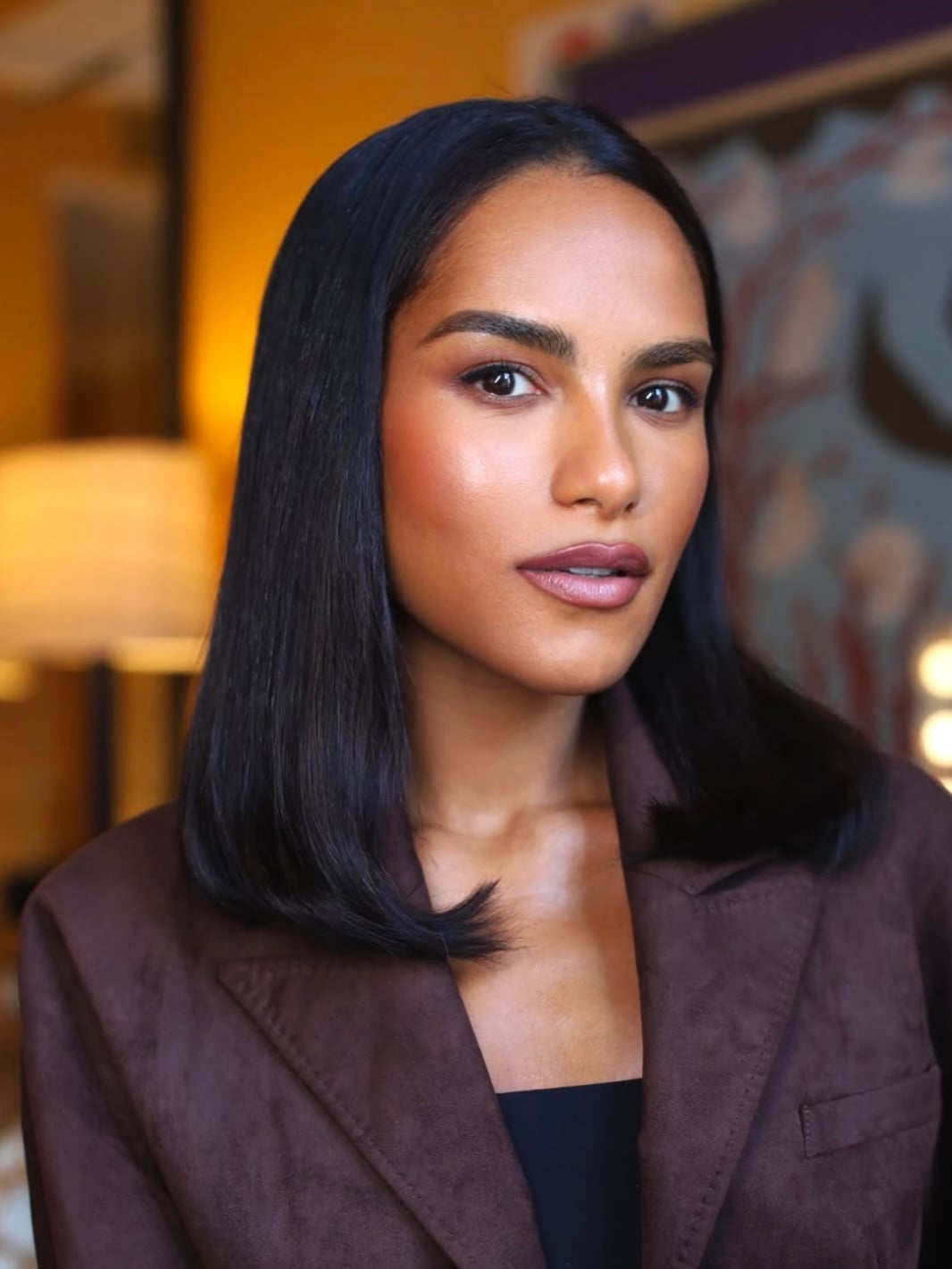
One blunt cut to the collarbone can be easier to maintain than this. Subtle face-framing layers and a middle part give fine, straight dark brown hair shape without removing weight from the ends. A middle part and length below the chin elongate a long face, so this works well if yours runs long. The catch: fine, straight hair with a middle part can lie flat without styling, so this cut needs a smoothing serum on most mornings. Ask your stylist for: collarbone length with subtle face-framing layers, middle part. Then plan on a trim every eight to ten weeks to keep the layers from growing into one flat length.
17. Mid-Back Layers With Curtain Bangs
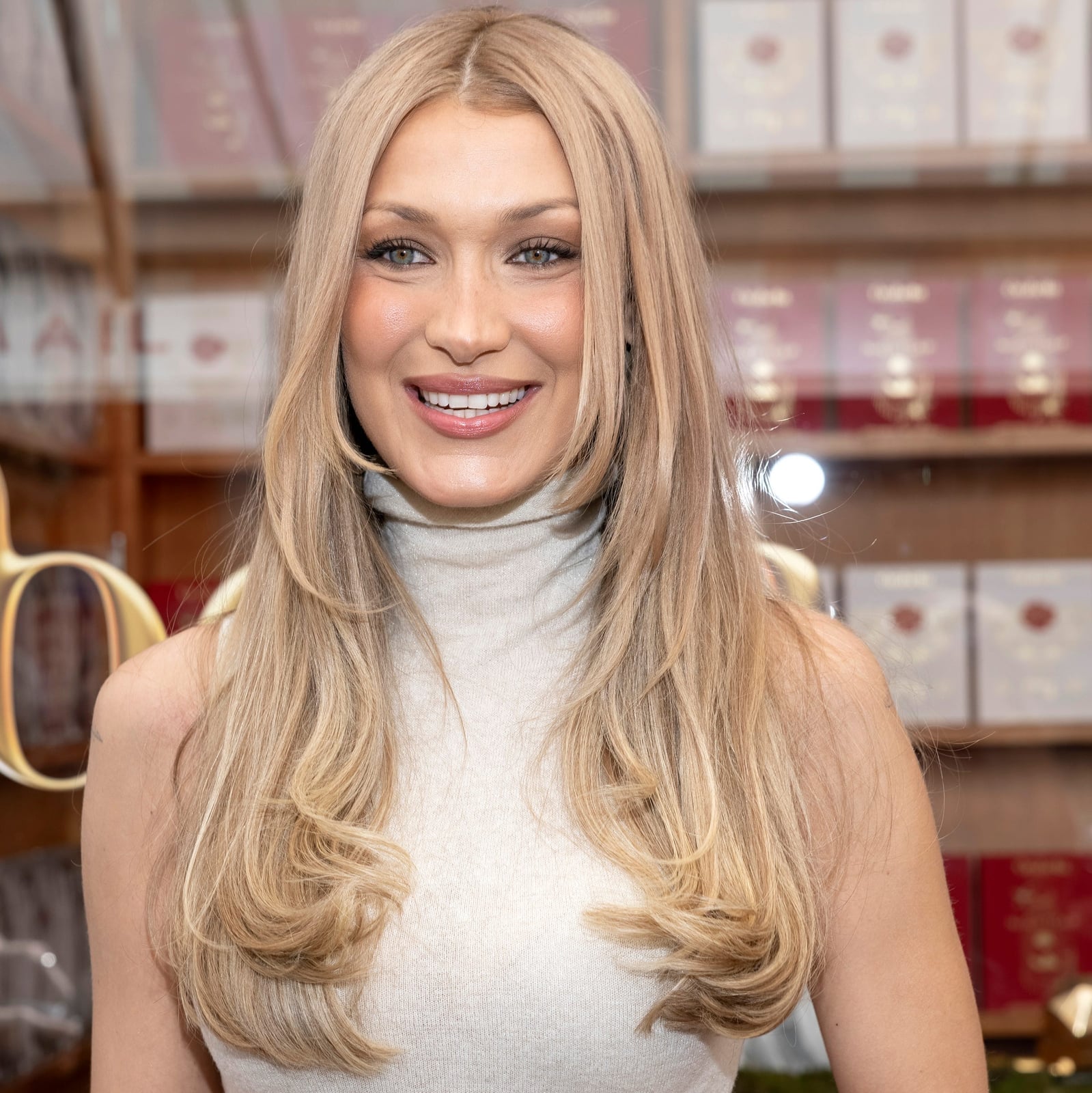
Long layers are a mechanical fix for fine hair that seems to collapse under its own length. Your stylist takes weight out of the interior and leaves the perimeter intact, so mid-back hair keeps its length but stops hanging like a curtain. The layers start around the collarbone and graduate downward, which builds movement through the middle and ends. Curtain bangs are cut to sit on either side of the part, and they soften an angular face without closing it off.
A wavy blowout is what makes the shape read: round brush at the roots, then a diffuser or a large barrel through the lengths. Blonde with lighter highlights reflects more light than a flat dark shade, which helps fine, wavy hair look fuller without extra density. Ask your stylist for: mid-back length with long layers, curtain bangs. A volumizing spray at the roots and a trim every ten to twelve weeks keep the layers from collapsing into one heavy sheet.
18. Collarbone Shag With Silver Highlights
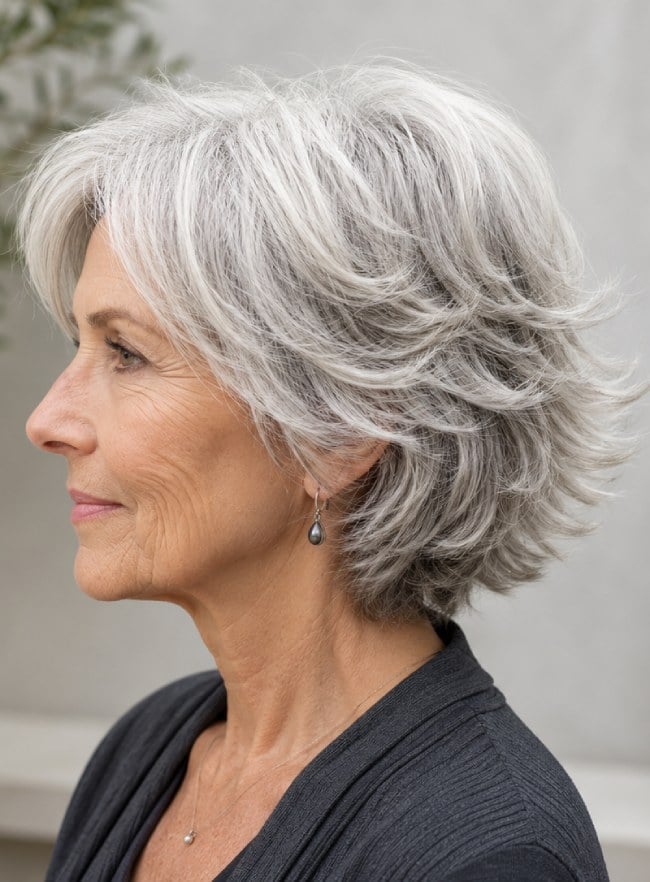
Silver highlights ask for more upkeep than a single-process brown, and fine hair shows the regrowth line sooner because there is less density to hide it. A root shadow buys you time: it blurs the line for roughly six weeks, then the silver needs a toner refresh every four to six weeks to keep brassiness out. The collarbone shag carries it well, with textured layers and curtain bangs that move on fine, wavy hair. Ask your colorist for: silver highlights with a root shadow. This is salon work, not a box job, because silver on fine hair shows every uneven patch. Ask your stylist for: collarbone length shag, curtain bangs. A texturizing spray wakes up the layers between washes.
19. Half Up Half Down Waves
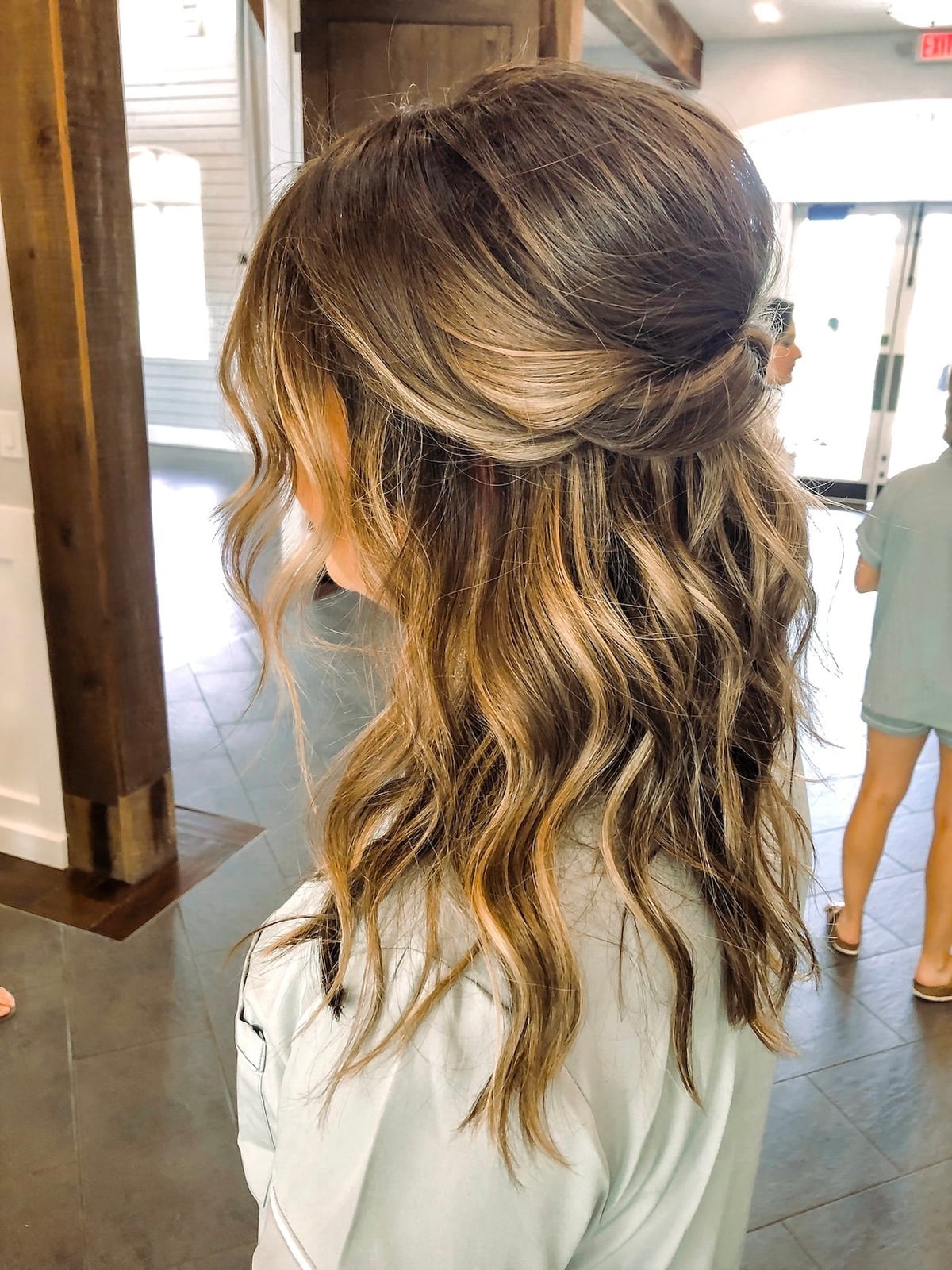
The half-up section is the whole trick here: pulled from above the ears and pinned at the crown, it lifts fine hair off the scalp and leaves the rest of the mid-back length loose. Loose waves through the lengths add width, and a side parting keeps the crown from looking too symmetrical. This is the style for a wedding, a dinner, or any evening when hair down feels flat and a full updo feels like too much.
Texture is what holds the shape. A texturizing spray through the lengths, then a light backcomb at the crown before you pin, keeps the half-up from sliding by hour three. Fine, wavy hair holds this better than straight hair, which needs a curling iron through the loose sections first. Blonde balayage adds dimension so the waves read as separate pieces. Ask your stylist for: mid-back length, half up half down style, loose waves. No bangs means nothing to trim between cuts.
20. Textured Bob With Curtain Bangs

Wondering whether a chin-length bob will make fine hair look thinner? Not this one. Textured waves through the lengths and curtain bangs break up the surface, so fine, wavy hair reads fuller than it is. Curtain bangs soften round and square faces, and the chin length keeps the jaw clear. Ask your stylist for: chin length bob, textured waves, curtain bangs. Dark blonde with balayage adds dimension. Air-dry with a texturizing product, and trim the baseline every six to eight weeks.
21. Final Thoughts
For fine hair, prioritize cuts that create the illusion of density. Blunt lines, strategic layering around the face, and textured ends can all add perceived fullness. Avoid excessive thinning or choppy layers that can make fine hair look even sparser.
- Schedule trims every 6-8 weeks to maintain shape and prevent split ends, which can weigh fine hair down.
- Use volumizing shampoos and conditioners; focus conditioner on the ends to avoid weighing down the roots.
- Incorporate texturizing sprays or dry shampoo at the roots for lift and grit before styling.
- When blow-drying, aim the nozzle at the roots and lift with a brush, or use a root-lifting spray.
The right cut for fine hair is about smart shaping, not just length.

