
Fulani braids bring together geometric scalp patterns, bead embellishments, and a tailored finish that works on natural hair at almost any length. This season, the style is shifting toward softer edges: think wavy ends, face-framing pieces, and a lived-in texture that keeps the look current for longer.
These 17 ideas for Fulani Braids Natural Hair range from mid-back lengths to short, neat rows and an ornate updo. Each section covers who it suits, how it holds, and what to ask your stylist for, so you can find the version that fits your texture, density, and daily routine without guesswork.
1. Mid-Back Fulani Braids With Beads and Shells
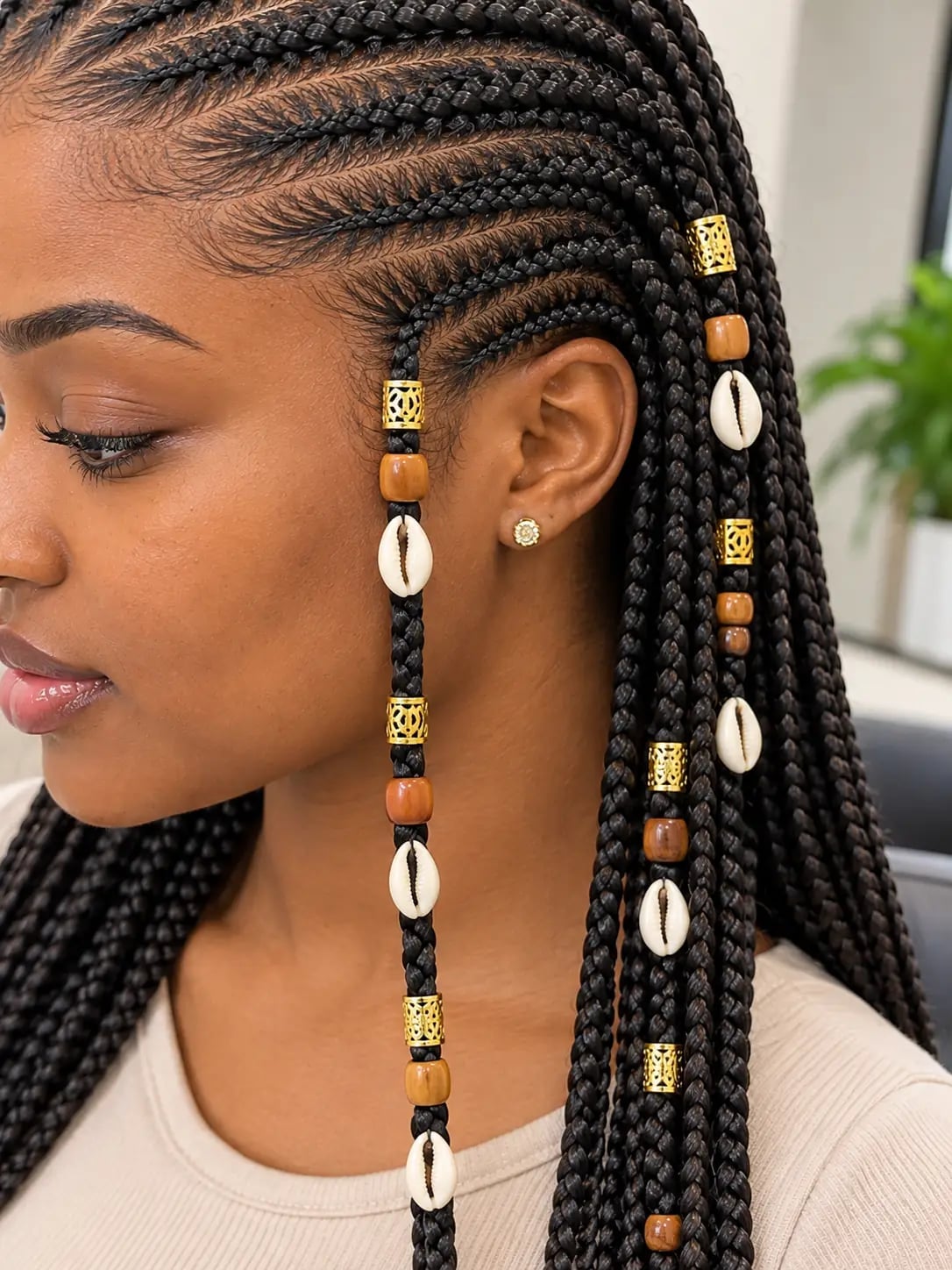
Every braid in this design is built on a clean middle part, with each section braided taut from root to tip so the shells and beads sit flat against the scalp rather than flopping forward. The mid-back length gives the hair enough weight to hold the embellishments in place, which is why thick natural textures handle this detail better than fine strands do. Ask your stylist for: mid-back Fulani braids with beads and shells.
Styling is minimal once the braids are in. You are mostly keeping the beads secure and the scalp moisturized between the rows. A light oil applied at the partings every few days prevents the tight braids from pulling the scalp dry. The shells add a faint clink when you move, which is the point.
2. Shoulder Length Fulani Braids With Curly Ends
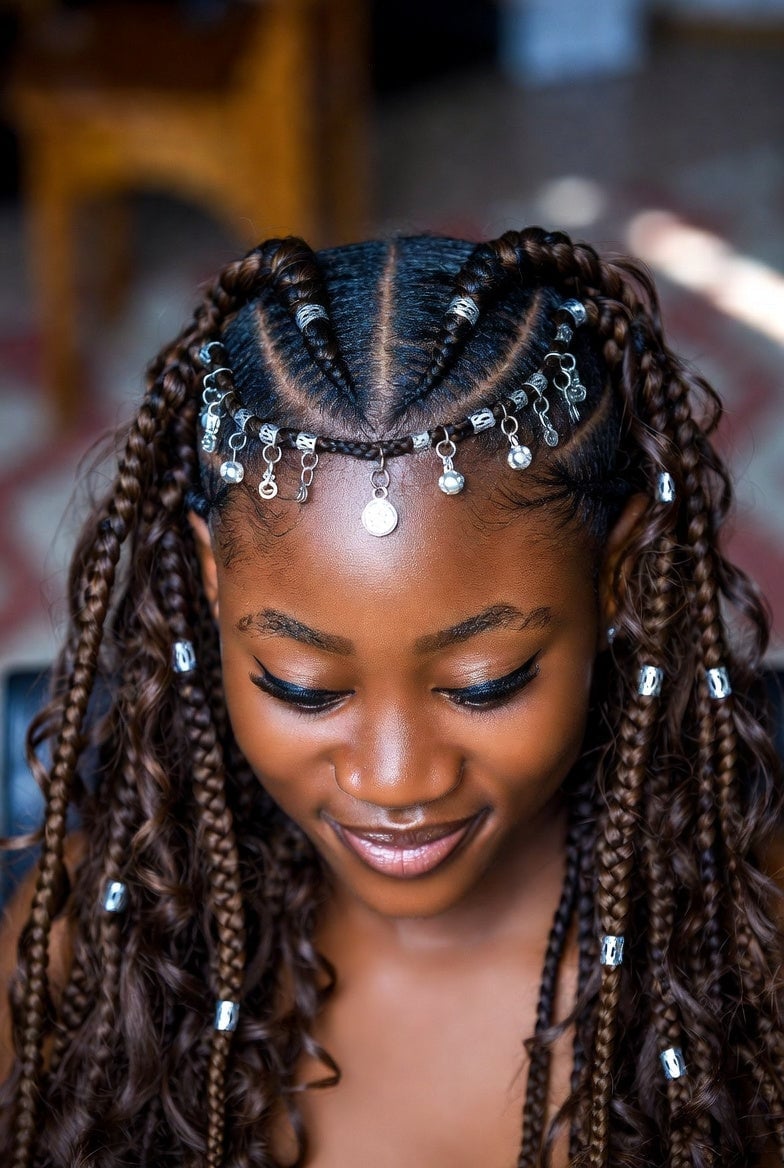
Can you keep the braided pattern without committing to waist-length hair? Yes, and the shoulder length is the reason. The scalp work stays intricate, middle part, geometric feed-in lines, but the loose curly ends stop the style from feeling heavy. This length works for thick, naturally curly hair because the unbraided portion has enough texture to curl up on its own rather than dangle straight. Ask your stylist for: shoulder length Fulani braids with curly ends and beads.
3. Dark Brown Fulani Braids With Ornate Beads
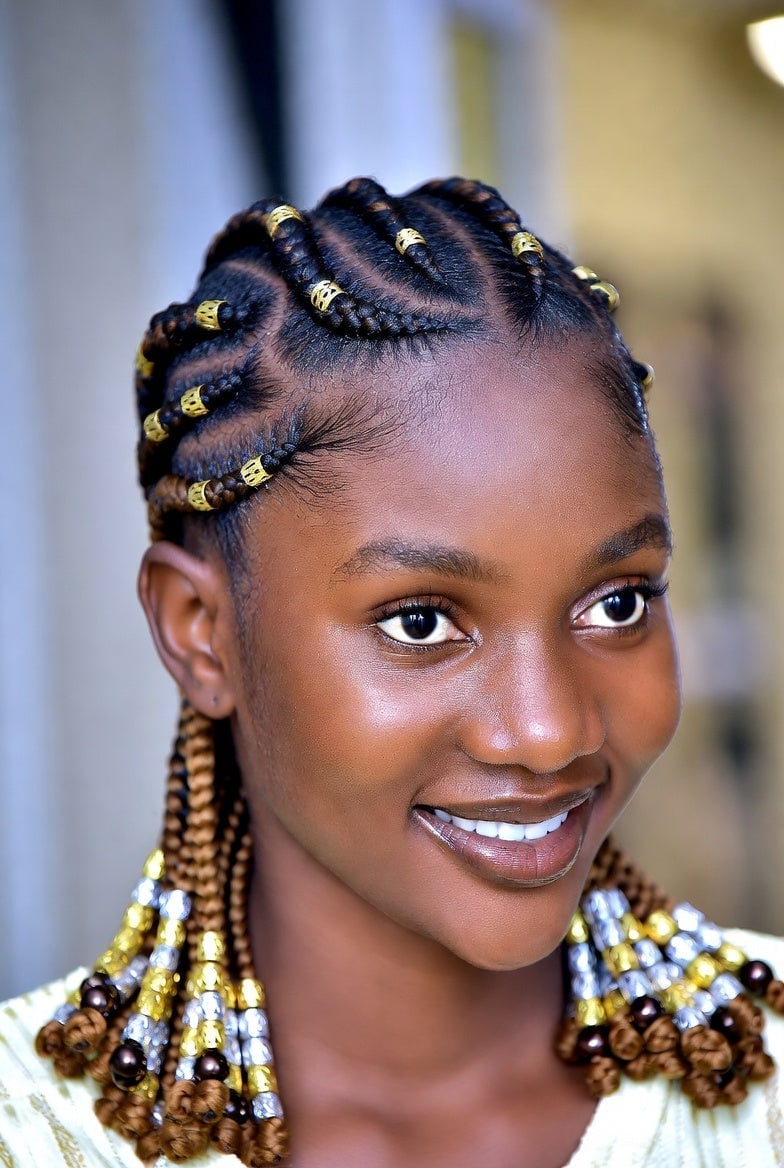
A Fulani braid set with plain beads looks clean. One with ornate beads looks deliberate. The difference here is the bead size and placement, smaller, more detailed pieces spaced every few inches instead of clustered at the ends. On dark brown hair the metal tones pop without competing with the color. Ask your stylist for: dark brown Fulani braids with ornate beads and curly ends. You are better off with thick, shoulder-length or longer hair so the braids have enough body to support the metal.
4. Mid-Back Braids With Blonde and Brown Tips
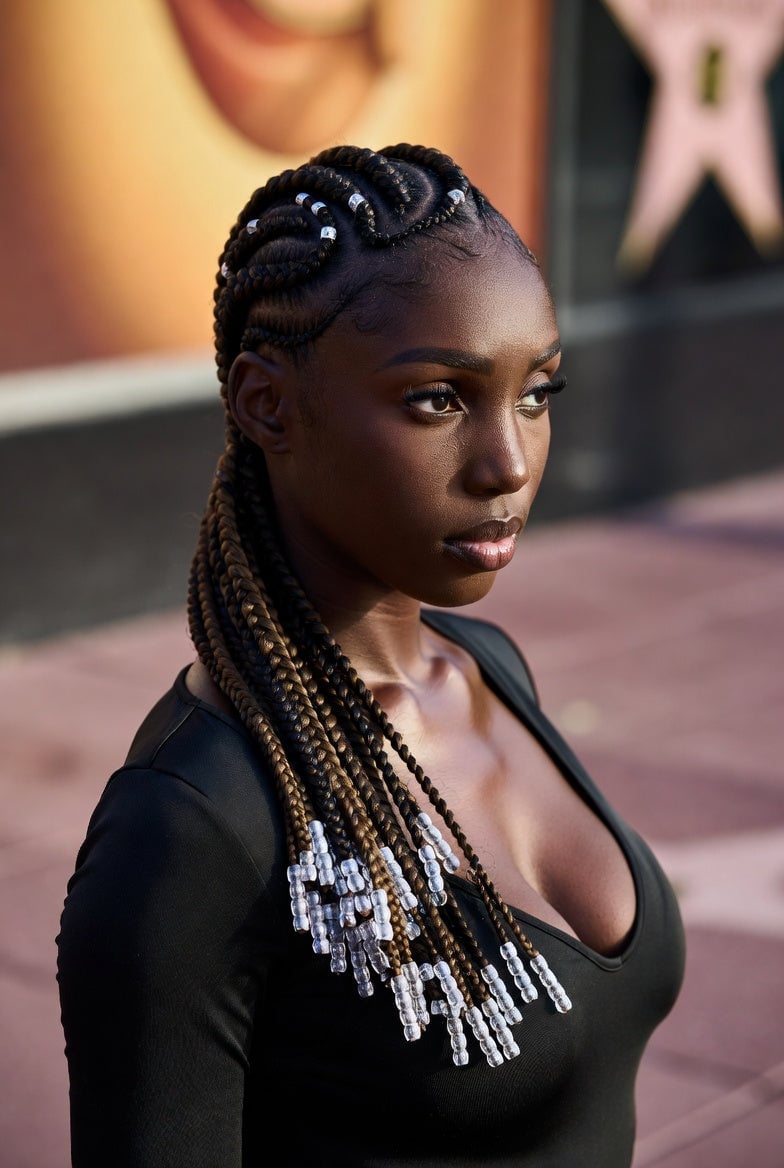
The transition from black roots to brown and then blonde tips creates a gradient that avoids looking grown out. Each braid is wrapped with clear and silver beads that shine against the darker root section. This color placement works best for mid-back or longer hair so the gradient has room to travel. Ask your stylist for: mid-back Fulani braids with black to blonde tips and silver beads. It works well in warmer months when lighter ends feel less heavy.
5. Mid-Back Fulani Braids With Gold Beads, Black
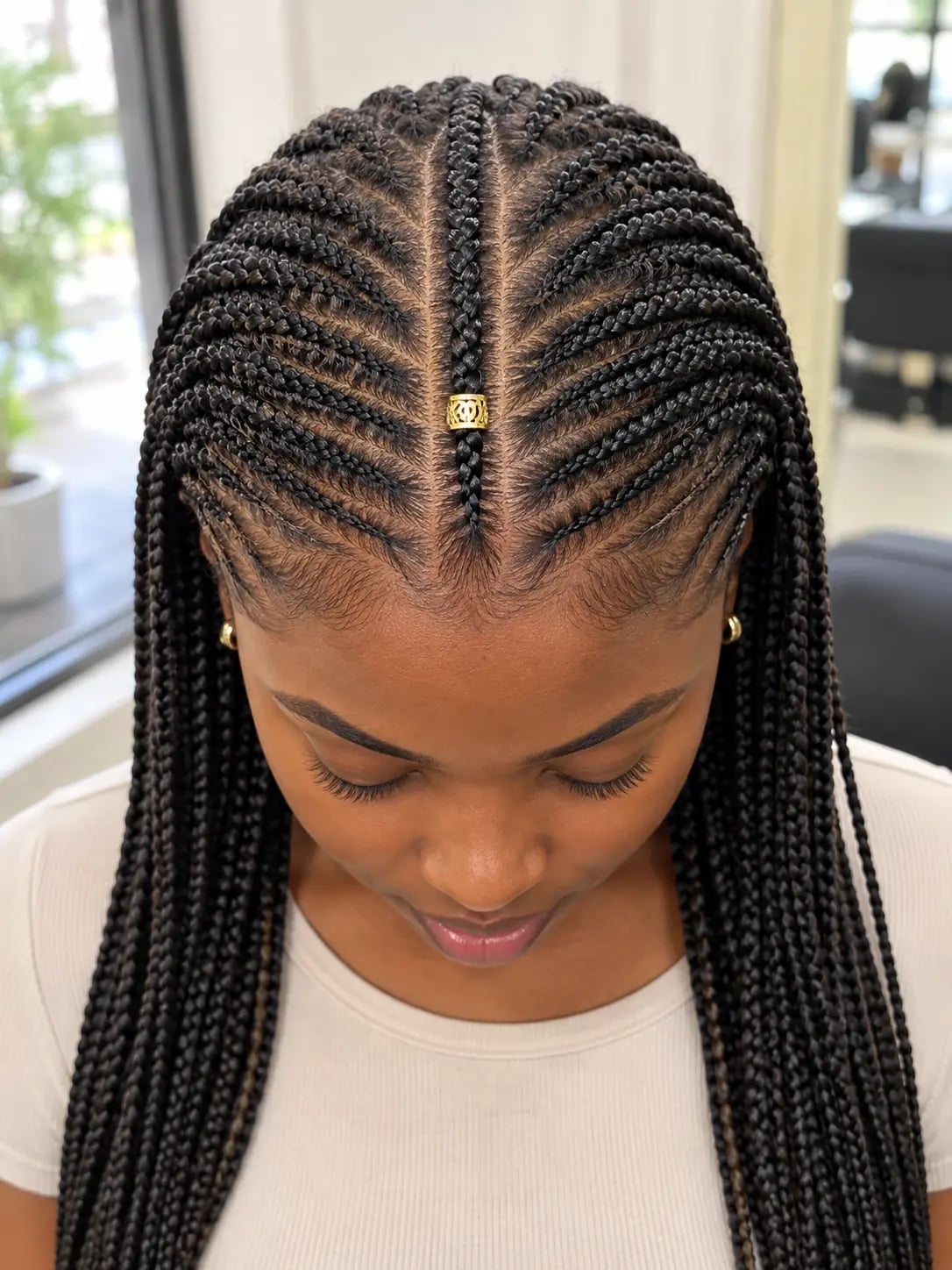
How do you make black Fulani braids look finished without adding color? Gold beads placed at regular intervals. The middle part keeps the scalp pattern symmetrical, and the mid-back length gives the braids enough weight to hang straight. Ask your stylist for: mid-back Fulani braids with gold bead detail. Be specific about spacing, every third braid or every few inches, so the placement looks planned.
6. Fiery Red Fulani Braids With Coily Curls
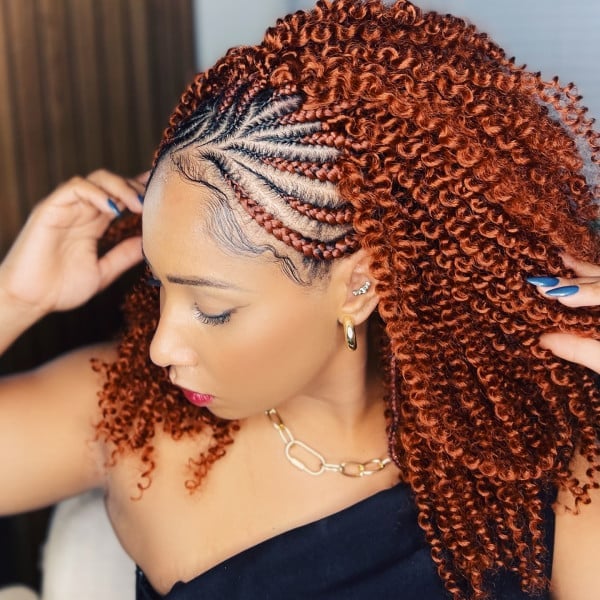
The coily curls at the ends turn these Fulani braids into a full, rounded shape that looks like a cut. It suits natural hair that reaches at least shoulder length, because the curl needs enough weight to bounce without deflating. Ask your stylist for: shoulder length fiery red Fulani braids with coily curls. The trade-off with a shade this saturated is that it fades faster than brown or black, so you will need a color depositing conditioner roughly every third wash to keep the red from turning orange. A middle part keeps the volume balanced on both sides.
7. Mid-Back Brown Fulani Braids With Dark Beads
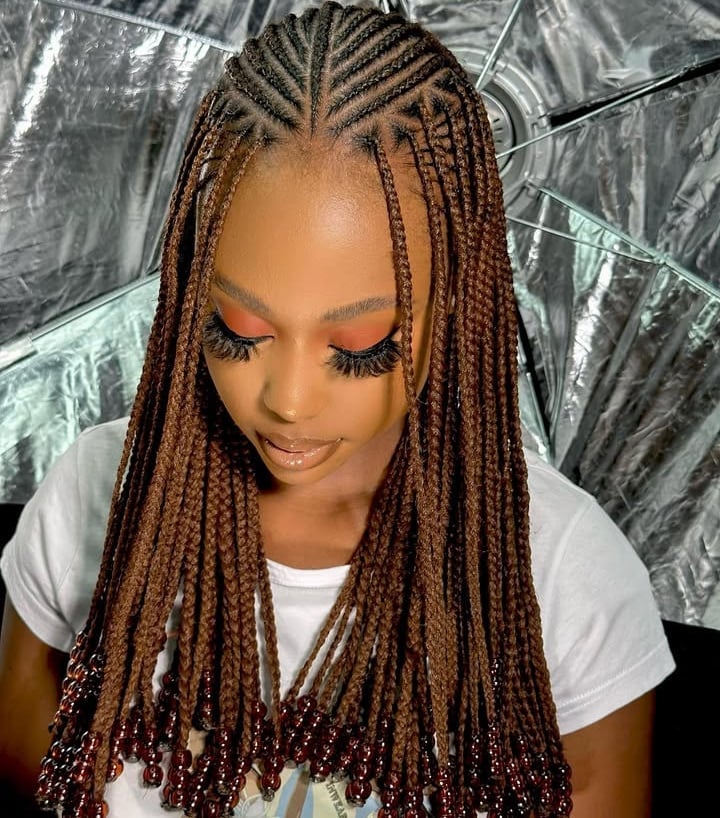
The central cornrow pattern anchors these mid-back braids, and the warm brown color prevents the dark beads from disappearing into the hair. It works best on natural coily texture that has enough grip to hold the beads in place without sliding. Ask your stylist for: mid-back brown Fulani braids with densely placed dark beads.
Those beads add weight, so the braids hang straighter than unadorned ones. A lightweight oil on the scalp every two or three days keeps the partings from looking dry. The beads click against each other when you move, which is either a satisfying detail or a reason to skip this version.
8. Mid-Back Fulani Braids With Detailed Scalp Patterns
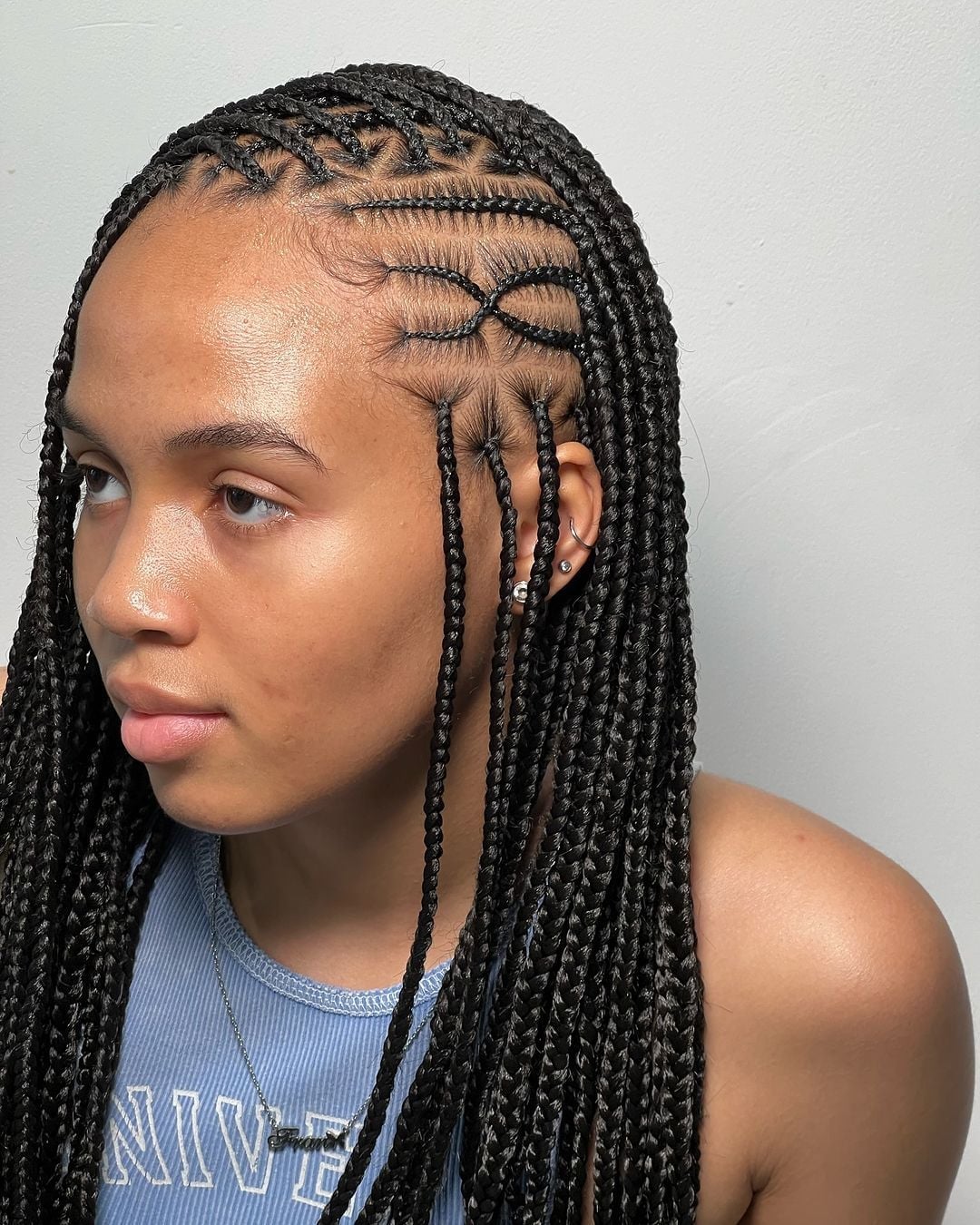
The scalp braiding here runs in precise, narrow lines that follow the hairline and curve toward the crown, which means the pattern stays visible even when the hair is pulled back. It requires natural thick hair at least mid-back length, because sparse density would leave gaps in the design. Ask your stylist for: mid-back Fulani braids with detailed scalp patterns. Each section is parted and braided close to the root, so the overall look is neat and the parting lines stay sharp for several weeks. A side view shows the depth of the technique better than a straight-on angle, which is why this style photographs well from an angle.
9. Mid-Back Black Fulani Braids With Small Beads, Middle
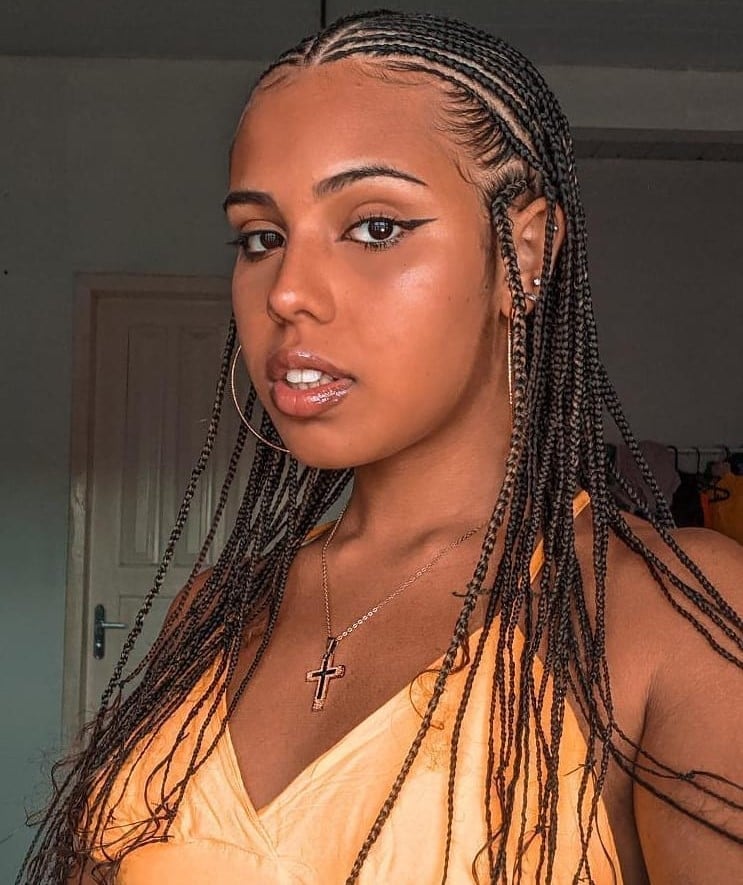
Can a Fulani braid style work for someone who wants the bead detail without the weight of larger ornaments? Yes, when the beads are small and spaced along the length. It suits natural coily hair that reaches mid-back, because the texture grips the beads and keeps them from slipping down. Ask your stylist for: mid-back black Fulani braids with small beads. The black color against the beads creates contrast, so the hair itself stays the main event. A middle part keeps the cornrow pattern symmetrical from the front.
10. Mid-Back Fulani Braids With Wavy Texture
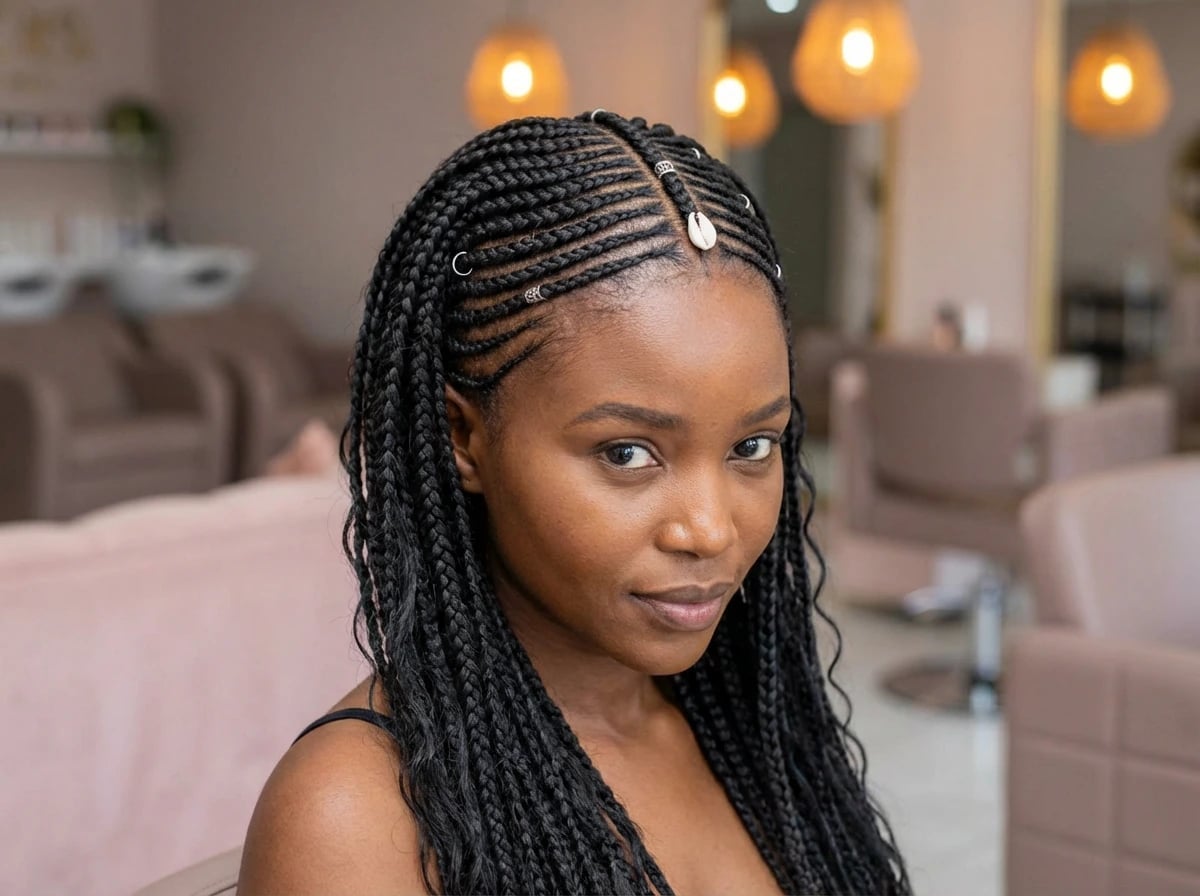
A straight braid extension and a wavy one sit differently: the wavy version has more movement at the ends and a softer silhouette overall. It suits natural hair at least mid-back length that wants the decorative beads and shells without the rigid line of a fully straight braid. Ask your stylist for: mid-back Fulani braids with wavy texture and beads and shells. The wave means the beads sit at slightly different angles along each braid, which catches light in a less uniform way than a flat braid. A light holding spray on the wavy sections keeps the curl pattern from loosening too quickly.
11. Mid-Back Braids With Loose Wavy Strands
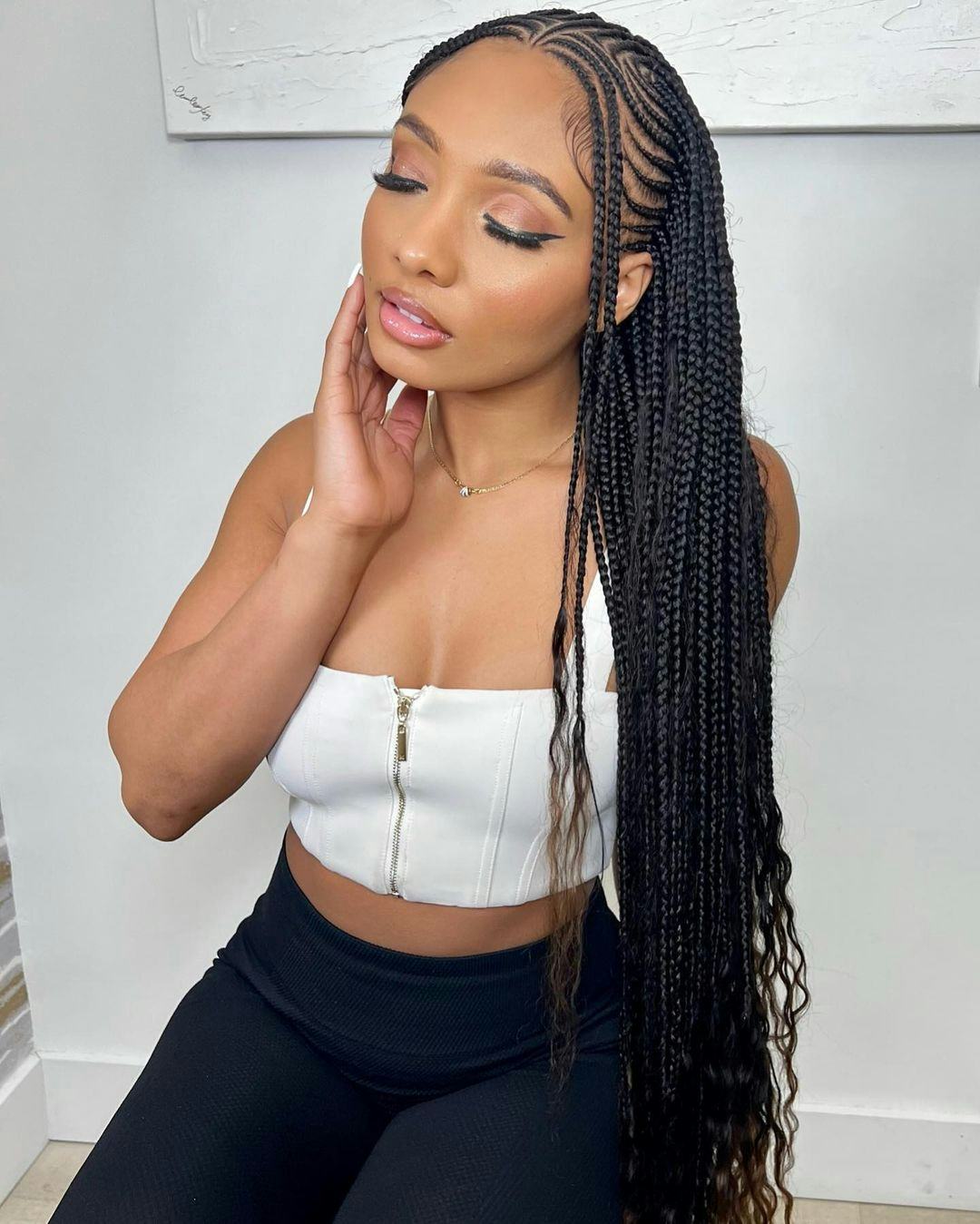
Mid-back Fulani braids with a middle parting transition from neat scalp work into loose, wavy strands finished with beads and charms. The contrast between the structured braids and the flowing waves adds movement without sacrificing hold. Ask your stylist for: mid-back Fulani braids with loose wavy ends and beads and charms.
Natural hair needs at least mid-back length to carry both the braided section and the wave pattern. The loose ends require a bit more upkeep than all-braided styles: apply a moisturizing serum to the waves daily to control frizz and keep the texture defined. Plan for a salon session every three to four weeks to refresh the braids and maintain the shape near the scalp. The wavy strands hold their pattern best with a silk scarf at night.
12. Fulani Braids With Flowing Wavy Curls
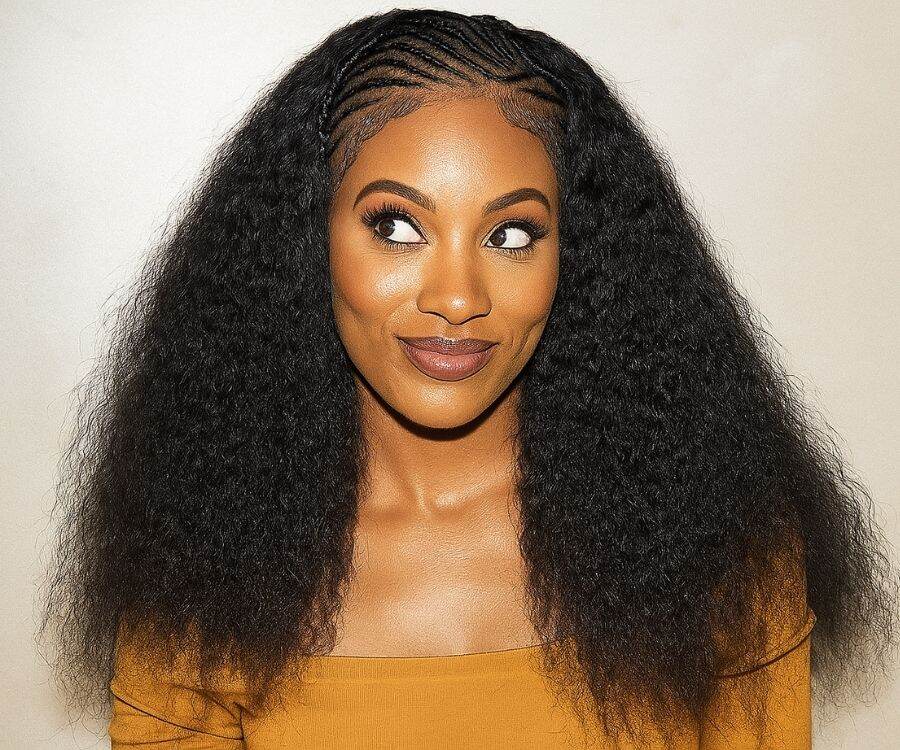
Wondering how to make Fulani braids feel less structured and more romantic? This version braids the crown with a middle parting and lets the rest fall into long, loose wavy curls that reach mid-back. Ask your stylist for: mid-back Fulani braids with flowing wavy curls. The blend of textures is polished but not rigid, which lands well for spring weddings or summer evening events. Gently separate the curls with your fingers after styling to add volume and soften the transition between braid and wave. It is a salon-only design: the curl pattern needs to be set during installation to hold its shape for the full two to three weeks.
13. Mid-Back Dark Brown Braids With Loose Waves
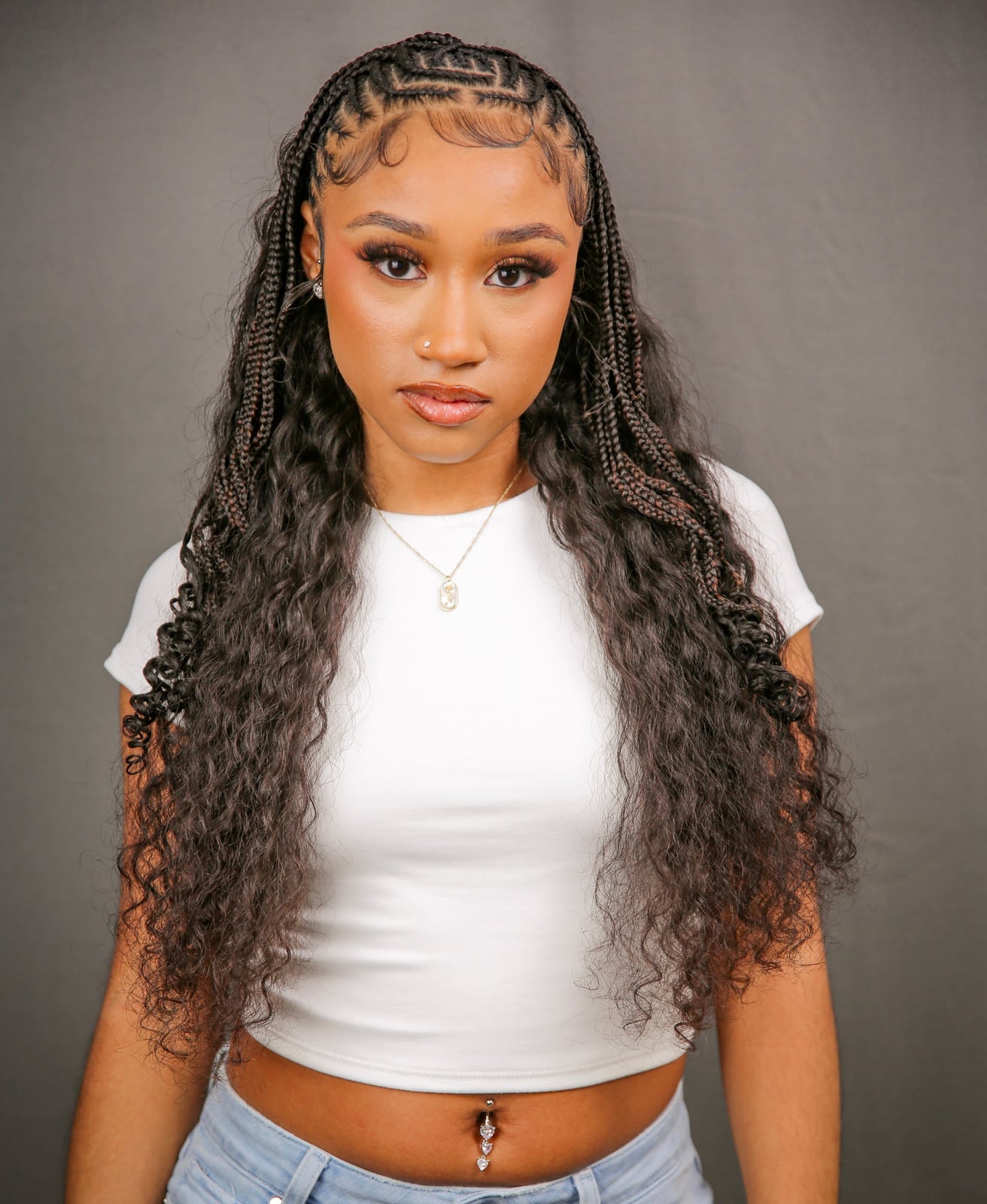
Ask your stylist for: mid-back dark brown Fulani braids with loose wavy hair. The parting is middle, and the thick texture allows the braids to sit flat against the scalp without pulling. A light texturizing spray on the waves keeps the pattern visible and prevents the loose sections from looking flat against the braided crown. The dark brown base makes the scalp braids a subtle texture, which works for anyone wanting a more understated version of the style.
14. Shoulder Length Fulani Braids With Geometric Patterns
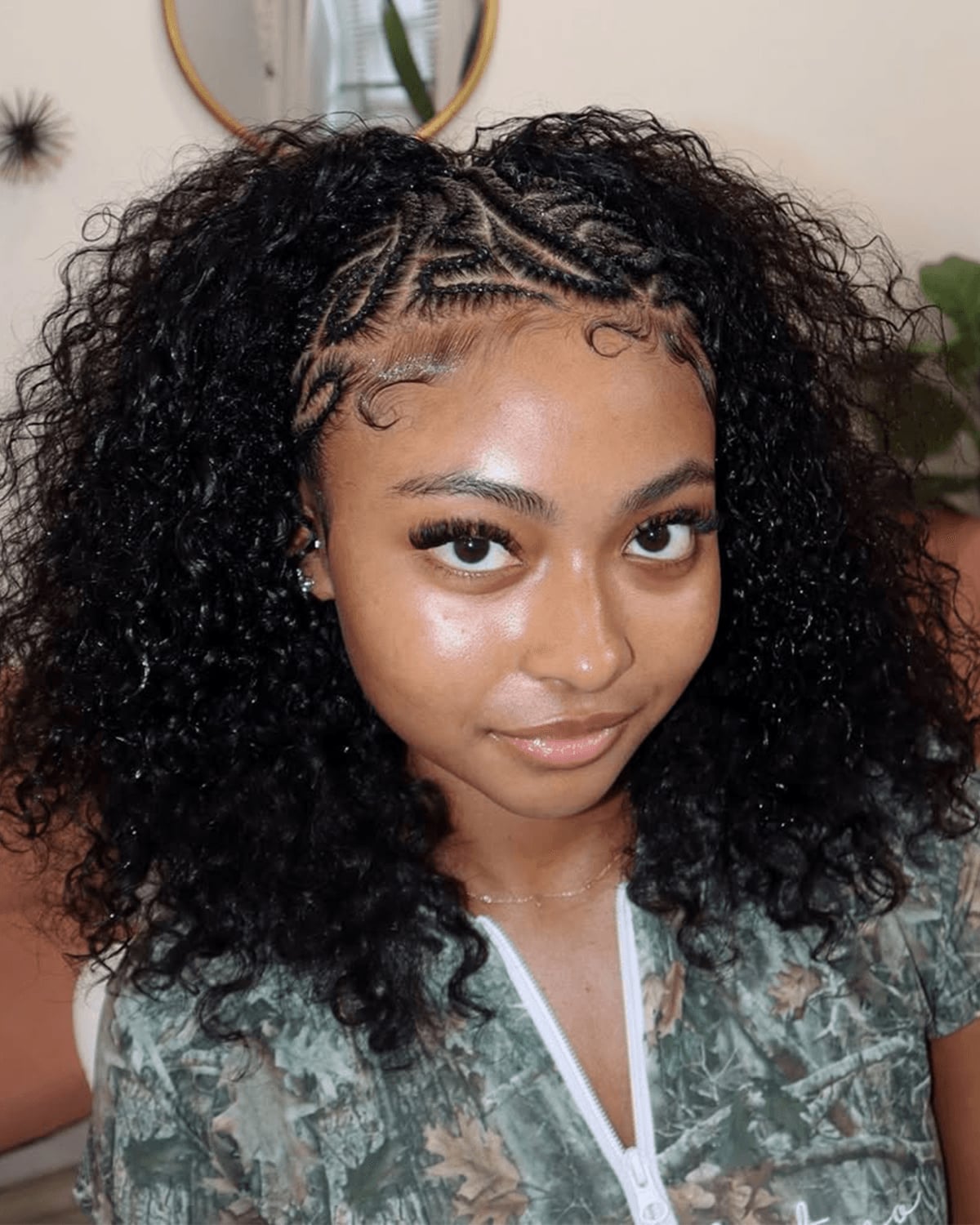
Who should try geometric scalp patterns with Fulani braids? Anyone with thick, curly natural hair at shoulder length or longer, because the volume balances the intricate lines at the scalp. Ask your stylist for: shoulder length Fulani braids with geometric scalp patterns. The middle parting keeps the geometric sections symmetrical, and the dark curly texture that falls around the shoulders softens the overall shape. The geometric lines hold their shape as long as the braids stay intact, so no constant adjustment is needed. A mousse applied to the scalp sections can help define the patterns after a few days of wear.
15. Side Parted Mid-Back Fulani Braids
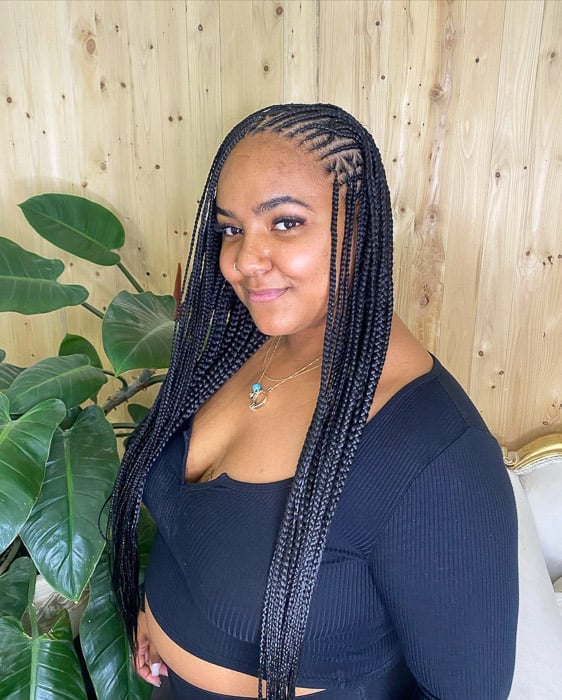
A deep side parting changes the whole silhouette of Fulani braids by sweeping the length to one side. Ask your stylist for: mid-back Fulani braids with a deep side parting. The braids reach mid-back with a sleek, natural texture that looks polished for a work setting or a formal dinner.
Getting a clean side part with symmetrical braid tension is a salon job: the stylist maps the parting before starting, and the braids follow that line consistently. A DIY attempt risks uneven tension and a part that shifts after a day. A smoothing serum on the braids keeps the side-swept look neat and reduces flyaways between salon visits. Plan for a refresh every three weeks to maintain the parting line as new growth appears.
16. Short Fulani Braids With Neat Parting
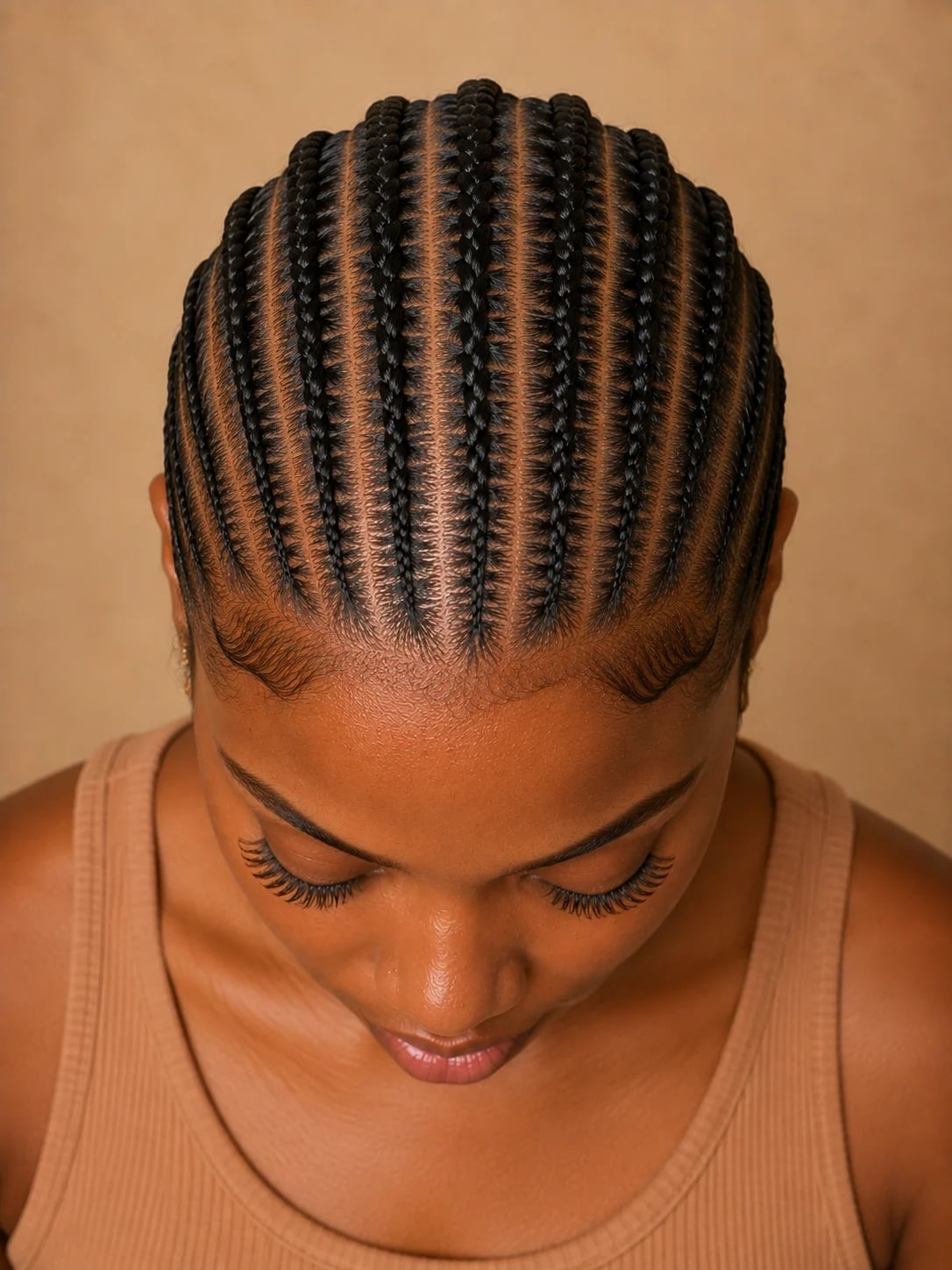
An overhead view reveals just how much design goes into a short length. The neat middle parting and symmetrical scalp braids create a precise geometric effect that is visible from every angle. Ask your stylist for short Fulani braids with a neat middle parting. The trade-off is that achieving this level of detail on shorter hair takes a skilled hand and a solid block of time. It is a salon-only situation, but the result holds its clean lines well between visits.
17. Mid-Back Fulani Braids In An Ornate Updo
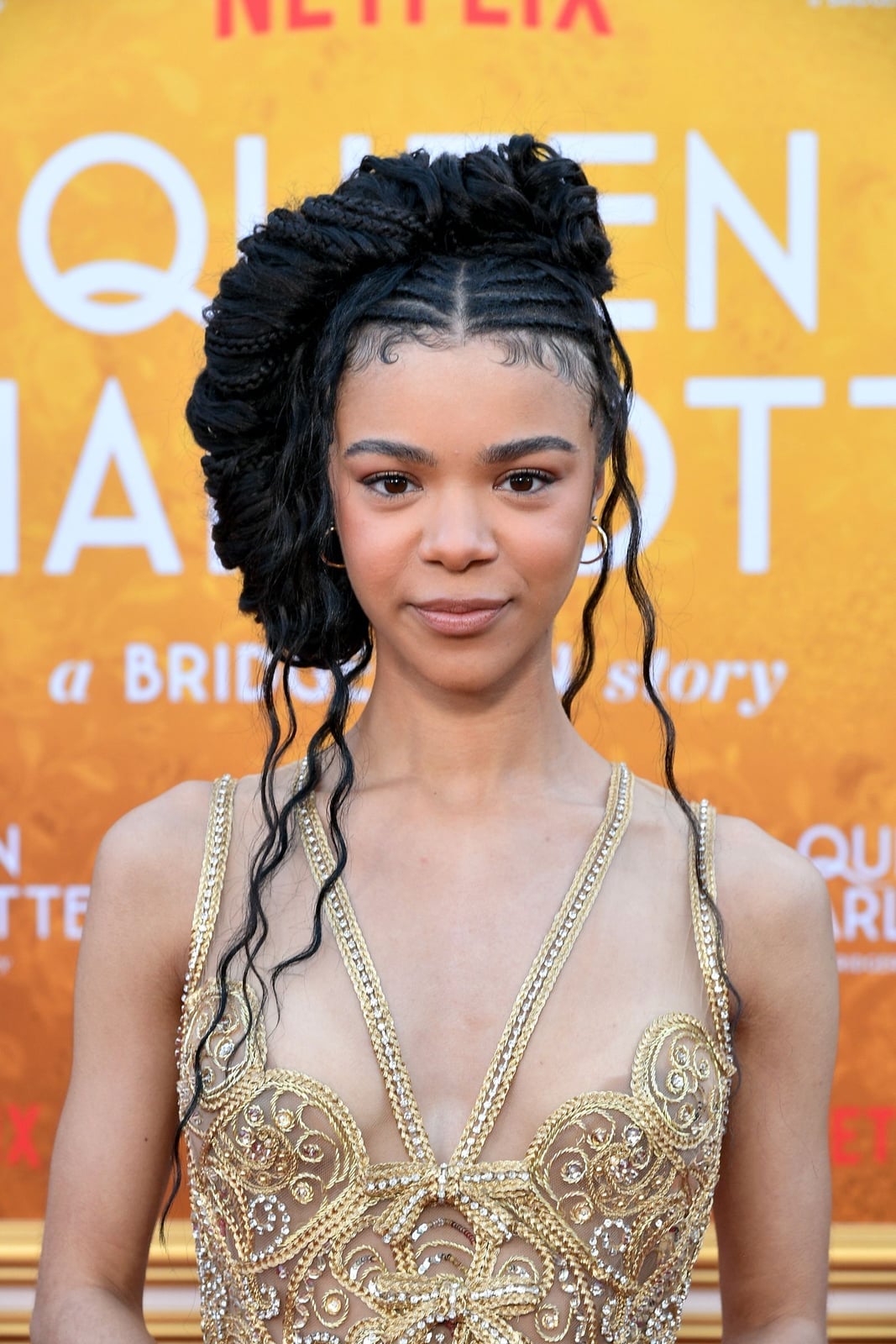
How do you get mid-back Fulani braids to behave for a formal event? The answer is an ornate updo that keeps the length contained and the decoration on display. Ask your stylist for mid-back Fulani braids in an ornate updo with framing tendrils. Thick, black braids are gathered into a sculptural shape, with a few loose strands left out to soften the edges and baby hairs left natural along the hairline.
This is the style for weddings, galas or any occasion where you want the intricacy of Fulani braids without the full length swinging around. A few bobby pins and a light-hold hairspray lock everything in place for the duration.
18. Final Thoughts
For maximum longevity and scalp health, ensure your stylist uses a moisturizing braiding cream and avoids excessive tension on the hairline. The decision rule is simple: if your hair is fine or you have a sensitive scalp, ask for smaller, lighter braids with a looser base. If your hair is thick and resilient, larger braids with beads and heavier decorative pieces work well for up to six weeks.
- Cleanse the scalp with a diluted shampoo or micellar water every 1-2 weeks.
- Apply a light oil or leave-in conditioner to the braids and scalp daily.
- Sleep with a silk or satin bonnet or scarf to maintain braid and hair integrity.
- Avoid excessive manipulation and tight styles to prevent tension on the scalp.
- Plan for takedown and re-braiding within 4-8 weeks, depending on hair growth and maintenance.
Fulani braids offer a rich canvas for personal expression.

