
Round faces have a natural symmetry, but the right haircut can add the angles and length that balance their soft curves. The current wave favors soft face-framing layers and curtain bangs over heavy, blunt cuts, especially as we move into 2025.
This collection of 20 haircuts for round faces spans from low-maintenance bobs to high-impact long layers, covering every texture from fine to thick and curly to straight. Whether your hair falls flat by noon or your fringe refuses to sit still, these styles are chosen to add vertical lines and break up width, giving you a practical guide to your next salon visit.
1. Chin Length Blunt Bob Dark Brown
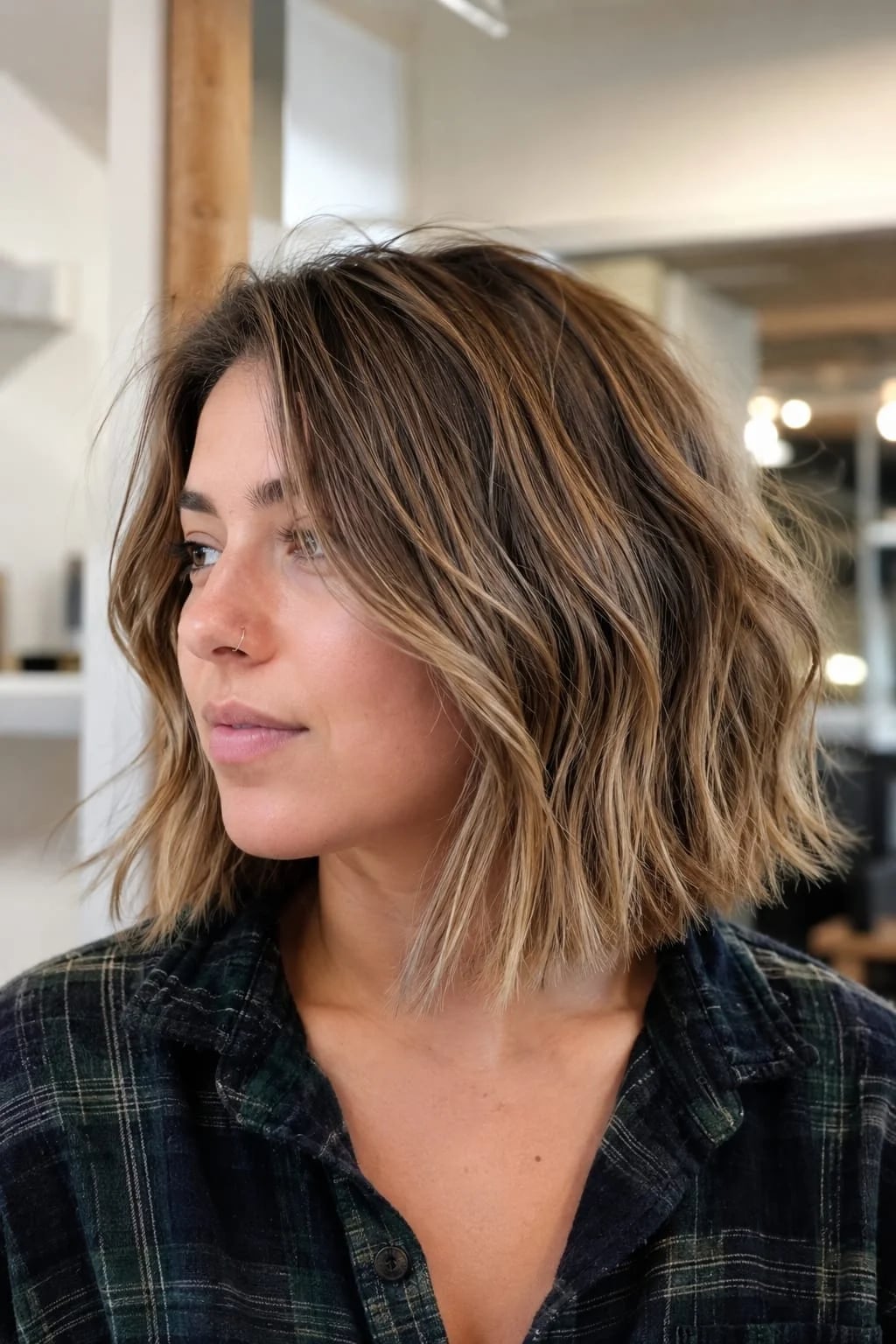
A blunt bob that ends precisely at the chin uses geometry to do the work. The clean, horizontal line creates the illusion of more length, which is the entire point for a round face. A middle part reinforces that vertical line. Ask your stylist for: chin length blunt bob, middle part. This cut works best on fine to medium hair that can hold a straight edge. No bangs keeps the line uninterrupted. A flat iron seals the deal, and a trim every six weeks preserves the sharp baseline.
2. Wavy Ash Blonde Chin Bob Side Part

Can a bob be soft and still do the job? Yes, with the right add-ons. A chin length bob with a side part and side-swept bangs breaks up the roundness of the face without harshness. The soft waves add movement, and the ash blonde color gives it a modern edge. Ask your stylist for: chin length wavy bob, side-swept bangs, ash blonde. The face-framing layers draw the eye outward rather than around.
3. Short Textured Pixie With Side Swept Bangs
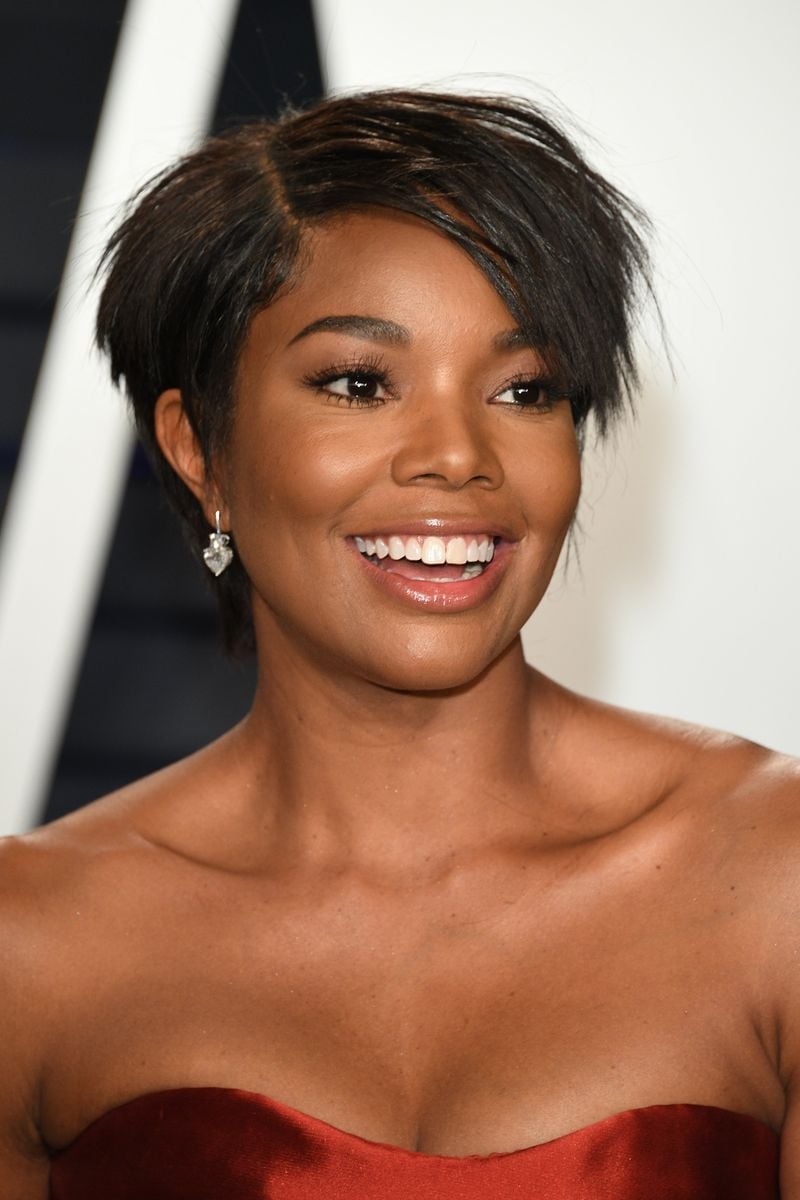
A textured pixie cut that ends around the ear is a bold move, but it works because of the side-swept bangs. The bangs soften the overall silhouette, while the short length exposes more of the face, which can read as angular rather than round. Fine, straight hair can look flat without product. Ask your stylist for: short textured pixie, side-swept bangs. A styling paste adds the definition that the cut needs. This is not a grow-out you will enjoy.
4. Angled Bob With Jawline Sharpness
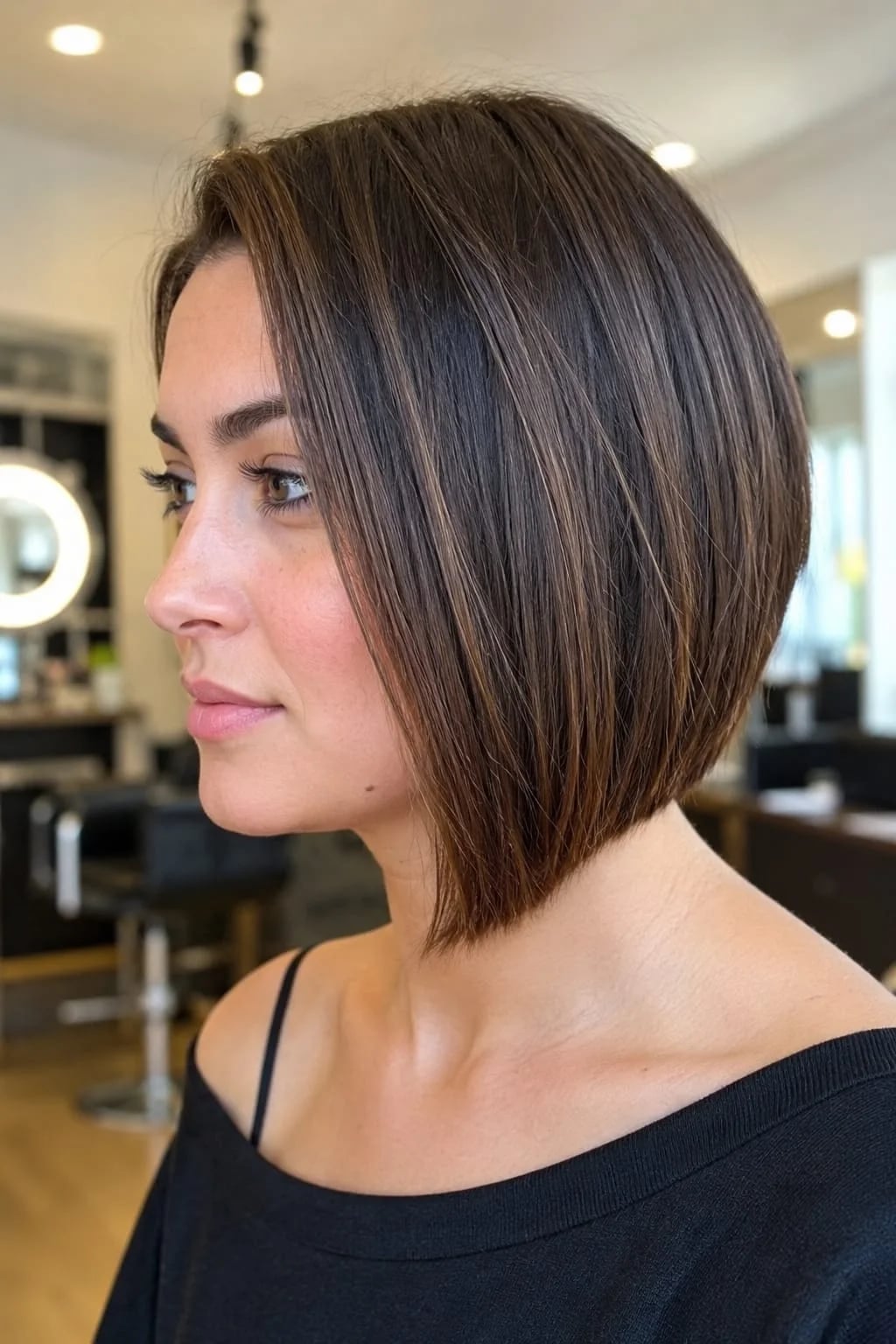
An angled bob is often compared to a blunt bob, and the difference is in the diagonal. Where a blunt bob stops squarely, an angled bob drops longer in the front, which draws the eye down and stretches the face. The side part and smooth blowout add polish. Ask your stylist for: angled bob to the jawline, smooth blowout, side part. The subtle lighter highlights add dimension without distraction. This cut requires a round brush during blow-drying and a trim every six weeks.
5. Polished Wavy Bob Chin Length Thick Hair
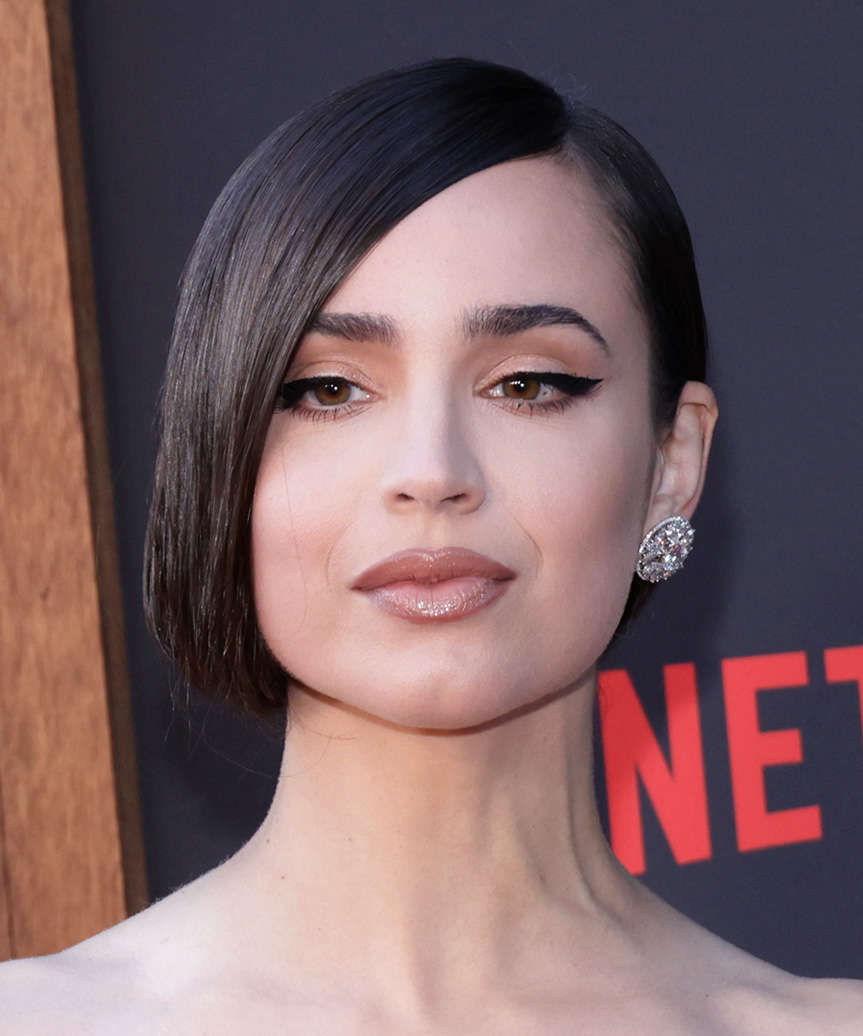
A polished wavy bob that ends at the chin works because the waves fall away from the face and do not add width. The side parting creates asymmetry, and the uniform waves look deliberate without being stiff. Ask your stylist for: chin length polished wavy bob, side part. Thick hair holds the wave pattern well, so a smoothing cream and finger-styling is enough. A trim every six to eight weeks keeps the shape from becoming a triangle.
6. Collarbone Bob Light Brown Subtle Highlights
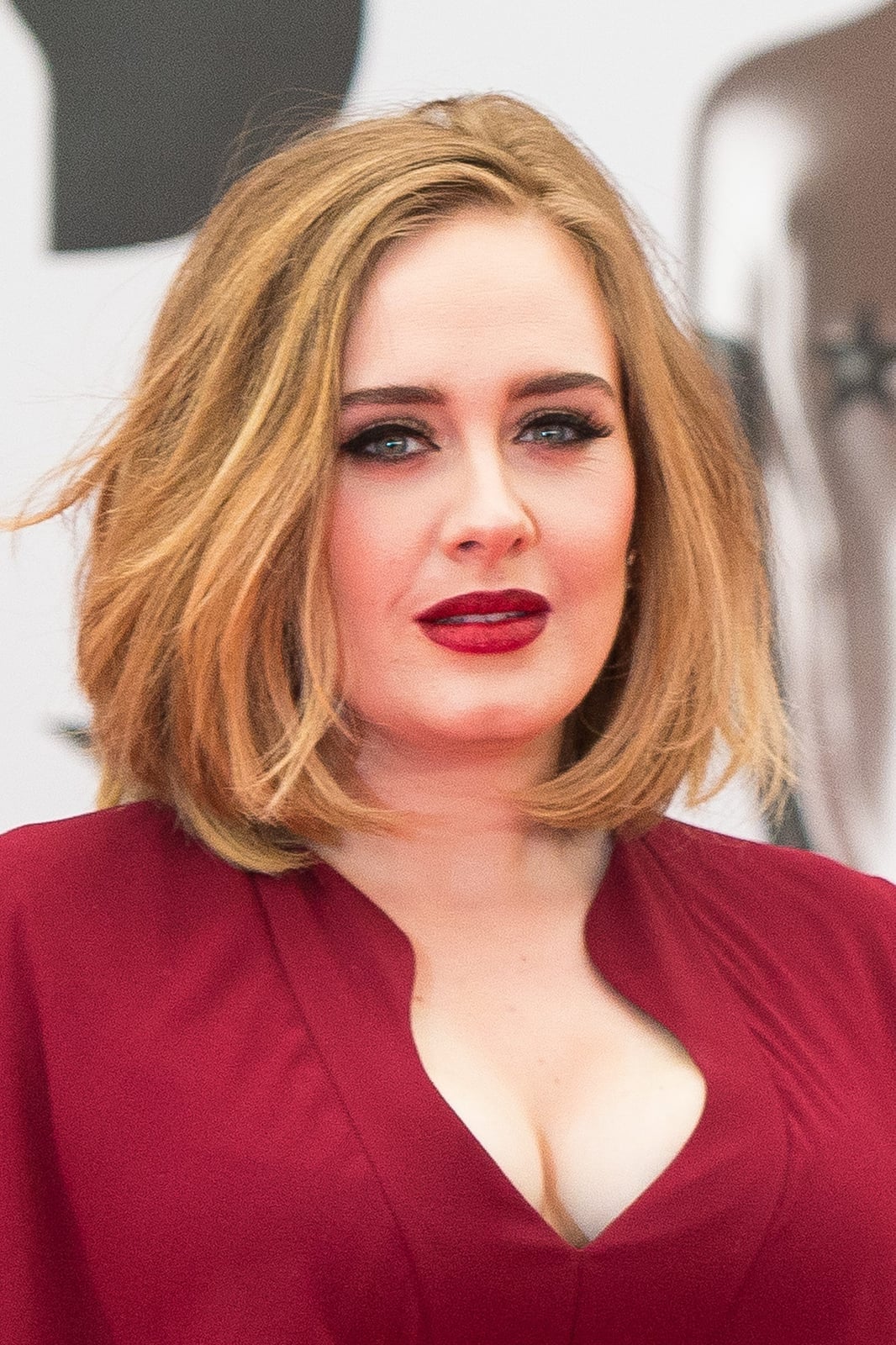
This bob’s clean, sharp line at the collarbone creates a vertical emphasis that visually lengthens a round face, no bangs to interrupt the silhouette. The side part adds asymmetry, which further breaks up the width. Medium density straight hair holds this shape best, since fine hair can look too sparse and thick hair can puff out the blunt edge. Ask your stylist for a collarbone bob with a side part. Use a volumizing spray at the roots and dry with a large round brush to maintain the slight wave at the ends. A trim every six weeks keeps the line crisp.
7. Dark Blonde Lob With Curtain Bangs
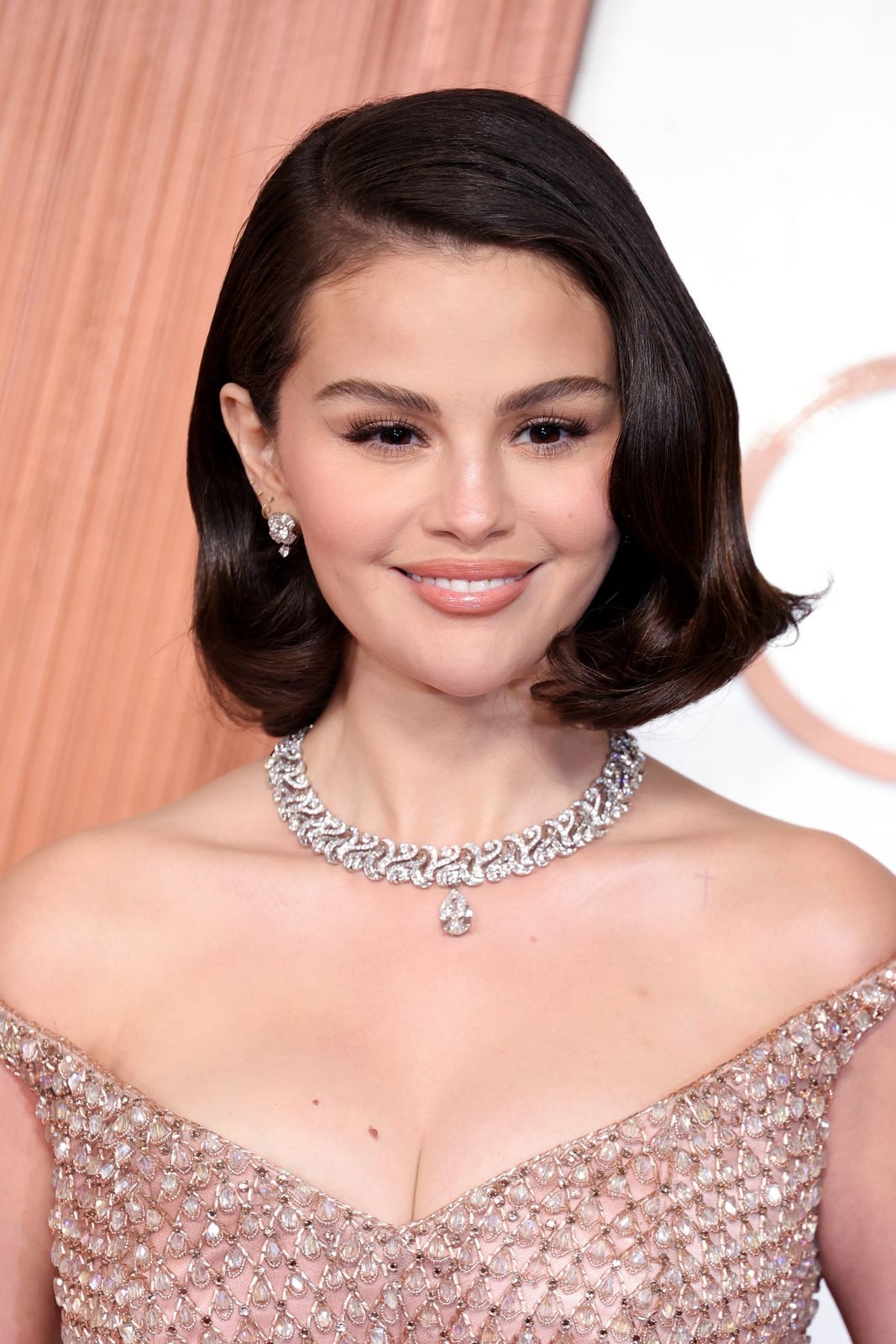
Wondering if curtain bangs actually work on a round face? They do, provided they hit at the cheekbones and angle outward. Here the collarbone-length lob keeps the overall line long, while the face-framing layers and middle part create a soft vertical pull. The dark blonde balayage adds dimension without harsh contrast. This cut suits medium density wavy hair that can hold the curtain shape without falling flat. Ask your stylist for a collarbone lob with curtain bangs. It works for the office and translates to dinner with the same blowout. Plan a trim every six to eight weeks to keep the bangs from grazing your chin.
8. Layered Lob With Face Framing Waves

The trick here is that the layers start below the chin, so the face-framing waves fall forward without widening the sides. This lob uses soft internal layers to remove bulk from thick wavy hair while keeping the collarbone length intact. The middle part and loose waves work together to create vertical movement. Ask your stylist for a collarbone lob with soft face-framing layers. To style at home:
- Apply a wave-enhancing serum to damp hair.
- Twist sections around your finger and air-dry or diffuse on low heat.
- Break the cast with your fingers, not a brush.
A trim every six to eight weeks prevents the layers from losing their shape.
9. Collarbone Layered Bob With Curtain Bangs
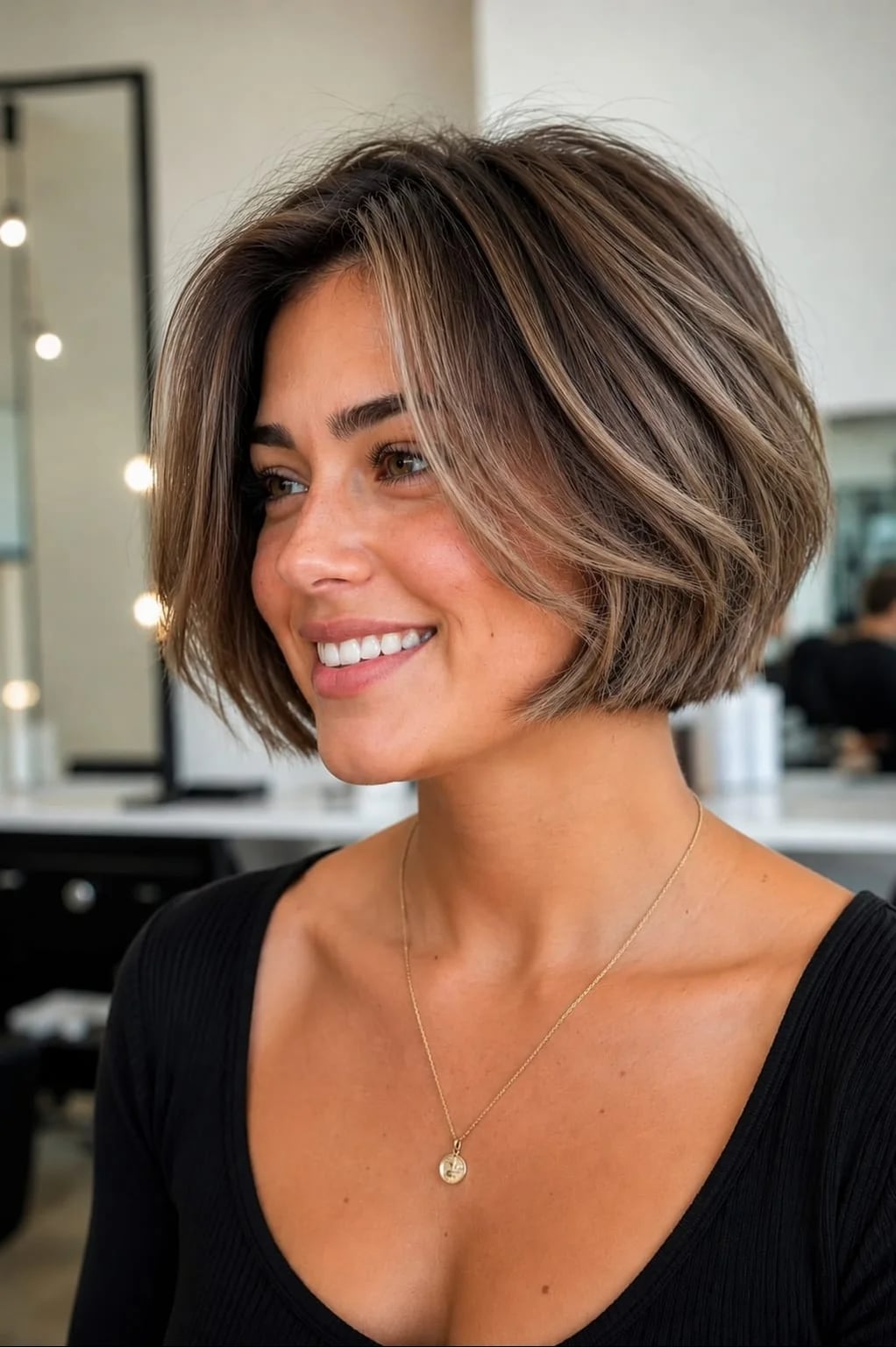
This bob builds on a classic collarbone length but adds layers through the back so the shape has movement, not weight. The curtain bangs are the standout detail. They require precise cutting to hit at the right angle on the cheekbone, which is why this is strictly a salon job. The middle part and the dark brown base with blonde highlights add depth without distracting from the cut’s structure. Ask your stylist for a collarbone layered bob with curtain bangs and blonde highlights. A DIY bang trim here risks the whole proportion shifting, so book your stylist for a refresh every six to eight weeks.
10. Auburn Layered Bob With Curtain Bangs, Wavy

Is auburn high-maintenance? It can be, since warm copper tones tend to fade toward orange. The subtle highlights here help by introducing lighter pieces that make the grow-out less obvious and the tone less flat. The collarbone-length bob with soft layers and curtain bangs keeps the face-framing soft, not blunt. The side part and gentle waves add texture that works well on medium density hair. Ask your stylist for a collarbone layered bob with curtain bangs in auburn. The honest drawback: you will need a toning gloss every four to six weeks to keep the copper from turning brassy.
11. Layered Bob With Prominent Curtain Bangs, Middle

The curtain bangs are the whole point here, sweeping out from a middle part to land right at the cheekbones. On a round face, that open frame adds vertical line where you want it most. Ask your stylist for a collarbone layered bob with curtain bangs and a medium brown base with blonde highlights.
This cut assumes you own a round brush and a blow-dryer, because the bangs will not blow themselves out. A quick dry each morning keeps the swoop alive, and a trim every six to eight weeks stops the layers from turning into one shapeless blob. Medium density wavy hair handles the weight best; fine hair tends to go flat by lunch.
12. Shoulder Length Layers Dark Curly Hair
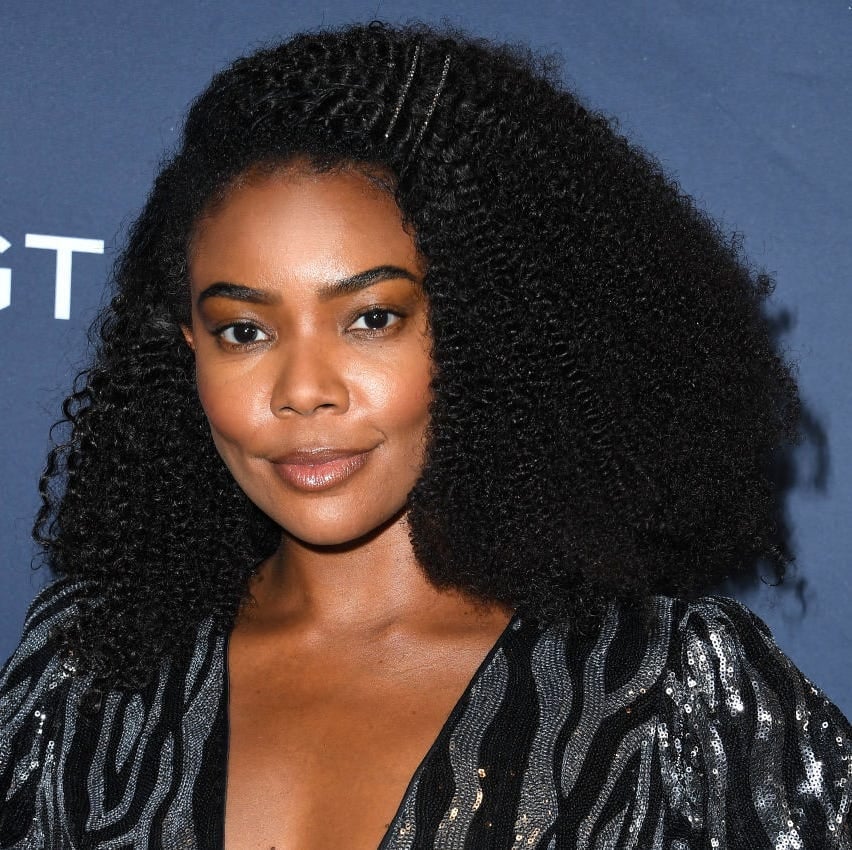
Curly hair already carries its own volume, so a shoulder length cut with layers does the face-shaping work that a blowout does on straight textures. The middle part splits the curl evenly, and the layers stop the shape from turning into a triangle. Ask your stylist for a shoulder length layered cut in dark brown that follows your natural curl.
13. Angled Platinum Blonde Bob Collarbone

The angle is the design: shorter in the back, longer in the front, all of it sleek and straight. That forward sweep draws the eye down, which is the oldest trick in the book for a round face. Ask your colorist for an angled bob to collarbone in platinum blonde, kept glassy with a flat iron. Fine straight hair shows off the sharp line best, and the blunt ends need a trim every four to six weeks to stay crisp. The platinum is a commitment, but the geometry handles the rest.
14. Long Layers Mid-Back With Face Framing

Long face-framing layers that start around the chin create a slimming effect without cutting a bob. The hair stays mid-back, dark brown and thick, so you keep the length while the front pieces do the sculpting. Ask your stylist for a mid-back cut with long face-framing layers in dark brown.
The layers are cut so the shortest piece hits your jaw and the rest cascades down. That softens the roundness without removing bulk, which is why this works on thick straight hair. Use a large round brush while drying to encourage the front pieces to sweep forward, then let the back air-dry. A trim every eight to twelve weeks keeps the face-framing pieces from creeping past your chin.
15. Mid-Back Waves With Face Framing Pieces
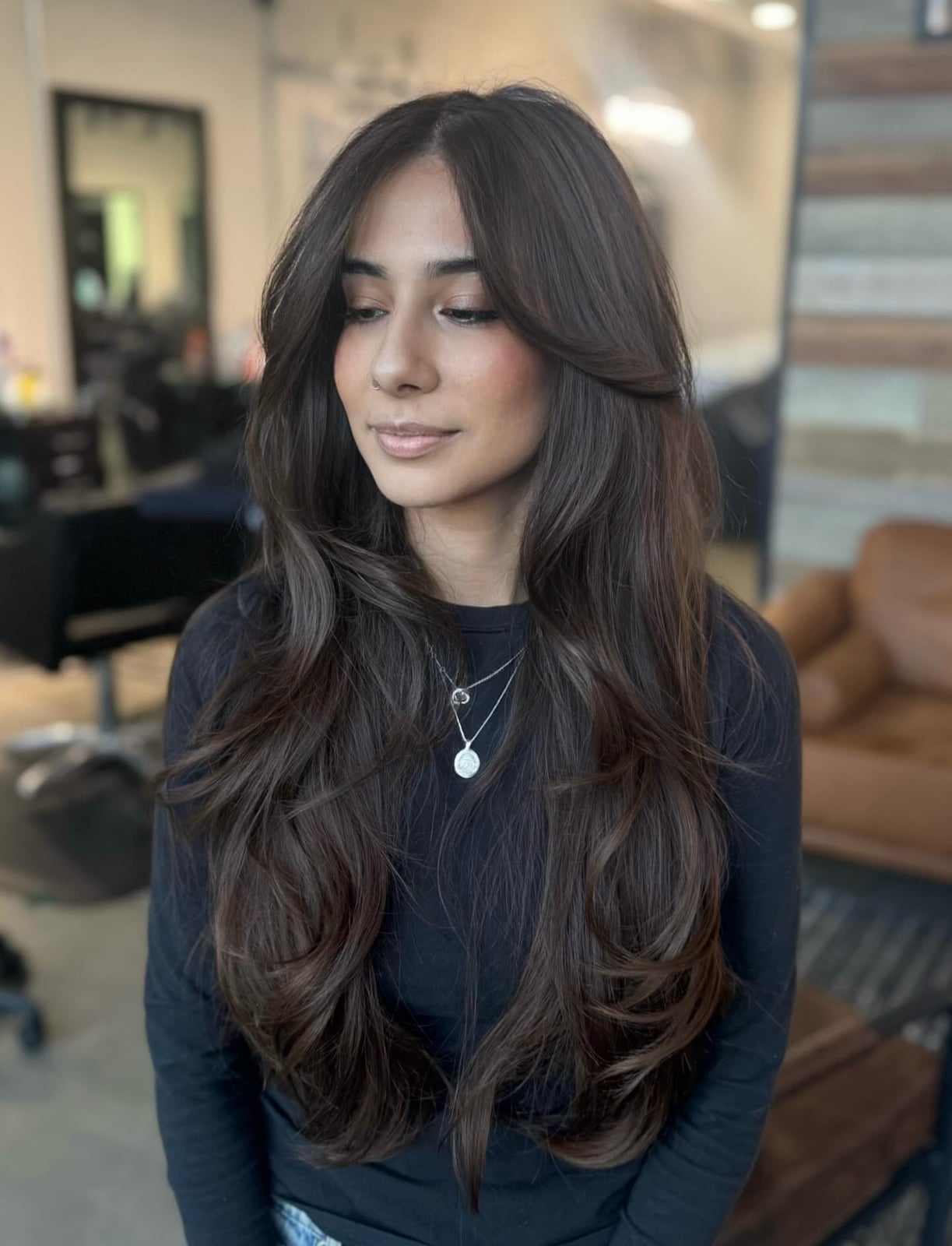
The loose waves give the hair movement, and the face-framing pieces are the standout detail. They start shorter around the cheekbones and blend into the long layers, so the eye travels down instead of across. Ask your stylist for mid-back waves with long layers and face-framing pieces in dark brown with subtle highlights.
When you ask, be specific about where the shortest framing piece hits: cheekbone, not chin, if you want maximum elongation. The subtle highlights add depth so the waves show dimension and contrast. Thick wavy hair carries this shape naturally, and a texturizing spray on damp hair, scrunched and left to dry, keeps the pieces from clumping. Trim every eight to twelve weeks to keep the framing from losing its shape.
16. Long Layers Mid-Back With Subtle Dimension
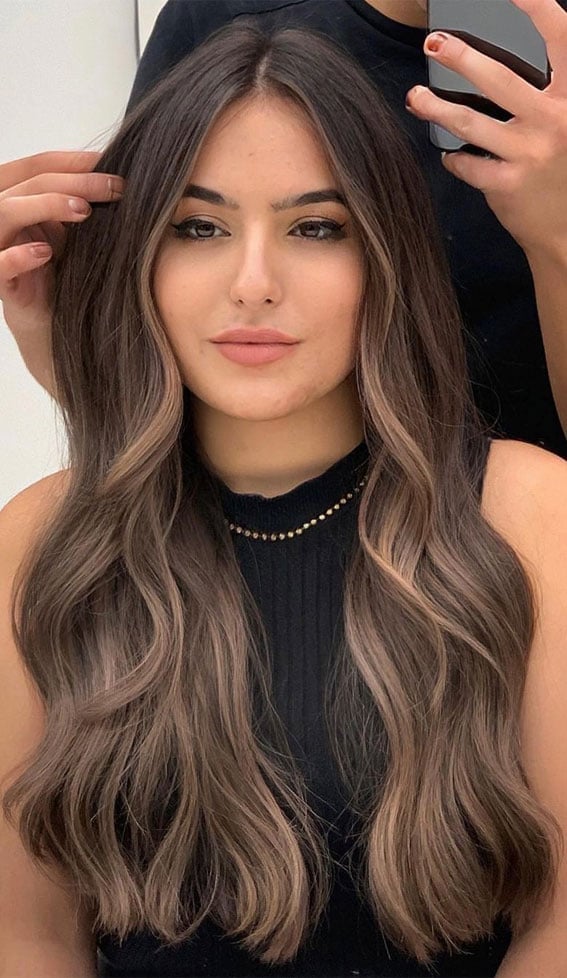
Subtle lighter pieces woven through dark brown hair keep the color from falling flat, which matters more when there are no bangs to distract the eye. For a round face, the vertical lines of long wavy layers and a middle parting create the elongation without needing a sharp angle.
Ask your stylist for: mid-back long layers, dark brown with subtle dimension, loose waves. The dimension fades gradually over about four months, which is longer than a full highlight. A smoothing serum on damp hair reduces frizz, and a trim every eight to twelve weeks maintains the shape.
17. Mid-Back Long Layers With Face Framing, Close-Up Take
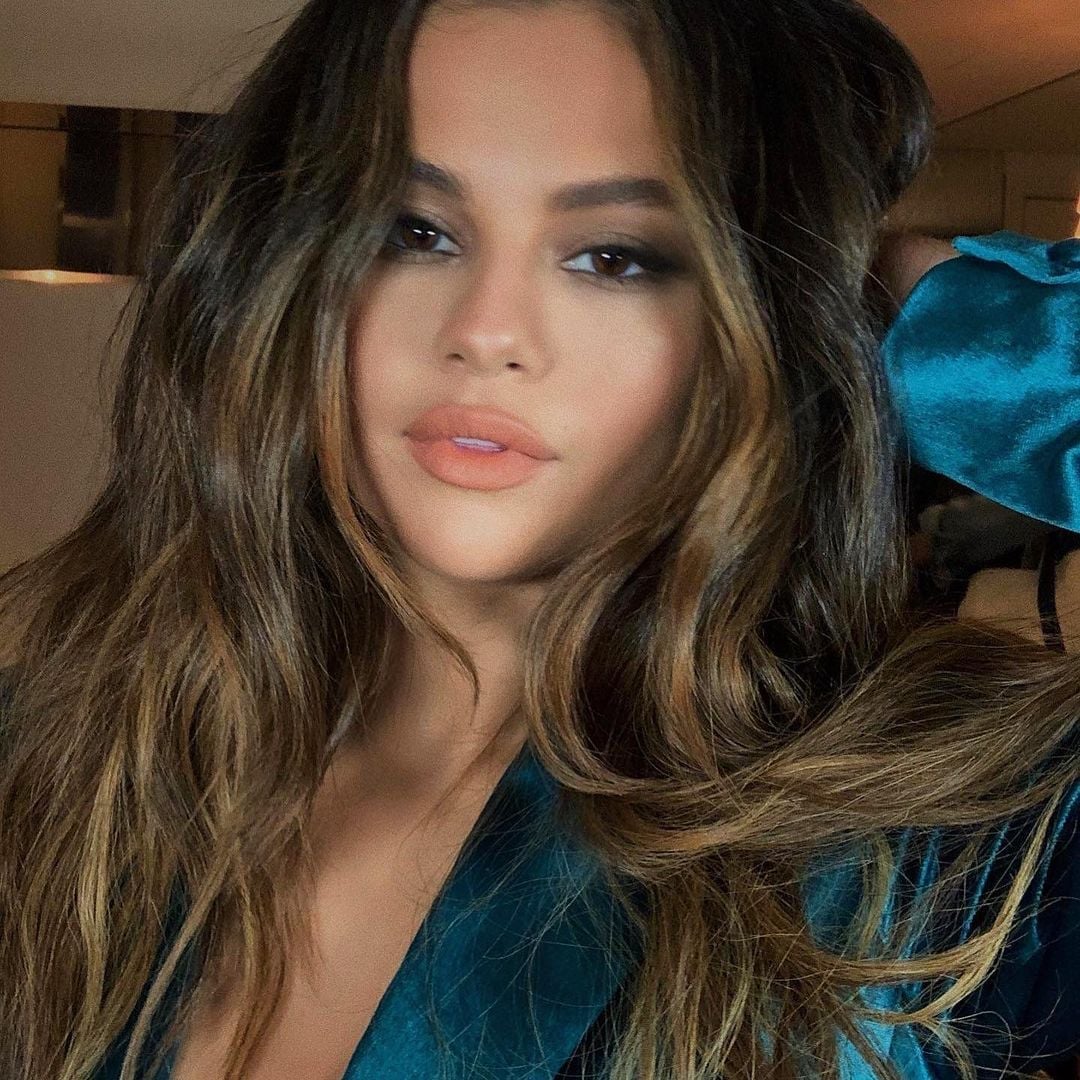
Ask your stylist for: mid-back long layers, face-framing pieces, dark brown with blonde highlights. A salon shapes the front pieces so they skim the face precisely, a skill that is hard to replicate at home with scissors. Expect about an hour in the chair for the cut and another hour if the highlights need a refresh. A large barrel curling iron sets the waves in five minutes.
18. Voluminous Mid-Back Layers With Curtain Bangs

Voluminous layers add width, which is the opposite of what a round face usually needs. But the curtain bangs change the math: they fall open at the center and sweep toward the cheekbones, creating a diagonal line that breaks the circular outline.
Ask your stylist for: mid-back long voluminous layers, curtain bangs, dark brown. Too much volume at the sides makes the face look wider. A volumizing mousse applied to damp roots and a large round brush during the blowout keep the lift concentrated at the crown. A trim every eight to twelve weeks prevents the bangs from becoming a solid block.
19. Mid-Back Long Layers With Full Bangs

A full set of bangs shortens the forehead visually, which can make a round face look rounder unless the hair is long enough to pull the eye down. Here, mid-back length and long layers do that job, while subtle highlights keep the heavy bang from reading as a single dark curtain. Ask your stylist for: mid-back long layers, full bangs, dark brown with highlights. The bangs need a trim every three to four weeks, and a texturizing spray on the waves stops the thickness from looking blunt.
20. Long Wavy Hair Blonde Balayage Full Bangs

This is not a subtle refresh. A dark base with a blonde balayage creates contrast, and the full bangs add weight at the top, which is a risk for a round face. The trick is that the balayage pieces start below the cheekbones, so the brightness lands where it lengthens the silhouette rather than widening it.
Ask your colorist for: long wavy hair, blonde balayage, full bangs. The heavy fringe works best in fall or winter, when a bit of forehead coverage feels intentional. A wide-tooth comb on damp hair and air-drying keeps the wave pattern low-effort. The bangs will need a salon trim every three weeks; the balayage itself stretches to four months before the grow-out line becomes obvious.
21. Final Thoughts
For round faces, the rule is simple: let the length fall below the chin or add layers that start past the jaw. Blunt cuts at the cheekbone will only widen the face, so angle them or keep them long.
- Trim collarbone-length bobs every 6-8 weeks.
- Long layers need trims every 8-12 weeks.
- Fringes reset every 3-4 weeks.
- Heat protectant before any hot tool.
- Diffuse curly hair for natural volume.
Choose a cut that makes you feel confident and suits your lifestyle.

