
Thinning hair is a density problem, not a length problem, and the right cut builds the illusion of fullness before a single styling product touches your head. Soft face-framing layers and curtain bangs still lead the salon conversation, while lived-in color and glossy natural texture keep the finish looking current instead of overworked.
These 20 haircuts for thinning hair run from chin-length bobs to short pixies, with the low-upkeep options and the ones that ask for more styling time both included. It suits fine, low-density and wavy textures, plus round, square and long faces. What it solves is the real complaint: hair that falls flat by noon and a fringe that refuses to sit.
1. Chin Length Bob With Voluminous Layers
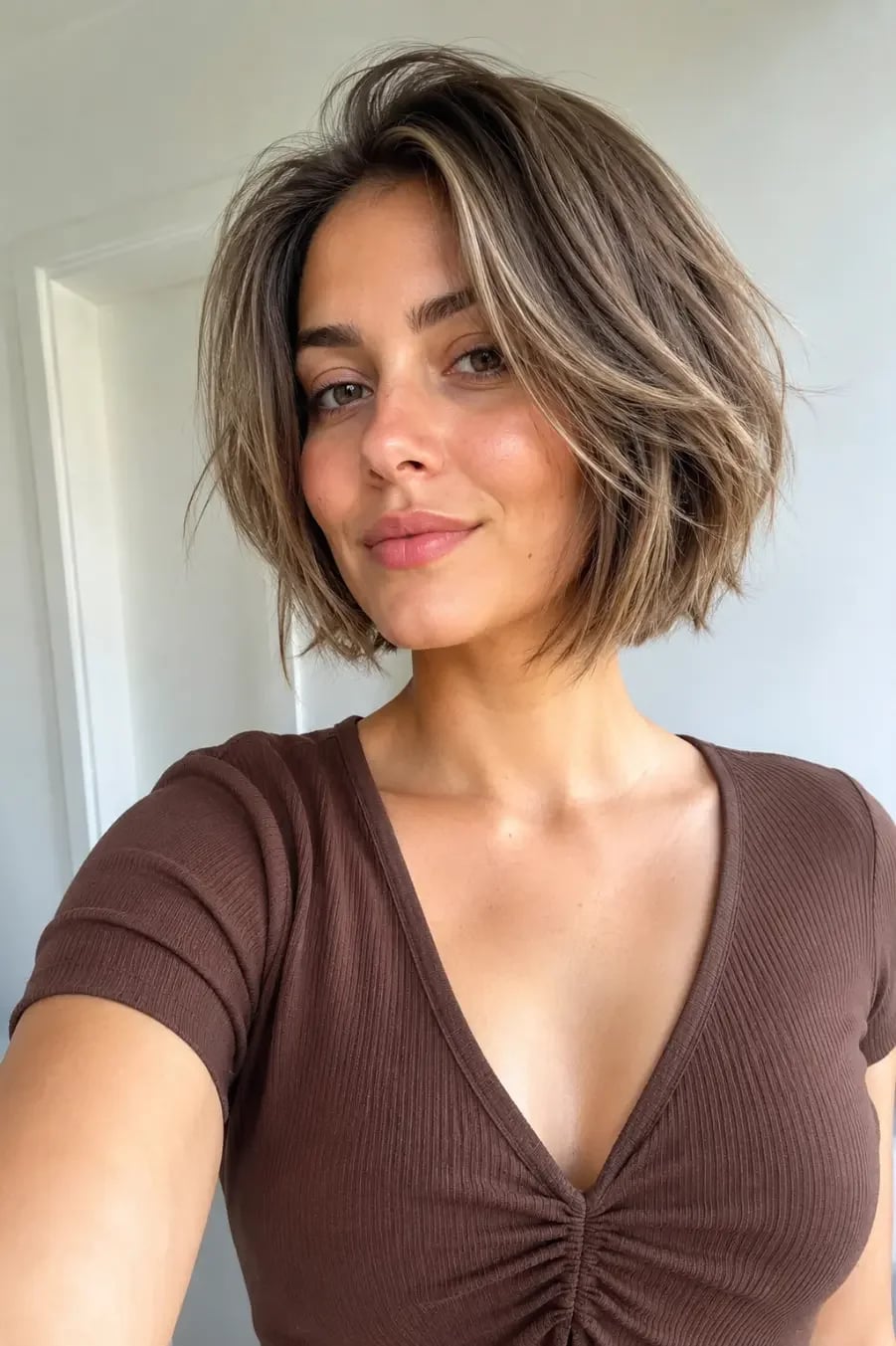
A chin-length bob with soft layers and curtain bangs uses a side part and a voluminous blowout to create the illusion of thickness. This cut suits fine hair that starts at chin length or longer, and the soft layers around the jaw help soften square and round face shapes. Ask your stylist for: chin length bob with soft layers and curtain bangs. Use a round brush to lift the roots for maximum volume, and plan a trim every six to eight weeks.
2. Collarbone Bob With Soft Curtain Bangs
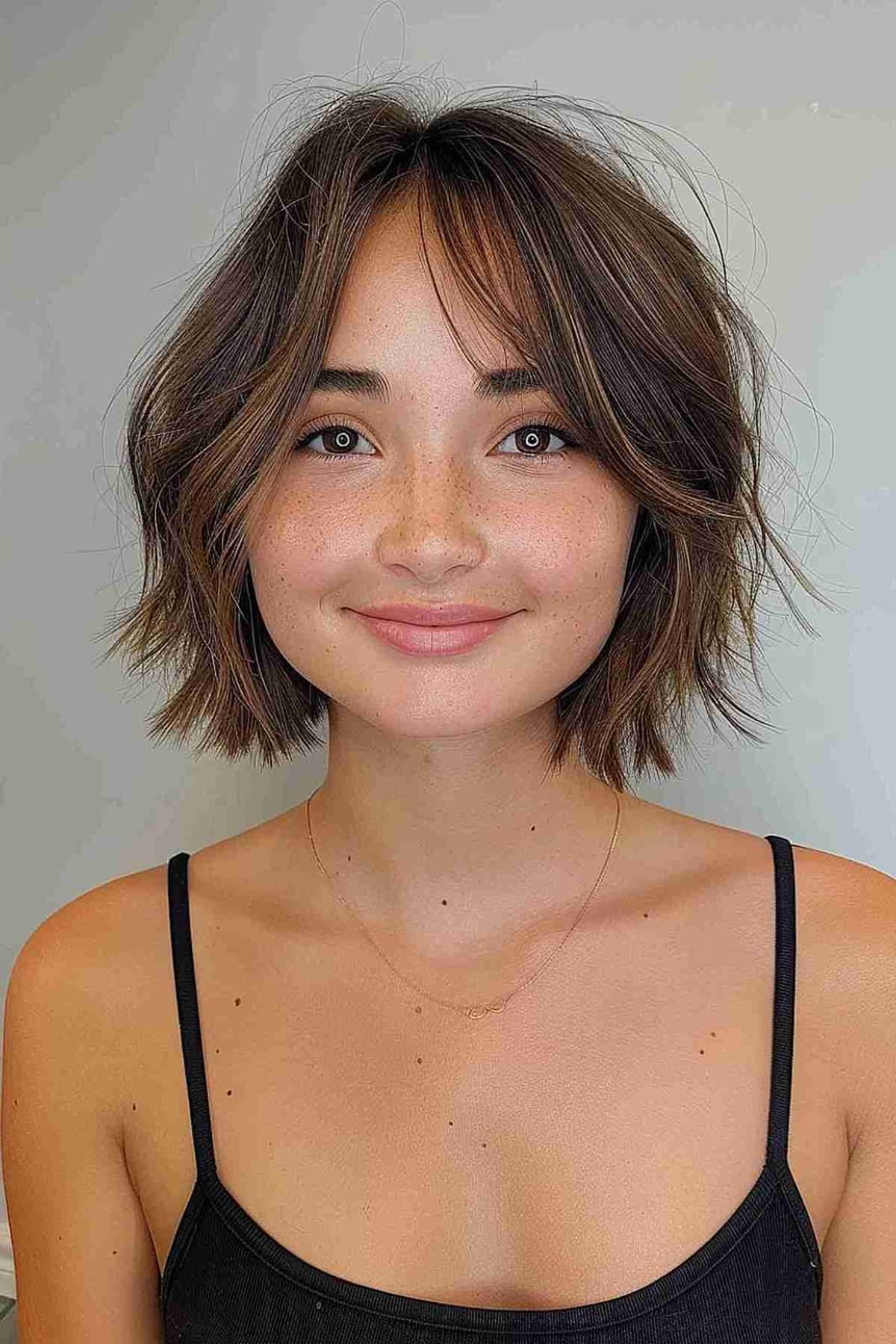
Wondering exactly what to ask for when you want fullness without losing length? A collarbone bob with soft curtain bangs and a middle parting adds volume at the sides while keeping the front light and soft. The curtain bangs are cut to blend into the body of the hair, so they never look heavy or separate. Ask your stylist for: collarbone bob, soft curtain bangs, middle part. Fine hair that is at least collarbone length benefits from this shape, and the bangs work well to soften angular face shapes.
3. Layered Collarbone Cut With Blonde Balayage

The layers and the balayage serve two different purposes. The soft layers remove weight from the ends so the hair moves, while the blonde balayage on a medium brown base adds visual depth that makes fine hair look thicker than it is. Ask your stylist for: collarbone length layers, curtain bangs, blonde balayage.
This layered collarbone cut needs enough length to start, so plan on growing hair to the collarbone first. Apply a texturizing spray to the roots before blow-drying, and schedule a trim every six to eight weeks to keep the shape precise.
4. Collarbone Lob With Face-Framing Curtain Bangs
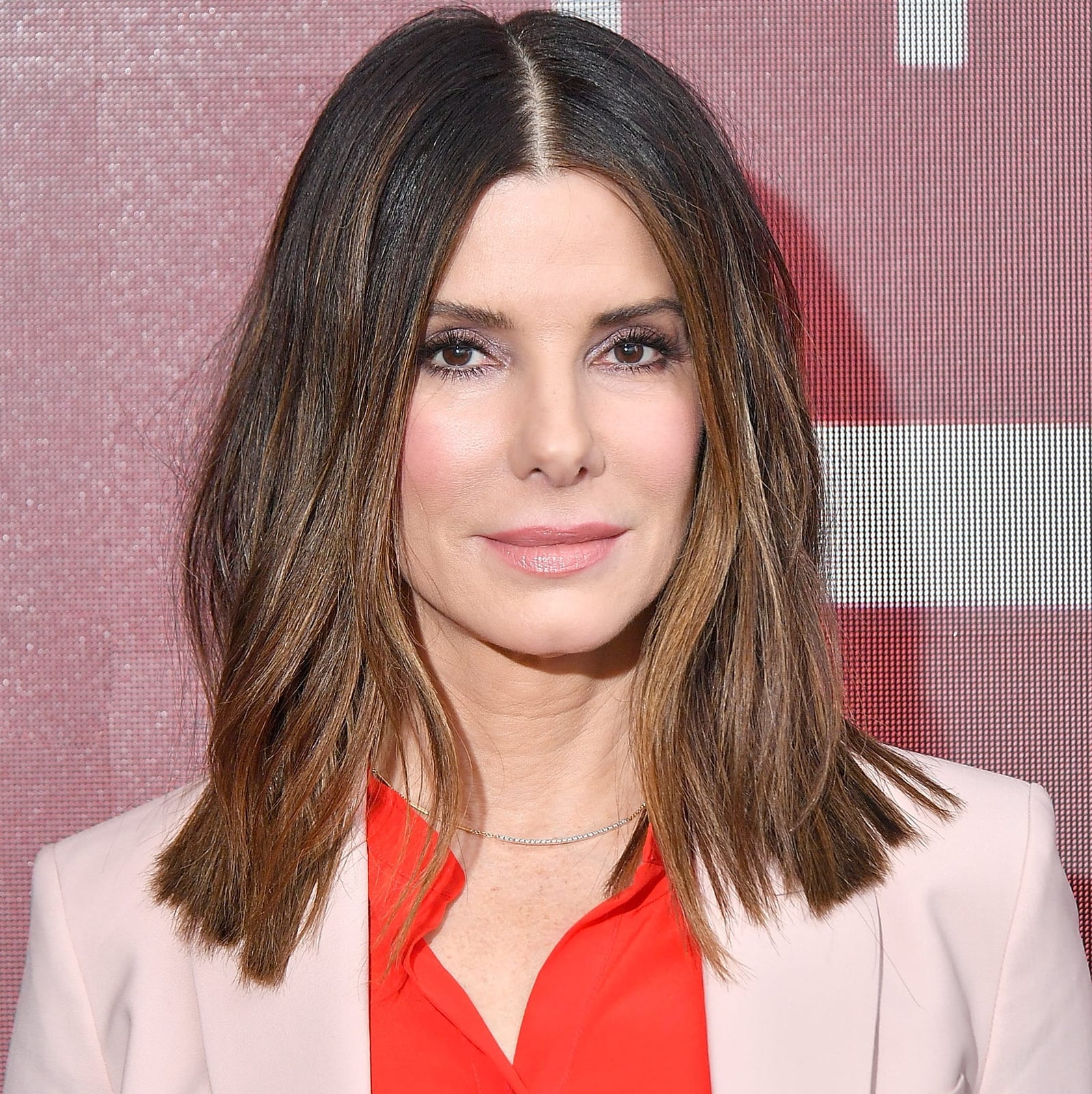
This is a collarbone lob, not a precise bob, which means it moves more and forgives a skipped blow-dry. The face-framing curtain bangs and subtle highlights on a dark brown base add dimension without requiring a full wash-and-style routine every morning. Ask your stylist for: collarbone lob, face-framing curtain bangs, slight outward flick. Medium-density, wavy hair holds the shape well, and a large barrel curling iron creates the gentle outward flick at the ends. A trim every six to eight weeks keeps the shape.
5. Strawberry Blonde Lob With Soft Layers
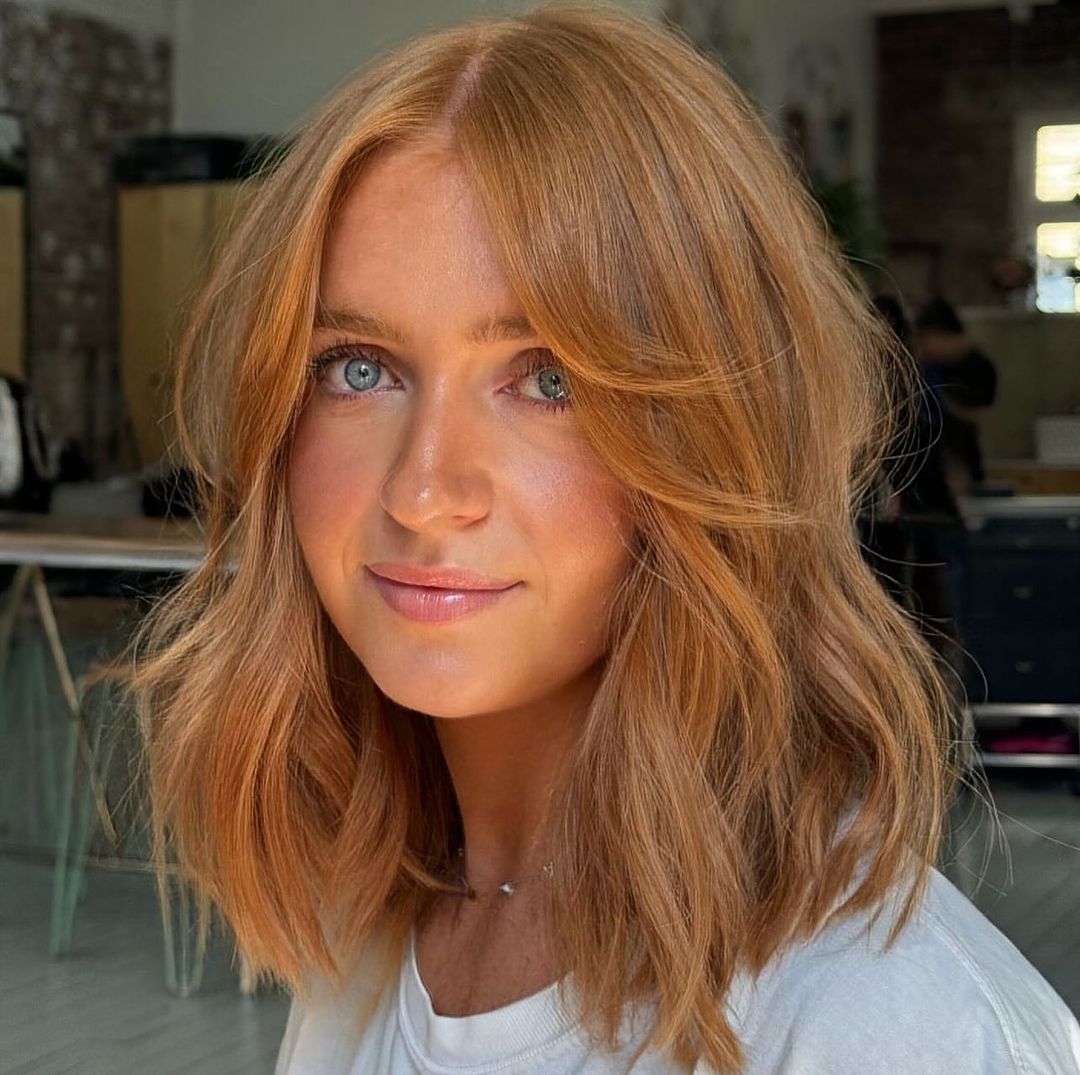
Strawberry blonde is a warm shade that reflects light, and that helps fine hair look fuller. The collarbone lob with soft curtain bangs and face-framing layers adds movement without sacrificing density at the ends, which is where thinning hair often looks limp. Ask your stylist for: collarbone lob, soft curtain bangs, face-framing layers.
This cut suits fine hair at collarbone length, and the face-framing layers work for most face shapes. Apply a texturizing spray to damp hair before air-drying or diffusing, and trim every six to eight weeks.
6. Ash Blonde Layered Lob With Face-Framing
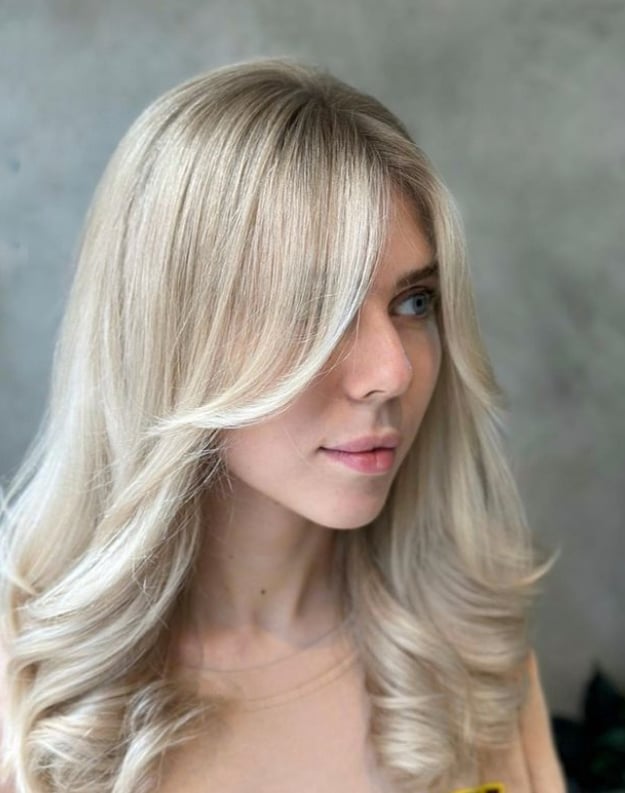
An ash blonde lob with face-framing layers and a middle parting is a solid bet for thinning hair, but the tone has a catch. Fine hair at collarbone length benefits from the soft waves and the movement the face-framing pieces create, which keeps the cut from looking flat. Ask your stylist for: collarbone layered lob, face-framing pieces, ash blonde. The honest drawback is that ash blonde can pull brassy on fine hair after a few weeks, so a purple shampoo becomes a regular part of your routine. A texturizing paste on dry hair helps the waves hold their shape, and a trim every six to eight weeks keeps the layers from losing their lift.
7. Layered Ash Blonde Lob With Side Swept Bangs
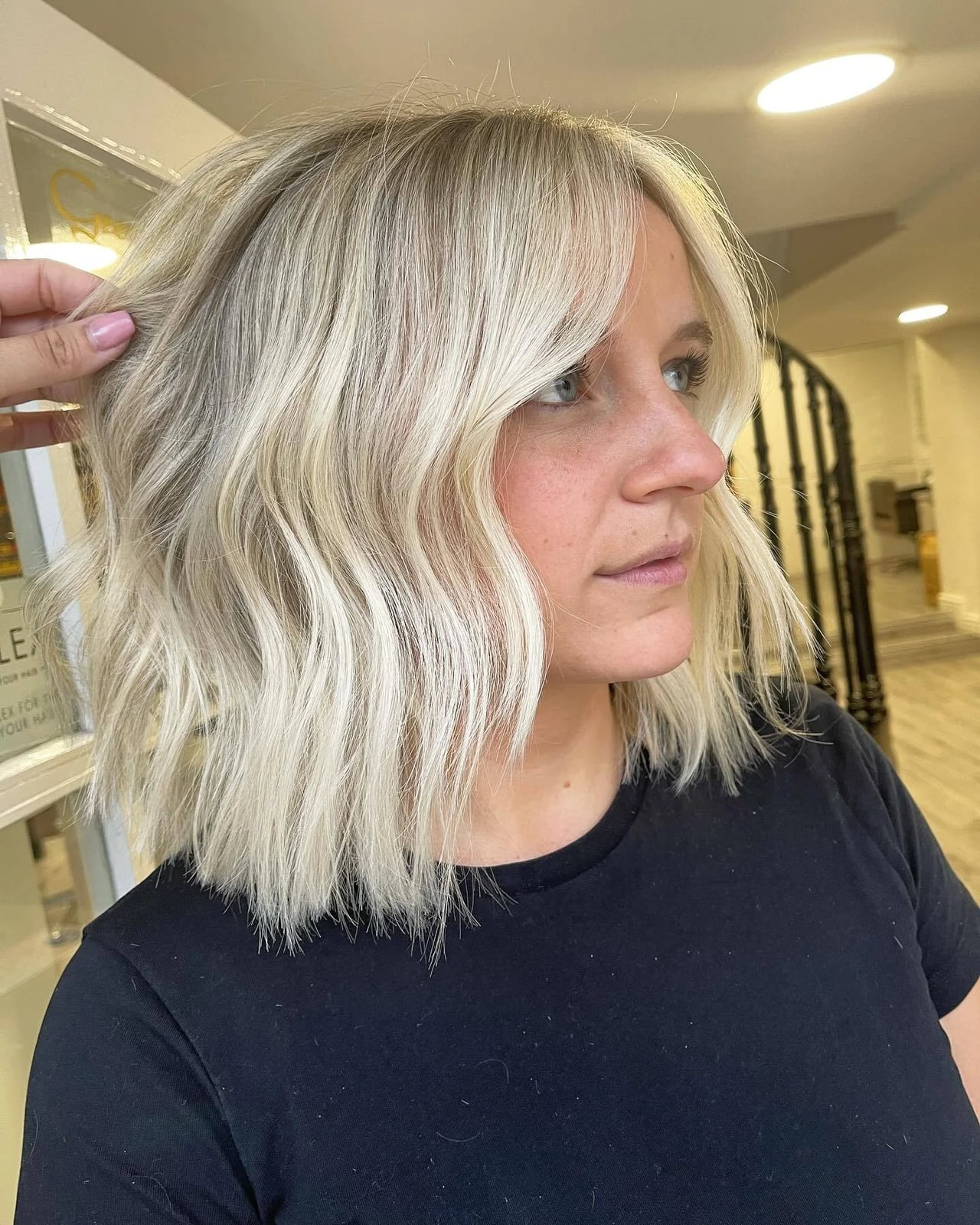
Wondering exactly what to say to get those side-swept bangs that don’t turn into a wispy style? The angle matters more than the length. Ask your stylist for: collarbone lob, side swept bangs, ash blonde. The bangs should start at the brow bone and sweep diagonally toward the cheekbone, which softens a square or angular jaw without removing too much density from the front. The lob stays layered to keep the fine, wavy texture from falling flat. Blow-dry the bangs with a round brush, directing the hair away from your face, and plan a trim every six to eight weeks to maintain the precise sweep. Subtle highlights throughout the ash blonde base add dimension that makes the layers read as intentional.
8. Collarbone Shag With Prominent Curtain Bangs
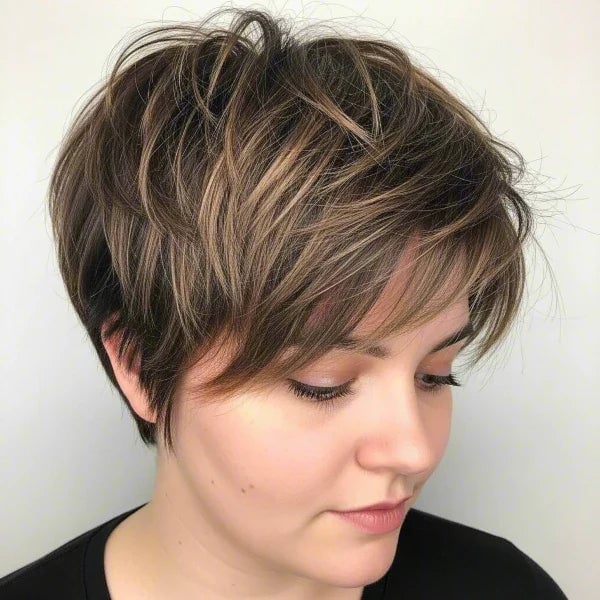
The collarbone shag with curtain bangs is often compared to a layered lob, but they serve different hair realities. A layered lob relies on uniform length through the body, while the shag uses stacked layers concentrated at the crown and nape. For thinning hair, that crown lift is the difference between a cut that sits and a cut that stands. The curtain bangs part in the middle and frame the face, which softens a round or heart-shaped face without removing bulk from the front.
Ask your stylist for: collarbone shag, prominent curtain bangs. The medium brown base with subtle highlights adds depth, but the real work happens in the cutting. A shag needs more precision than a standard layered lob, so find a stylist who understands how to graduate the layers without over-thinning the ends. A trim every eight to ten weeks keeps the shape from growing into a blunt, heavy mess.
9. Medium Brown Shag With Loose Waves
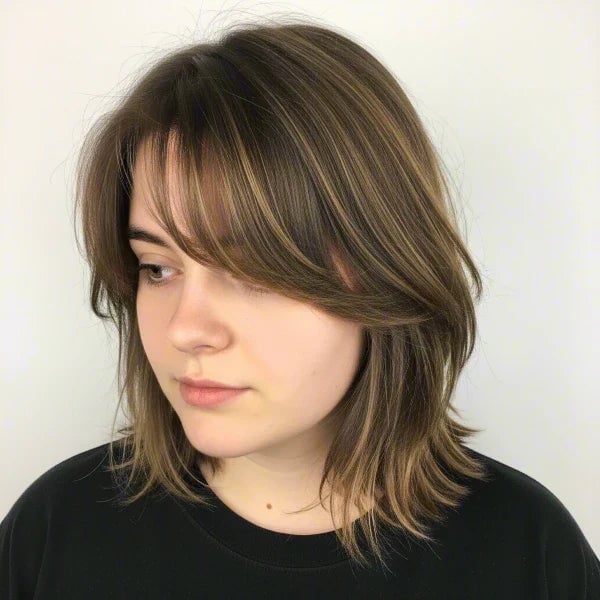
A shag cut like this one is designed to be worn, not styled. The medium brown base with subtle highlights and loose waves means the texture does most of the work. The collarbone length and curtain bangs keep the shape from feeling heavy, while the layered crown prevents the fine-to-medium density from lying flat by midday. Ask your stylist for: collarbone shag, prominent curtain bangs. Styling is straightforward: apply a sea salt spray to damp hair, scrunch, and let it air-dry or diffuse on low heat. The waves hold better without a brush disturbing the layers. A trim every eight to ten weeks maintains the shag’s lift, but between cuts the grow-out is forgiving because the layers blend into each other rather than creating a hard line.
10. Dark Blonde Bob With Wavy Texture

A collarbone bob with soft layers and curtain bangs suits fine hair that needs a visual boost without a drastic length change. The dark blonde base with lighter highlights creates depth, which makes each strand appear thicker than it actually is. Curtain bangs soften a long or oval face, while the wavy blowout adds movement that disguises sparse areas. Ask your stylist for: collarbone bob, soft layers, curtain bangs. This is not the cut for someone who wants to air-dry and walk out the door: the wavy texture requires a blowout with a round brush and a volumizing mousse at the roots. A trim every six to eight weeks keeps the bob from growing past the collarbone and losing its shape. The side parting adds lift where fine hair tends to go flat.
11. Shoulder Length Shag With Full Bangs
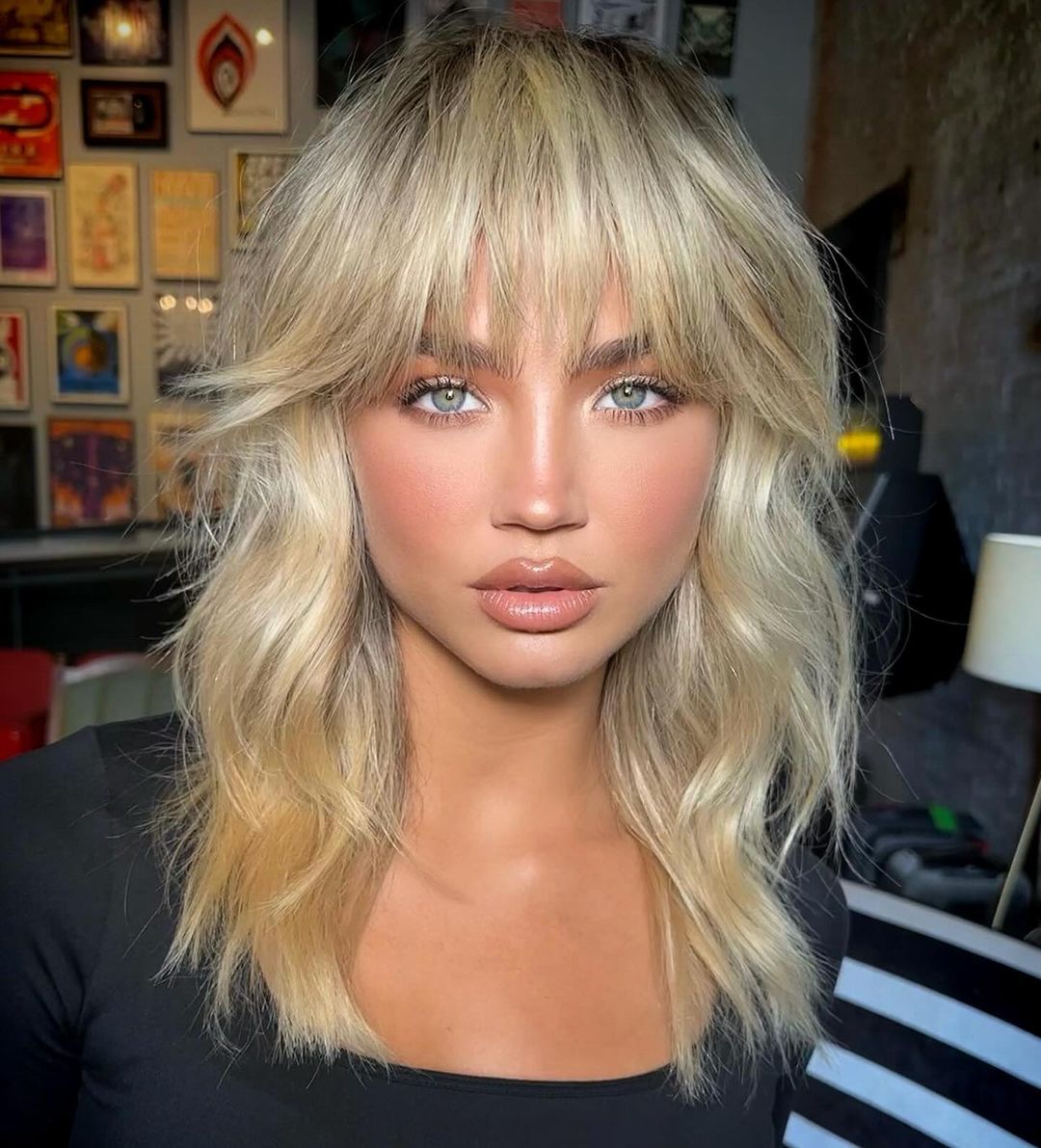
A shoulder length shag with full bangs is a design that puts the weight where you need it most: at the hairline. Those bangs, cut straight across and left to air dry into soft waves, create a focal point that draws the eye upward, masking any sparseness along the front. The middle parting and wavy, fine texture let the layers underneath do the work of adding body without looking fussy. Ask your stylist for: shoulder length shag, full bangs. On fine hair, this cut needs regular shaping to keep the bangs from turning into a curtain, so plan for a trim every eight to ten weeks.
12. Chin Length Bob With Textured Waves
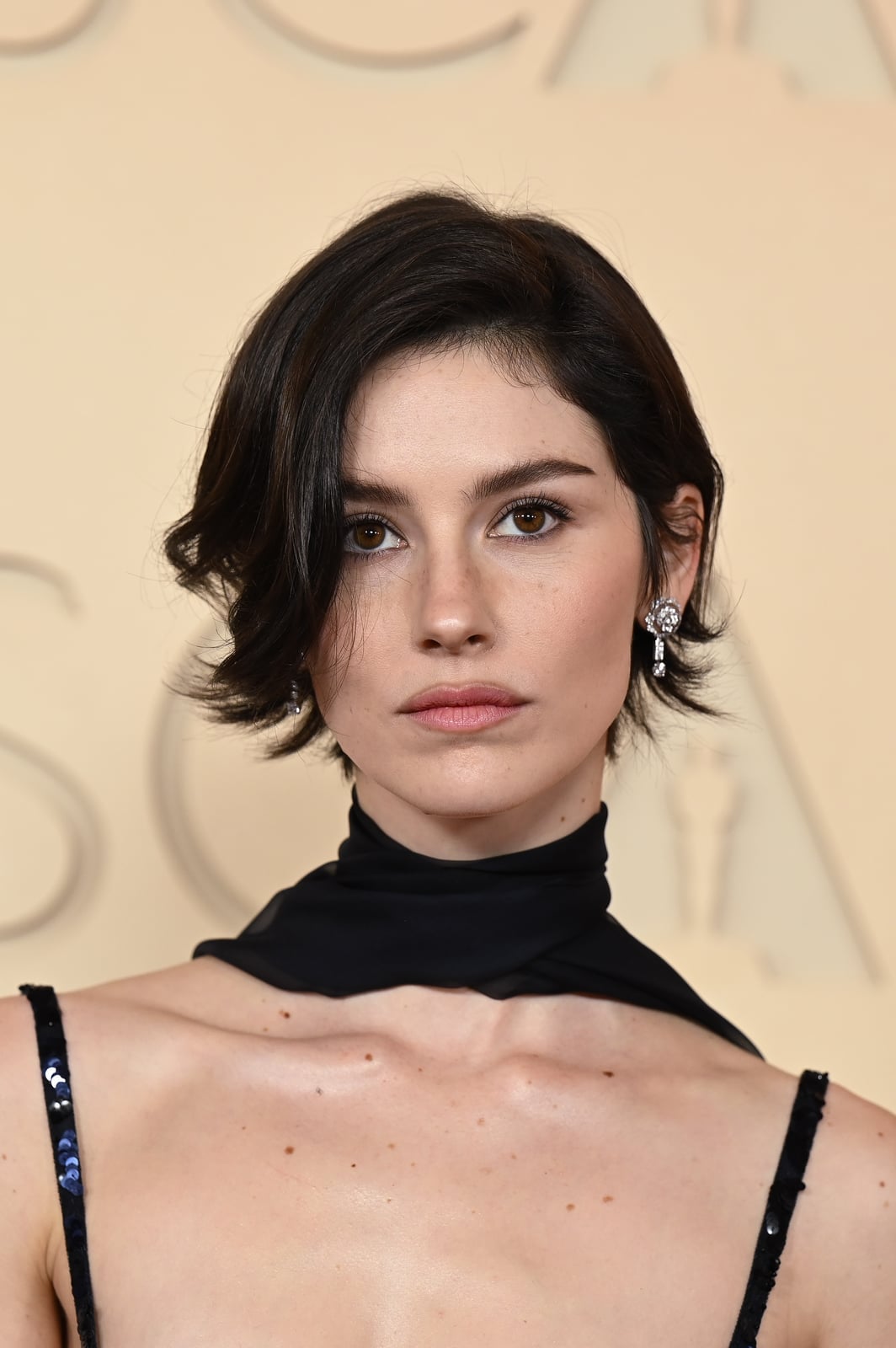
The subtle layers and dark brown color add movement, yet fine hair can fall flat if you skip the texture step. Ask your stylist for: chin length bob, textured waves, no bangs. A sea salt spray on damp hair, then air dry, gives you that lived-in wave, but it won’t hold past a day. If you want a low-maintenance option, a blunt bob might suit you better. Plan for a trim every six to eight weeks to keep the ends from looking straggly.
13. Sharp Chin Length Blunt Bob With The Dark Brown Hair Appears Fine
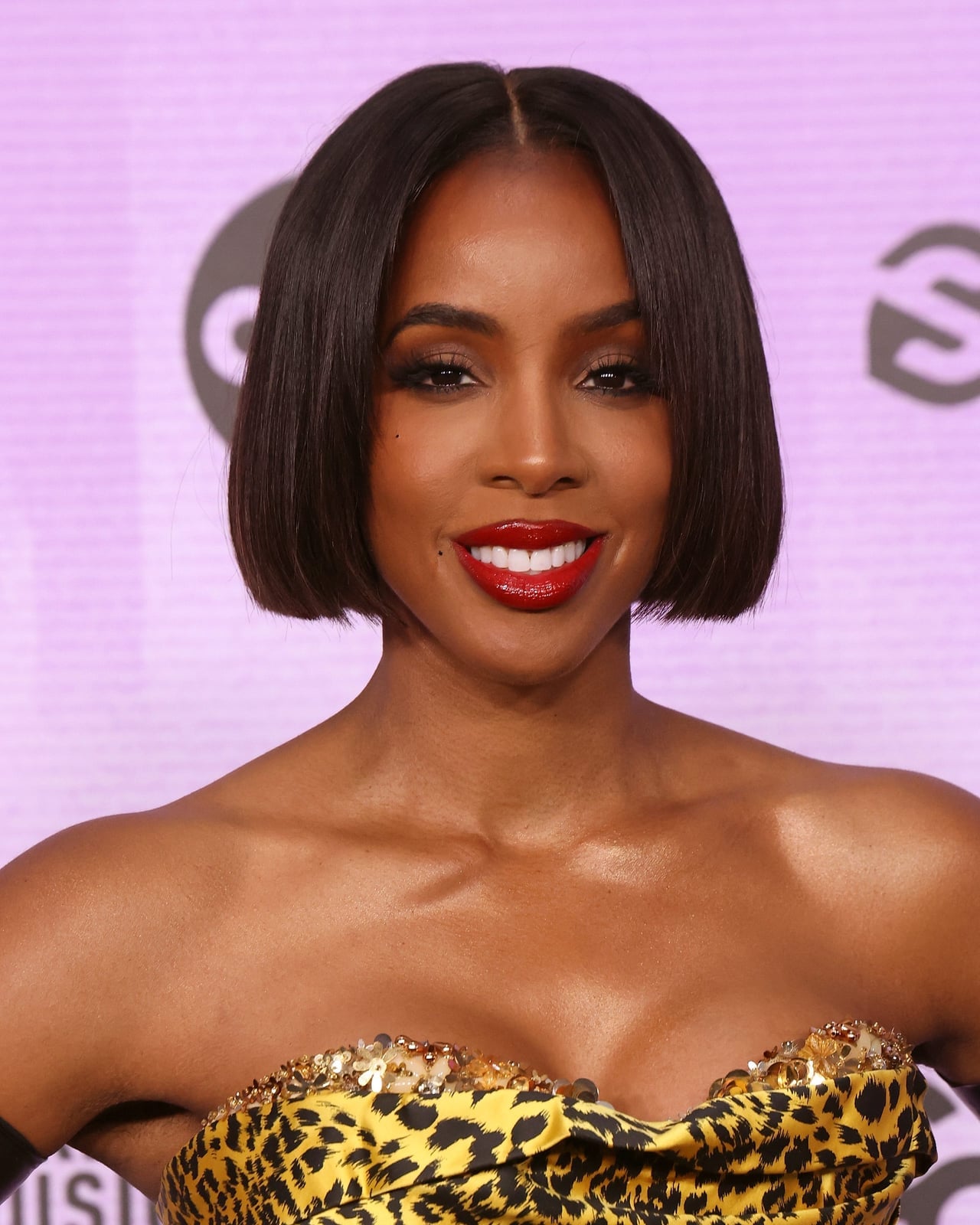
Wondering whether a blunt bob can work for fine hair when every article tells you to ask for layers? The answer is yes, but only if the cut is absolutely precise. A sharp, chin-length bob with no bangs relies on the density of the cut edge itself: every strand is the same length, so the hairline appears as a solid block of color. The dark brown base helps, since a single tone on fine, straight hair creates less visual breakage than highlights would. Ask your stylist for: chin length blunt bob, poker straight finish. This is a salon-only cut: the bluntness needs a sharp scissor technique that a DIY trim cannot replicate. A flat iron keeps the line clean, and a trim every six to eight weeks is required to keep the edge crisp.
14. Short Red Bob With Wispy Bangs

A short red bob with wispy bangs is the color-first choice for anyone who wants thinning hair to feel like a statement, not a compromise. The vibrant red draws the eye to the cut, while the wispy bangs soften the hairline without sacrificing coverage. The ear length and textured, slightly tousled finish give it an easy, everyday energy that works for a festive occasion or just a Tuesday. Ask your stylist for: short bob, ear length, wispy bangs. Because the bangs are wispy, they need a texturizing paste to stay in place, and a trim every four to six weeks keeps them from becoming a full fringe.
15. Short Layered Cut With Textured Fringe
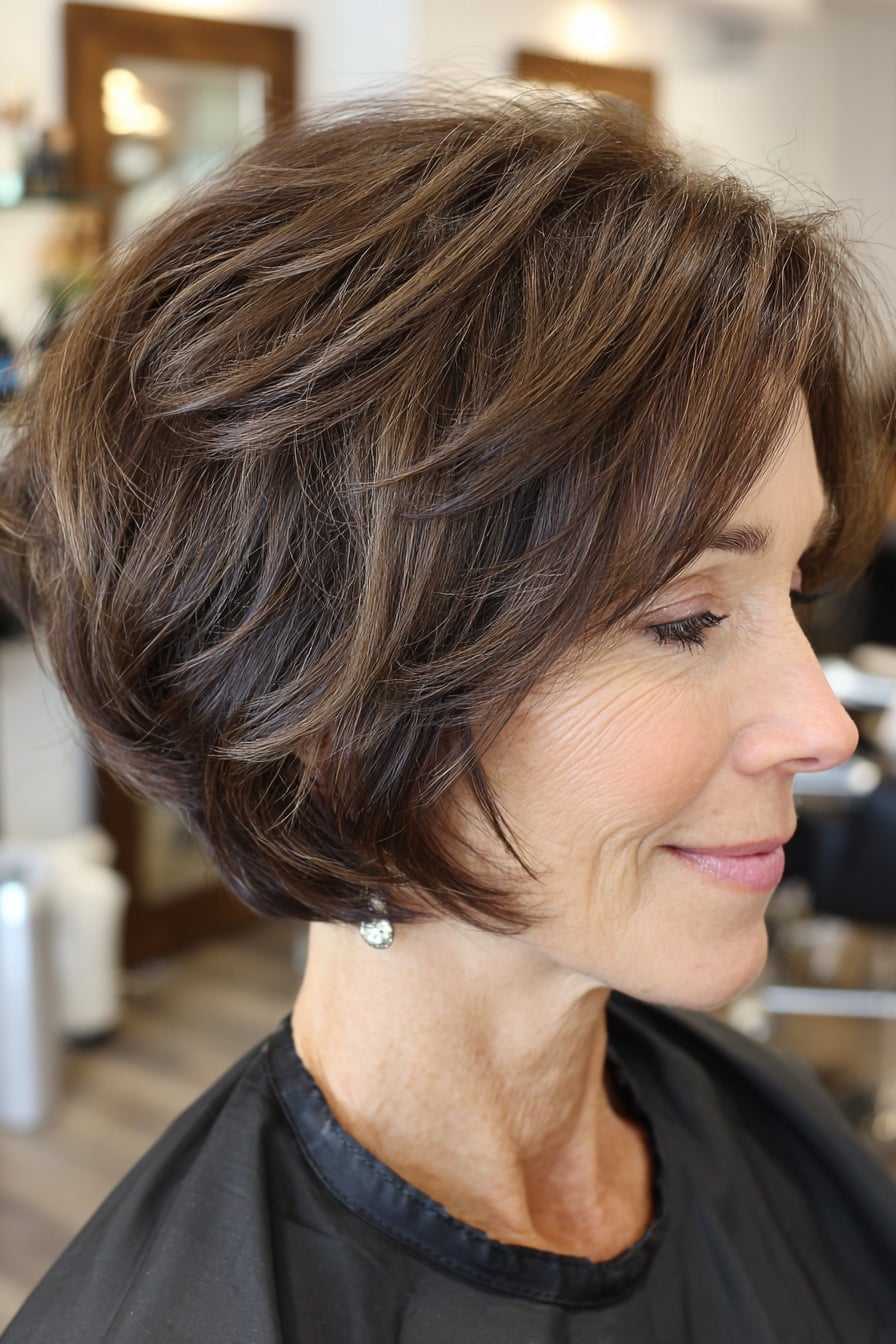
A short layered cut with a textured fringe is built for daily wear, but it demands a little effort each morning. The ear length and subtle layers, in brown with blonde highlights, give fine hair a boost of body, while the short fringe adds a soft frame around the face. Ask your stylist for: short layered cut, ear length, textured fringe. The textured finish means you’ll be working a product through the fringe and ends every day to keep the volume from collapsing. It’s not a wash-and-go style, but the payoff is a modern cut that doesn’t look like you’re hiding anything. Trim every four to six weeks to keep the layers crisp.
16. Silver Blonde Pixie With Wispy Bangs
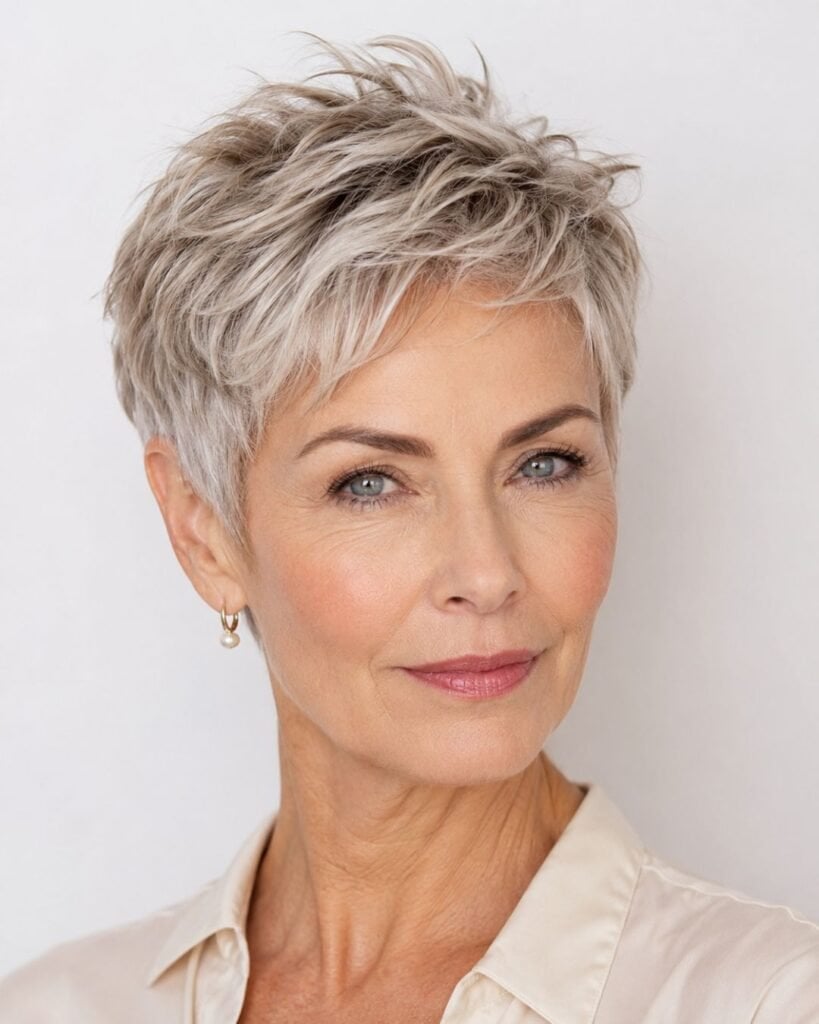
A silver blonde pixie is a deliberate style choice, and the wispy bangs soften what could otherwise be a severe line. The cool tone makes fine, wavy hair look brighter and fuller. This cut suits fine hair at ear length, especially if you want a low-maintenance shape that still frames the face. Ask your stylist for: short pixie, wispy bangs swept to side, silver blonde. The tousled texture adds volume, so a quick texturizing spray and a few minutes of finger styling are all you need. A trim every four to six weeks keeps the wispy bangs from growing into a full fringe.
17. Dark Brown Pixie With Textured Layers
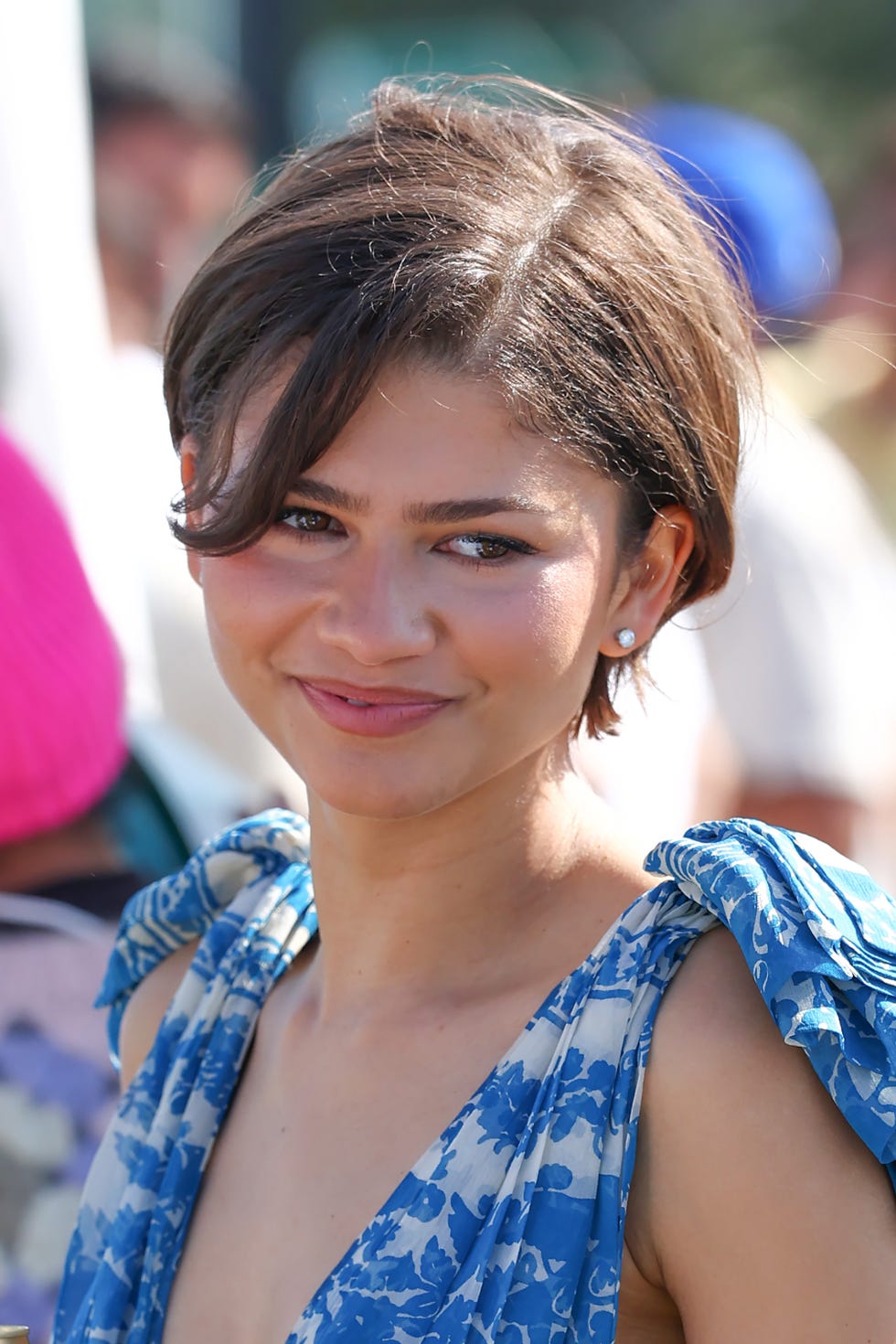
The dark brown pixie relies on textured layers cut into the crown to build shape without adding bulk. Each layer is sliced at an angle so the fine, straight strands stack with visible movement. The side-swept bangs carry the eye forward, which balances the shorter back and keeps the whole cut looking deliberate. Ask your stylist for: short pixie cut, textured layers, side-swept bangs. Work a texturizing paste through the layers to sharpen the definition, then let it dry as it lands. A trim every four to six weeks keeps the silhouette crisp, because a pixie this precise shows its age quickly.
18. Ash Blonde Pixie With Messy Waves
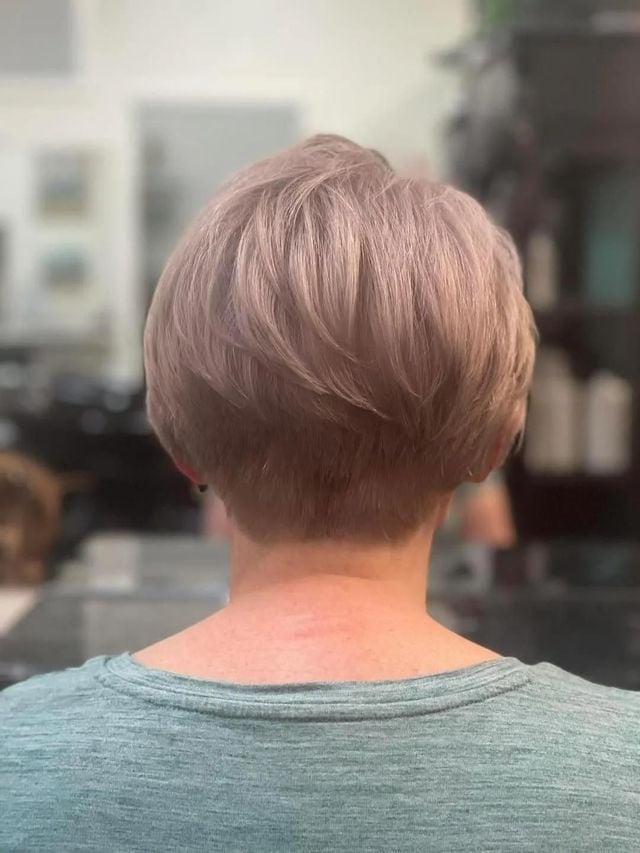
This ash blonde pixie is a fair trade: the messy, wavy texture gives fine hair an instant volume boost, but it also means you accept a lived-in finish that can turn frizzy in humid weather. The side-swept bangs and subtle lighter highlights add dimension around the face, so the cut looks styled and not unkempt. It suits fine hair at ear length that can handle a bit of unpredictability. Ask your stylist for: textured pixie cut, messy wavy style, side-swept bangs. If you prefer a clean line, this one will test your patience, because the tousle is the whole point. A trim every four to six weeks keeps the shape from losing its edge.
19. Dark Brown Pixie With Curly Bangs
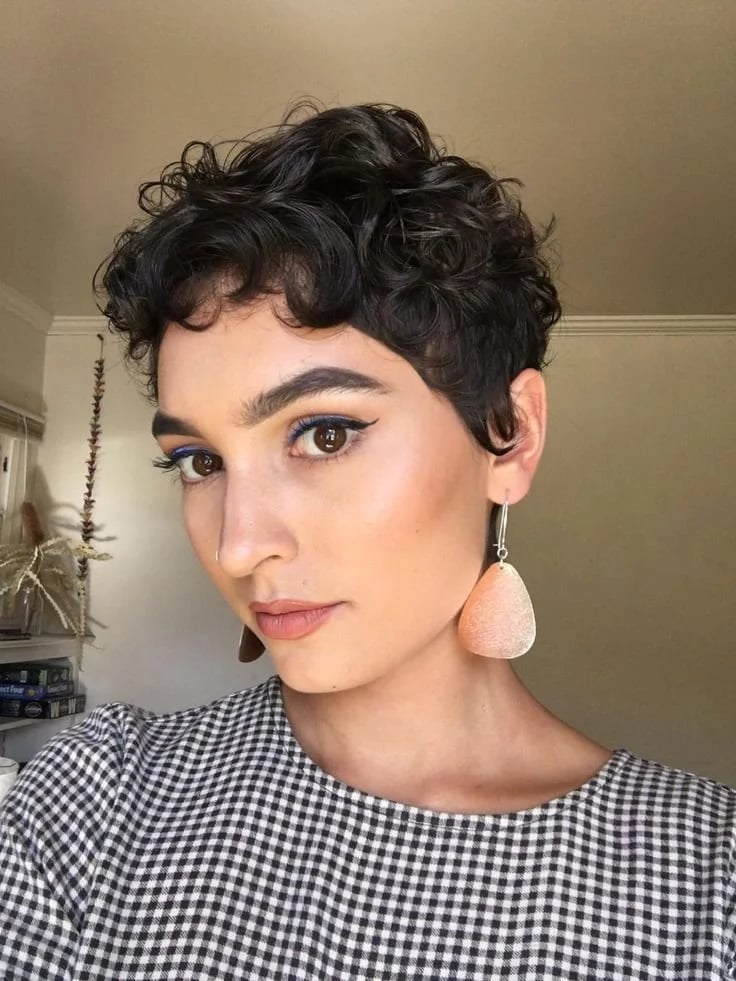
Wondering how to ask for curly bangs without leaving the salon with a surprise? Start with the texture. The dark brown pixie here is cut short around the ears and nape, with volume left on top so the natural curl pattern has room to spring. The short, textured bangs frame the face and keep the air-dried finish looking deliberate. This suits fine, curly hair at ear length that wants to work with its natural movement. Ask your stylist for: short pixie, textured curly bangs, air-dried finish. A curl-defining cream on damp hair and a no-touch drying method are all the styling this needs. A trim every four to six weeks keeps the curls from weighing down the top.
20. Black Pixie Cut With Tousled Texture
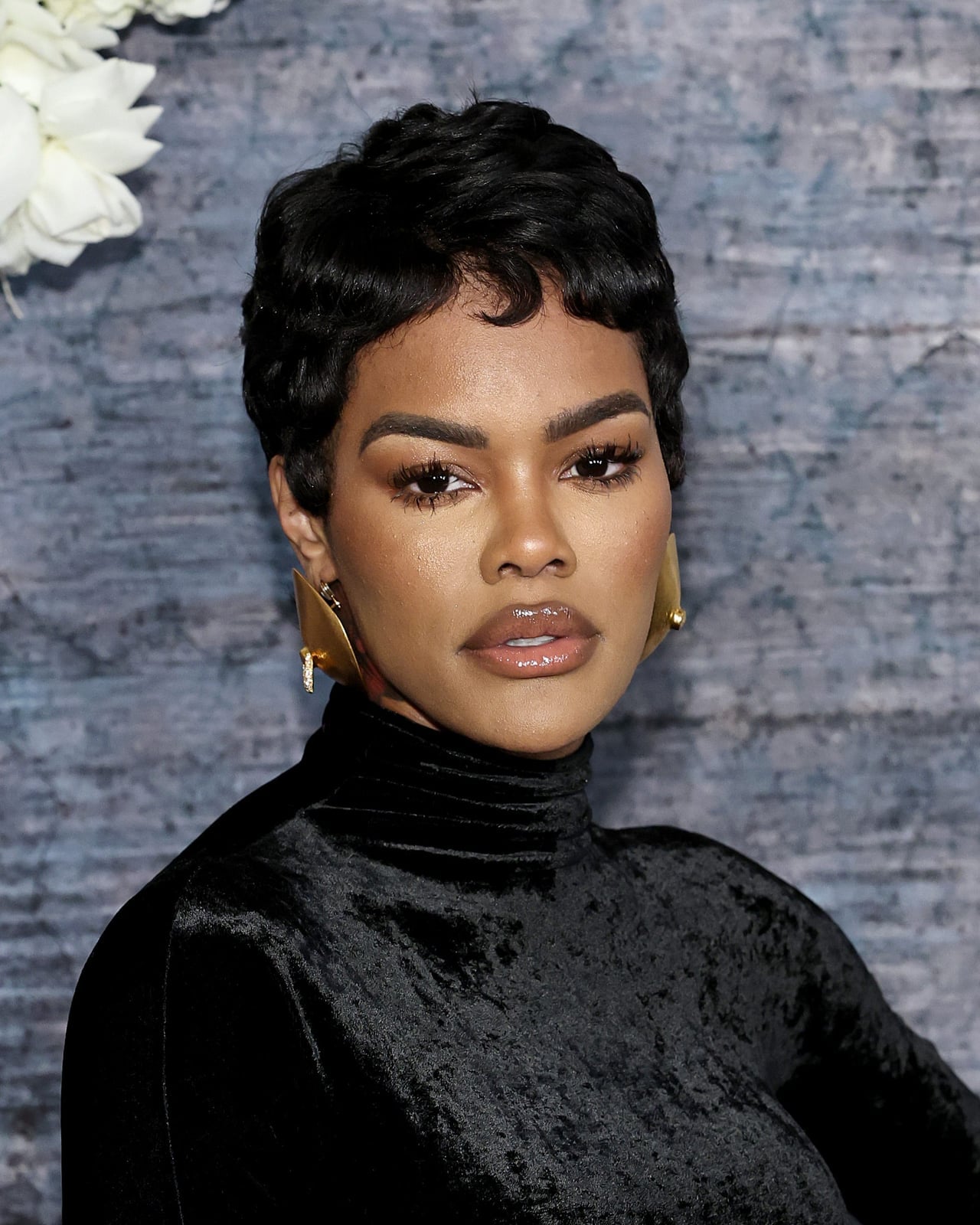
Compared to a smoother pixie, this black cut with a short fringe is the easier daily option. The tousled, textured finish hides grow-out and styling slips, while a sleek version demands precision every morning. The curly, fine texture is cropped close to the head, with volume concentrated on top to create the illusion of density. Ask your stylist for: short textured pixie cut, tousled finish, short fringe. A matte wax or paste is the only tool you need: work it through dry hair and go. The salon visit does the heavy lifting, so your at-home time stays under five minutes. A trim every four to six weeks keeps the crop from looking shaggy in the wrong way.
21. Final Thoughts
For fine or thinning hair, keep one blunt baseline in the cut and add layers only where they create movement, then let bangs raise the perceived density around the face. Short pixies need a trim every four to six weeks; collarbone and chin lengths hold their shape on a six-to-eight-week rhythm.
- Trim every six to eight weeks to keep the shape.
- Choose volumizing formulas over heavy smoothing ones.
- Work in a texturizing spray or dry shampoo for grit.
- Spray heat protectant before any hot tool.
Find the cut that makes your fine hair look its best.

