
Honey brown highlights are a highlighting technique that threads warm, honey-toned pieces through a brown base. The look has moved toward lived-in color, soft face-framing layers and curtain bangs, so the grow-out line stays blurry instead of striped.
This collection covers 17 takes, from a short bob to mid-back length, with low-upkeep balayage and bolder face-framing pieces. Honey Brown Highlights work on fine, medium and thick hair, and on straight, wavy or curly texture. If your fine hair falls flat or your last highlight line showed at six weeks, start with the collarbone and bob ideas.
1. Collarbone Layers With Honey Highlights
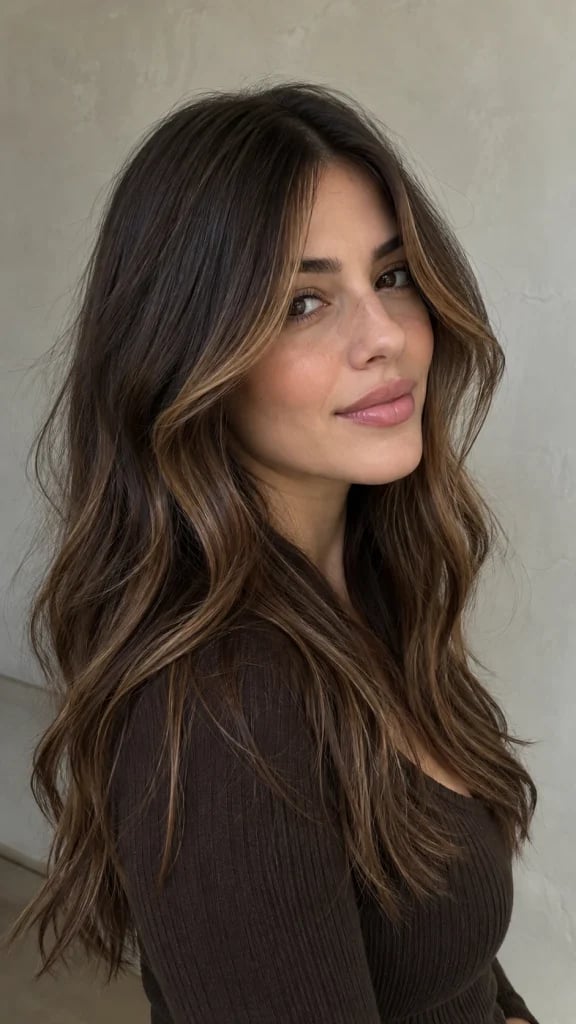
You have a brown base and want warmth without going full blonde, so what exactly do you say? This is collarbone length with soft wavy layers, a middle part and curtain bangs, all sitting on thick texture. The honey highlights concentrate around the face, which is the part people actually see. Ask your colorist for: collarbone layers with face-framing honey highlights. A texturizing spray defines the waves without weighing them down. Plan on a trim every six to eight weeks to keep those layers moving.
2. Collarbone Waves With Curtain Bangs And Honey Blonde
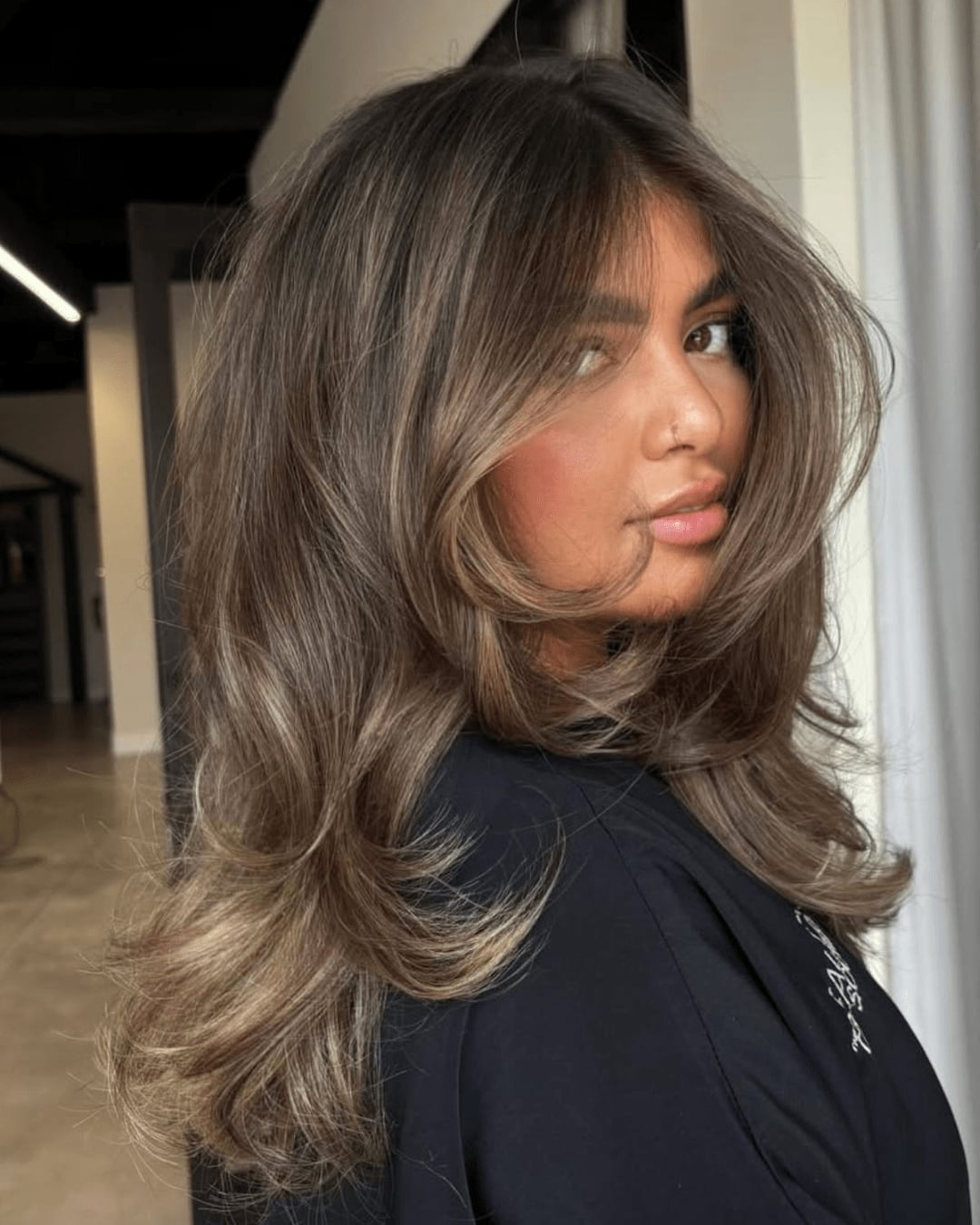
The waves here are voluminous and deliberate, not a morning accident. A medium brown base carries honey blonde highlights that read as dimensional rather than striped, and the curtain bangs frame the face without demanding constant attention. Thick, wavy hair holds this shape well through a workday. Ask your colorist for: collarbone wavy cut with curtain bangs and honey blonde highlights. A large barrel curling iron builds the wave pattern in about fifteen minutes. The curtain bangs need a trim every four to six weeks or they start auditioning for a different haircut.
3. Shoulder Length Waves With Honey Highlights
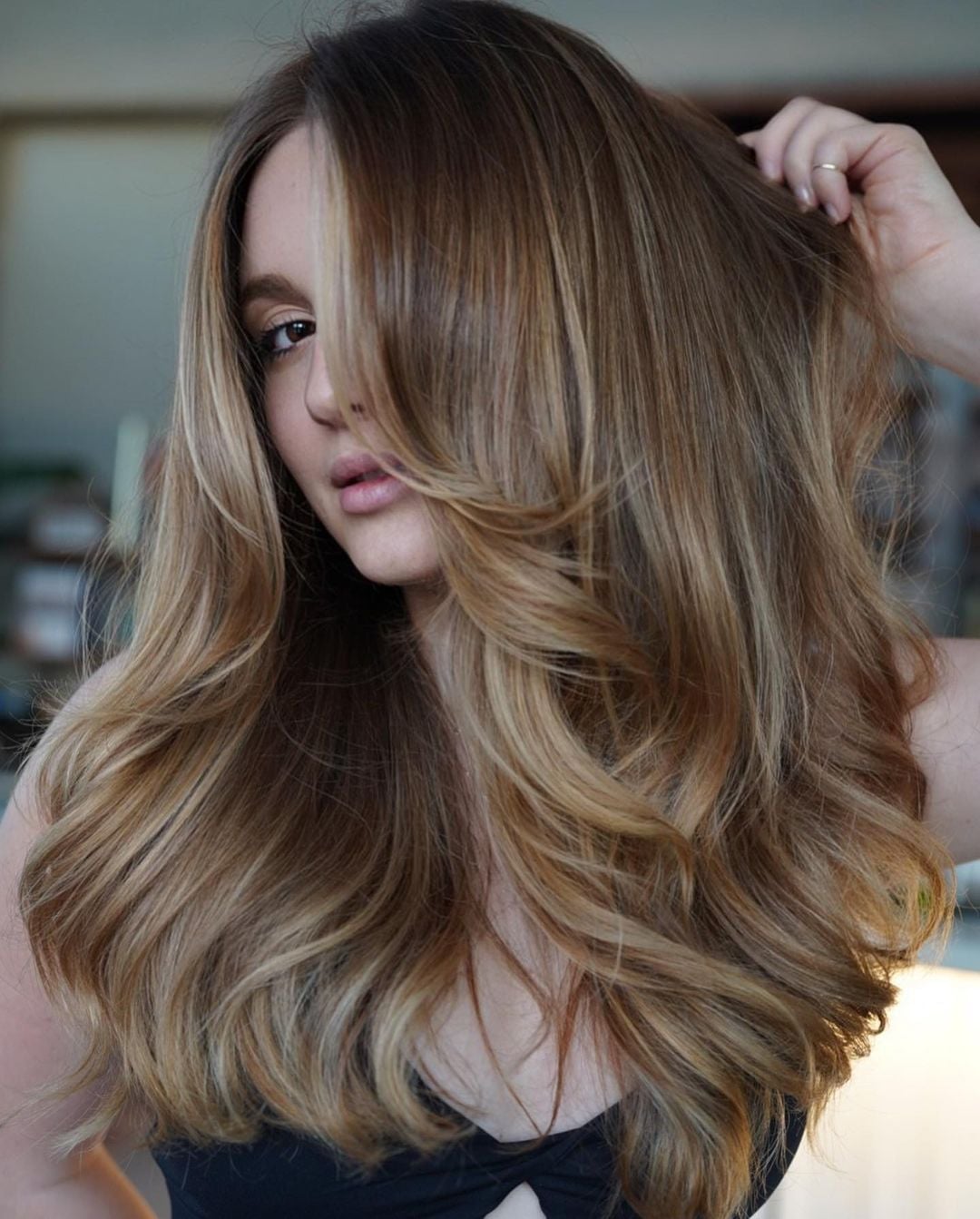
Shoulder length with soft face-framing layers and a side parting. It is the kind of cut that works on most face shapes because the layers hit at different points. The honey blonde highlights are spaced through thick, wavy hair, adding warmth without a harsh grow-out line. Ask your colorist for: shoulder length wavy cut with face-framing honey highlights. Air dry with a curl-enhancing cream or diffuse for more defined texture. A trim every six to eight weeks keeps the shape honest.
4. Collarbone Layers With Side Swept Bangs And Honey
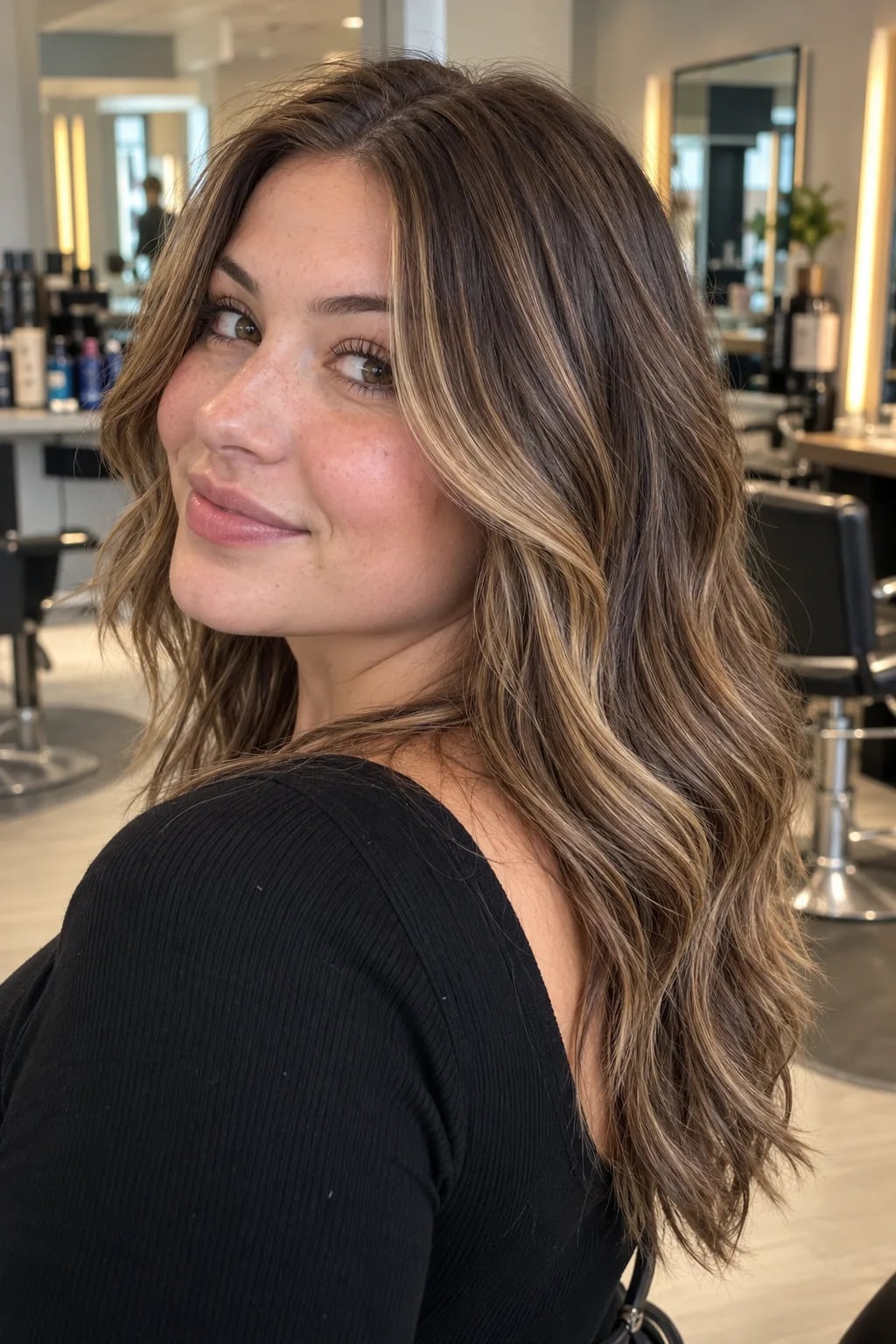
The honey highlights here are painted through long, collarbone-length layers with a side-swept bang that softens a square jaw. The technique uses a medium brown base and places the lighter pieces where the hair naturally falls, so the dimension looks built in rather than painted on. Medium-density wavy texture carries the color without the ends feeling thin. Ask your colorist for: collarbone long layers with side swept bangs and honey highlights. A texturizing spray gives it that lived-in finish. The baseline needs a trim every six to eight weeks.
5. Brown Bob With Honey Highlights Back View
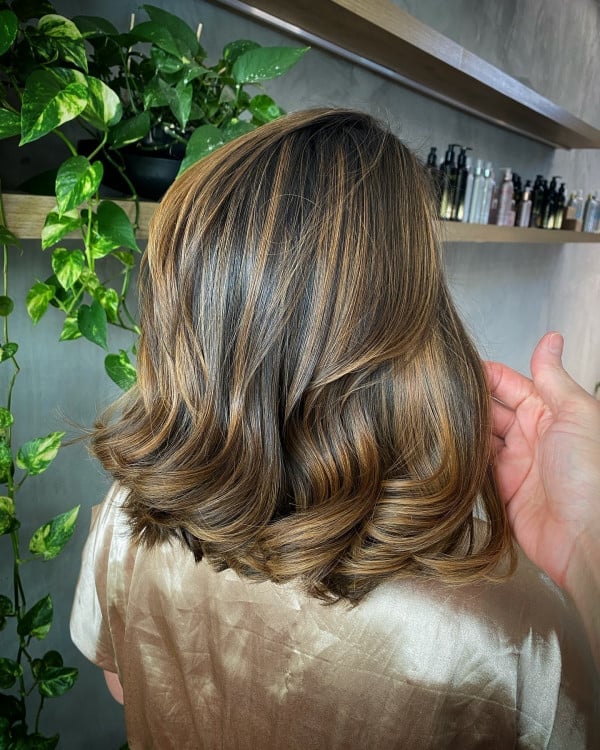
A collarbone bob with honey highlights reads differently from the back. You see the distribution of color across the blunt baseline and the way the waves add volume. The brown base keeps it grounded while the honey pieces lift the whole shape. This is a salon-only cut because a bob that hits the collarbone requires an even baseline and precise layering. Ask your colorist for: collarbone blunt bob with honey highlights. A round brush during blow-drying creates the volume you see here. Trim every six to eight weeks or the bob starts looking shaggy.
6. Short Bob With Subtle Honey Blonde
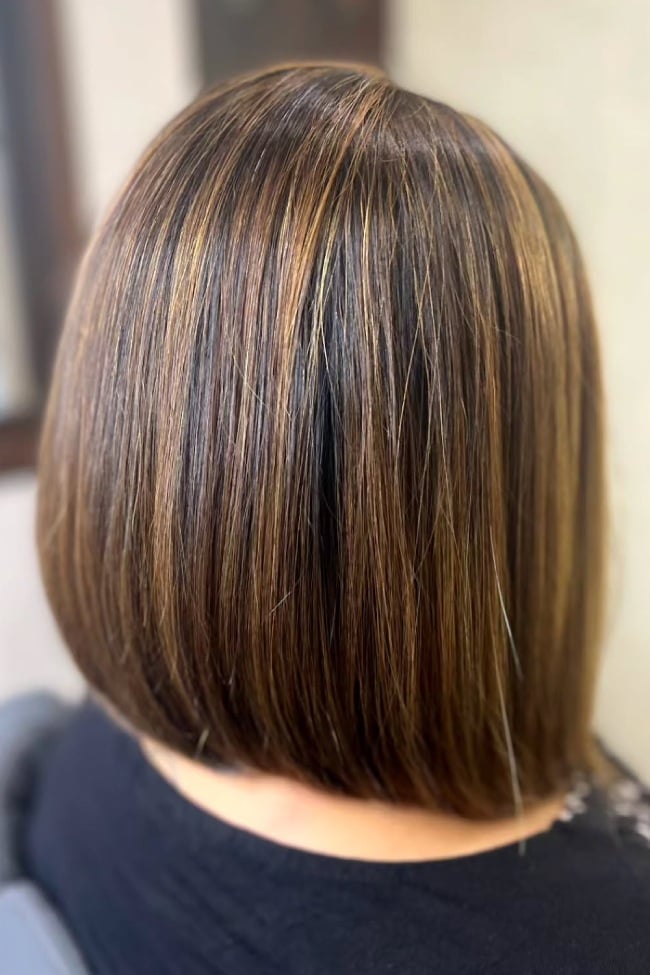
The straight, fine texture creates soft warmth instead of obvious striping. Ask your colorist for: short blunt bob with subtle honey blonde highlights. Very fine hair can look thinner with too many highlights, so keeping them subtle is the right call. A flat iron handles the smooth finish, and the bob needs a trim every four to six weeks to hold its line.
7. Collarbone Layers With Blowout And Honey
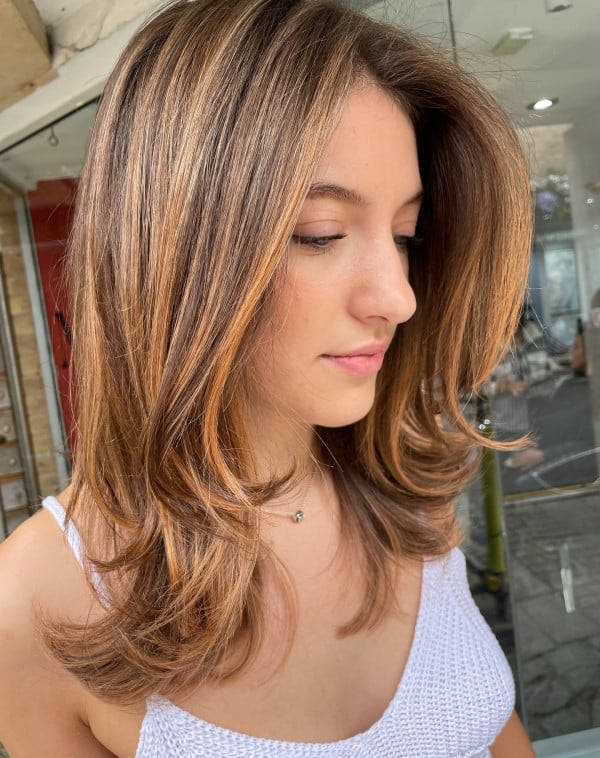
The medium brown base and warm tone make this a natural bridge from late-summer sun into early fall, when a glossier finish suits the season shift. Ask your colorist for: collarbone layered cut with a blowout and honey highlights. Thick, wavy hair holds the blowout shape well, and a middle part lends length to rounder faces. A round brush and blow dryer are the main tools here, with a trim every six to eight weeks to keep the layers from tangling.
8. Mid-Back Waves With Curtain Bangs And Honey
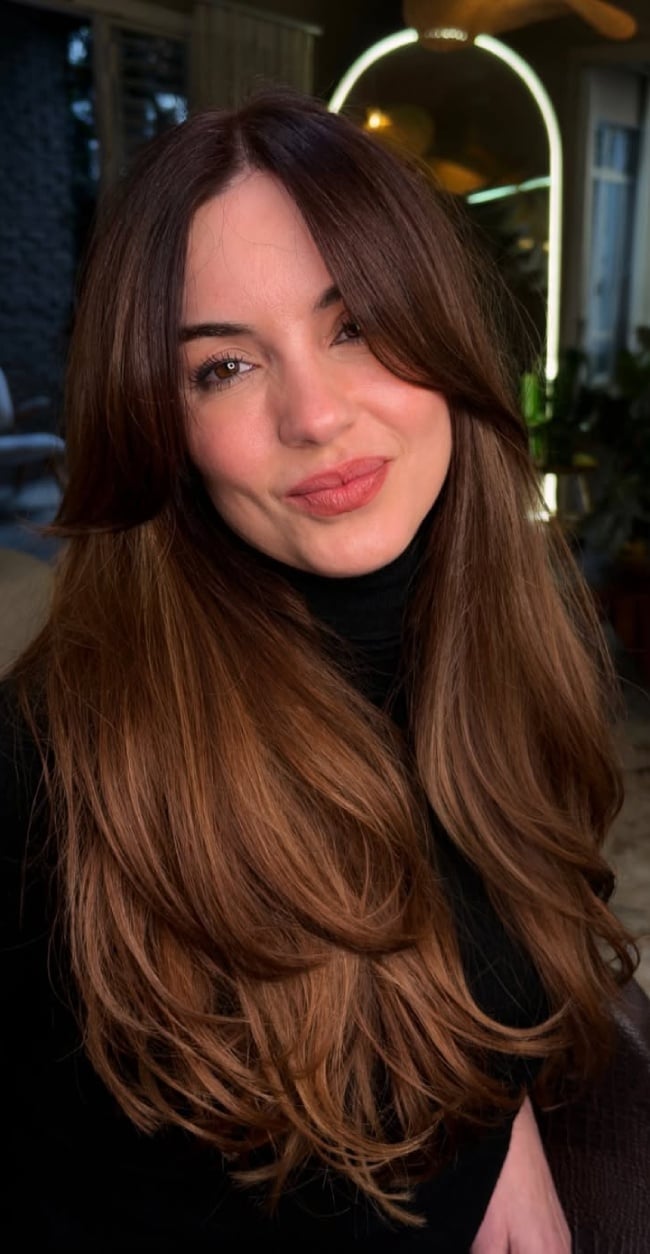
Can curtain bangs and honey highlights coexist without looking busy? On this mid-back length, thick wavy chestnut brown hair, they do. The color is built with a balayage technique that paints the honey tone freehand onto the surface layers, leaving the deeper chestnut underneath for contrast. The curtain bangs are cut to blend into the soft layers, so the warmth lands right around the face. Ask your colorist for: mid-back wavy cut with curtain bangs and honey highlights. Thick, wavy texture holds the wave pattern naturally, and a middle part keeps the bangs balanced. A large barrel iron or rollers define the bend, and a trim every six to eight weeks preserves the curtain shape.
The balayage approach means the grow-out is gradual, with no hard line where the honey meets the base, which buys you about two months between toning appointments. Square and heart face shapes get the most softening from the bangs, but the key is the placement of the honey tone: it should hit the mid-lengths and ends, not the root.
9. Mid-Back Layers With Honey Highlights
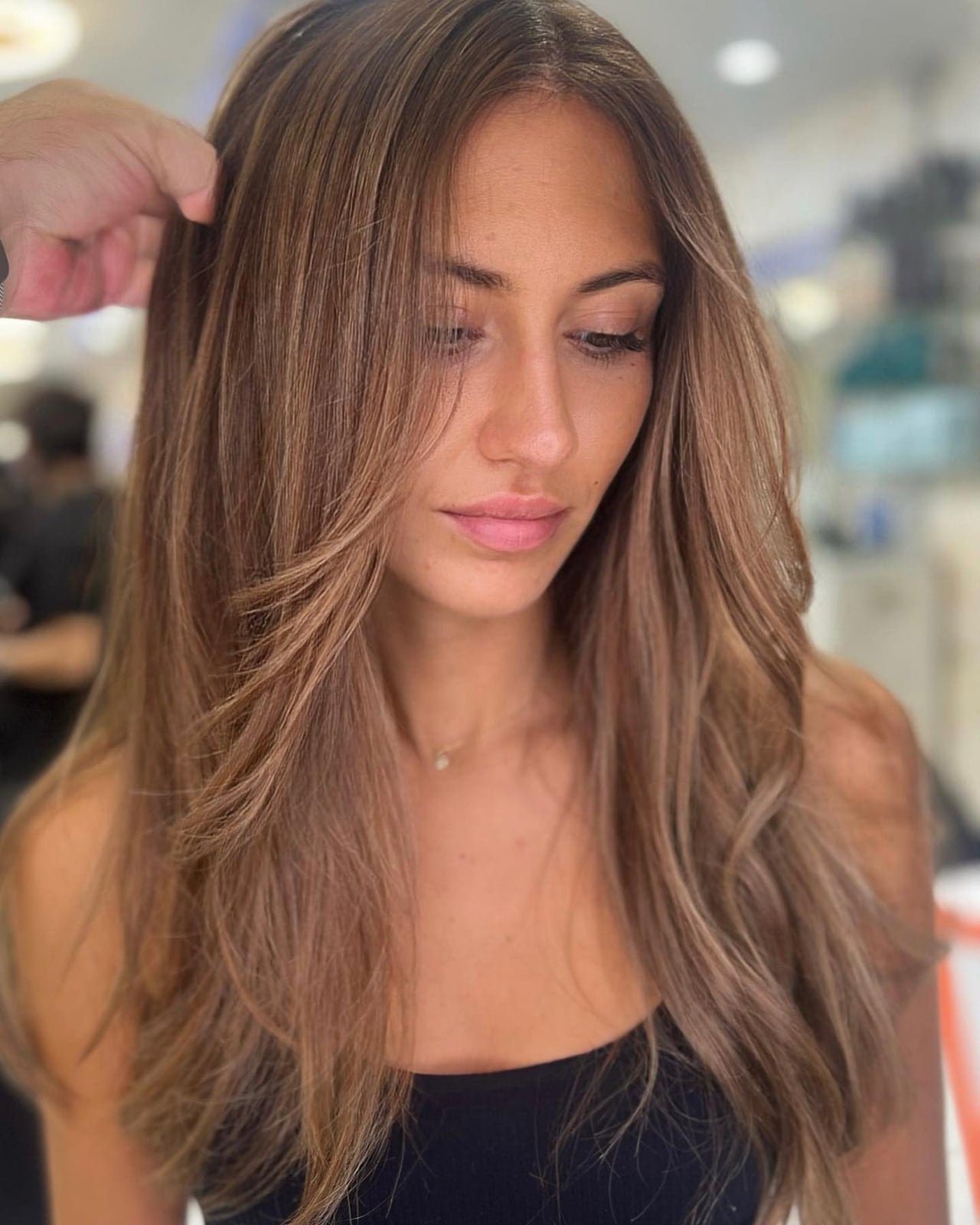
This mid-back length layered cut, styled in soft waves with a middle parting and subtle face-framing layers, shows how honey highlights shift in effect based on intensity. Ask your colorist for: mid-back layered cut with face-framing layers and honey highlights. Specify if the honey tone should be a soft wash or a more distinct contrast against the brown base. The face-framing layers here catch the lighter pieces first, which draws attention to the cut’s movement. Thick, wavy hair at this length benefits from layers that remove weight without losing volume. A texturizing spray keeps the waves from falling flat, and a trim every six to eight weeks prevents the ends from thinning out.
For the honey highlights themselves, ask for fine weaves, not chunky sections. The tone should stay warm without tipping into brassy, so a toning gloss every eight to ten weeks keeps it in the honey zone and away from the orange one.
10. Mid-Back Layers With Side Part And Honey
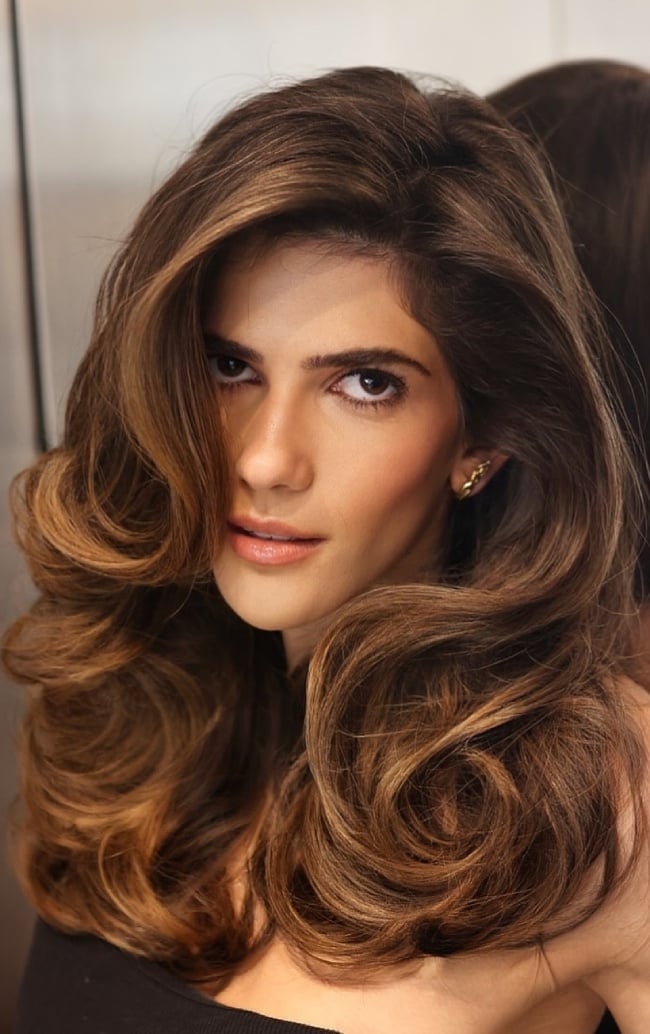
The side part changes the way the highlights fall: they concentrate on the heavier side, which creates a natural asymmetry. Ask your colorist for: mid-back layered cut with side part and honey highlights. Thick, wavy texture holds the volume at the root, and a side part adds lift for finer hair types. Blow-dry with a round brush to emphasize the shape, then a trim every six to eight weeks keeps the layers from growing past the collarbone. The grow-out phase is forgiving because the honey highlights are blended, so the line between color and base softens over time.
11. Mid-Back Waves With Face-Framing Pieces And Honey
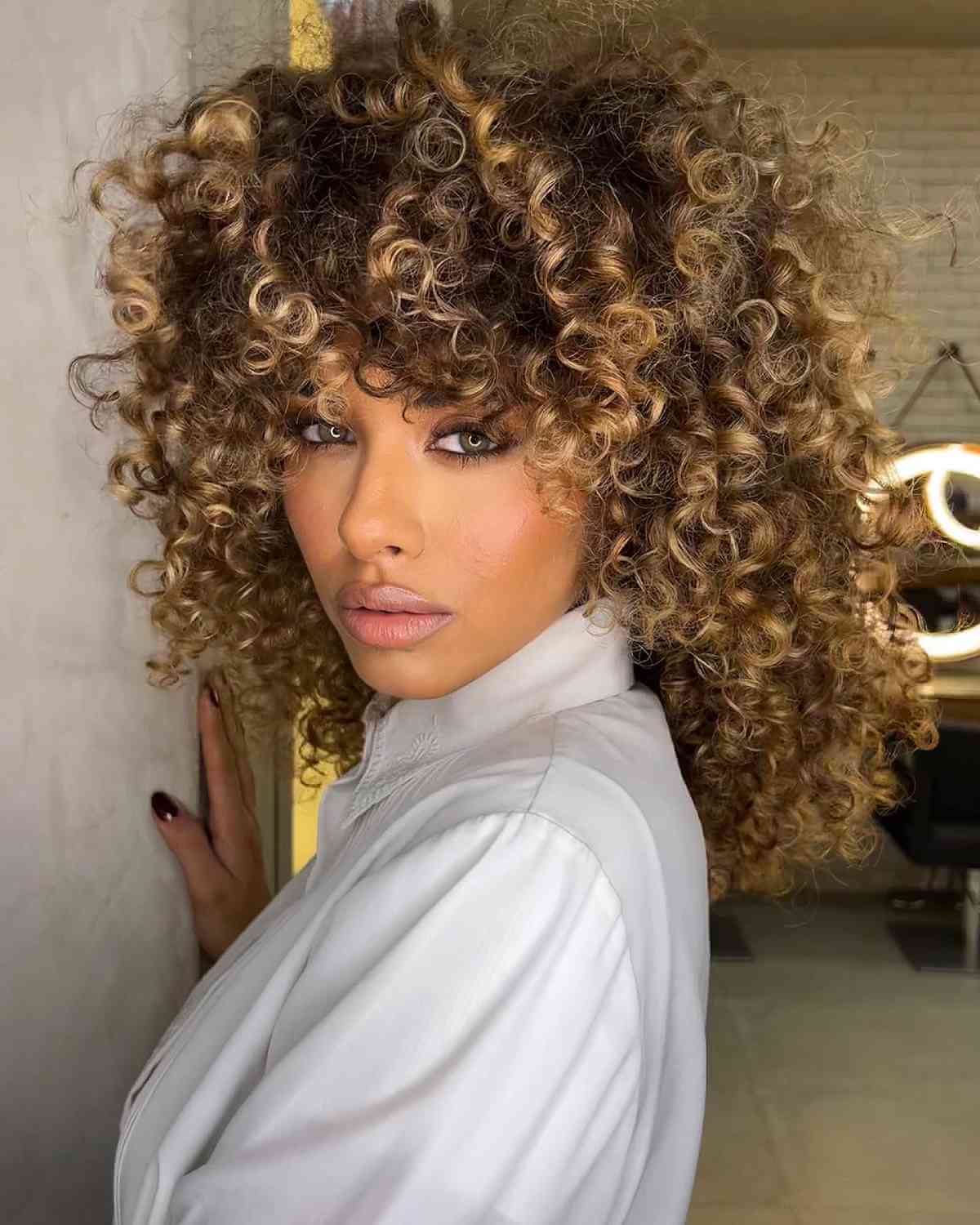
Face-framing pieces do the architectural work here, pulling the eye forward while the mid-back waves stay soft. On a dark brown base, honey highlights around the face make the whole arrangement read brighter without going full blonde. This setup flatters square jawlines, since the shorter pieces soften the angles. It also suits thick, wavy hair, where the layers have enough weight to hold their shape.
Ask your colorist for: mid-back waves with face-framing pieces and honey highlights. A side parting adds a little asymmetry, which helps if your face is on the round side, because the diagonal line breaks up the symmetry. The grow-out is forgiving, since the face-framing pieces are meant to blend, but a trim every six to eight weeks keeps the ends from looking straggly. A texturizing spray on dry hair gives the waves a lived-in feel, though you can skip it if your natural texture already cooperates.
12. Mid-Back Dark Brown With Rich Honey
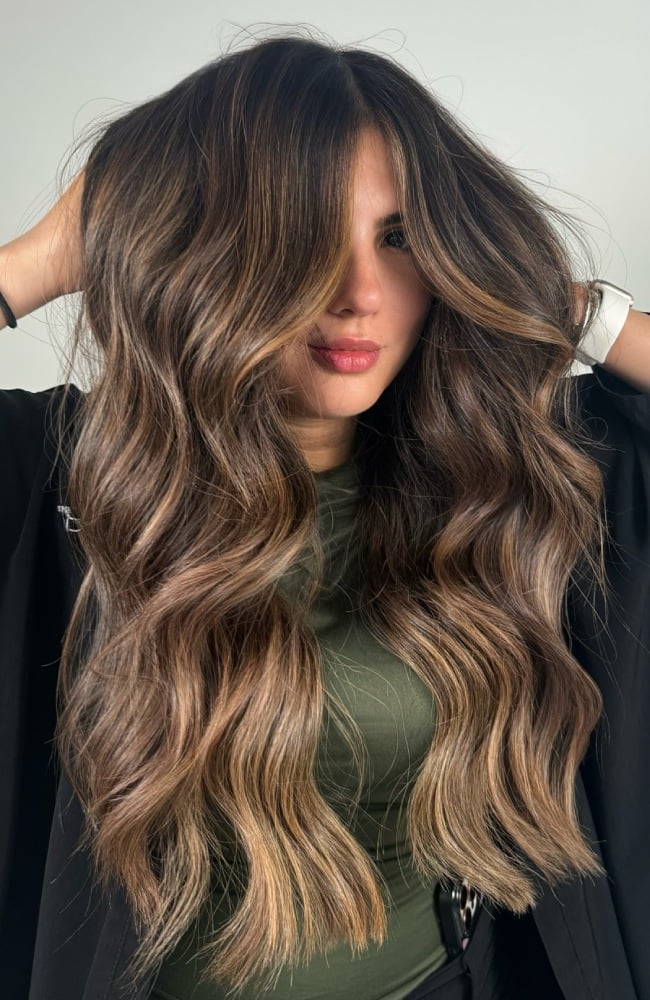
Rich honey on dark brown is the color equivalent of a wool coat: warm, substantial, and exactly right when the temperature drops. The loose waves and middle part let the highlights move with the hair, so the dimension shows up in motion, not just in still light. This is a shade that lands well in autumn and winter, when the lower sun makes golden tones glow instead of washing out.
Ask your colorist for: mid-back dark brown with rich honey highlights. The middle part works to elongate a round face, drawing the eye down the length of the hair. On thick, wavy hair, the color sits deep enough that it avoids a brassy cast, just warmed up. A smoothing serum on the lengths keeps the gloss factor high, and a trim every six to eight weeks maintains the shape. It is an evening-ready color that still behaves on a Tuesday.
13. Mid-Back Dark Brown With Honey Curls, Wavy
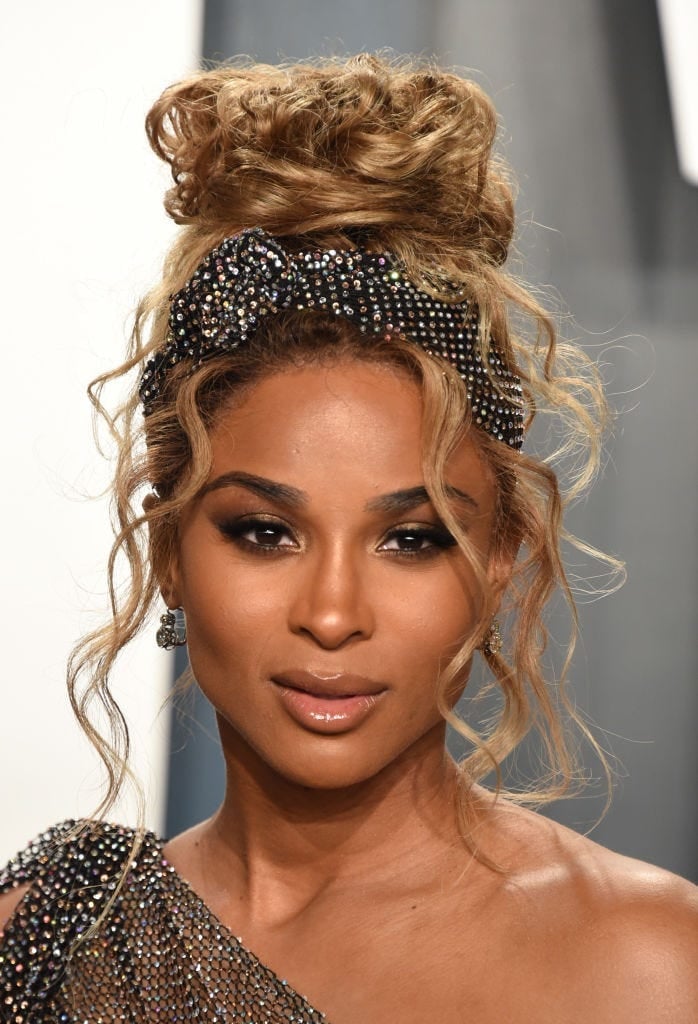
This is a full-volume situation, and the color is built to support it. Large, voluminous curls on a dark brown base give the honey highlights plenty of surface area to catch light, which makes the dimension read from across the room. To get this shape at home, start with a blow dryer and a diffuser attachment to encourage the natural curl, then finish with a large-barrel curling iron only on the pieces that need extra lift.
Ask your colorist for: mid-back dark brown with honey blonde highlights and voluminous curls. The middle part keeps the volume balanced on both sides. This style suits thick, wavy hair best, since fine hair can’t hold that much curl without falling flat. It also adds width to a long face, giving the proportions a little more balance. Plan on a trim every six to eight weeks, because the ends take the most heat and show it first.
14. Mid-Back Layers With Honey Contrast, Wavy
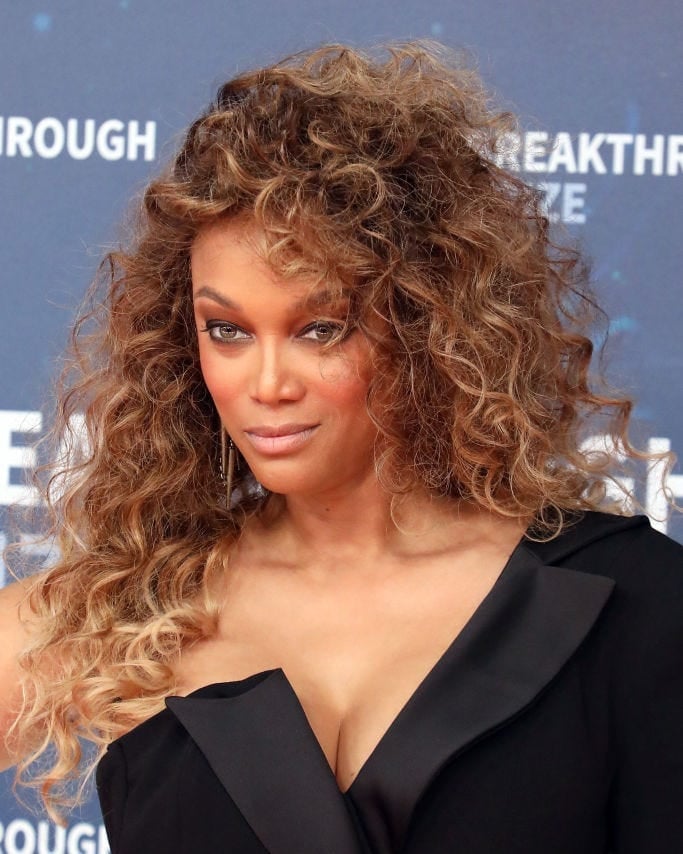
The contrast here is the whole point: a dark brown base with distinct honey-toned highlights that do not blend into a single muddy shade. The layered cut and loose waves give the color places to break, so the contrast shows up as movement. This is a salon-leaning look, since getting that separation requires a colorist who knows how to place highlights with a lighter hand in some sections and a heavier one in others.
Ask your colorist for: mid-back layered cut with striking honey highlights. Brassiness is a risk: on a dark base, honey tones can pull orange if the toner fades. A purple shampoo once a week keeps it in check, and a trim every six to eight weeks maintains the layers. The natural, air-dried texture in the styling is a bonus, because it means you are not married to a blowout. The contrast also has a way of drawing attention to a strong jawline, if that is something you want to feature.
15. Mid-Back Waves With Dimensional Honey
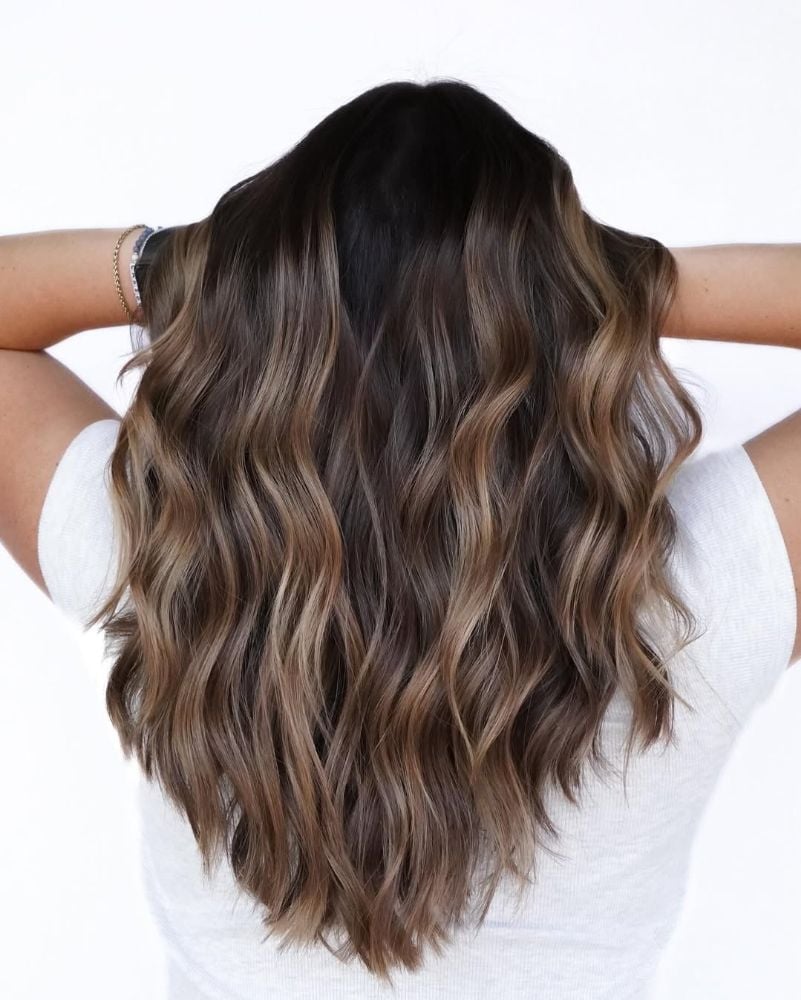
Dimensional honey is not a single shade but a family of them, placed so the lighter pieces sit deeper in the hair and the darker ones stay closer to the root. From the back, this creates a subtle contrast against the brown base, enough to add depth without turning the whole head into a highlight parade. The loose waves help, because each bend shows a different angle of the color.
Ask your colorist for: mid-back wavy cut with dimensional honey highlights. The key is asking for variations in the honey tones, not one uniform blonde. This works on thick, wavy hair where the layers have body to hold the wave pattern. A serum on the lengths adds shine without weighing the waves down, and a trim every six to eight weeks keeps the shape from getting too heavy. It is an everyday color that does not demand a special occasion to look finished.
16. Long Light Brown With Lived-In Honey
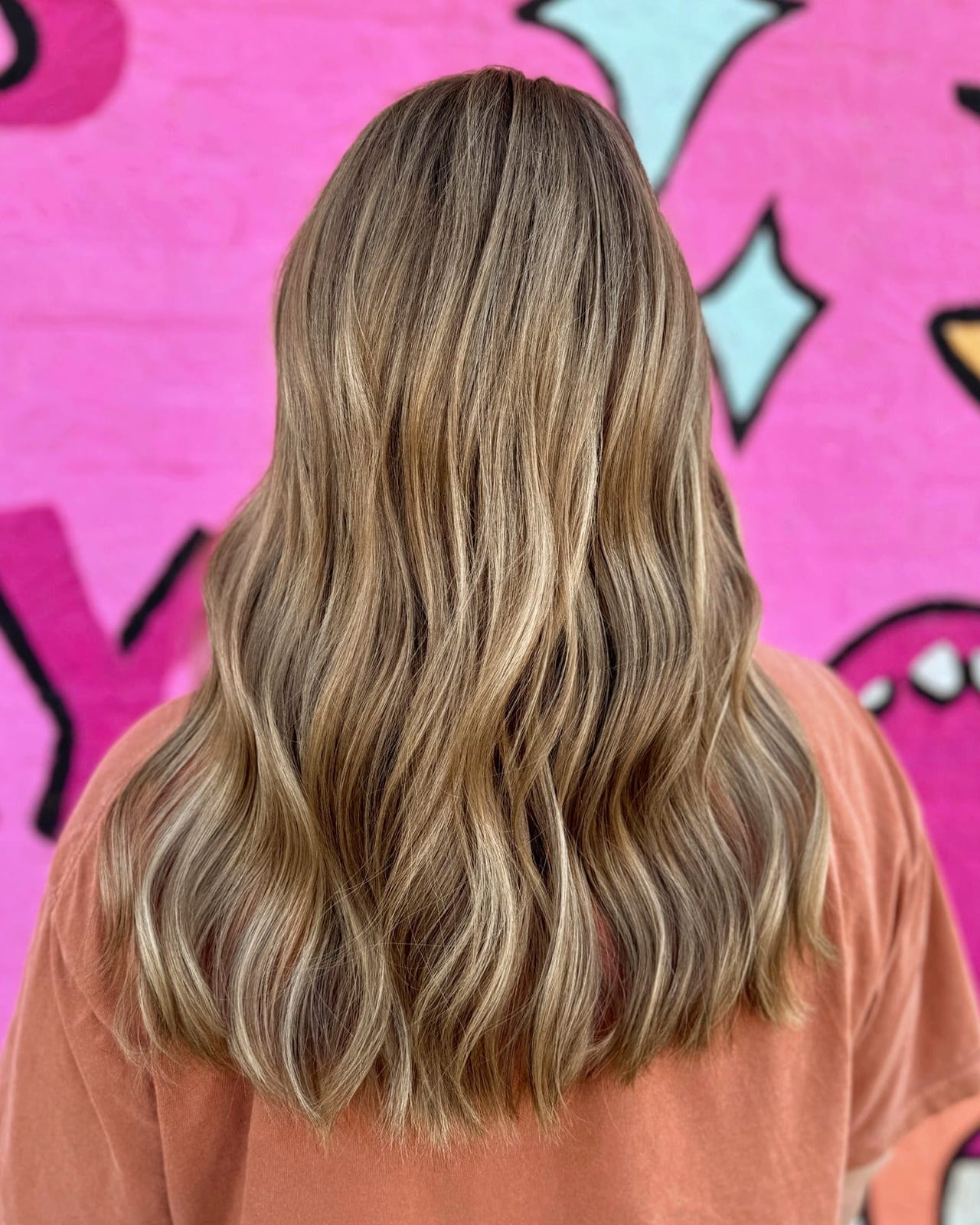
Lived-in color works best when you stop chasing the root line every few weeks. This is a light brown base with honey highlights scattered through mid-back length, cut in long layers and worn in loose waves with a middle part. Medium-density wavy hair carries that kind of grow-out without looking neglected.
Ask your colorist for: long light brown with lived-in honey highlights. The tone stays warm and soft, so a root shadow or a gloss every eight to ten weeks keeps it from going flat. A texturizing spray gives the waves a relaxed finish, and a trim every eight to ten weeks keeps the layers from collapsing into one length. The whole point is that it looks good on a Wednesday when you have done nothing to it.
17. Long Bronde With Golden Honey Highlights
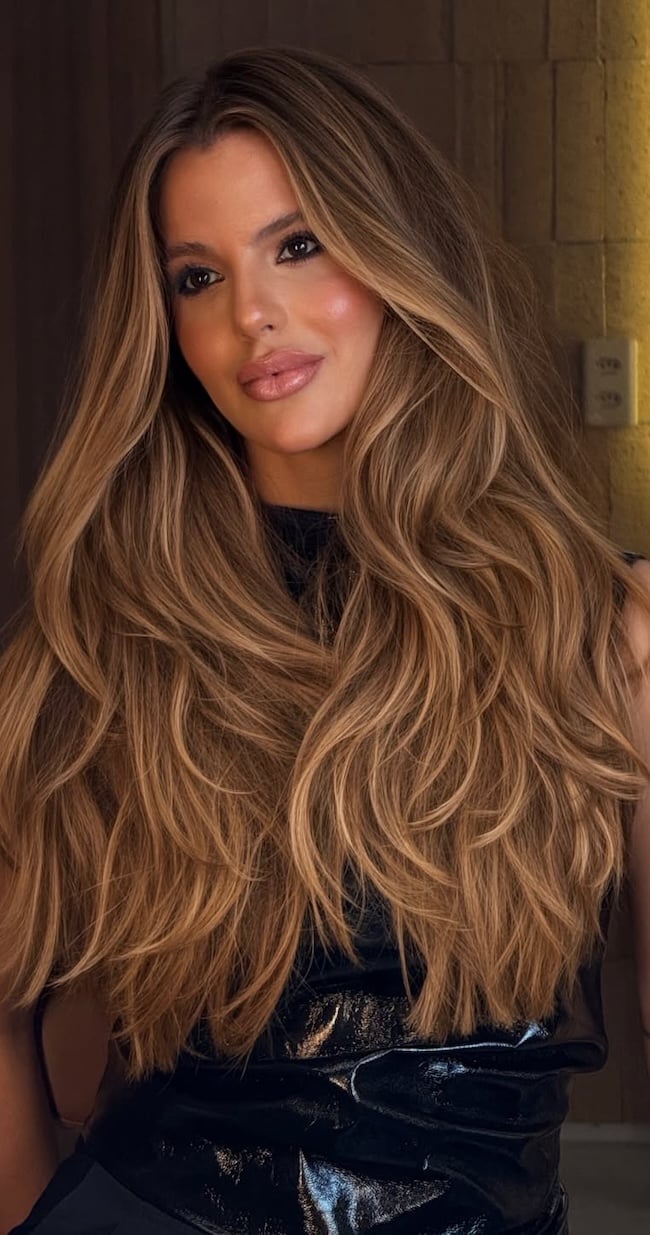
A solid brown base with honey highlights gives you contrast. A bronde base with golden honey highlights gives you a gradient, and the difference shows up the moment the hair moves. Here the base sits between brown and blonde, the golden pieces run through long, thick waves, and a middle part splits the whole thing down the center.
Ask your colorist for: long bronde with golden honey highlights. The lighter base means less visible regrowth than a dark brown starting point, which suits anyone who would rather stretch the time between appointments. Thick, wavy hair holds the blowout shape that keeps the gradient readable, and a middle part plus length below the chin elongates a round face. Fine hair tends to lose the distinction between base and highlight at this level of contrast, so a solid brown base with honey pieces usually reads cleaner there. Trim every eight to ten weeks and use a volumizing mousse at the roots before blow-drying.
18. Final Thoughts
Pick the technique by your tolerance for root maintenance: balayage and foilyage grow out softly, while face-framing pieces need more frequent toning to stay bright. Fine hair does better with fewer, finer pieces and one blunt baseline; thick or curly hair can carry wider ribbons without losing shape.
- Refresh highlights every eight to twelve weeks.
- Wash with color-safe shampoo to slow fading.
- Deep condition weekly to keep highlighted hair hydrated.
- Limit heat styling and always use a heat protectant.
- Tone every four to six weeks to keep brass at bay.
Find your perfect honey brown highlight shade.

