
Ombre hair color creates a gradient from a darker base to lighter ends, a technique that has moved past its early-2000s roots into something more refined. The current shift favors softer transitions and natural-looking blends, with curtain bangs and face-framing layers adding a lived-in feel.
This collection of 20 ombre hair color ideas spans everything from bold, vivid transitions to subtle, barely-there shifts, covering short bobs to mid-back lengths. It addresses a common struggle: finding a gradient that fades gracefully without a harsh grow-out line or brassiness. The range suits straight to coily textures and low to high density hair, with each look built for real life, not just the salon chair.
1. Mid-Back Length Black To Fiery Red Ombre
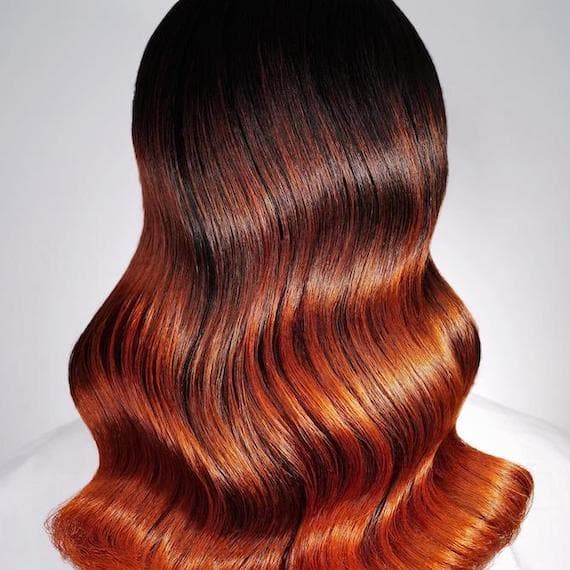
The red arrives late and all at once, a fiery red that takes over where the black base loosens its grip around the mid-lengths. That hard stop is the design, not a mistake: the colorist paints the lighter shade through the ends and lets the two colors meet in a narrow gradient instead of a long fade. Layers cut through the mid-back length give the transition somewhere to move, so the line of color breaks up in the waves rather than sitting in one flat stripe. It rewards thick, wavy texture, since fine hair can lose the contrast in the movement. Ask your colorist for: mid-back length ombre, black to fiery red. The red will need a refresh every six to eight weeks to stay fiery instead of rusty. A heat protectant before any hot tool keeps the ends from dulling faster than the root line.
2. Long Dark Blonde To Ash Blonde Ombre With Curtain Bangs
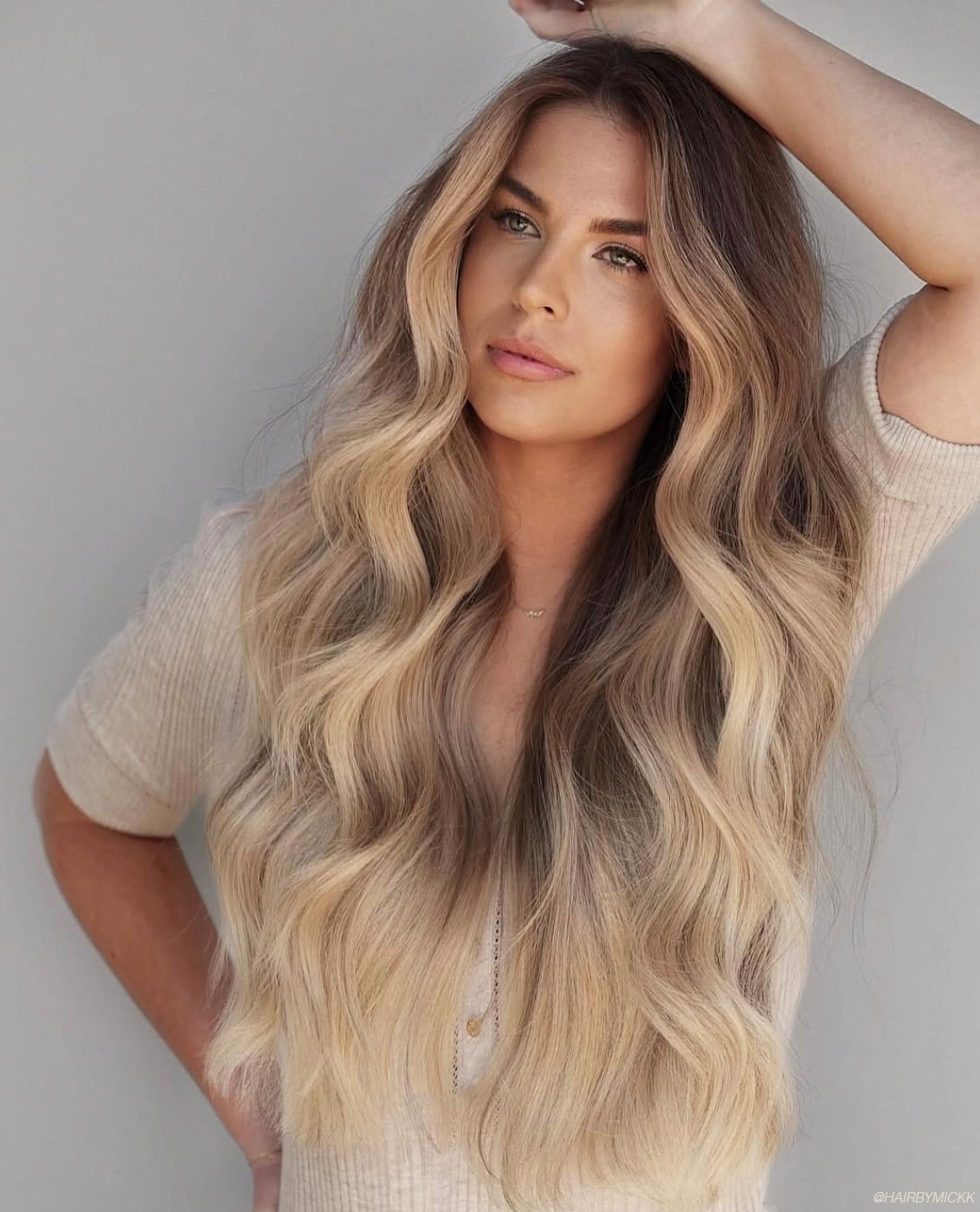
What separates a cool ash blonde ombre from a warm one that turns brassy by week three? The base you start from, mostly. A dark blonde root gives the colorist enough depth to transition into the ash blonde ends without lifting everything to a single flat shade, and the gray-leaning tone at the bottom stays cool because it has a darker anchor above it. That makes it a reasonable ask if warm golds tend to go orange on you. It wants long, thick hair with some wave, since the ash reads best when the ends have body to catch light. The middle part and curtain bangs suit oval and heart-shaped faces.
Ask your stylist for: long dark blonde to ash blonde ombre, curtain bangs. Blow-dry the curtain bangs toward each side for a soft, lived-in finish, and keep a round brush handy if you want them to hold. Ash tones drift warm as they fade, so book a toning appointment every six to eight weeks rather than waiting for the brass to announce itself. A purple shampoo between visits buys you a little time.
3. Mid-Back Dark Brown To Purple Ombre
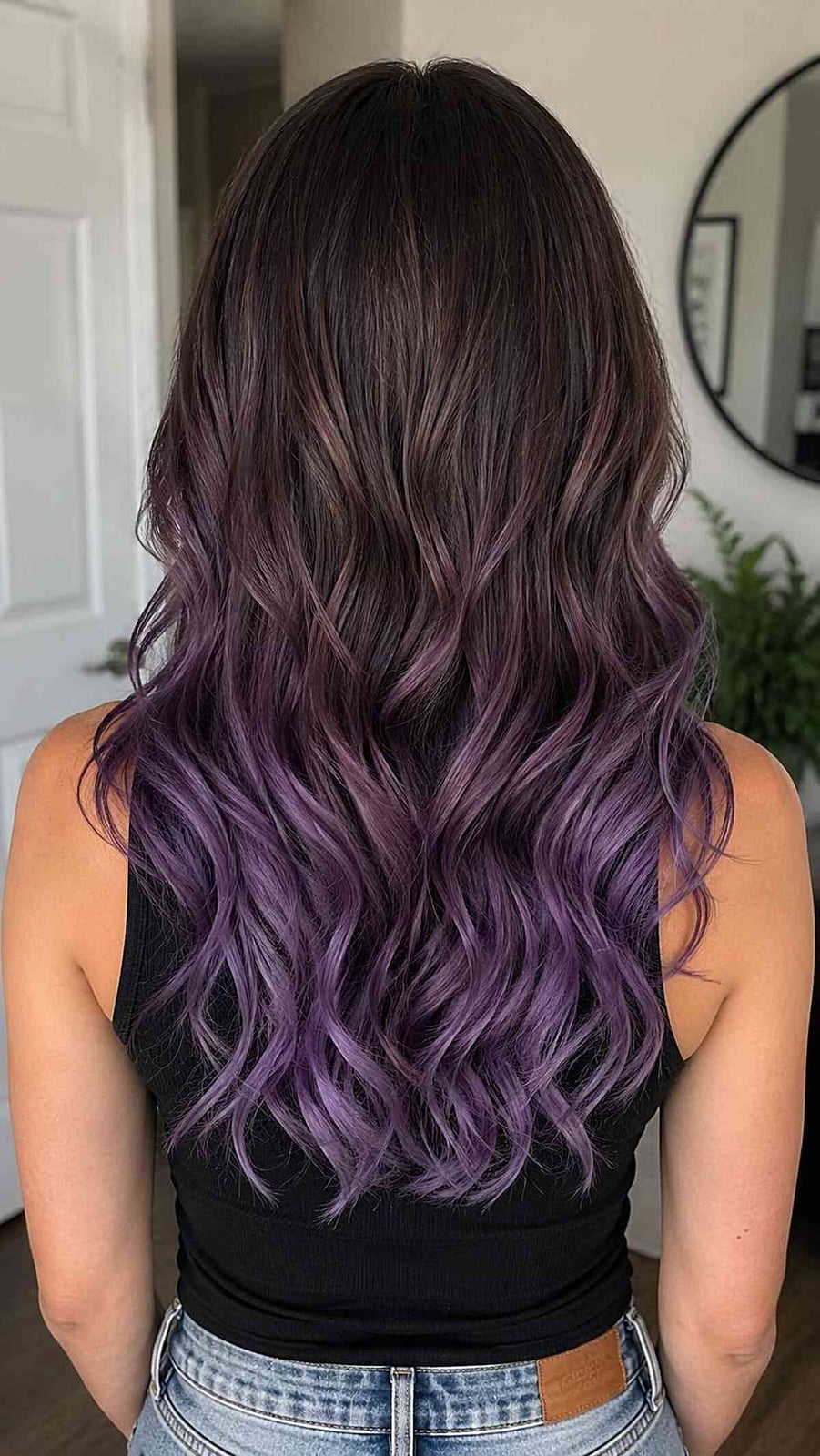
Set this next to a classic dark brown to blonde transition. Blonde ends suggest sunlight; purple ends suggest a decision. The dark brown base holds the root line steady so the lighter color starts lower and the grow-out stays soft. Purple is the louder choice, and it asks more of the hair underneath: thick, wavy mid-back length gives the vibrant ends enough surface to show the hue instead of swallowing it in a thin tail. Ask your colorist for: mid-back length dark brown to purple ombre. If you want the color to do the talking and skip the small talk, this is the version. A color-depositing conditioner keeps the purple from sliding toward gray between salon visits, and a trim every eight weeks keeps the ends crisp.
4. Mid-Back Dark Purple To Pink Ombre, Wavy
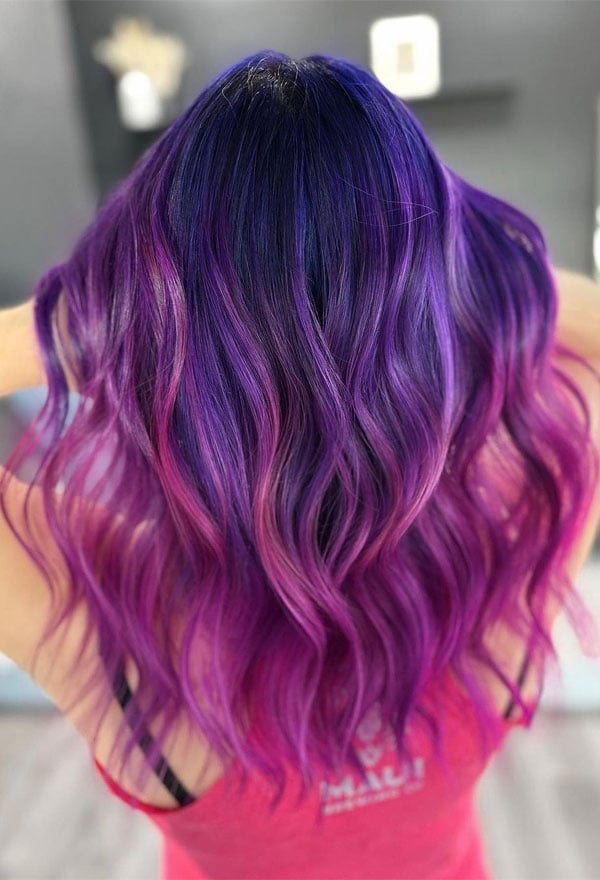
A dark purple base fading into pink ends is a gradient with a short shelf life, and that is the trade. Vivid purples and pinks sit on top of the hair rather than inside it, so they rinse out faster than a brown-to-blonde ombre ever would. Expect the pink to soften first, usually within a few washes, while the dark purple root holds longer and keeps the whole thing looking on purpose. Medium density, wavy mid-back hair carries it well: the waves break up the color line so fading looks like part of the plan. Ask your colorist for: mid-back length dark purple to pink ombre. If you will not commit to a color-depositing mask every week or two, skip this one and pick a shade closer to your natural base. Color-safe shampoo is the minimum, not the whole routine.
5. Collarbone Hot Pink To Fiery Red Ombre
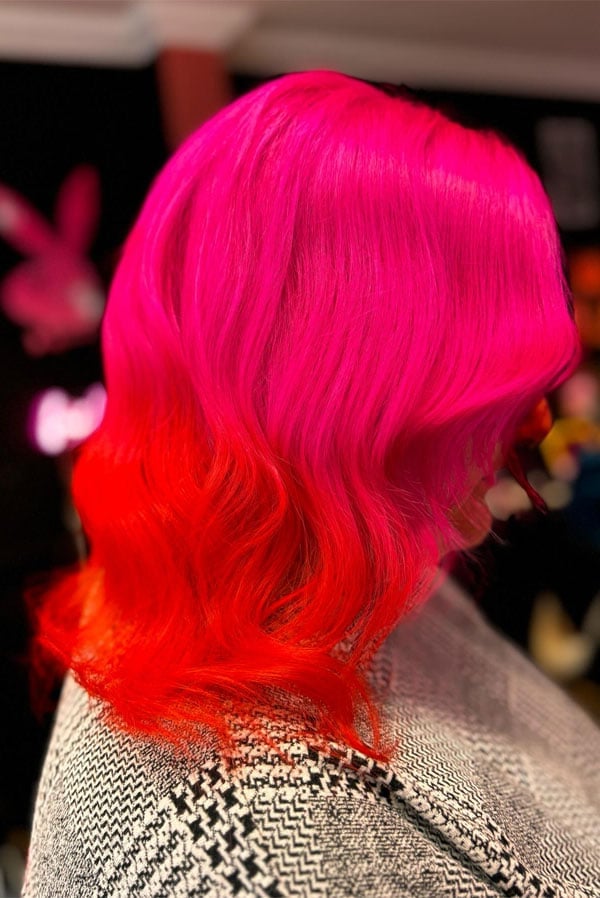
The transition runs hot pink at the roots into fiery red at the ends, and at collarbone length there is nowhere for that much color to hide. That is the point in summer, when the whole thing reads like a sunset and the short lob keeps it from feeling heavy. Medium density wavy hair holds the gradient without the ends going limp, and collarbone length means the pink-to-red shift happens right where the waves start. Ask your colorist for: collarbone length hot pink to fiery red ombre. Book it for festival season, then keep it out of direct sun, which fades reds fastest.
6. Mid-Back Dark To Vivid Blue Ombre
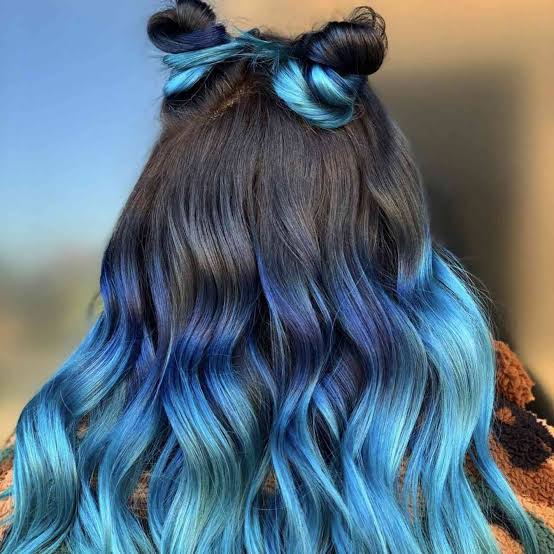
How much blue do you actually want at the ends? That decides the whole appointment. This is a dark base melting into a vivid, saturated blue on mid-back length hair, cut in layers and worn wavy, so the color moves instead of sitting in one flat band. Ask your colorist for: mid-back length dark to blue ombre. Bring the word vivid and say whether you want the blue to start at the shoulders or lower, because intensity lives in that placement. Thick hair carries the saturation well; fine hair shows the line sooner. Be clear that the blue is the goal, not a hint of it.
7. Collarbone Dark Brown To Copper Blonde Ombre With Curtain Bangs
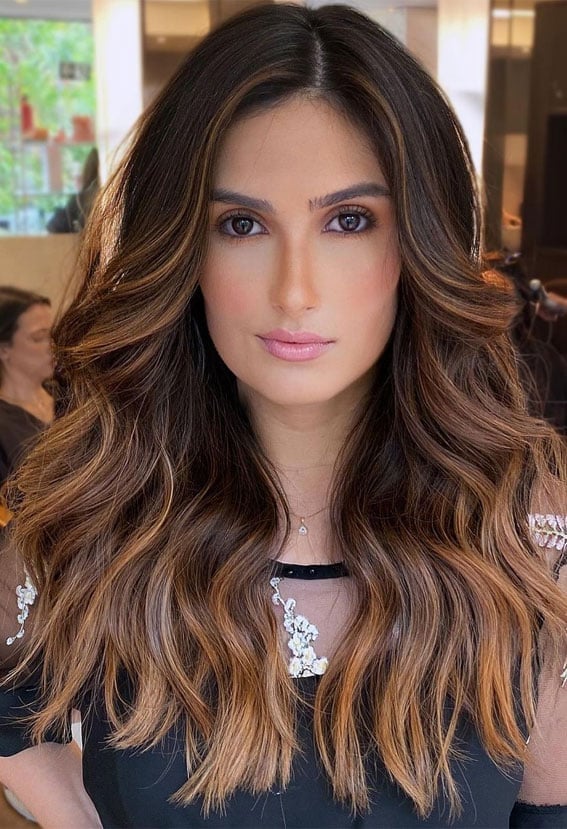
Face-framing layers and curtain bangs do most of the work here, catching light around the jaw while a dark brown base gives way to warm copper blonde. Ask your stylist for: collarbone length dark brown to copper blonde ombre with curtain bangs. The cut needs a trim every six to eight weeks, and the curtain bangs want a tidy every four to six so they keep their shape instead of collapsing into the forehead. Copper fades fastest on the ends, so a toning gloss every six to eight weeks keeps the warmth honest. Medium density suits this length best.
8. Mid-Back Dark Brown To Blonde Ombre With Curtain Bangs, Wavy
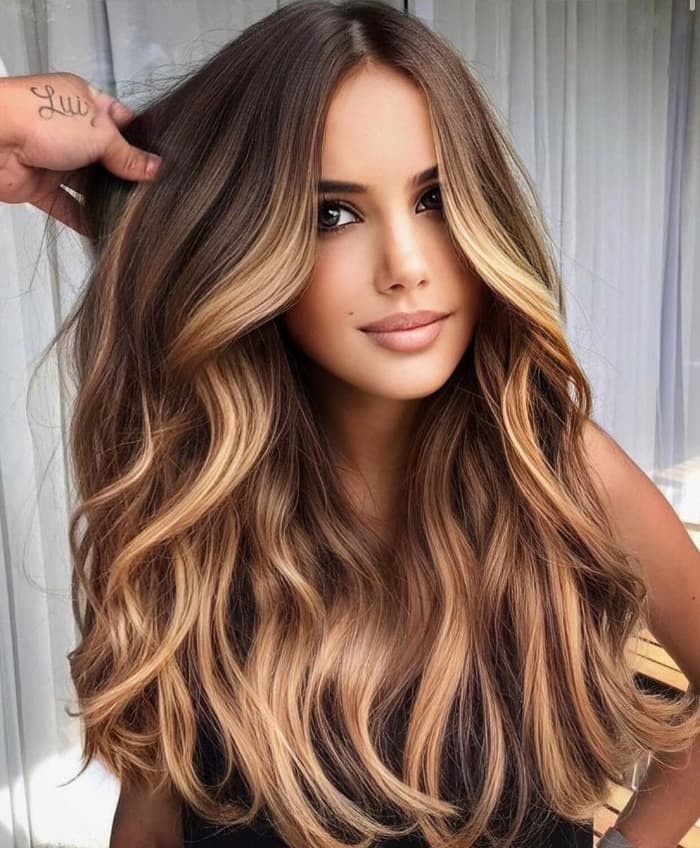
The transition is the tell: a dark brown root that hands off to blonde without a visible seam, which takes more than one bowl of lightener. Ask your colorist for: mid-back length dark brown to blonde ombre with curtain bangs. Blending happens in stages, with the midsection painted to bridge root and end, and thick wavy hair gives the colorist room to feather that line. Curtain bangs need their own placement so the blonde does not start too high on the face. This is not a home project if you want the fade smooth; a box kit lays a hard stripe where the blend should be.
9. Mid-Back Dark Brown To Lighter Blonde Ombre
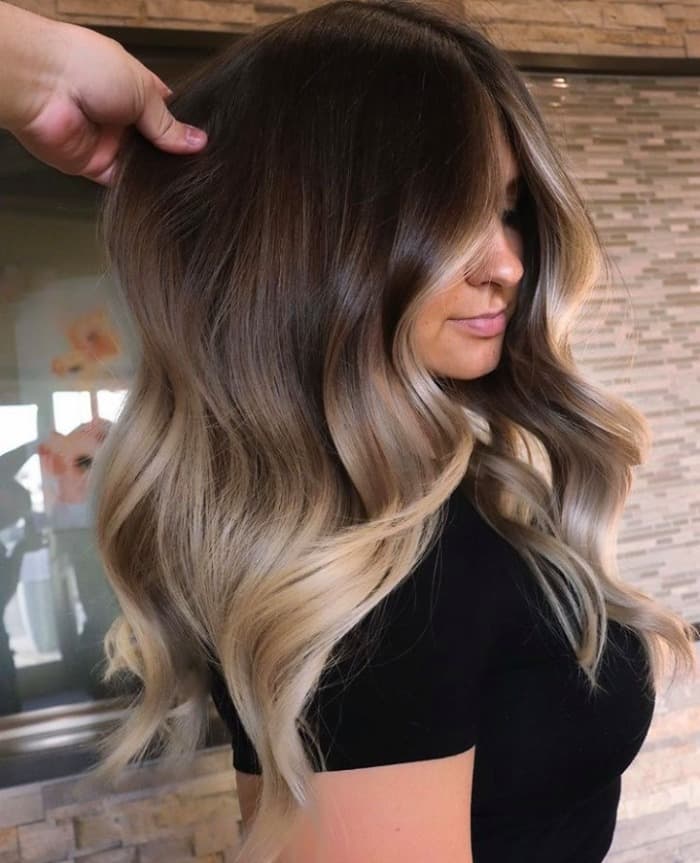
Can you get this lighter blonde at home? You can get close on the tone and nowhere near it on the blend. Ask your colorist for: mid-back length dark brown to lighter blonde ombre with curtain bangs. The lift from dark brown to blonde is the part that punishes shortcuts: overlapping lightener on thick mid-back length hair is how bands and breakage happen. A color-depositing mask in between appointments stretches the blonde and keeps the tone from going yellow. The salon route costs an afternoon and a return visit; the home route costs a repair appointment later. Same chair, worse mood.
10. Mid-Back Dark Brown To Honey Blonde Ombre With A Glossy Finish
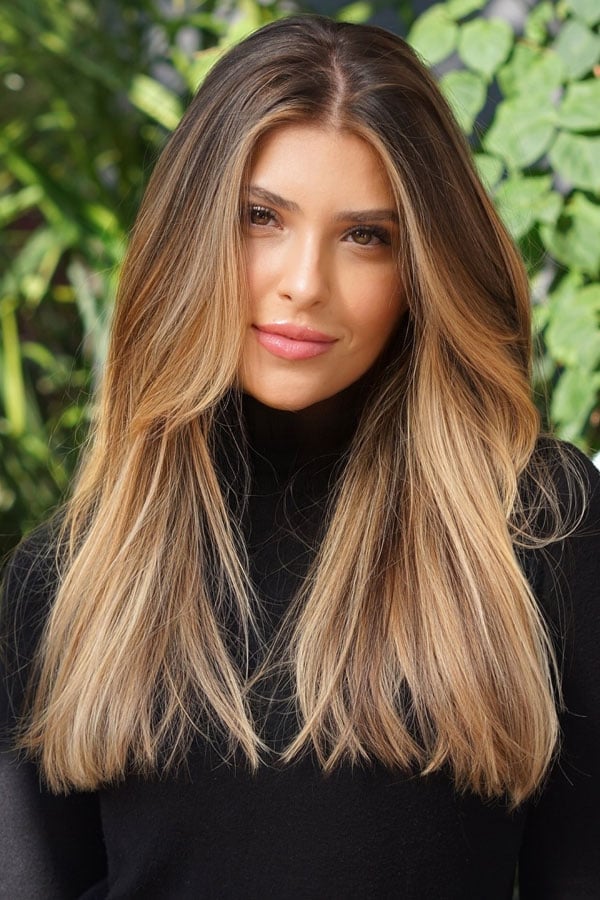
Long layers give the honey blonde fade somewhere to travel, and the gloss is what makes the ends look lit from within. Ask your colorist for: mid-back length dark brown to honey blonde ombre with a glossy finish.
Honey blonde drifts warmer as the weeks pass, so plan a toning gloss every six to eight weeks to keep it from tipping orange. Wash less often and use a color-safe shampoo; the shine survives longer that way. Long layers need a trim every eight to ten weeks to stay shaped. Thick wavy hair holds the gloss well, and a shine serum on the ends keeps the honey tone visible between appointments.
11. Mid-Back Dark Brown To Golden Blonde Ombre With Long Layers
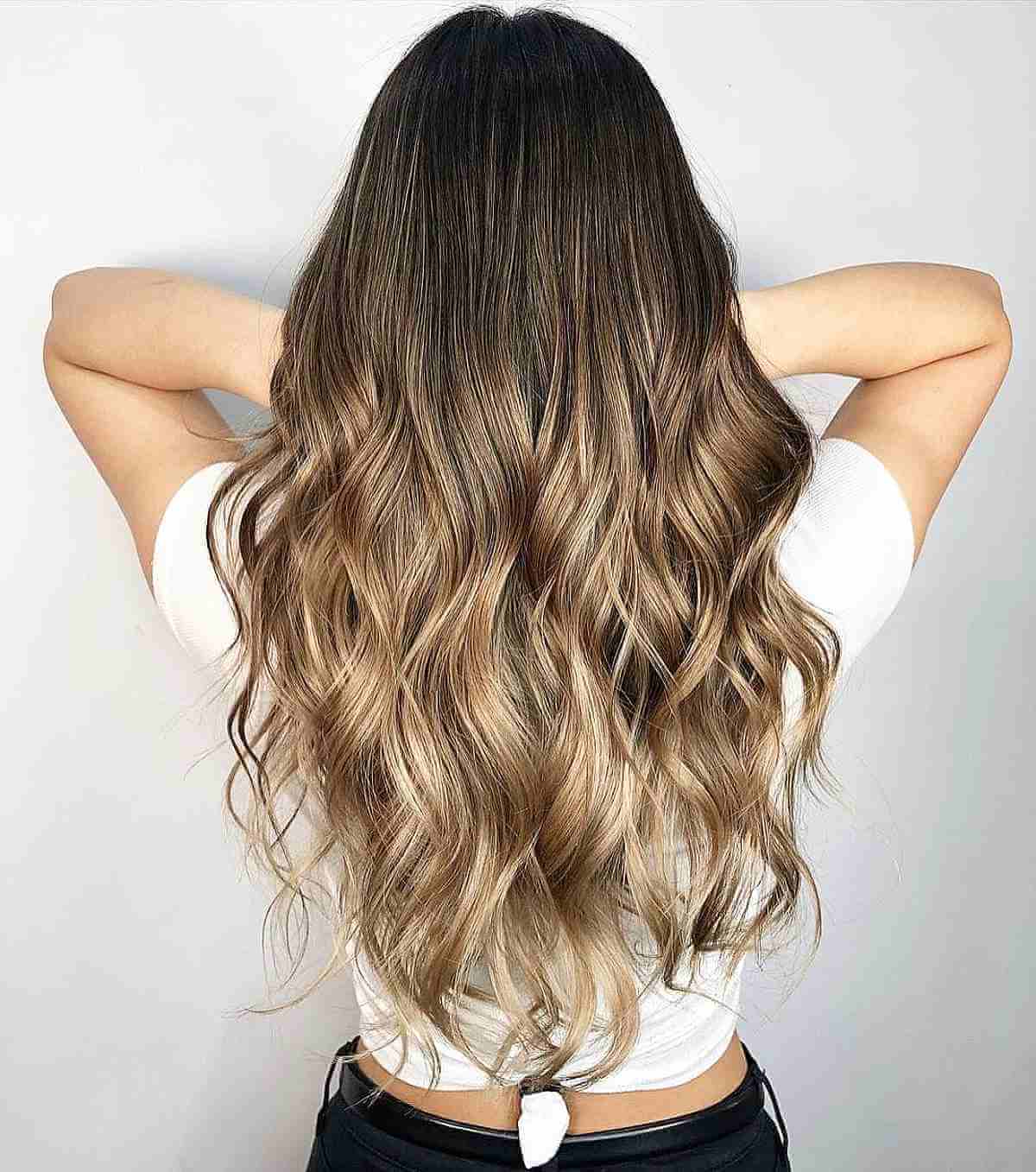
Does golden blonde look yellow on a dark brown base? Only when the tone is wrong. Here the color runs from a dark brown base into golden blonde ends, and the long layers cut through mid-back length so the wavy, medium-density texture has room to move. Medium density is the sweet spot: enough body to hold the loose waves, not so much weight that the gradient gets swallowed. Fine hair can wear it too, though the blonde will show through faster between appointments.
Ask your colorist for: mid-back length dark brown to golden blonde ombre. Ask for the golden tone specifically, since a neutral blonde on this base can look dusty. A texturizing spray through damp waves gives the lived-in finish and keeps the gradient from sitting flat. Book a trim every eight to ten weeks to keep the layers from growing out blunt, and a toning gloss every six to eight weeks to hold the gold against brass.
12. Mid-Back Natural Dark Brown To Blonde Ombre With Uniform Waves
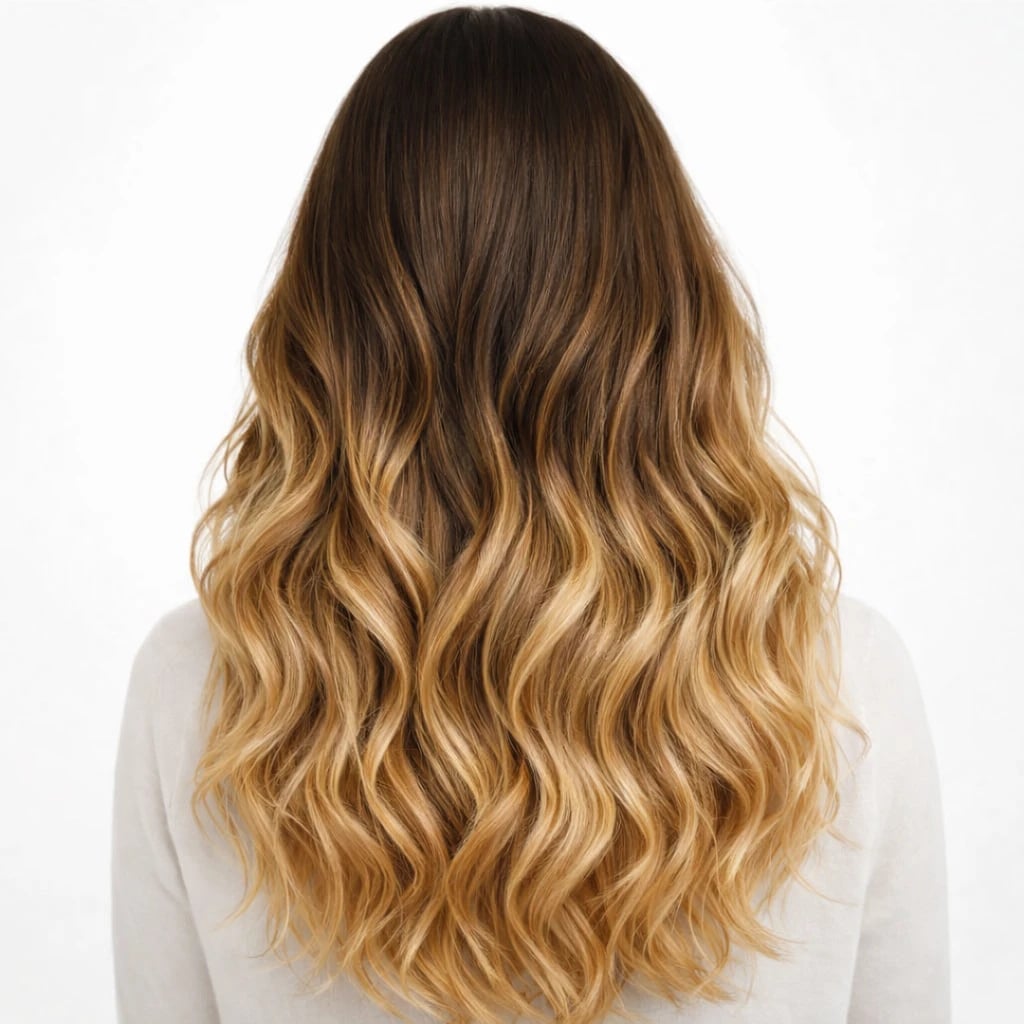
The design here is a gradient built in one direction: a natural dark brown root that keeps its depth for several inches before the color lifts to a warm blonde at the ends. That long root is the technique. Your colorist paints the mid-lengths first, then feathers the lightener downward and back up toward the root line, so the two shades meet over a wide band instead of a hard stripe. Uniform waves on thick, mid-back length hair do the rest, spreading the transition across every layer.
Ask your colorist for: mid-back length natural dark brown to blonde ombre. Keep the root natural and the ends warm, and the grow-out stays quiet for months.
13. Mid-Back Dark Brown To Bright Blonde Ombre, Close-Up Take
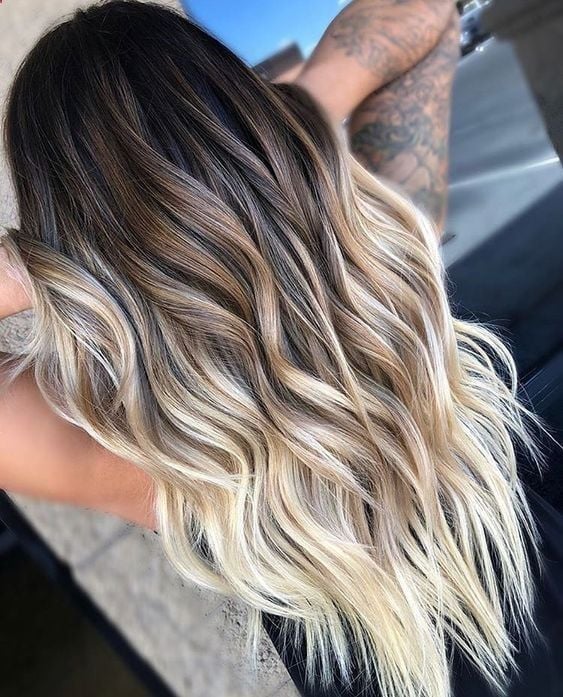
A dark brown base against bright blonde ends is the most dramatic version of the ombre, and the one with the shortest shelf life. That much lift exposes warmth, so the blonde turns brassy within a few weeks unless the tone is maintained. Thick, wavy mid-back length hair carries the contrast well because the layers break up the line, but the upkeep is real: a toning gloss every six to eight weeks, purple shampoo once a week, and a trim every eight weeks to keep the ends sharp instead of straw-like.
Ask your colorist for: mid-back length dark brown to bright blonde ombre. Low maintenance is not the goal here. Commit to the toning schedule for the contrast to stay fresh.
14. Mid-Back Dark Blonde To Light Blonde Ombre
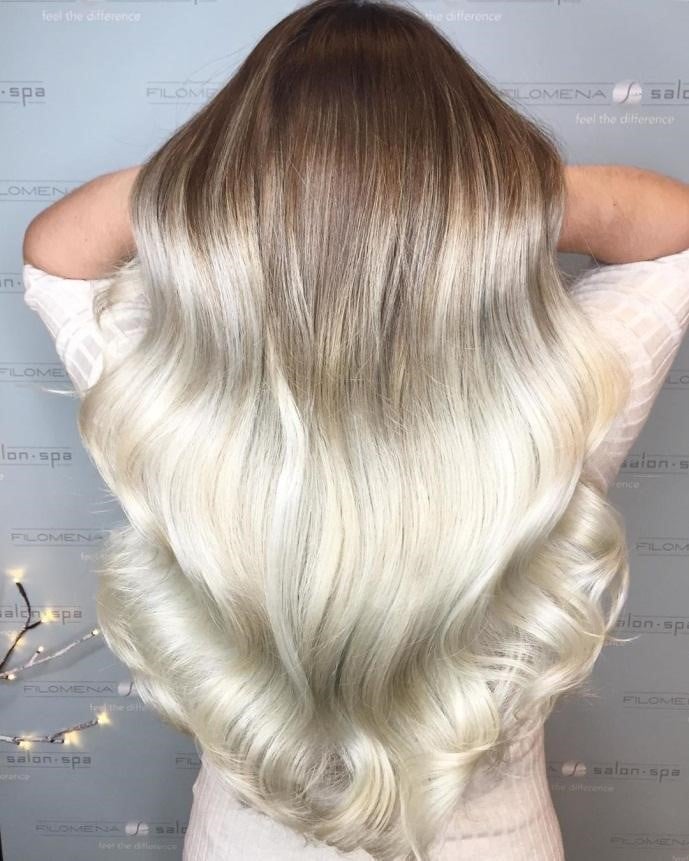
Set this next to a dark brown to bright blonde ombre and the shift is subtle. The base is already dark blonde, so lifting to light blonde ends takes less work and less damage, and the gradient on thick, wavy mid-back hair looks like sun exposure. On a dark blonde base, a subtle ombre can look flat in low light, and the shift shows when the waves move.
Ask your colorist for: mid-back length dark blonde to light blonde ombre. Ask for the light blonde ends to stay cool, not icy, so the transition looks natural. A purple shampoo once a week keeps the lighter ends from turning yellow between glosses, and a toning gloss every eight weeks holds the tone. Choose this over a high-contrast ombre if you want the color to grow out quietly and your trim schedule to stay flexible.
15. Mid-Back Straight Brown To Blonde Ombre Blowout
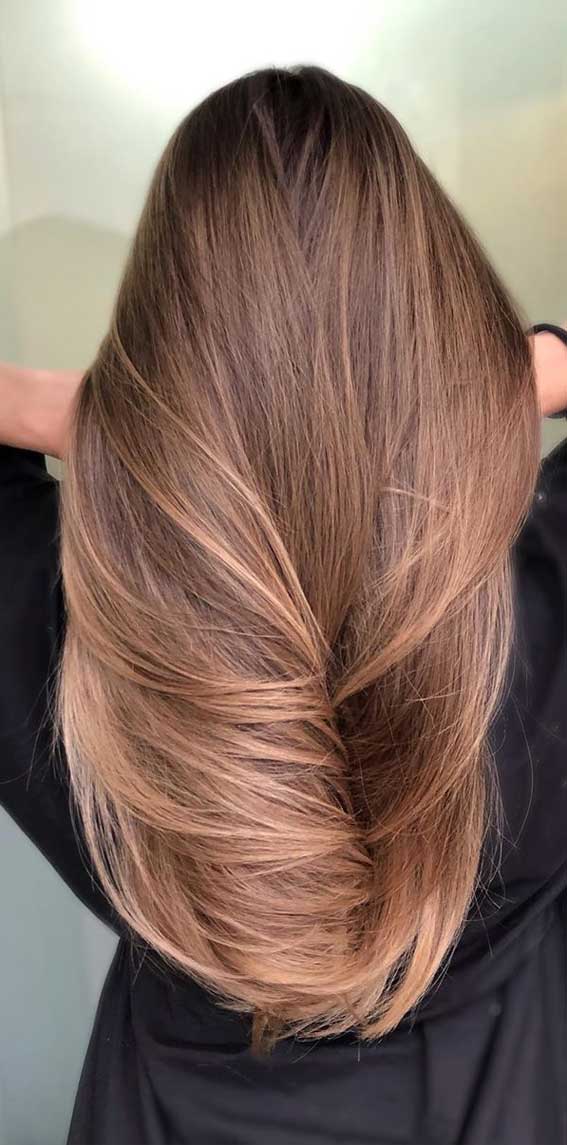
Straight, thick hair shows an ombre more honestly than any other texture, because there is nothing to hide the transition. On this mid-back length, the brown root shifts smoothly to blonde ends, and the blowout with a middle parting gives the gradient a clean, polished surface. Thick straight hair holds a round-brush blowout for two or three days, which is the main reason to learn the technique or book a weekly set.
Ask your stylist for: mid-back length brown to blonde ombre blowout. A large round brush lifts the root and smooths the straight texture so the color reads as one continuous sweep. The upkeep is the blowout itself: refresh with dry shampoo at the root and re-smooth the ends with a brush and low heat. Book a trim every eight weeks, and a toning gloss every six to eight weeks to keep the blonde ends from going warm.
16. Mid-Back Dark Brown To Medium Brown Subtle Ombre
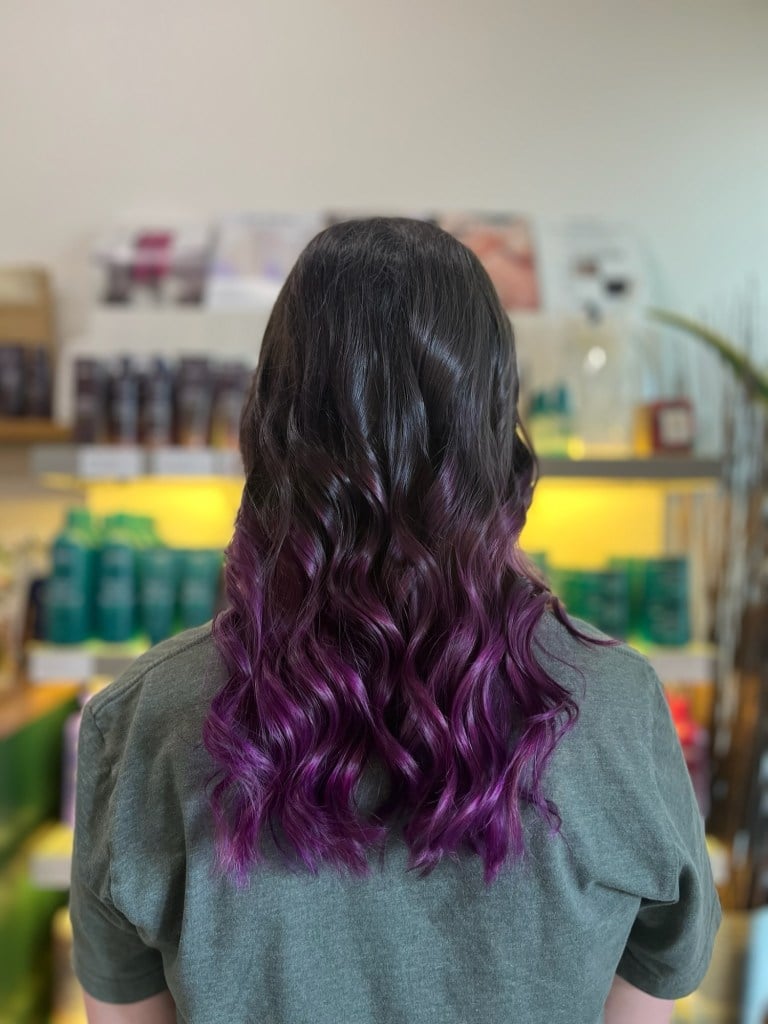
Wondering if ombre can be subtle enough for the office? This mid-back length option keeps the shift between a dark brown base and medium brown ends so gentle the color looks almost natural. Thick, wavy hair benefits most from the soft gradient, as the texture adds depth without needing a dramatic contrast. Ask your colorist for: mid-back length dark brown to medium brown subtle ombre. A texturizing spray will help the loose waves catch the light and emphasize the barely-there transition.
17. Collarbone Dark Brown Lob With Caramel Highlights
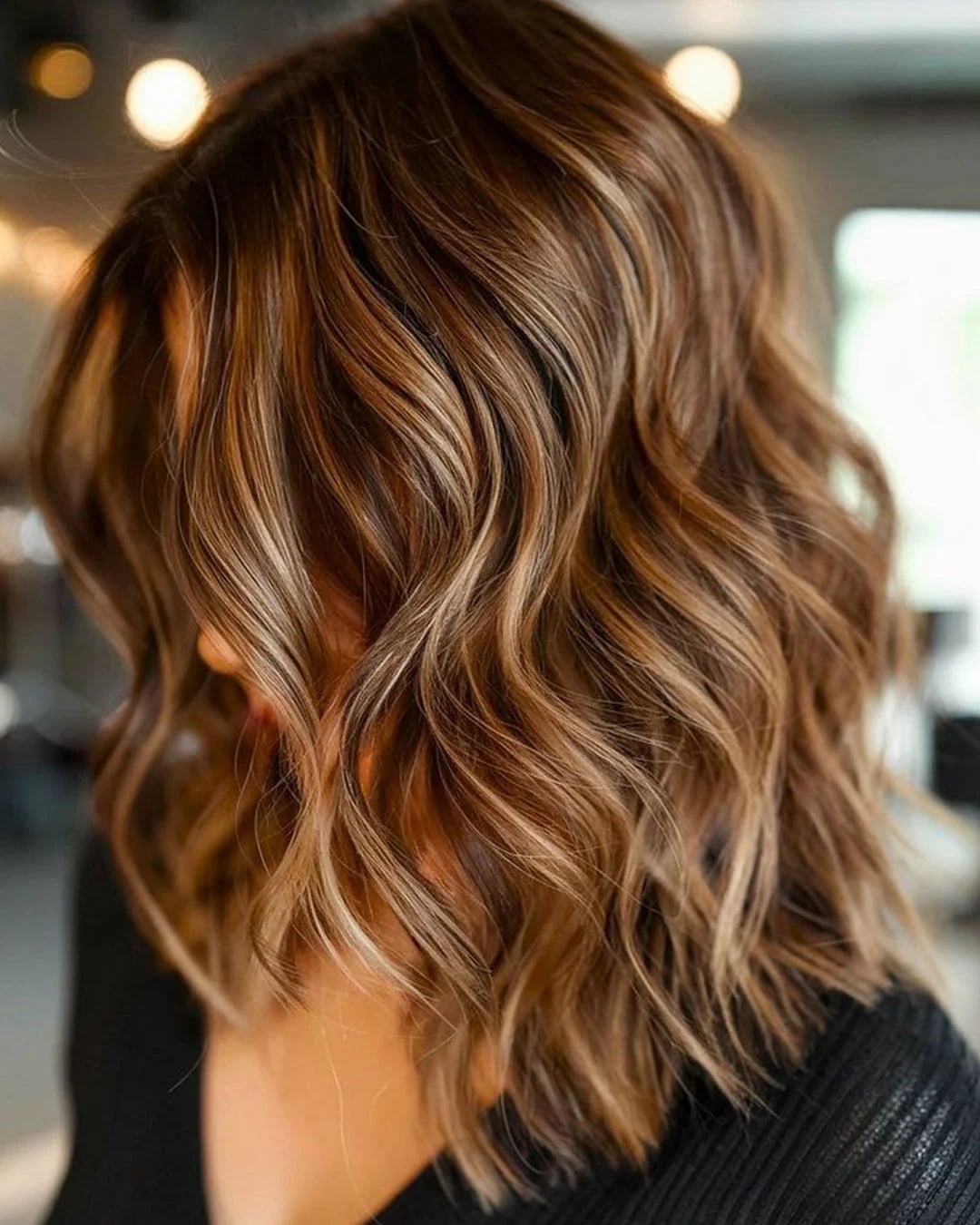
The real design here is the placement. Caramel highlights are woven through a dark brown lob, starting a few inches from the root and concentrating at the ends. This technique creates the illusion of a sun-kissed ombre without a harsh line, and the blowout lets the lighter pieces catch the eye naturally. Ask your colorist for: collarbone length dark brown lob with caramel highlights. A sea salt spray will add texture and keep the waves defined.
18. Collarbone Medium Brown Base With Caramel Highlights
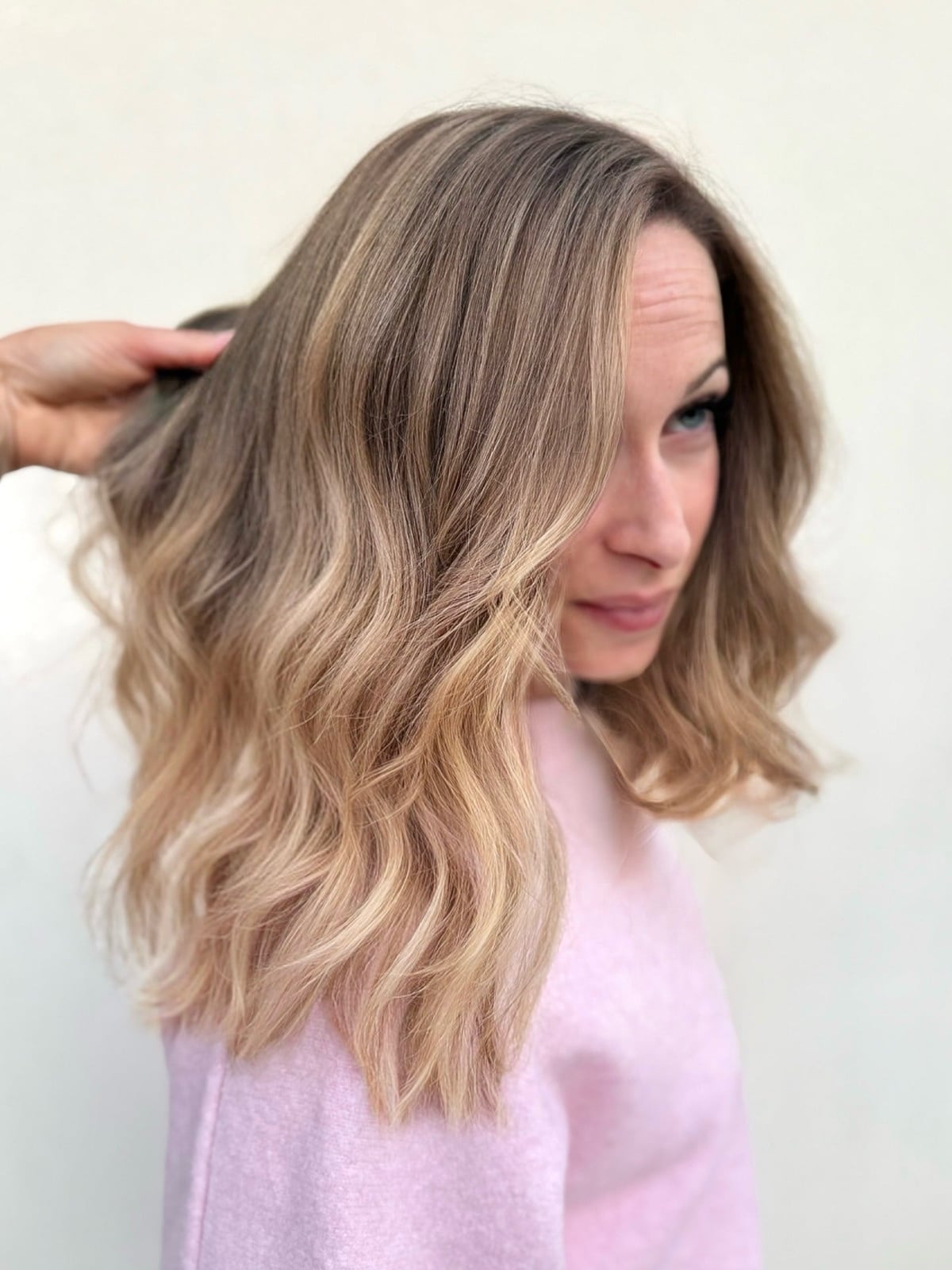
Caramel highlights on a medium brown base grow out with a lived-in softness that saves you from frequent salon trips. The long layers here are cut to move with the hair, so the lighter pieces peek through the loose waves rather than sitting on top. Ask your colorist for: collarbone length medium brown with caramel highlights. A texturizing spray will enhance the layers and keep the waves from falling flat. Plan a trim every eight to ten weeks to maintain the shape.
19. Collarbone Long Bob Dark Brown To Caramel Ombre
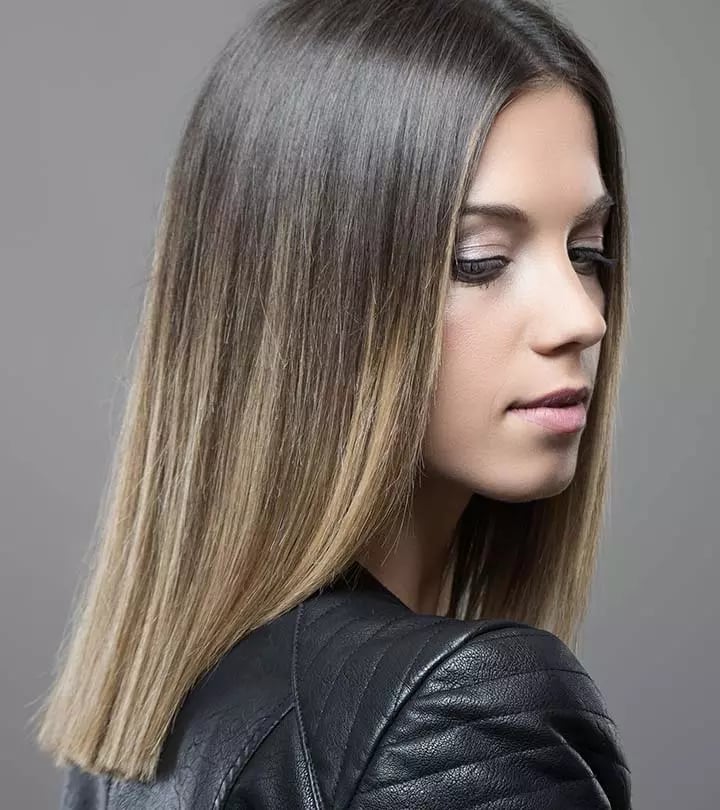
Here is the honest trade-off: a collarbone-length long bob with a dark brown to caramel ombre looks polished, but the transition zone is short, so the color shift can feel abrupt on fine hair. The blunt cut and middle part keep the silhouette modern, while the warm caramel ends add contrast without going full blonde. Ask your colorist for: collarbone length long bob dark brown to caramel ombre. The drawback is that the ombre can look muddy if the caramel is not lifted enough against the dark base.
20. Chin Length Blunt Bob Subtle Dark Brown To Light Brown Ombre
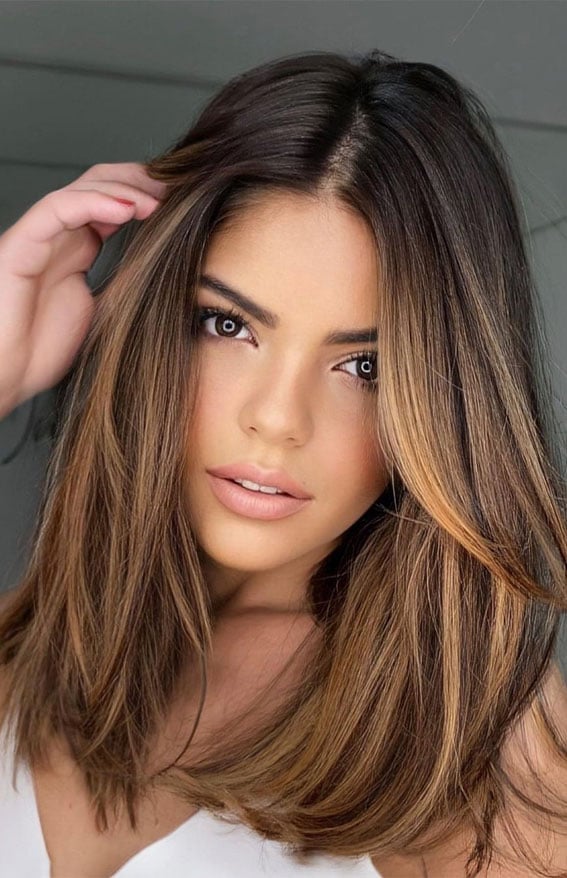
How do you ask for this exactly? Start with the cut: a chin-length blunt bob with no bangs. Then specify the color: a subtle ombre that shifts from dark brown at the roots to a lighter brown at the ends, with the lightest pieces concentrated on the last inch. The side part and straight styling keep the line sharp and the gradient readable. Ask your colorist for: chin length blunt bob subtle dark brown to light brown ombre. Apply a smoothing cream, then blow-dry straight for a sleek finish.
21. Final Thoughts
For a softer, more natural effect, opt for ombre shades that are only two to three levels lighter than your base color. For a bolder statement, consider contrasting hues or vibrant fashion colors.
- Toning may be needed every 8-10 weeks to maintain the lighter ends’ vibrancy.
- Use color-safe shampoos and conditioners to preserve the gradient.
- Deep condition weekly to keep the ends hydrated and prevent dryness.
- Trim split ends every 6-8 weeks to maintain the health of the color transition.
Ombre offers versatility for any style.

