
Partial highlights are a placement strategy, not a separate color service: your colorist lights up selected sections, usually the face frame and mid-lengths, and leaves the rest of the base alone. The current version leans lived-in, with soft face-framing layers and curtain bangs doing as much work as the tone itself.
18 ideas here run from a dark brown base with caramel pieces to ash blonde blends on a dark blonde lob, short bobs to mid-back layers, fine hair to thick waves. Partial Highlights make sense when a full set feels like too much upkeep or your fine hair falls flat without dimension, and the grow-out line stays forgiving between visits.
1. Dark Brown With Caramel And Blonde Highlights
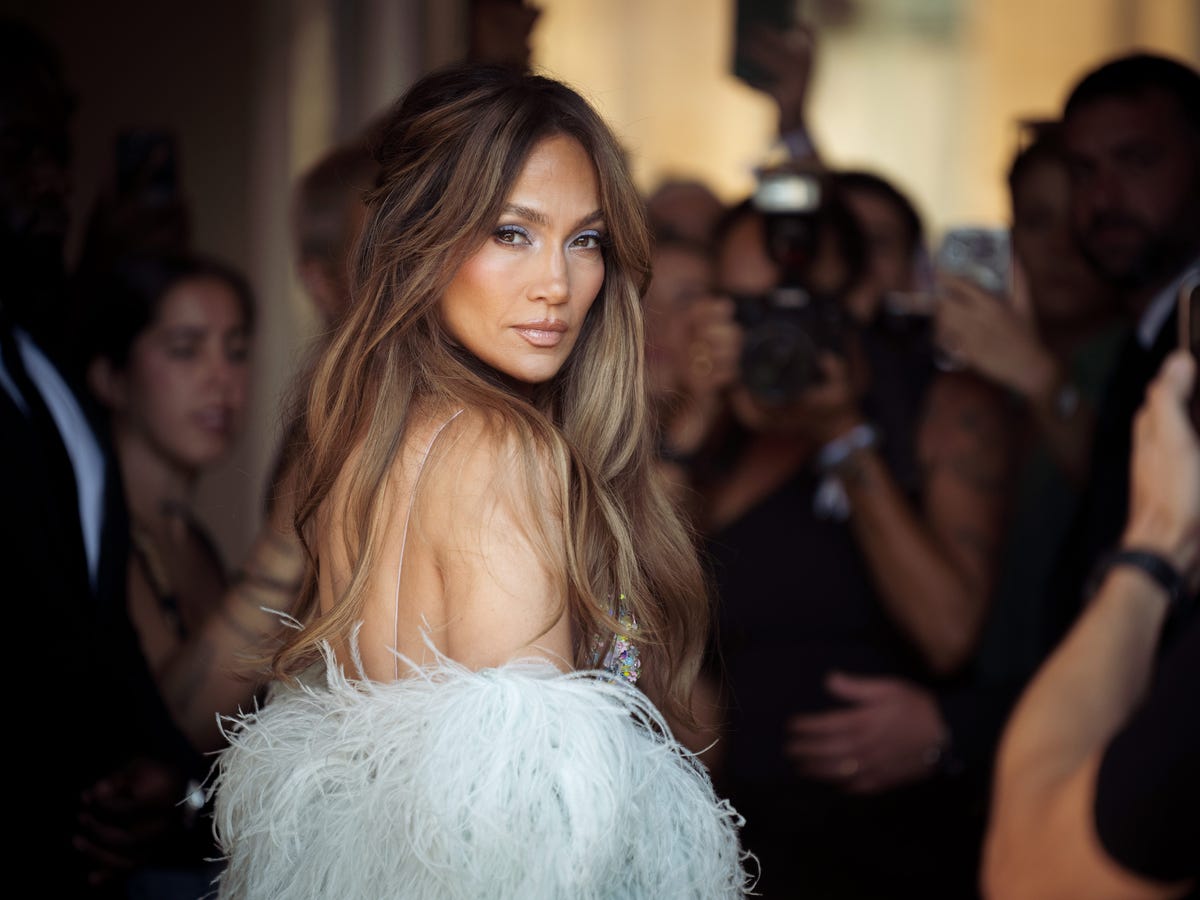
The key to this placement is the contrast between two distinct highlight tones against the same dark brown base. Instead of one shade doing all the work, caramel adds warmth while blonde adds brightness, and the two are woven through the mid-back length in loose waves that show off every strand. The curtain bangs take the same blend, so the face gets its own dose of dimension without needing a separate color treatment.
Thick, wavy hair at mid-back length is the ideal starting point: the density gives the highlights plenty of canvas to read as natural rather than sparse. Ask your colorist for a dark brown base with blended caramel and blonde highlights. Expect about two and a half hours in the chair for the application. A toning gloss every six weeks keeps the caramel from pulling too orange, and a trim for the curtain bangs every four to six weeks keeps the shape clean.
2. Thick Wavy Hair Dark Brown Base With Blonde Caramel Highlights
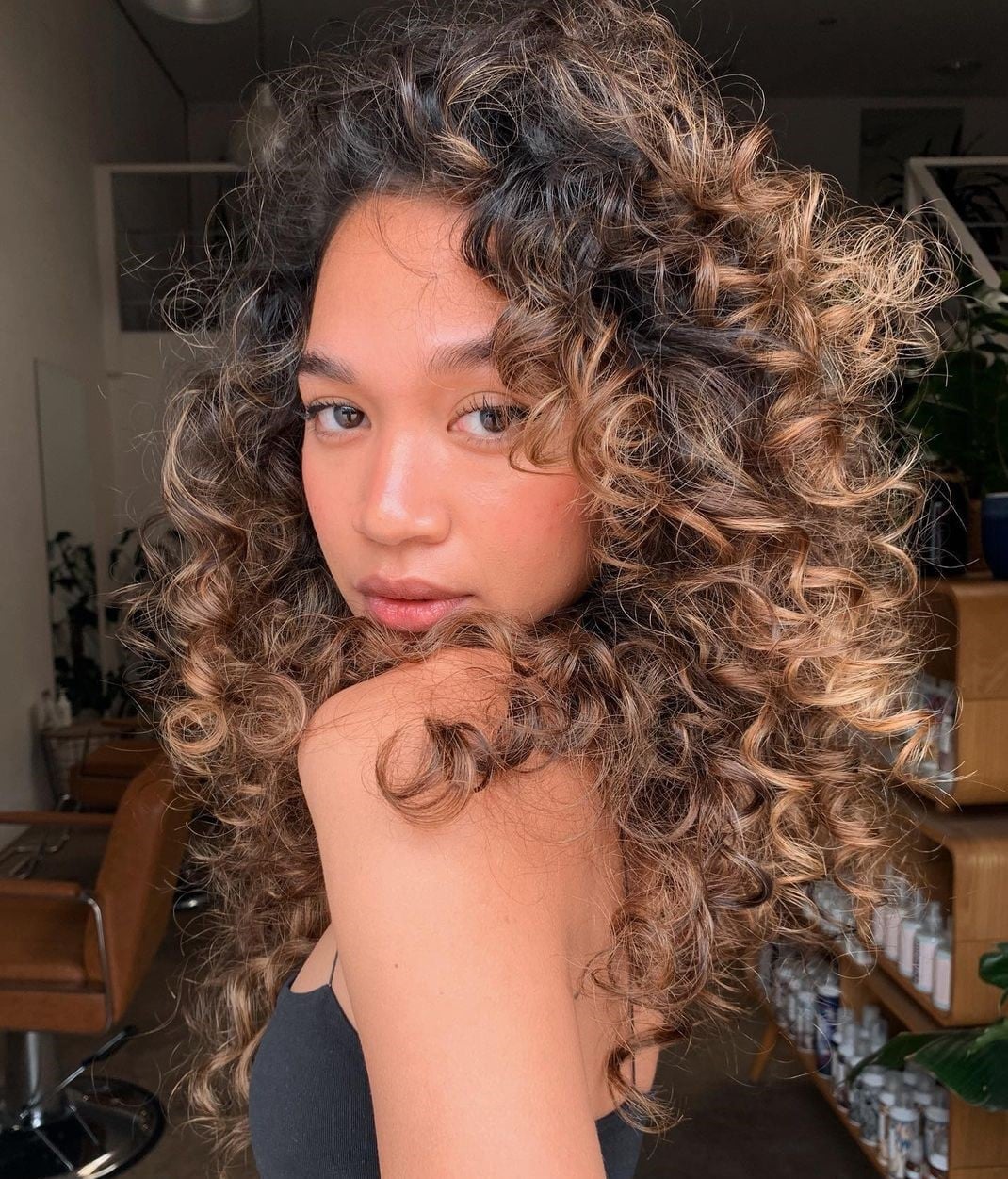
This version keeps the blend seamless instead of chunky. Chunky highlights leave visible stripes between sections, but here the caramel and blonde shades melt into each other and the dark brown base, so the eye sees depth instead of individual ribbons. The back view shows the dimension is consistent from the crown to the ends.
For thick, wavy hair, this approach works better than a full highlight, which can feel heavy on natural texture. Ask your colorist for a dark brown base with blended blonde and caramel highlights. A middle parting distributes the waves evenly on both sides, so the color looks balanced with the hair tucked behind an ear or left loose. The grow-out is forgiving because the base is already dark and the lighter pieces are spaced far enough apart that new growth blends in for about eight weeks.
3. Dark Blonde Lob With Lighter Blonde Highlights
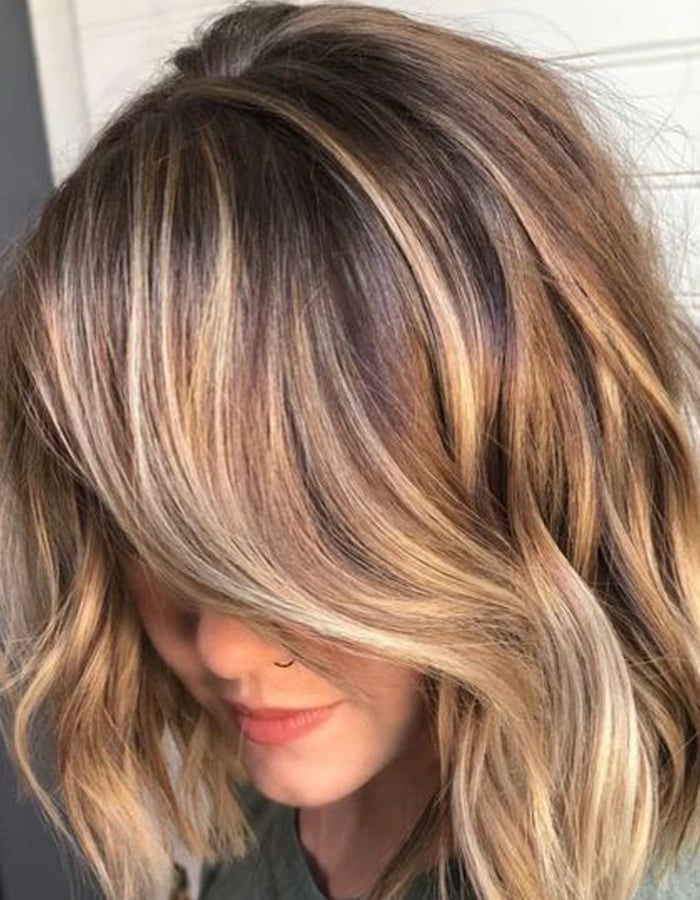
Does this work on a shorter length, or does it need more hair to land? A collarbone lob with curtain bangs is the sweet spot: the face-framing highlights hit right at the jaw and cheekbones, so they soften square and round jawlines without requiring extra inches. The lighter blonde strands are concentrated around the face and through the ends, leaving the dark blonde base as the anchor. That means the color adds brightness exactly where you see it first. Ask your colorist for a dark blonde base with lighter blonde partial highlights. A wavy blowout keeps the ends from looking too blunt, and the curtain bangs soften the overall silhouette.
4. Medium Brown Lob With Caramel Highlights
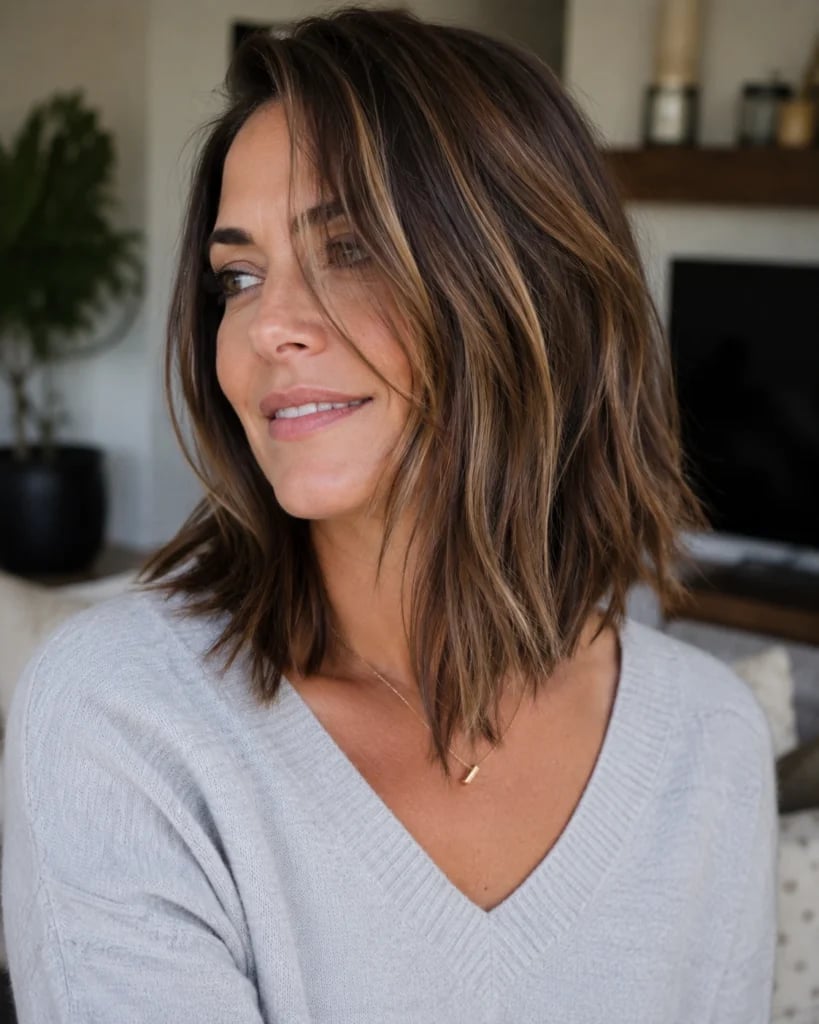
A side part changes the way highlights land. Here, the medium brown lob is parted to the side, and the caramel partial highlights are concentrated on the heavier side of the parting, so the color catches light whenever you turn your head. The effect is subtle rather than uniform: the darker side gets less color, which mimics natural sun exposure. Ask your colorist for a medium brown base with caramel partial highlights. Tell them you want the highlights heavier on the side you part to, with a few thinner pieces on the other side for balance. A collarbone lob with a wavy blowout keeps the caramel from looking too dense, and a gloss every six to eight weeks prevents the caramel from warming up into a coppery tone.
5. Light Brown With Partial Blonde Highlights
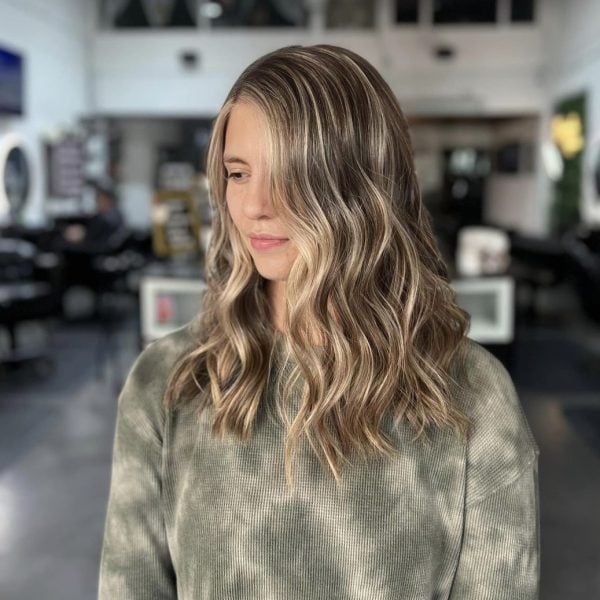
Blonde highlights on a light brown base give a subtle look because the contrast is lower than it would be on dark brown. The grow-out is a key reason to choose this combination: a light brown root blends into blonde highlights more softly than a dark root does, so you can stretch the time between touch-ups to ten or twelve weeks. The partial placement here is concentrated around the face and through the long layers, leaving the back mostly untouched. Ask your colorist for a light brown base with blonde partial highlights. Use a texturizing spray on the waves to keep the layers separated, and plan on a toning appointment every eight weeks if the blonde starts pulling warm.
6. Medium Brown With Honey Highlights
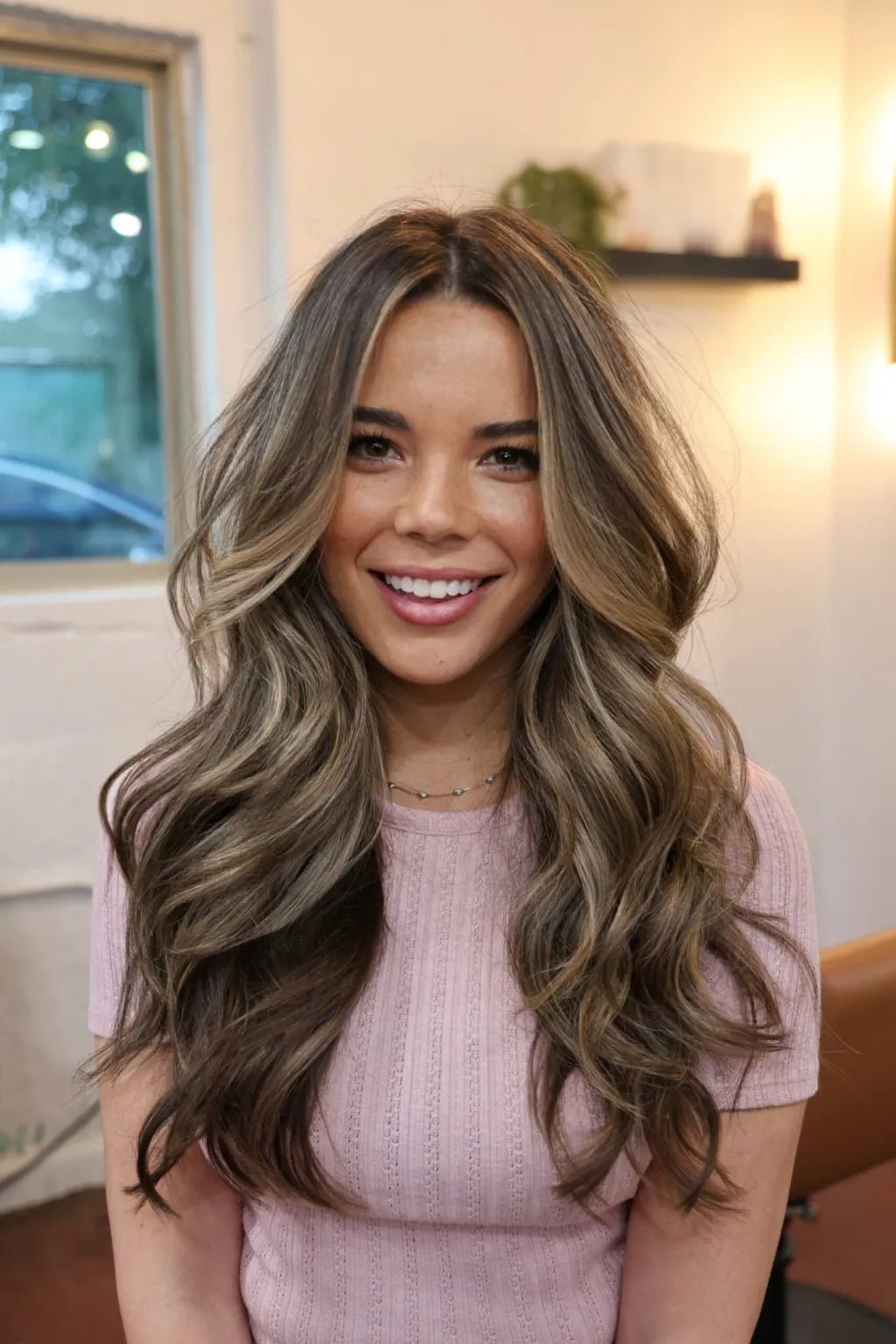
Honey highlights read warmer than a standard caramel, and that difference is the reason this color earns its keep past August. A medium brown base holds the gold in the highlights without letting the whole head tip into brassy, and loose waves on a collarbone-length cut keep the tone moving instead of pooling at the ends. Thick hair carries honey well because the density gives the lighter pieces something to sit against. Ask your colorist for: medium brown base with honey partial highlights, collarbone length with soft layers. The middle part elongates a round face, and the layers keep the waves from reading heavy. It works for a fall wedding, a first day at a new job, or any Tuesday that needs help. A heat protectant before blow-drying and a trim every six to eight weeks keeps the shape crisp as the seasons turn.
7. Collarbone Length With Caramel Highlights
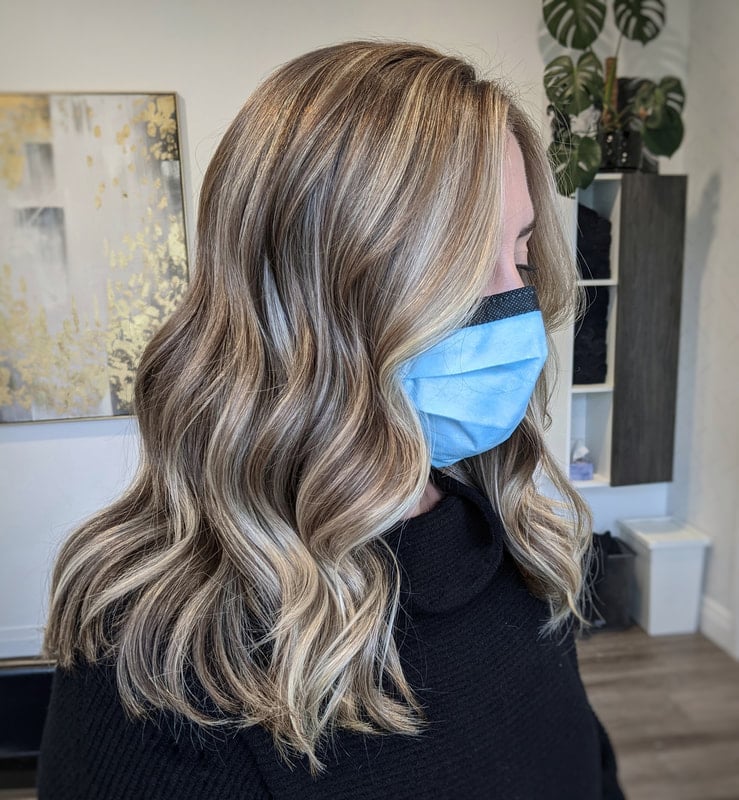
What goes wrong with face-framing layers? Usually too many of them. Ask for a few pieces around the jaw and cheekbone on a collarbone-length cut, not a ladder of short strands that fight the wavy blowout. Caramel highlights on a brown base do the rest, giving the layers a lived-in edge that a single-process color cannot. The salon version reads precise because the colorist places each highlight against the cut; an at-home attempt tends to land chunky and hard to soften. Ask your colorist for: caramel highlights on brown base, collarbone length with face-framing layers. A side part suits long faces, and medium-density waves hold the blowout shape for a couple of days. Trim every six to eight weeks to keep the ends from dragging the layers down.
8. Dark Brown With Caramel Highlights And Curtain Bangs
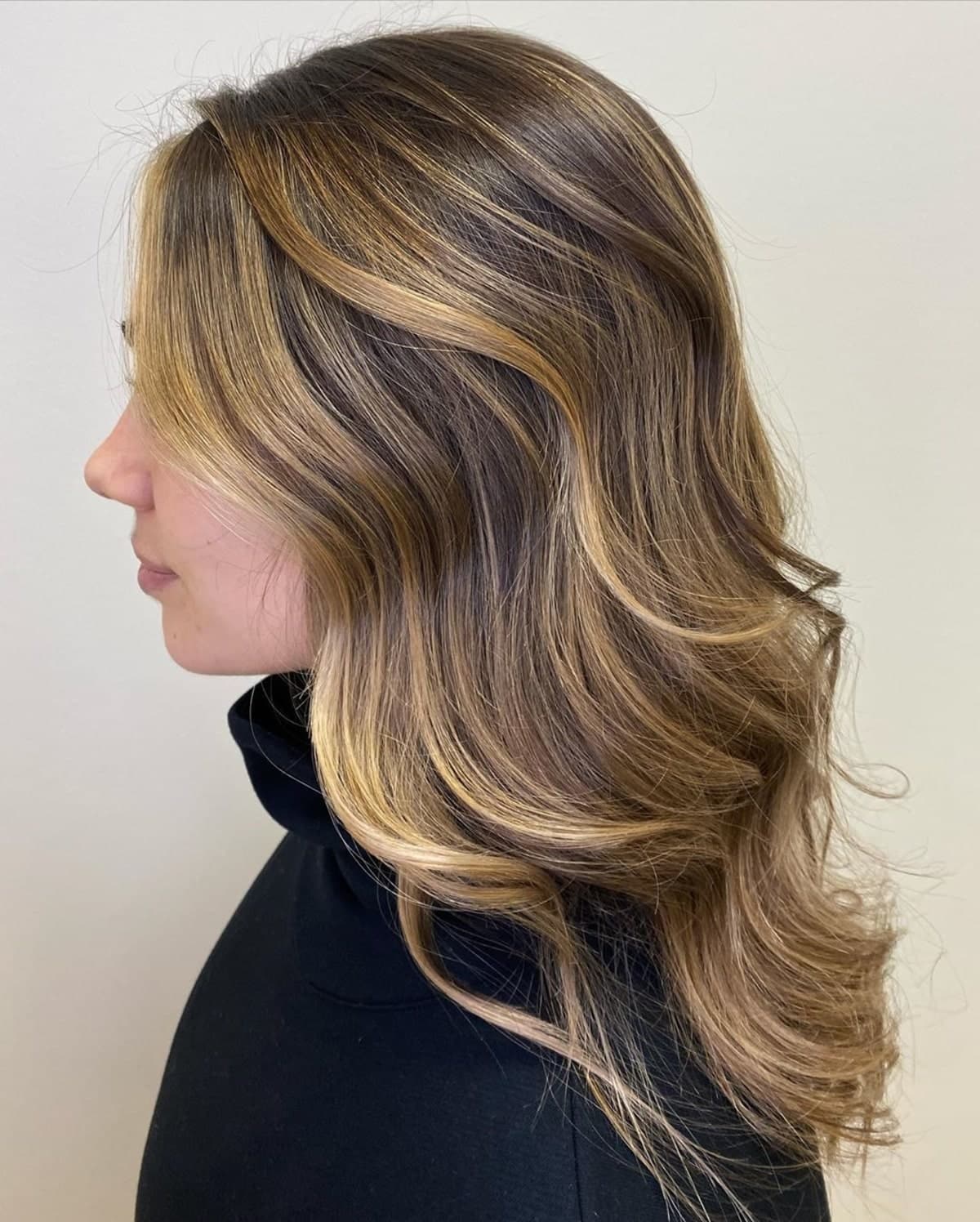
Caramel on a dark brown base is a contrast decision, and the curtain bangs are what keep it from reading as two separate colors fighting for space. The lighter pieces sit against mid-back length, so the eye travels down the length instead of stopping at the root. Face-framing layers carry the caramel from the bangs into the body of the hair, and thick waves give the whole thing a glossy finish that flat styling would flatten out.
The catch is the bangs. Curtain bangs on a middle part need a blow-dry with a medium round brush to sit right, and that is a daily job, not a weekly one. Skip it and they fall flat against the forehead. Ask your colorist for: dark brown base with caramel highlights, mid-back length, curtain bangs, face-framing layers. Curtain bangs soften a round or heart face, and the trim rhythm lands at eight to ten weeks.
9. Dark Blonde With Ash Blonde Highlights
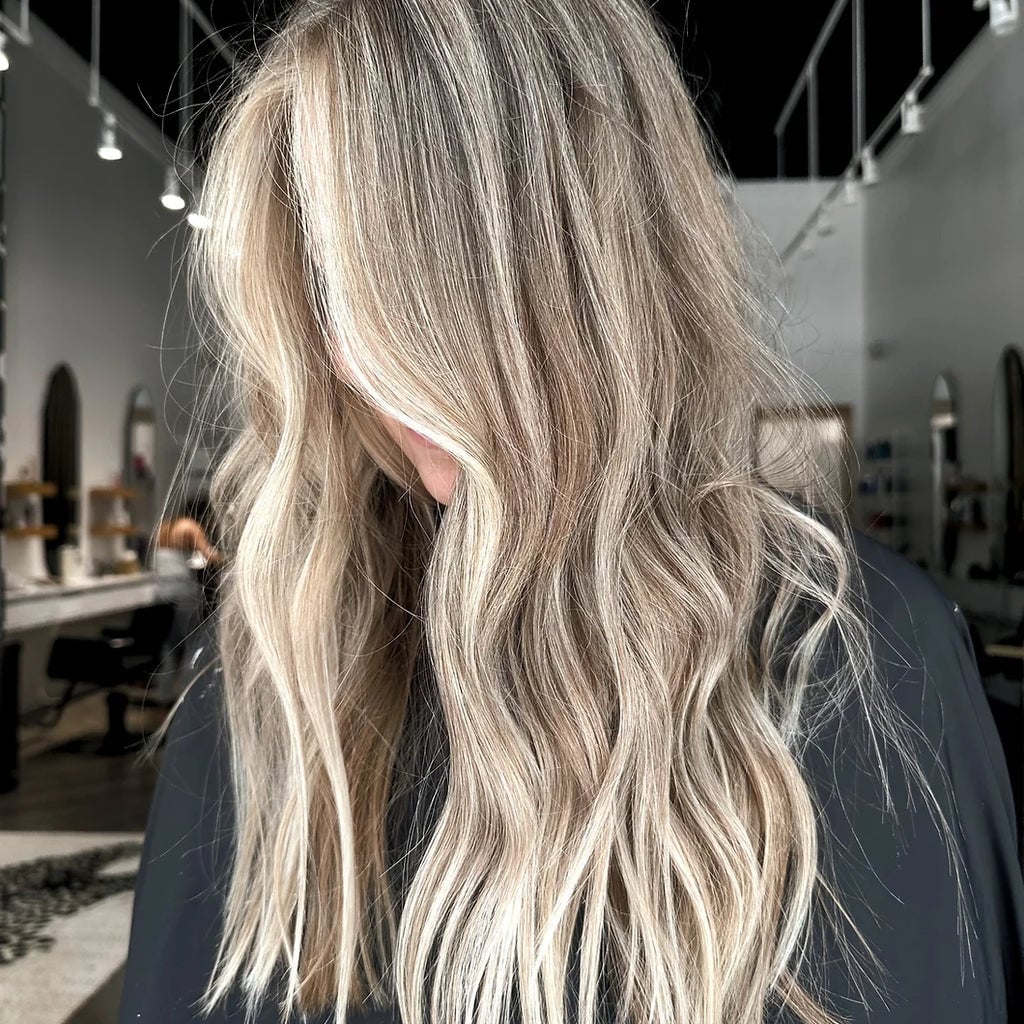
Ash blonde on a dark blonde base is a lifting and toning job before it is a color. The highlights have to come up far enough to clear the warmth in the base, then a toner cools what is left so the ash reads clean instead of green. On mid-back length with thick waves, the colorist can afford wider sections because the density hides the blend lines. Curtain bangs get their own placement so the lighter pieces fall forward.
Partial highlights here mean the dimension sits where the waves catch it, not on every strand. Ask your colorist for: dark blonde base with ash blonde partial highlights, mid-back length, curtain bangs. A root lifting spray at the crown keeps the blowout from collapsing, and the toner needs a refresh every six to eight weeks to hold the cool tone. Trim every eight to ten weeks.
10. Dark Blonde With Cool Ash Blonde Highlights, Mid-Back
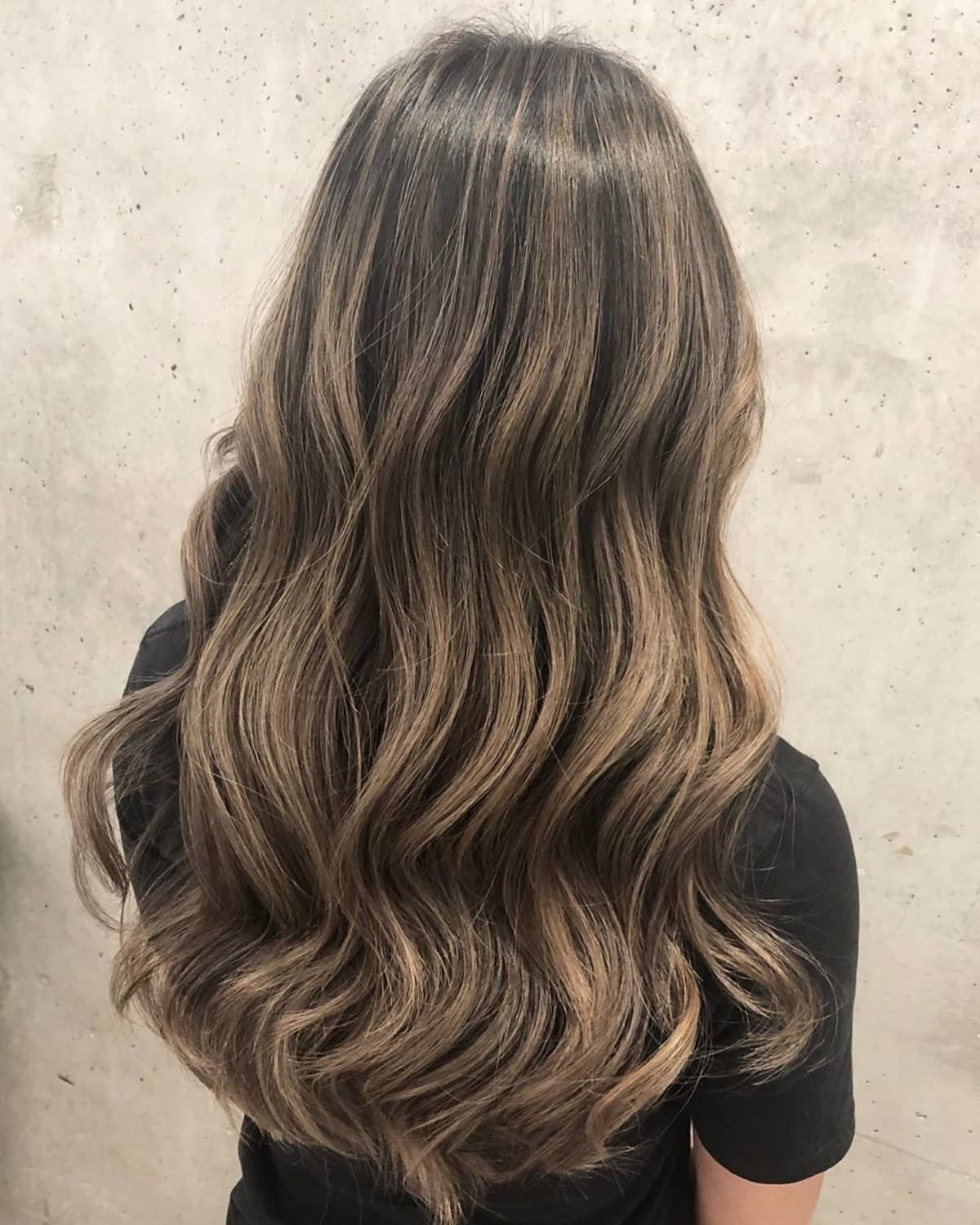
Set cool ash blonde against a warm honey or golden blonde and the difference is the base, not the highlight. A dark blonde base already carries some warmth, so ash highlights on top of it read cooler than the same toner would on a medium brown. That makes this the choice for anyone who wants a low-contrast, cool-toned result on mid-back length with thick waves. The loose waves and curtain bangs keep the ash from looking severe. Ask your colorist for: dark blonde base with ash blonde partial highlights, mid-back length, curtain bangs. A middle part with curtain bangs softens a round or heart face. A leave-in conditioner handles the dryness that lifting brings, and the trim rhythm sits at eight to ten weeks.
11. Dark Brown With Face-Framing Blonde Highlights
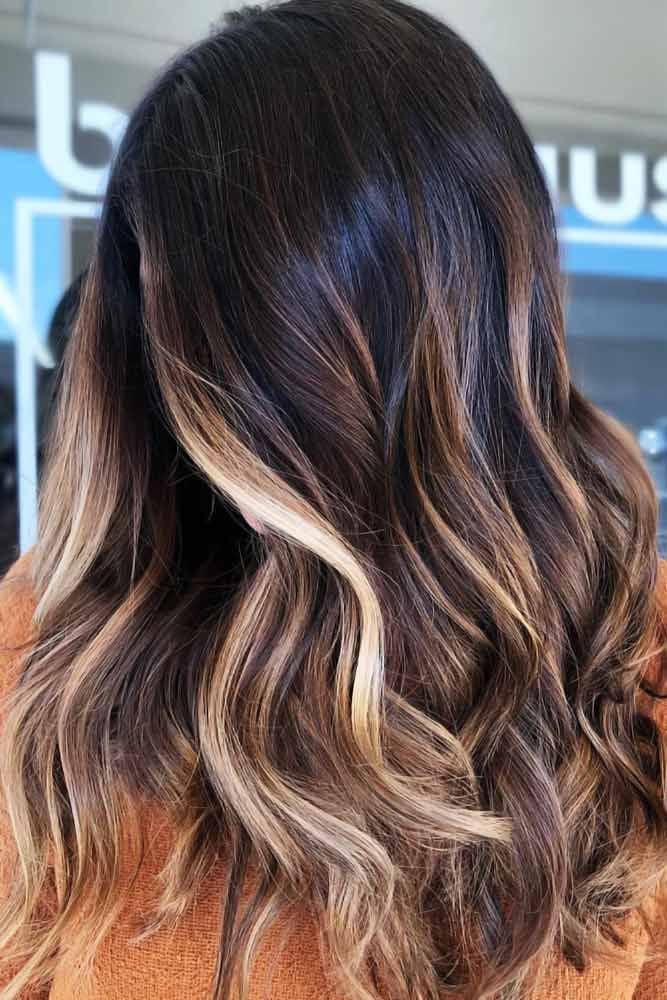
Wondering if face-framing highlights work on a collarbone-length cut? On a dark brown base, blonde strands concentrated around the face create a subtle lift without committing the whole head. The wavy texture and medium density keep the blend natural. This placement suits round faces especially well, since the middle part and vertical lines elongate the shape. Ask your colorist for: dark brown base with face-framing blonde partial highlights, collarbone length. Plan a trim every six to eight weeks to keep the ends sharp.
12. Mid-Back With Blonde Bronde Highlights
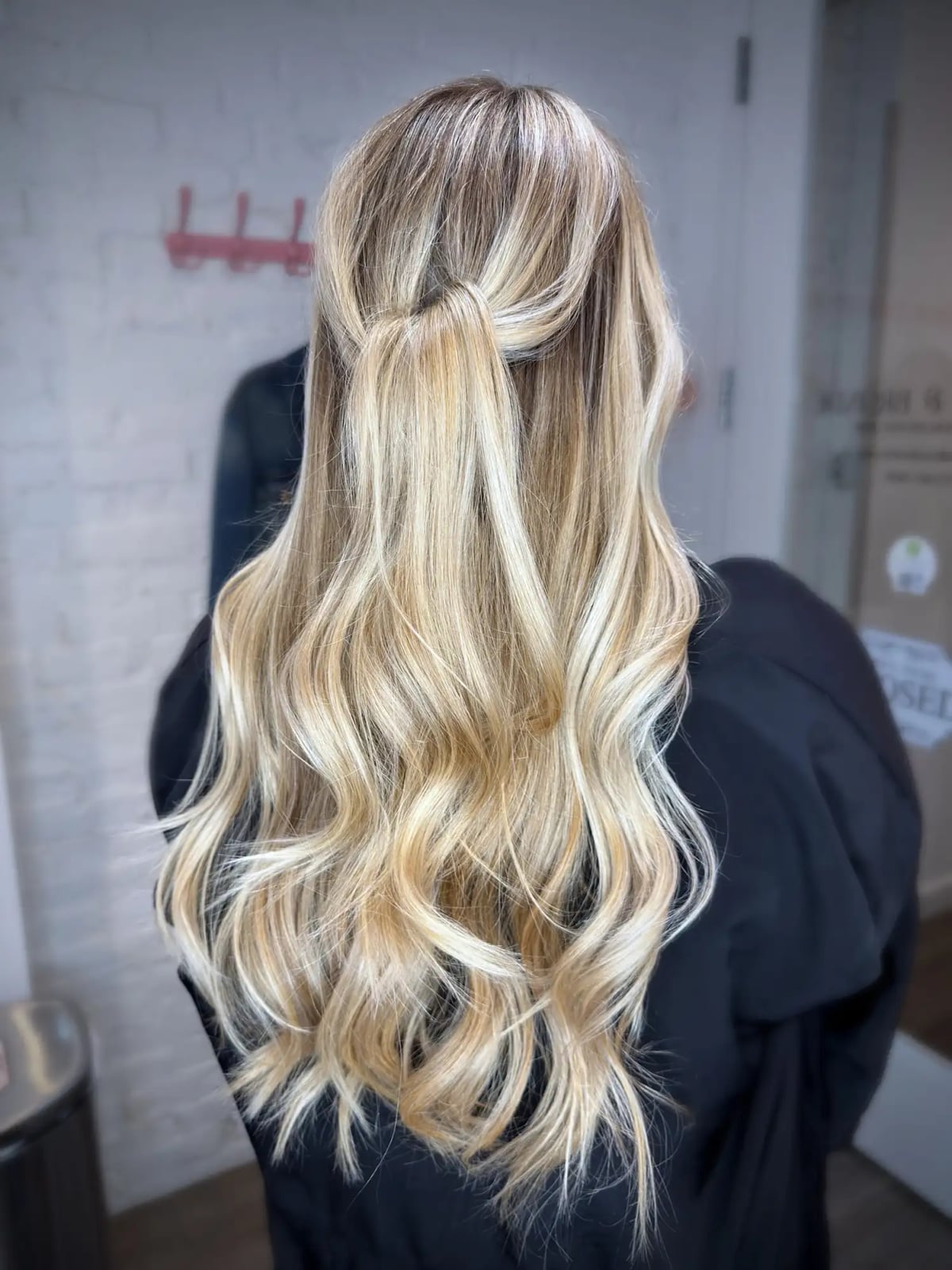
The real trick with a mid-back length is keeping the dimension visible from behind. Here, a blowout with loose waves spreads blonde and bronde partial highlights throughout the darker base, so the color moves even when the hair is still. It relies on a middle parting to let the light catch both sides evenly. Ask your colorist for: mid-back length with blonde and bronde partial highlights, loose waves.
Thick, wavy hair holds this distribution best. A texturizing spray on dry hair brings back the wave shape between washes. The grow-out is unusually forgiving: the mix of tones means you can stretch toning appointments to every eight to ten weeks. Trim every eight to ten weeks to maintain the layers.
13. Textured Wavy Bob With Lighter Brown Highlights
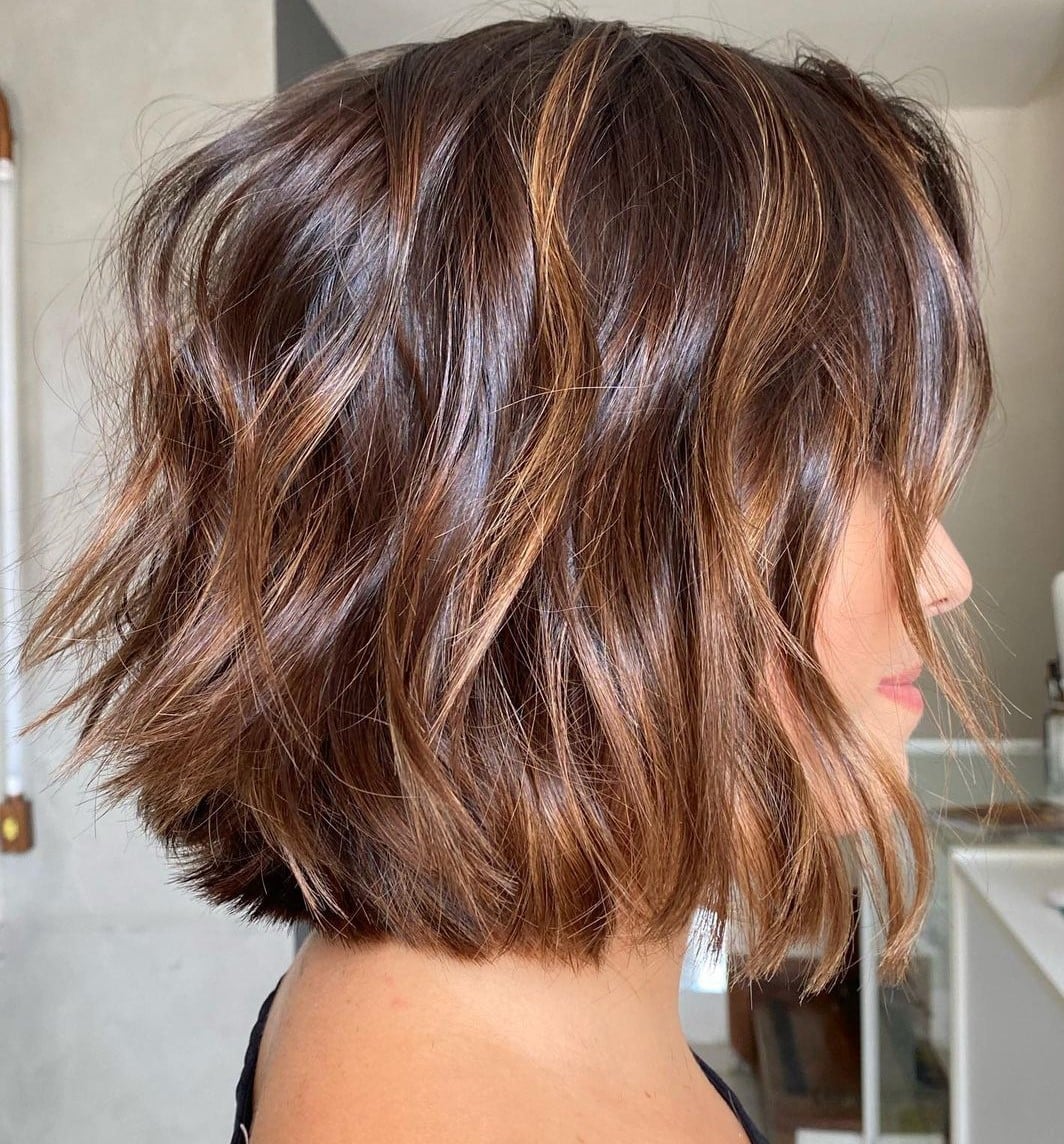
A chin-length bob with a side parting gets a second life when the highlights sit a shade lighter than the base. The dark brown foundation keeps the contrast subtle, while the lighter brown pieces add texture that the cut already suggests. This works for spring and autumn alike: the warmth is neutral enough for both. Ask your colorist for: chin length textured wavy bob with lighter brown partial highlights. A sea salt spray on damp hair enhances the natural wave. A trim every six to eight weeks preserves the bob’s shape and the highlight placement.
14. Dark Brown Bob With Subtle Highlights
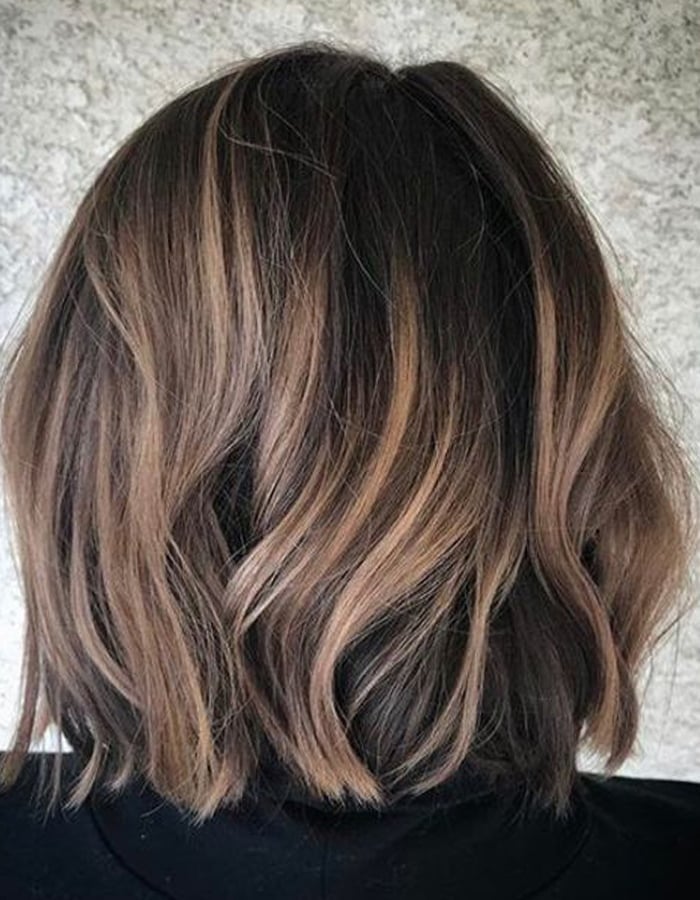
How do you ask for highlights that look natural rather than applied? Specify a dark brown chin-length bob with subtle lighter brown partial highlights, and let your colorist know you want the lighter pieces blended closely to the base tone. The back view here shows how the loose waves carry the color evenly, avoiding stripes. A smoothing cream keeps the waves polished. This is strictly a salon job: the subtlety requires precision foiling that DIY kits cannot replicate. A trim every six to eight weeks keeps the bob crisp and the highlights in proportion.
15. Medium Brown Lob With Contrasting Blonde Highlights
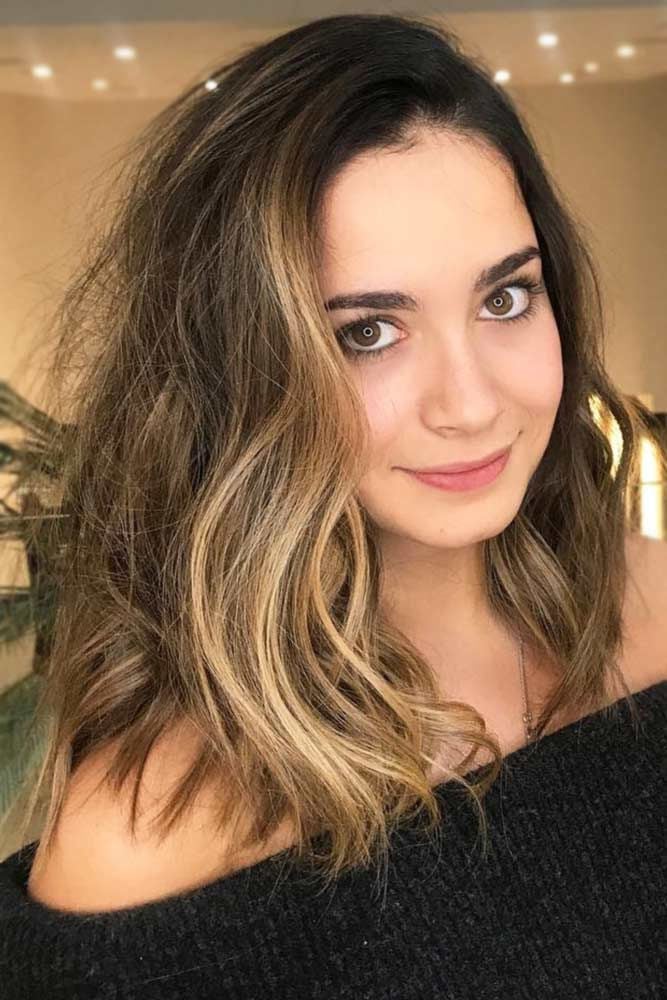
The common mistake with contrasting highlights is letting the lighter pieces sit too wide, which can turn brassy within a few weeks. On a medium brown chin-length lob with a middle parting, the blonde strands here stay fine and spaced, so the contrast looks deliberate. The wavy texture and medium density help blend the shift. High-contrast blonde on brown needs a toning gloss every four to six weeks to stop warmer tones from dominating. Ask your colorist for: medium brown base with contrasting blonde partial highlights, chin length lob. A texturizing spray defines the waves and keeps the ends piecey.
16. Mid-Back Layers With Partial Blonde Highlights, Wavy
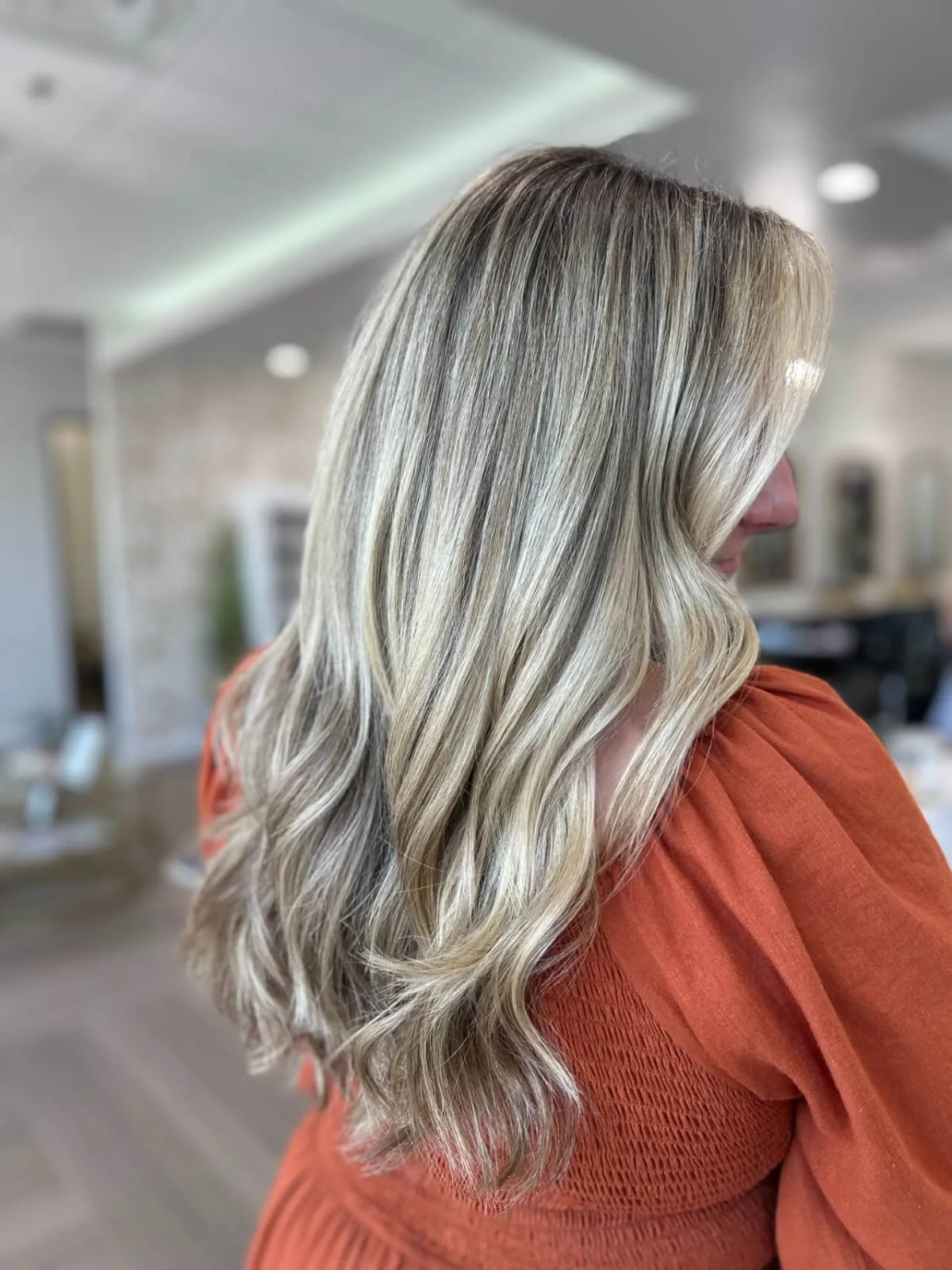
A side view shows what loose waves do for mid-back layers with partial blonde highlights: the lighter strands create ribbons of contrast against the darker base. Thick, wavy hair at mid-back length benefits most from this placement, and a middle part helps elongate a round face. Ask your colorist for mid-back length layers with partial blonde highlights and loose waves.
Apply a lightweight oil to damp ends for a polished finish without weighing the waves down. Expect a trim every eight to ten weeks to keep the layers defined, with a gloss appointment at the same interval to refresh the blonde tone.
17. Medium Brown With Golden Brown Highlights
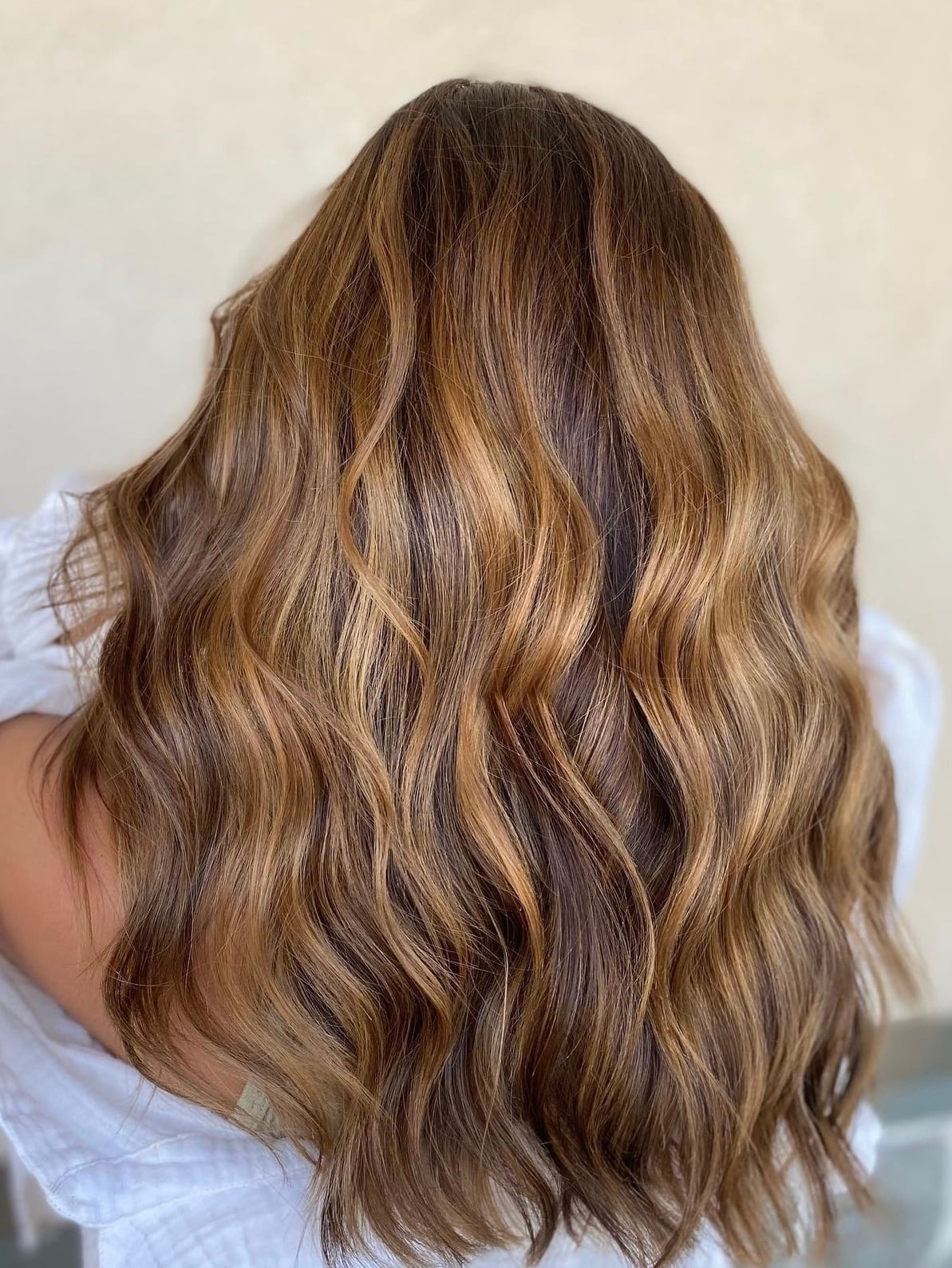
The back view shows a medium brown base with golden brown highlights woven just a shade lighter, so the result is warmth with low contrast. The technique relies on fine sections and a balayage-like hand, keeping the highlights concentrated on the mid-lengths and ends for a grown-in feel. This works especially well on thick, wavy hair at mid-back length, and the soft, all-over dimension suits any face shape. Ask your colorist for a medium brown base with golden brown partial highlights and mid-back length layers.
Air drying is the fastest route to a natural finish, though a round brush on the layers adds soft movement. Plan a trim every eight to ten weeks and a toning gloss when the highlights start to lean brassy, usually around the same mark.
18. Dark Brown Wavy Lob With Side-Swept Bangs
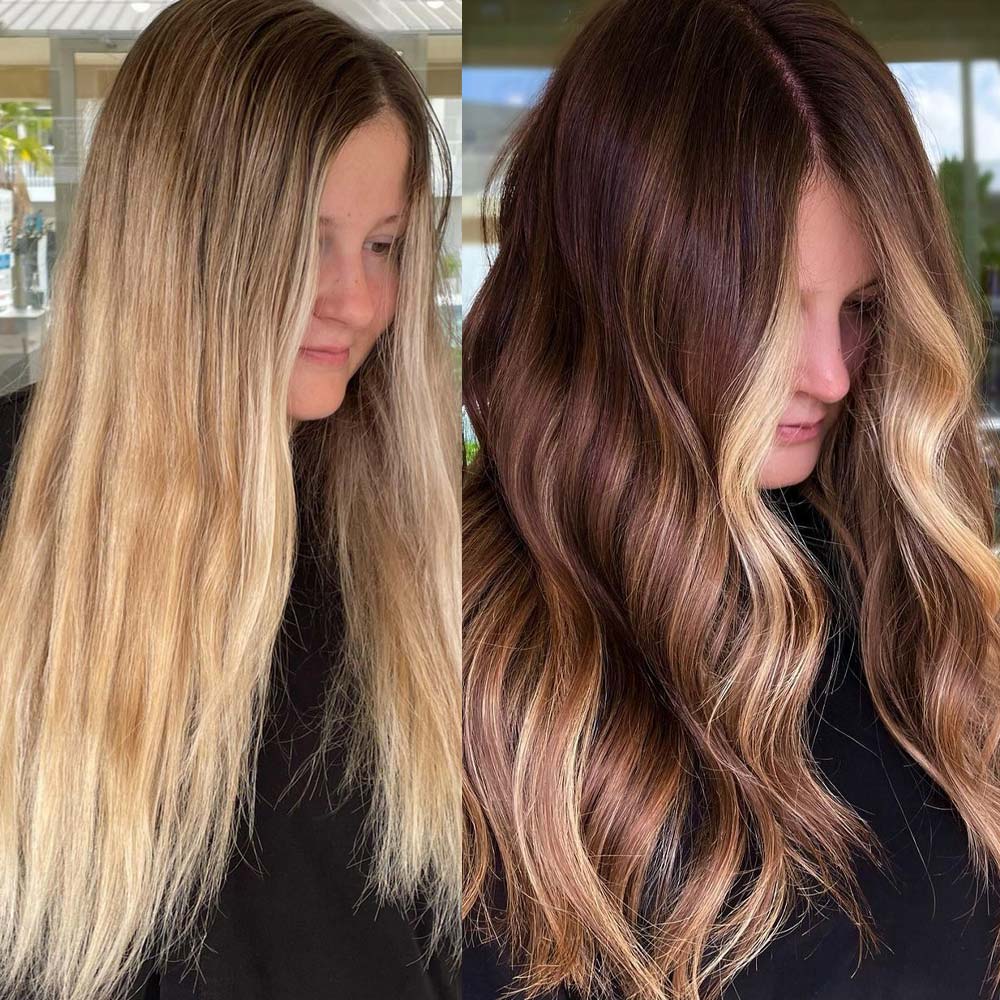
Is there a way to get blonde highlights on dark brown hair without a harsh grow-out line? On a collarbone-length wavy lob, the answer is a partial placement that keeps the blonde concentrated on the surface and ends, so the darker root grows in gradually. The side-swept bangs take a few lighter pieces too, which stops them from looking like a separate color zone. Ask your colorist for a dark brown wavy lob with blonde partial highlights and side-swept bangs. A texturizing spray on dry waves keeps the undone texture intact, and a trim every six to eight weeks keeps the bangs from grazing your lashes.
19. Final Thoughts
For low upkeep, keep the lightener around the face and ends and ask for a softer blend at the roots. Want more visible dimension? Go fuller through the mid-lengths. Fine hair benefits from fewer, finer sections; thick waves can carry more contrast without looking striped.
- Book a refresh every eight to twelve weeks.
- Wash with color-safe shampoo and conditioner.
- Tone once a month if brassiness shows up.
- Use a heat protectant before any hot tool.
Partial highlights are your secret weapon for adding depth and interest.

