
Pink hair has traded novelty for permanence. The current shift favors lived-in dimension over block color, with soft face-framing layers and curtain bangs taking the edge off even the brightest fuchsia.
These 17 Pink Hair Color Ideas cover the full spectrum, from low-upkeep ombré to high-impact vivids, across every length and texture. If your fine hair tends to fall flat, a blunt bob with a pastel tone adds volume without bulk. If a visible grow-out line drives you crazy, balayage or a dark-to-pink ombré buys you six weeks between appointments.
1. Pastel Pink Bob With Textured Waves
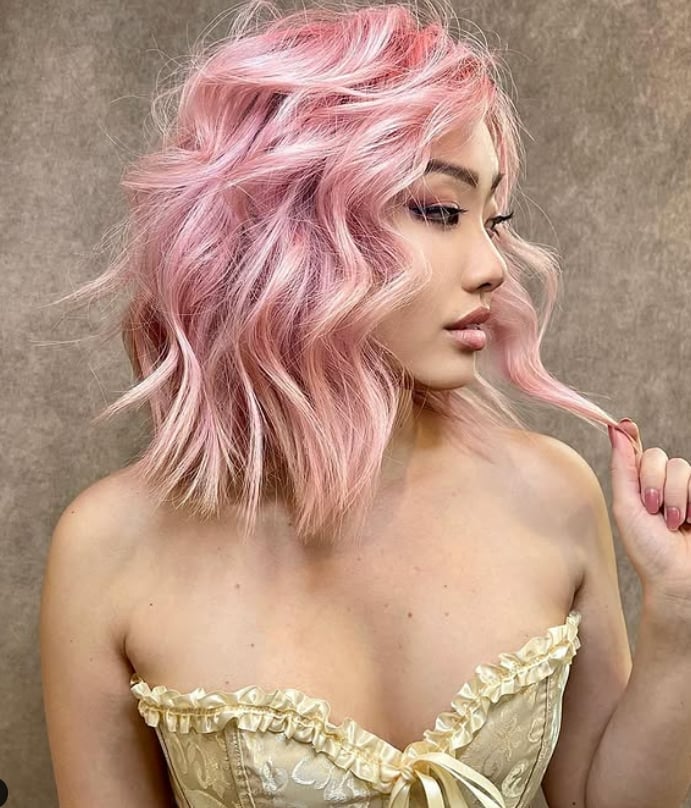
A chin-length bob with curtain bangs and textured waves gets its softness from a uniform pastel pink base with lighter pink highlights woven through. A center part and face-framing layers work best on fine to medium hair that already has some wave, since the cut encourages movement. Ask your colorist for: chin-length bob, textured waves, soft curtain bangs, pastel pink with subtle lighter highlights. A texturizing spray and air drying or diffusing keeps the shape lived-in; plan a trim every six to eight weeks to hold the line.
2. Hot Pink Blunt Bob With Purple Roots
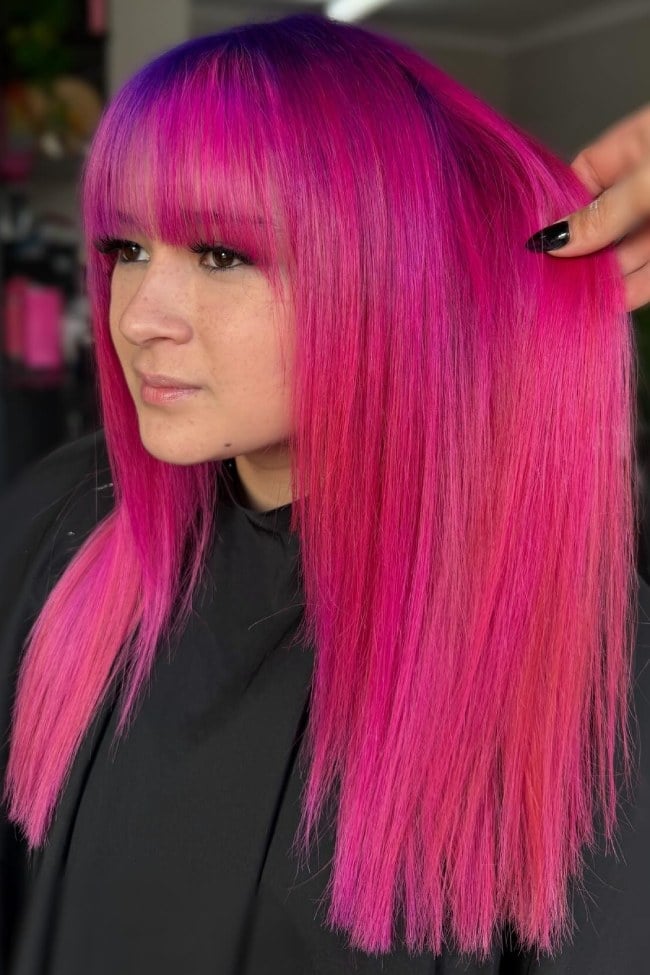
If the pastel route feels too polite, this hot pink blunt bob with visible purple roots is the louder sibling. The chin-length cut is poker straight with blunt bangs, and the vivid pink against the darker roots creates a sharp contrast. It suits fine, straight hair that holds a sharp line, and the blunt bangs complement oval and long faces. Ask your colorist for: chin-length blunt bob, hot pink with visible purple roots, poker straight style. Upkeep matters: roots need touching up every four to six weeks, and the straight styling demands a flat iron.
3. Vibrant Coral Pink Shag With Curtain Bangs
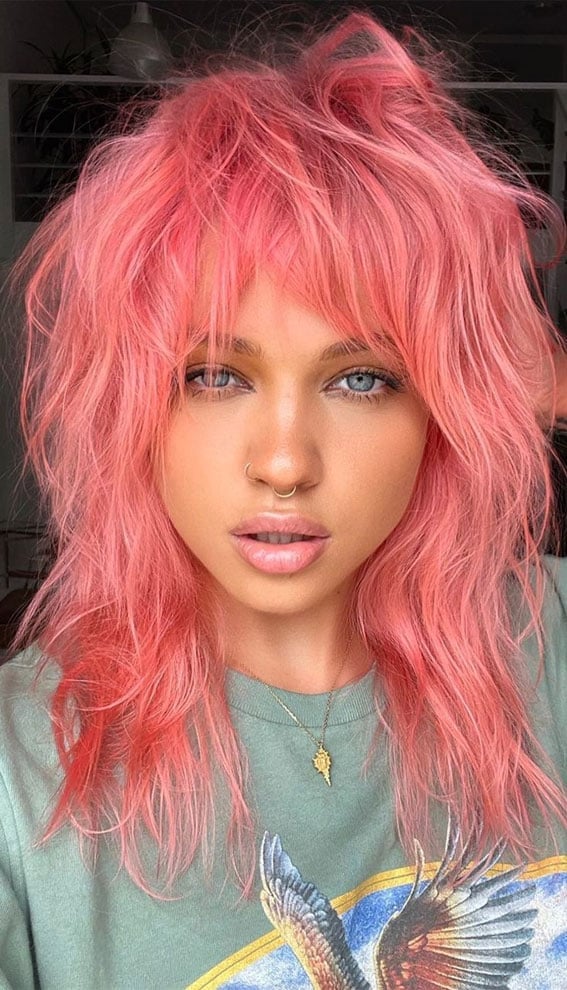
The curtain bangs blend into the face-framing sections, so the cut suits most face shapes. The coral tone leans warmer than bubblegum, which gives the uniform color some depth. Ask your colorist for: shoulder-length shag haircut, curtain bangs, vibrant coral pink. A sea salt spray enhances the wave pattern. Trim the shag every eight to ten weeks to keep the layers from growing out.
4. Collarbone Shag In Vibrant Pink
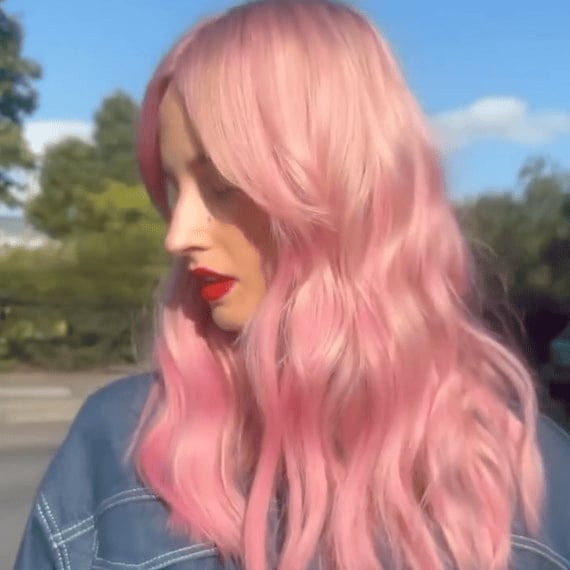
A collarbone-length shag with curtain bangs in vibrant pink is the longer cousin of the shoulder version, and it wears differently. The extra length adds weight, so the loose waves from a blowout sit lower and move less, which suits thick hair that can handle the bulk. The glossy finish comes from the color’s saturation rather than extra product. Ask your colorist for: collarbone length shag, curtain bangs, vibrant pink. A volumizing mousse before blow-drying lifts the roots, and a trim every eight to ten weeks keeps the shag’s shape intact.
5. Chin Bob With Pink Face-Framing Streaks
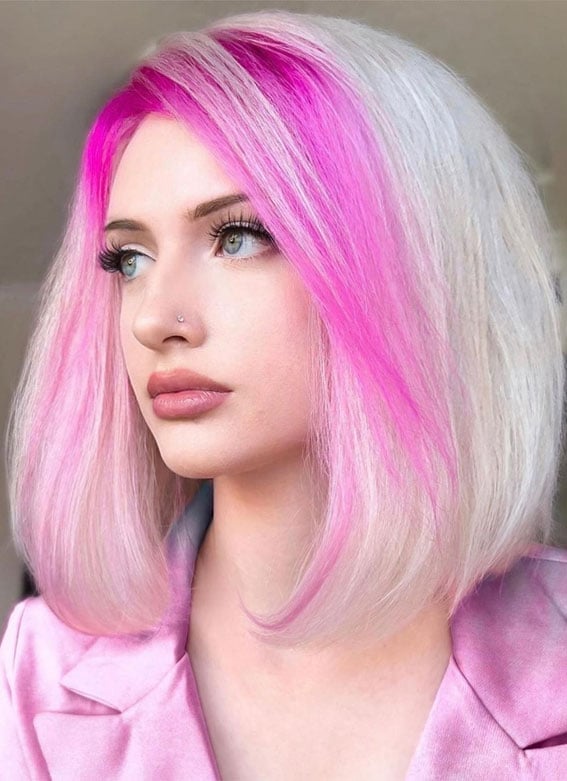
How do you ask for bright pink streaks without ending up with a full head of pink? This chin-length bob with blunt bangs and a side parting pairs a white blonde base with vivid pink sections that frame the face, leaving the rest neutral. The contrast is sharp and graphic. It works on fine, straight hair that can carry a blunt bob, and the blunt bangs suit oval and long faces. Ask your colorist for: chin-length bob, white blonde with bright pink face-framing streaks, blunt bangs. This is a salon job, not a DIY project, since the placement needs precision. A color-depositing conditioner keeps the pink from fading between visits.
6. Mid-Back Wavy Blonde With Pink Money Piece
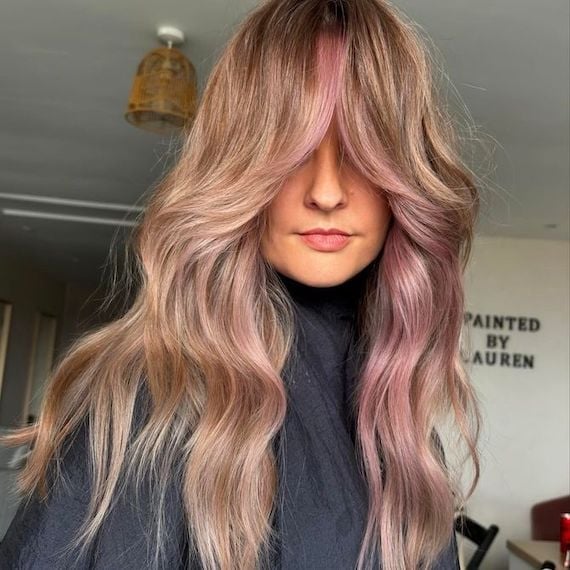
A pink money piece works because it is a frame, not a flood: two strips of pink highlights sit in a light blonde base right where the face meets the hair, and the eye does the rest. The mistake is treating those strips like ordinary highlights and letting them grow into a stripe. Keep the pink concentrated in the front and leave the mid-back blonde, and the grow-out becomes a soft fade instead of a skunk line. Book this for a summer wedding or a festival weekend, when the light catches the pink and the curtain bangs do the rest.
Ask your colorist for: light blonde with pink highlights and a pink money piece. The catch is maintenance: pink over blonde fades faster than the base and can drift brassy within a few weeks, so a color-depositing wash keeps the tone honest between appointments. Thick wavy hair at mid-back length carries the volume; a large barrel iron and a heat protectant give the blowout shape. Trim every eight to ten weeks. Skip it if you want a set-and-forget color, because this one asks for attention.
7. Collarbone Wavy Vivid Pink
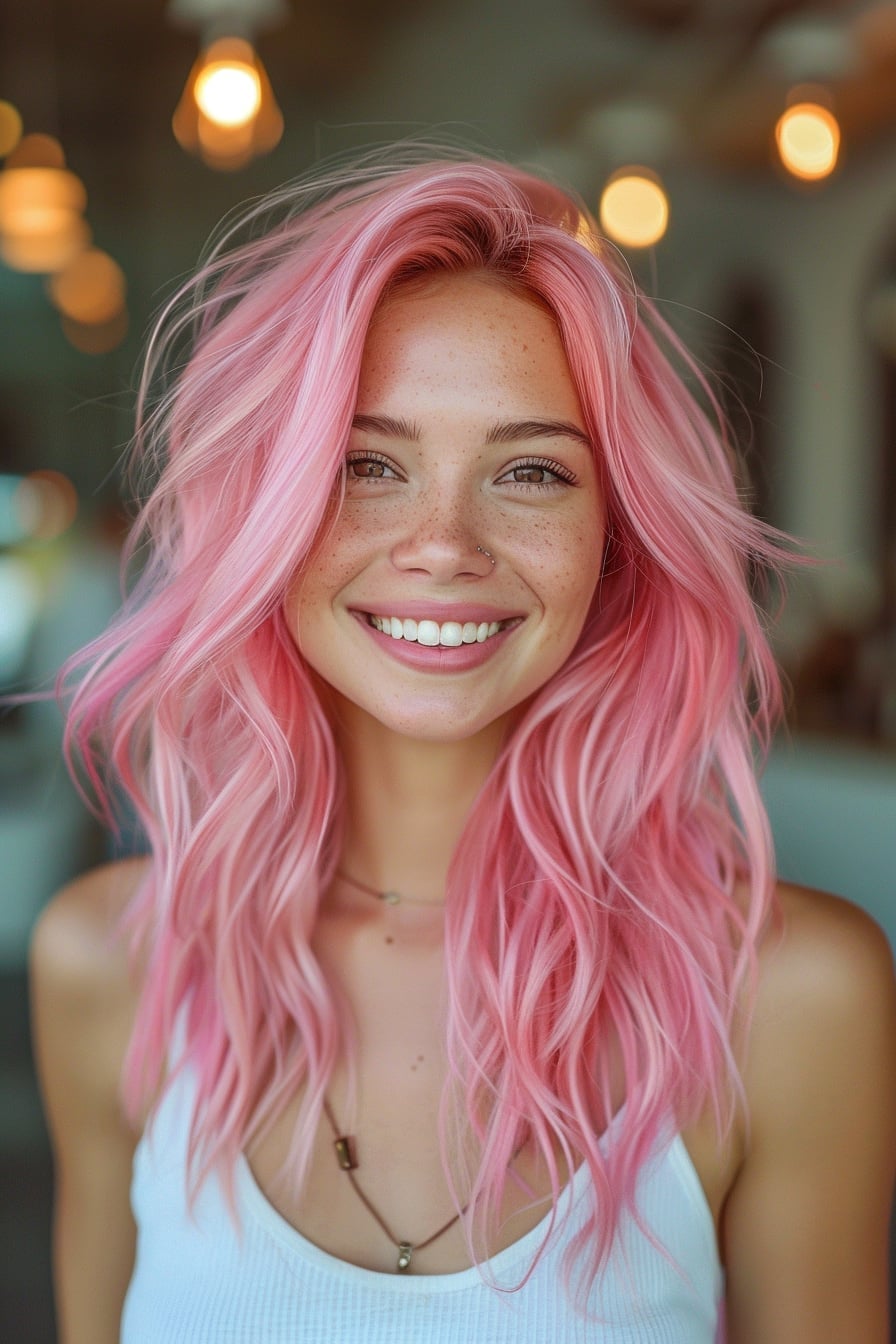
Where dusty rose whispers, vivid pink with lighter pink highlights announces itself, and collarbone length gives it room to move without the weight of mid-back hair. The face-framing layers and wavy blowout do the styling work, so the color carries the look. It lands hardest in summer and at festivals, when a glossy finish and a saturated pink look clearly planned. Ask your colorist for: collarbone length wavy hair, vivid pink with lighter pink highlights. Medium wavy hair holds the shape; a smoothing serum keeps the finish glossy. Frizz is the enemy here, so keep a heat protectant on hand and trim every six to eight weeks to protect the shape.
8. Mid-Back Vibrant Pink With Purple Undertones
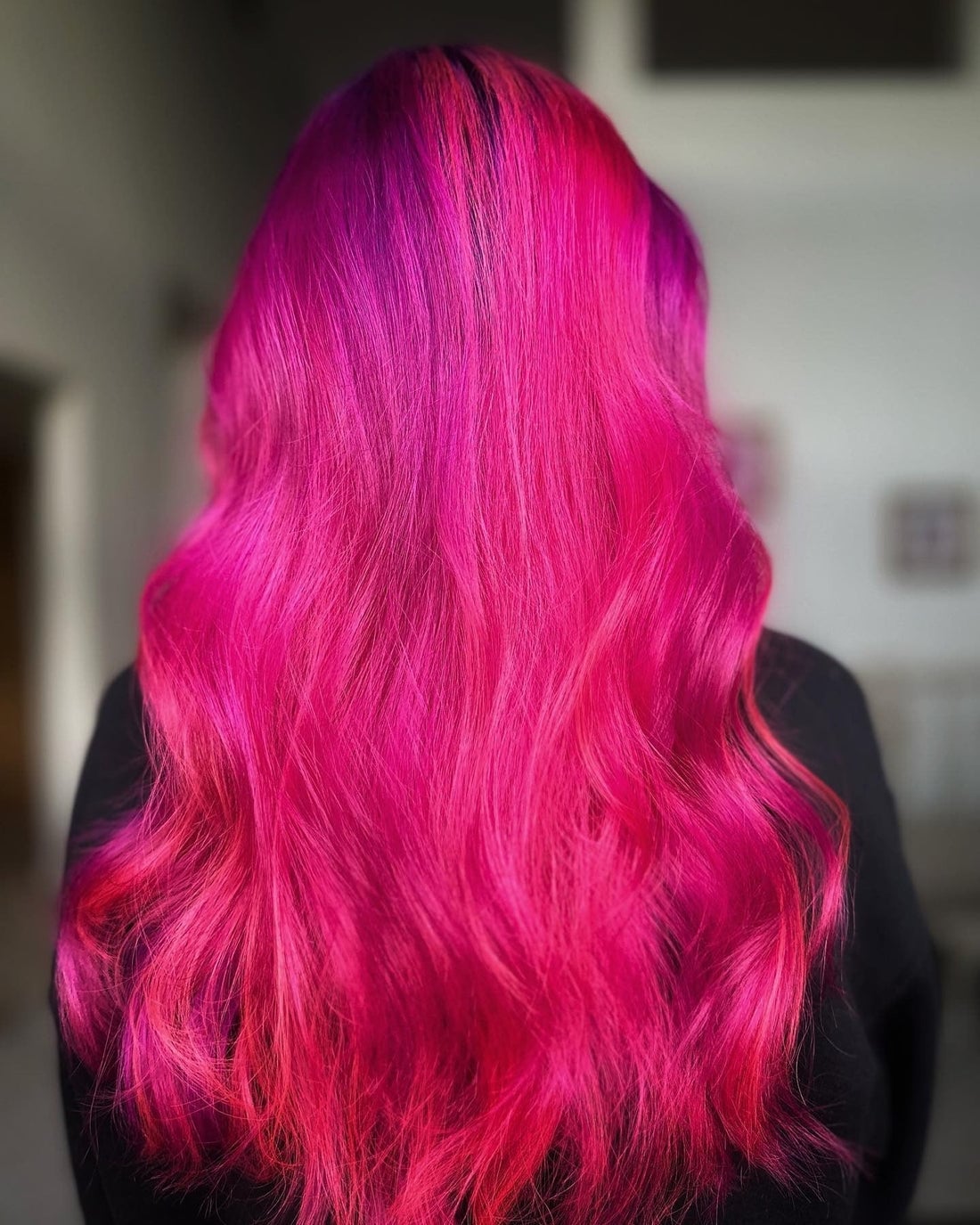
Vibrant pink with purple undertones is the version that looks almost liquid in loose waves, because the purple cools the pink and keeps it from reading candy. Mid-back length with long layers gives the color somewhere to travel, and thick wavy hair supplies the volume the shade needs. Ask your colorist for: mid-back length wavy hair, vibrant pink with purple undertones. The honest trade-off is upkeep: vivid pink fades on a schedule, and the purple undertones are the first thing to go, so a color-depositing mask every week or two keeps the tone from sliding toward salmon. Plan on a salon refresh every four to six weeks, plus a trim every eight to ten. Skip it if you want low-maintenance color; commit if you enjoy the ritual.
9. Mid-Back Dusty Rose Pink With Loose Curls
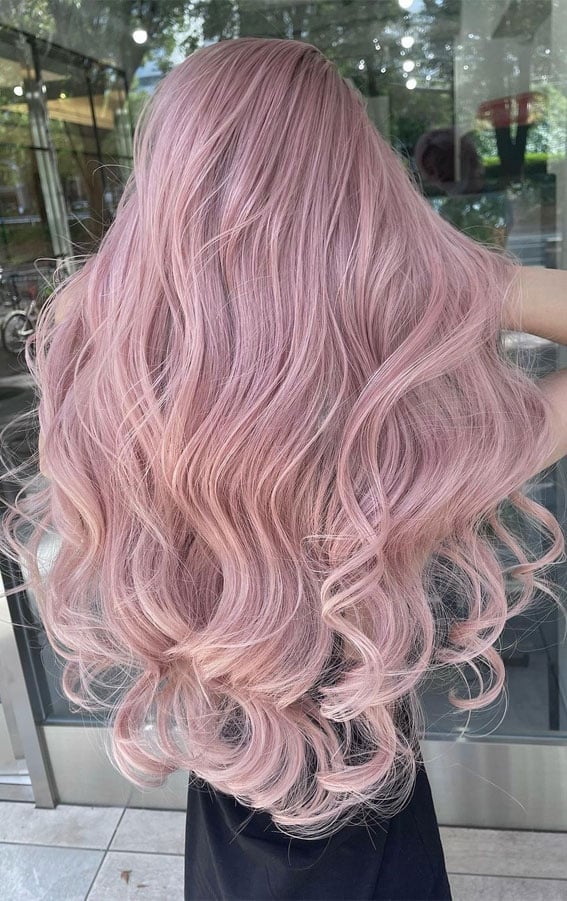
Dusty rose pink is the muted cousin of the vivid stuff: soft, slightly grayed, and built to look lived-in. Mid-back length with long layers and loose curls gives the shade movement, and thick wavy hair holds the curl pattern without collapsing. This is the pink for anyone who wants color without a neon commitment, and it suits most face shapes because the long layers keep the shape open. Ask your colorist for: mid-back length long layers, loose curls, dusty rose pink. A curl-defining cream and a diffuser or air dry get the texture; trim every eight to ten weeks. Pass if you want high contrast, because dusty rose is deliberately quiet.
10. Mid-Back Ash Blonde With Pink And Lavender Tones
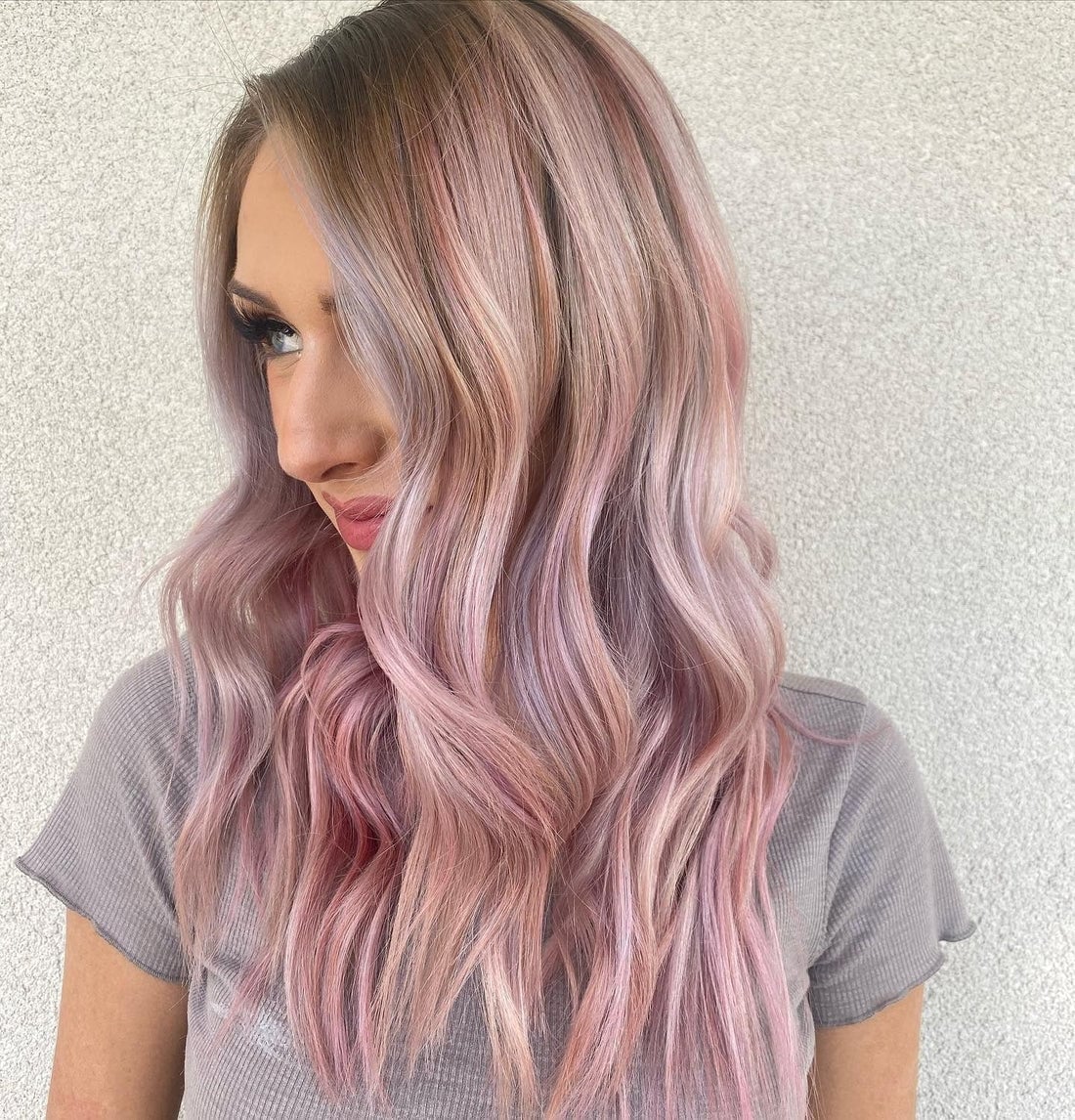
Ash blonde with pastel pink and lavender tones is a layering job: the base goes ash first, then the pink and lavender are glossed through in loose waves so the tones sit on top rather than inside the cut. Mid-back length with long layers gives the color room, and medium-density wavy hair keeps the pastels from looking heavy. Ask your colorist for: ash blonde with pastel pink and lavender tones. The drawback is brassiness: ash base plus pastel top coats means warm undertones can push the lavender toward gray, so a purple shampoo and a color-depositing conditioner between appointments are not optional. Trim every eight to ten weeks.
11. Collarbone Rose Pink With Blonde Balayage
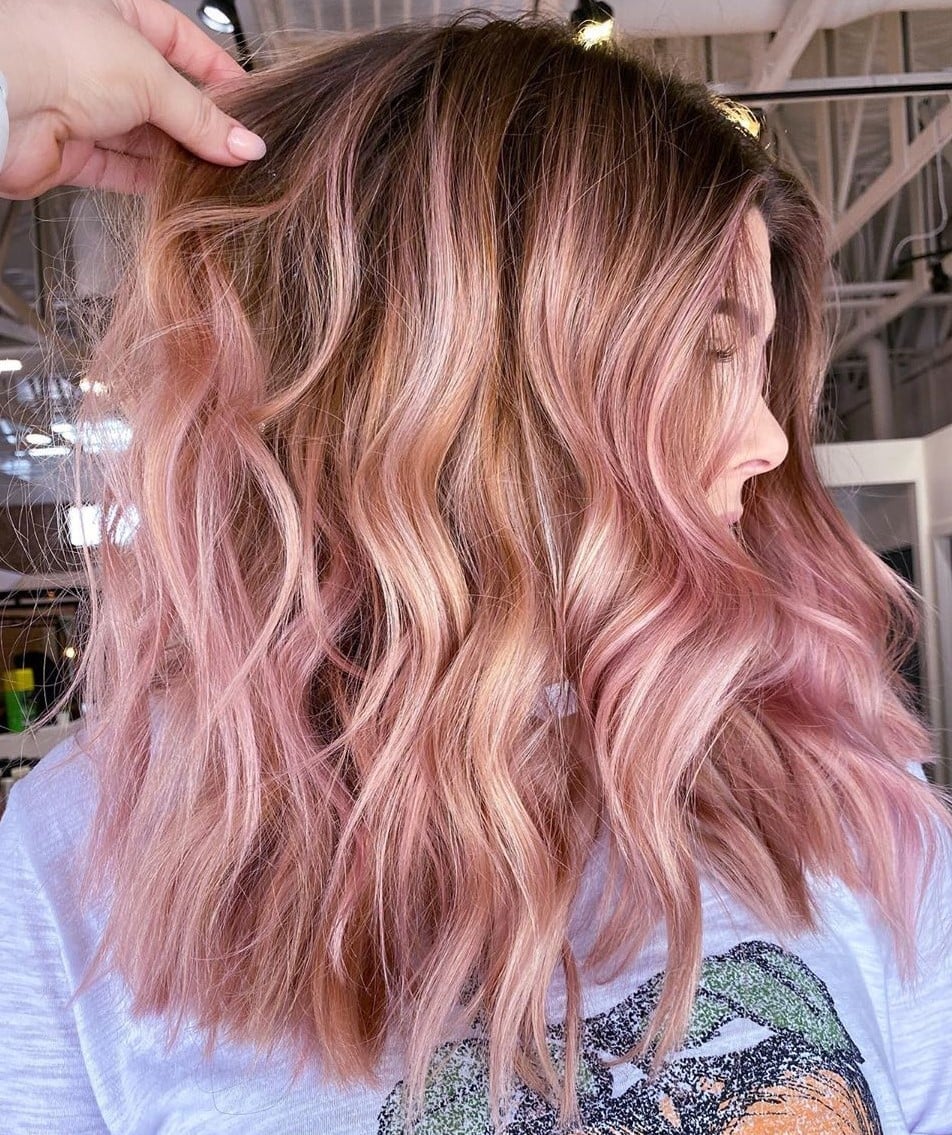
Ever wondered how to get that soft, dimensional pink without looking like you raided a dress-up box? A rose pink base with a blonde balayage technique is the answer. The face-framing layers and collarbone length keep it modern on medium wavy hair, while the blonde pieces lighten the rose for a softer finish. Ask your colorist for: collarbone length long layers, rose pink with blonde balayage. To style, apply texturizing spray to damp hair, then wrap sections around a large-barrel iron for loose waves. The layers will catch every shade shift.
12. Collarbone Lob With Rose Gold Balayage
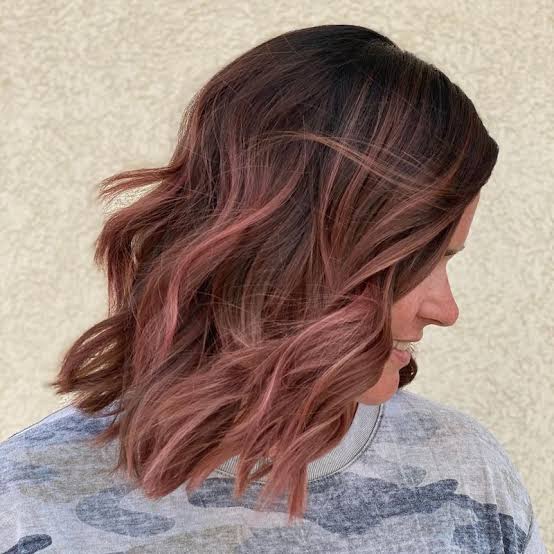
A dark brown base with rose gold balayage is the grow-out-friendly version of pink hair you have been looking for. The dark root stays natural while the rose gold highlights warm up the ends, so you can stretch six to eight weeks between appointments without a harsh line. Ask your colorist for: collarbone length lob, dark brown with rose gold balayage, wavy blowout. A boar bristle brush during blow-drying smooths the cuticle and keeps the rose gold reflective. Medium density wavy hair holds the wave pattern best, and a side part adds lift at the crown.
13. Mid-Back Dark Brown To Soft Pink Ombré
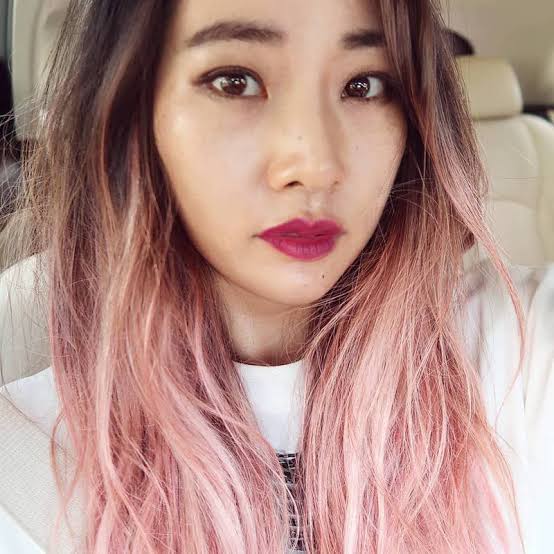
A dark brown to soft pink ombré is not the same as a pastel pink dye job, and that is the point. The brown base keeps the roots looking natural while the pink fades in gradually, which means less visible grow-out than an all-over pastel. Medium density wavy hair at mid-back length shows off the long layers and the color transition. Ask your colorist for: mid-back length long layers, dark brown to soft pink ombré. This is a salon technique: the colorist hand-paints the pink onto pre-lightened sections, so the blend looks organic, not striped. Plan on about three hours in the chair.
14. Mid-Back Dark Brown To Vibrant Pink Ombré With Long Layers
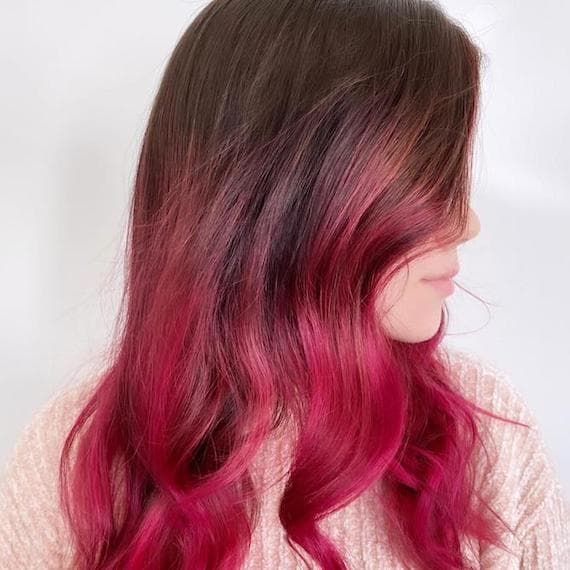
The most common mistake with a dark brown to vibrant pink ombré is visible banding, where the color stops and starts in harsh lines. A skilled colorist avoids this by painting the lightener in a graduated pattern, starting higher on some sections and lower on others. The long layers help disguise the transition point too. Ask your colorist for: mid-back length long layers, dark brown to vibrant pink ombré. The downside: vibrant pink fades faster than soft pink, so expect a toning appointment every four to six weeks to keep it from turning coral. Medium density wavy hair with a middle part shows the gradient best from a side view.
15. Shoulder Length Blonde With Bright Pink Tips
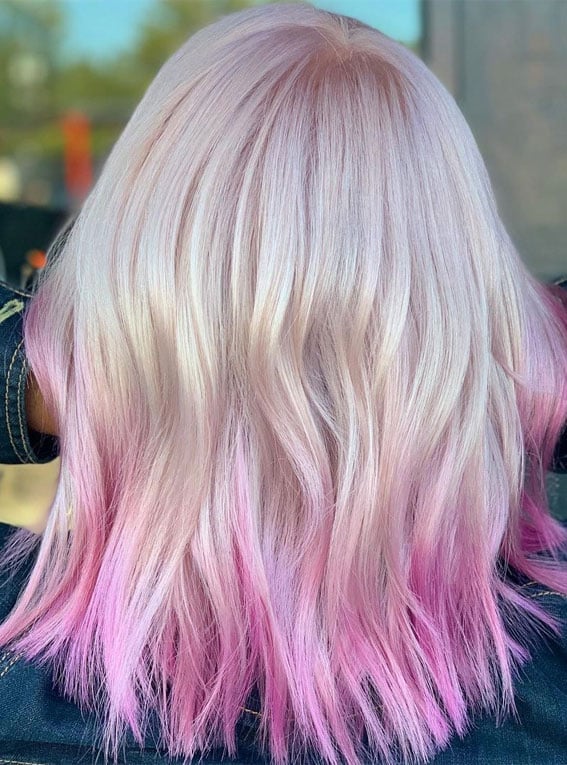
Bright pink tips on a blonde base are the least commitment way to test pink hair, and they land perfectly in warm weather when a pop of color feels right. The shoulder length and layers keep the pink concentrated at the ends, so the grow-out is just a trim away. Ask your colorist for: shoulder-length layered hair, blonde with bright pink tips. Medium density straight hair works well here because the pink sits cleanly at the bottom without competing with waves. A slight wave or a sleek flat iron finish both work: the pink tips catch the light either way.
16. Chin Length Pastel Pink Straight Bob
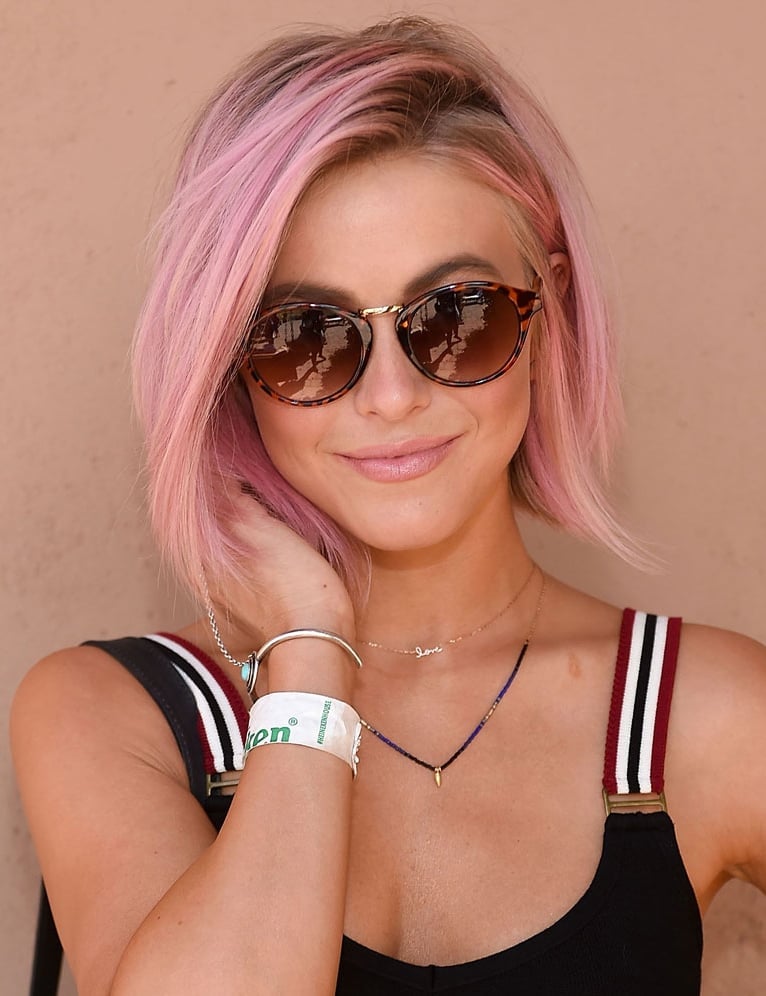
Pastel pink is a commitment, and this chin-length bob with blunt bangs makes that clear. The uniform color sits on fine, straight hair, so the clean lines of the cut do the talking. Ask your colorist for: chin-length bob, blunt bangs, pastel pink. A flat iron keeps the finish smooth, and the straight style shows every bit of fading. Brassiness shows up faster on pastel shades, so a toning appointment every four to six weeks helps maintain the color. The blunt line needs a trim every six to eight weeks to hold its shape.
17. Dusty Pink Messy Bun With Wispy Bangs
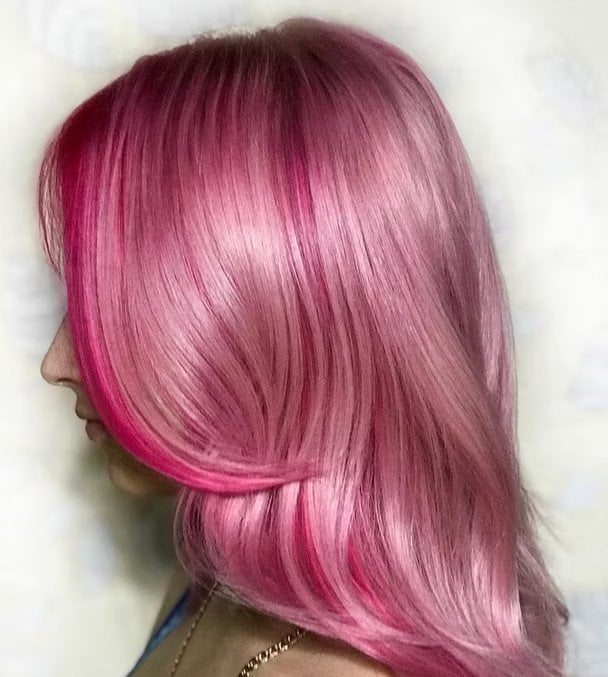
Can you get a dusty pink messy bun to look this deliberate at home? The fine, curly texture does most of the work, so the answer is usually yes. Ask your colorist for: dusty pink hair, wispy bangs. The updo hides the length, which means any cut works underneath. One real drawback: the dusty tone washes out faster than a vivid pink, so the color needs refreshing every few weeks to keep that muted, soft look from turning dull.
18. Final Thoughts
For low upkeep, commit to an ombré or balayage that blends with your natural root color. For maximum impact, go uniform vivid pink or a bold money piece, just plan for a toning session every four to six weeks. The right pink is the one you are willing to maintain.
- Use color-safe shampoo and conditioner to preserve vibrancy.
- Toning may be needed every 4-6 weeks depending on the shade.
- Protect hair from heat styling; use a heat protectant spray.
- Avoid frequent washing to extend color life; consider dry shampoo.
- A trim every 6-8 weeks will maintain the cut’s shape.
Embrace the spectrum of pink hair color.

