
The pixie bob sits between a pixie and a bob: short at the back, longer at the jaw, with layers that keep the shape from going helmet-like. It has drifted toward softer face-framing layers and lived-in color, so the grow-out line looks like a plan instead of a mistake.
Here are 23 takes on the Pixie Bob, from ear-length and blunt to chin-length with curtain bangs, some needing a two-minute diffuse and others a real blow-dry. For fine hair that collapses by noon, a visible root line, or a fringe that parts itself, the right cut and texture stop the daily fight.
1. Textured Dark Brown Pixie Bob
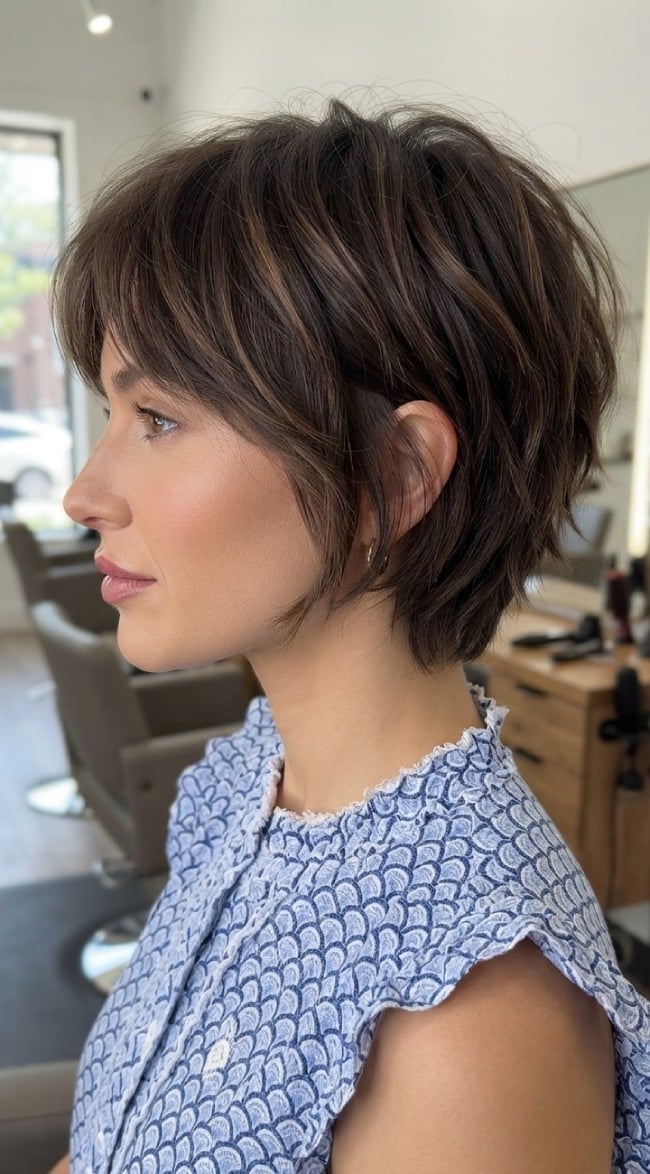
A pixie bob cut to ear length with a dark brown base and subtle lighter brown highlights is a study in controlled chaos. The wispy fringe sweeps across the forehead, and the tousled, wavy strands add volume without weight. This design suits fine, wavy hair textures best, softening round and oval faces with that fringe. Ask your stylist for: ear-length pixie bob, textured styling, wispy fringe. Work a texturizing paste through dry hair to enhance the waves; a trim every six weeks keeps the shape honest.
2. Ash Brown Pixie Bob With Piecey Layers
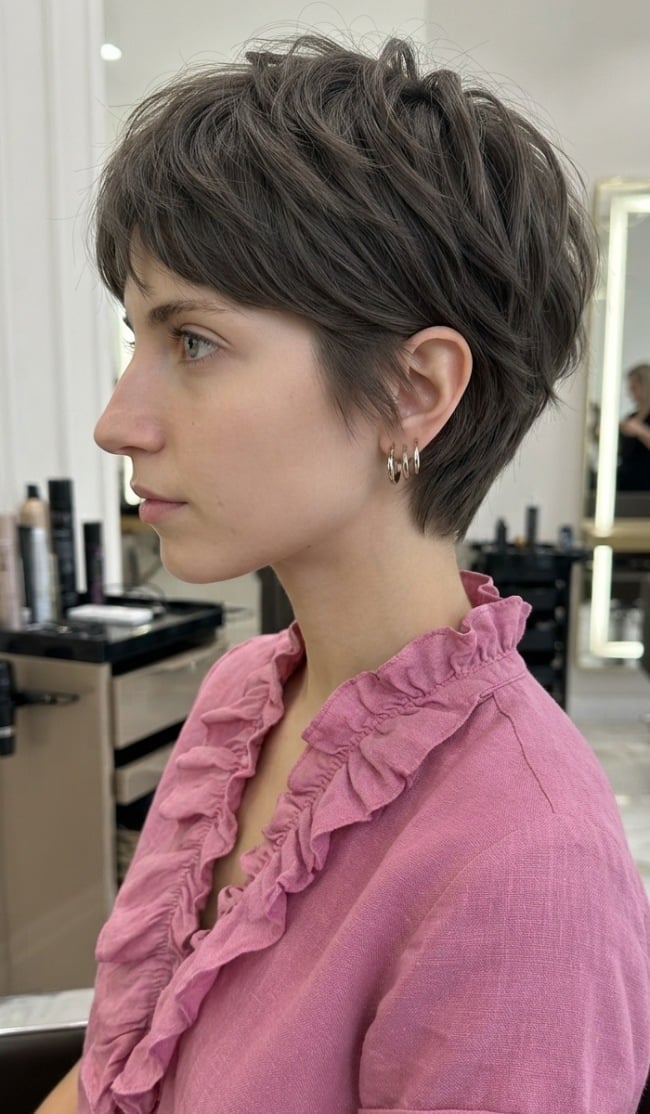
What sets this ear-length pixie bob apart from its tousled cousin? The piecey layers. Each strand is cut to have its own definition, which creates deliberate movement rather than a uniform wave. The ash brown base with subtle highlights stops the cut from reading flat. Fine, wavy hair at the ear gets a texture boost here. Ask your stylist for: ear-length pixie bob, ash brown, piecey side-swept bangs. A light hold spray locks in the separation; trim every six weeks to keep those layers distinct.
3. Textured Dark Brown Pixie Bob With Side Fringe

A short fringe that sweeps to the side changes the geometry of an ear-length pixie bob. The dark brown base keeps it grounded, while the textured, wavy finish adds a rumpled ease. This version works well on fine, wavy hair and can soften angular faces with that side-swept line. Ask your stylist for: ear-length dark brown pixie bob, textured styling, short side fringe. A dab of pomade on the fringe keeps it from collapsing; plan a trim every six weeks.
4. Ash Blonde Pixie Bob With Textured Fringe

A darker ash blonde pixie bob reads cooler and more subtle than a warm golden blonde. At ear length with a textured, wavy finish and a short fringe swept to the side, it offers brightness without the brass. So where does this sit next to a dark brown version? The blonde lifts the overall effect, making it ideal for anyone who wants dimension from color rather than from heavy layering. Fine, wavy hair at the ear handles the texture well. Ask your stylist for: ear-length ash blonde pixie bob, textured styling, short side fringe. A texturizing spray will enhance the waves; trim every six weeks.
5. Sharp Ash Blonde Pixie Bob
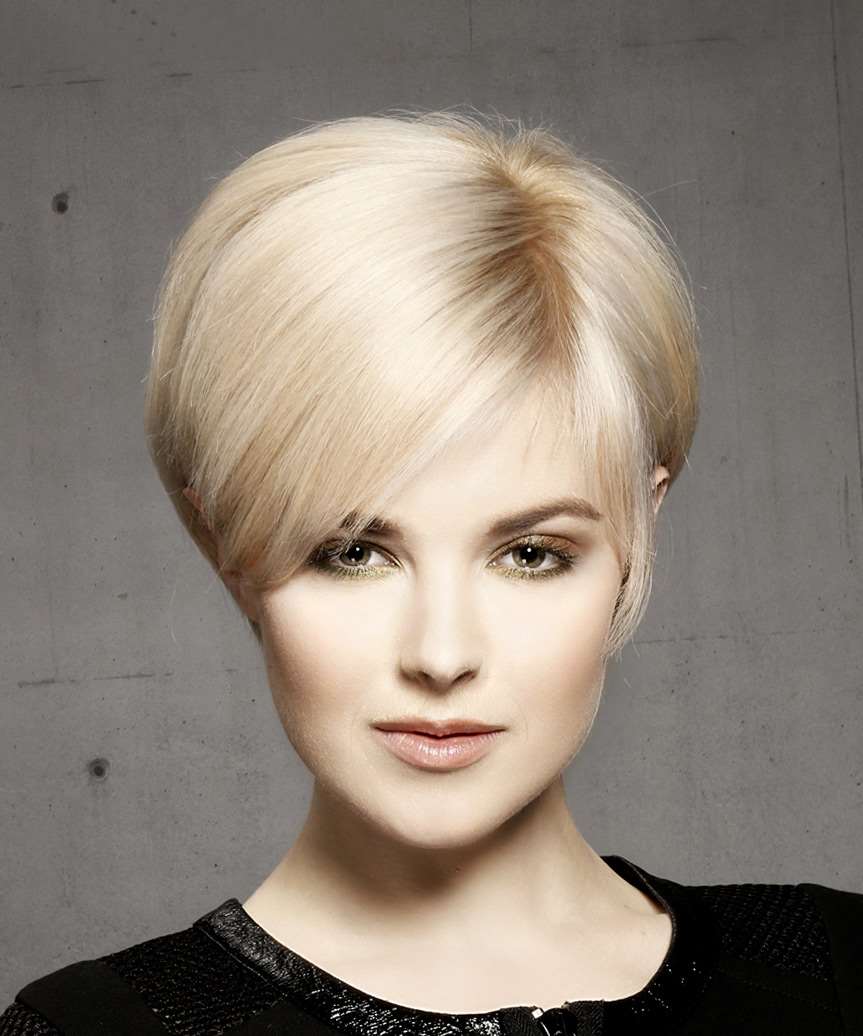
This ear-length pixie bob trades texture for a clean, sharp graduated line that tucks behind the ears. The ash blonde color has a subtle root shadow, which makes the grow-out phase less dramatic than a solid light shade. The smooth, straight finish and side-swept fringe give it a polished, deliberate feel. Fine, straight hair at the ear holds this line best; angular or heart-shaped faces pair nicely with the side-swept fringe. Ask your stylist for: ear-length sharp pixie bob, ash blonde, side-swept fringe. Use a smoothing serum and a small brush to maintain the sleekness; trim every six weeks.
6. Two-Tone Dark Brown and Blonde Pixie Bob
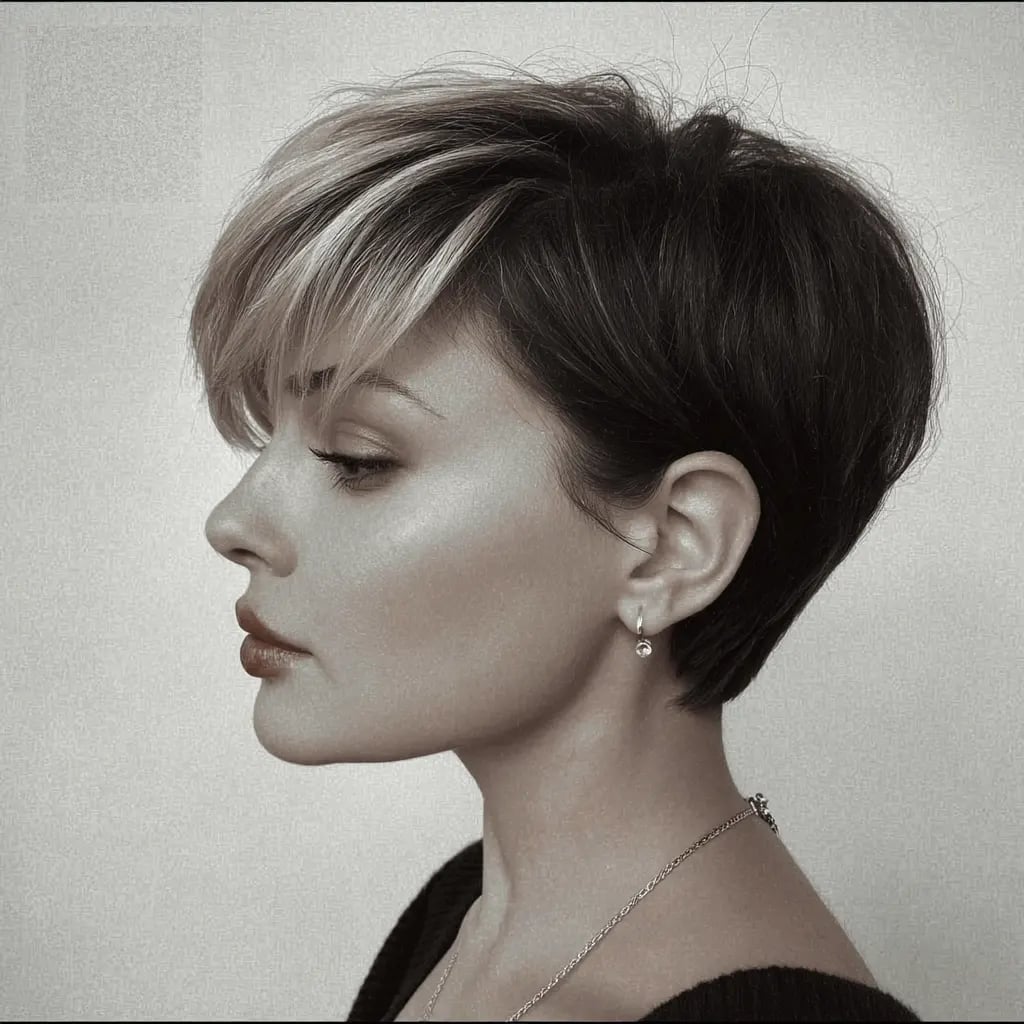
Blonde highlights sit on top of a dark brown base, a two-tone design that lands best in spring or early fall when you want something a little sharper than a solid shade. Fine to medium straight hair at ear length picks up the contrast clearly. Ask your stylist for: ear-length pixie bob, dark brown with blonde highlights, side-swept fringe. A smoothing cream keeps the shine even and the pieces separate.
7. Fine Straight Dark Brown Pixie Bob
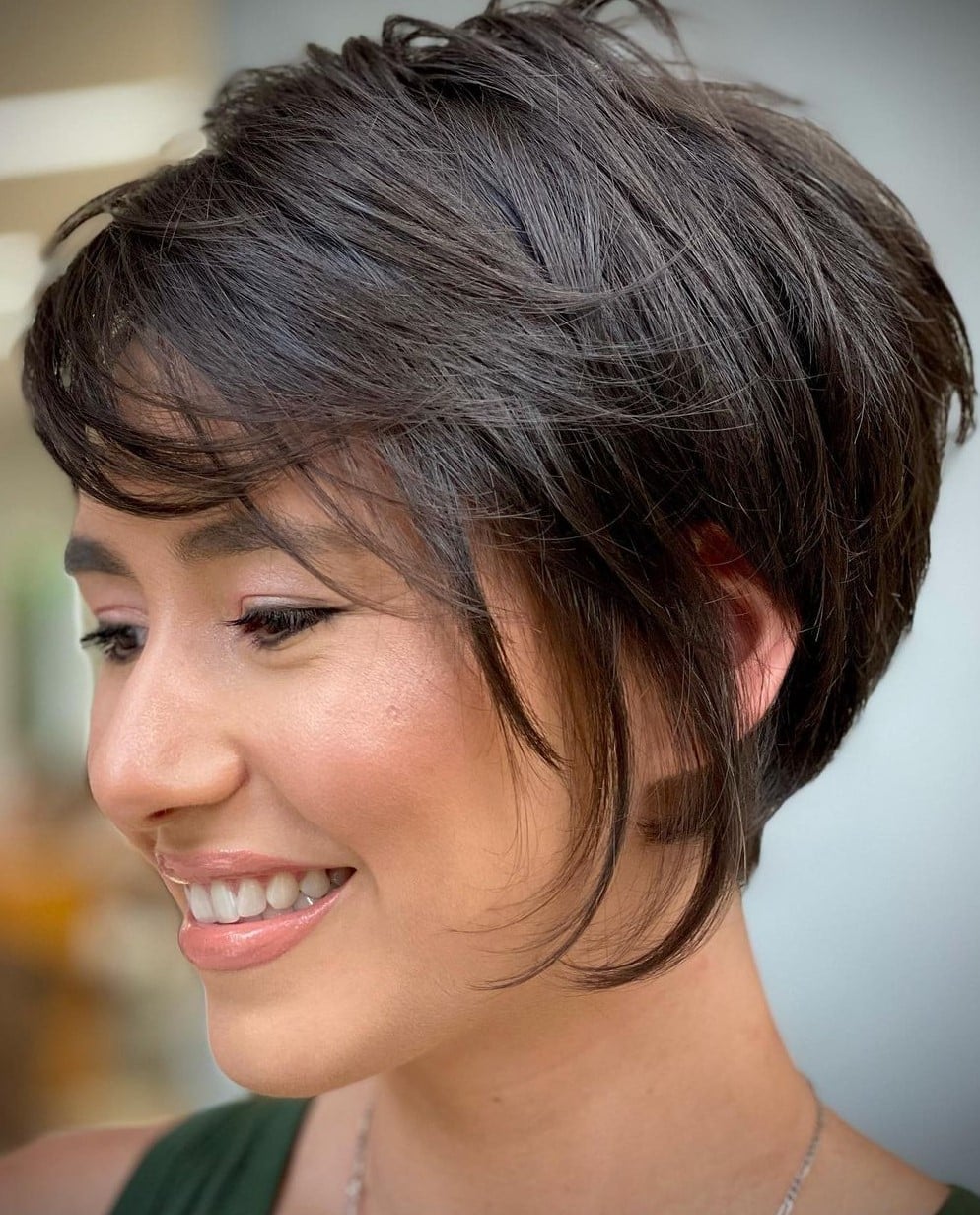
Fine, straight hair does not hold texture the way thicker strands do, so this cut depends on product and layering. The ear-length dark brown pixie bob uses textured layers and side-swept bangs to create movement without bulk. Ask your stylist for: ear-length pixie bob, textured layers, side-swept bangs. A texturizing spray adds grip, and a trim every six weeks keeps the shape clean. This is a salon cut. The layers are too precise to replicate at home with scissors.
8. Chocolate Brown Pixie Bob With Textured Crown
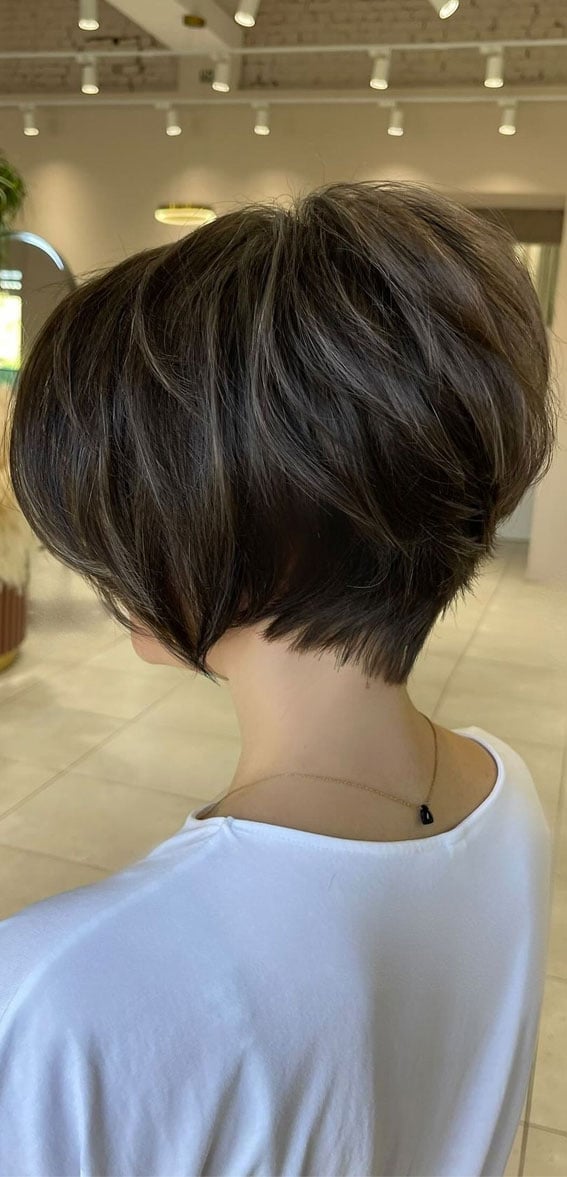
The textured crown on this chocolate brown pixie bob adds height exactly where short hair needs it most. Wispy bangs keep the front soft, and the ear-length cut works with fine, wavy texture without demanding volume. Ask your stylist for: ear-length pixie bob, chocolate brown, short wispy bangs, textured crown. The drawback: the crown needs a matte paste to stay visible, and on very humid days it can soften into a uniform shape.
9. Tapered Copper Pixie Bob
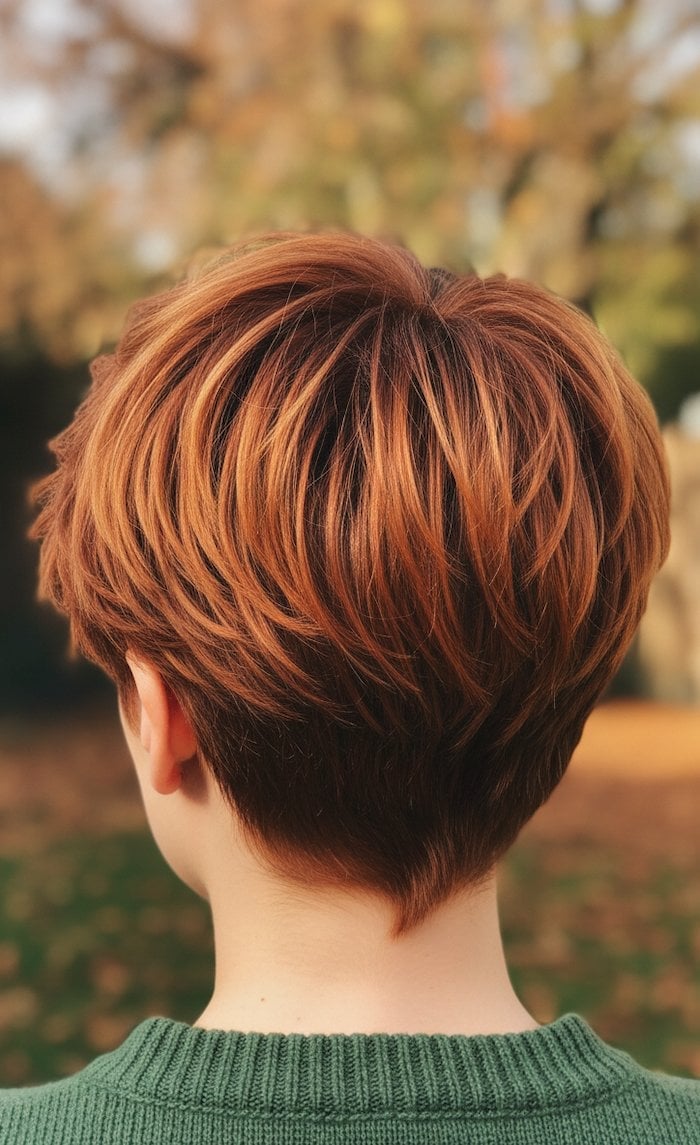
The tapered nape removes bulk gradually so the copper shade with blonde highlights looks dimensional. Soft textured layers sit on top of an ear-length shape, and the natural wavy finish keeps the silhouette from looking severe. Ask your stylist for: ear-length tapered pixie bob, copper with highlights, textured layers. A middle parting at the crown helps the weight fall evenly on both sides.
10. Stacked Pixie Bob With Undercut
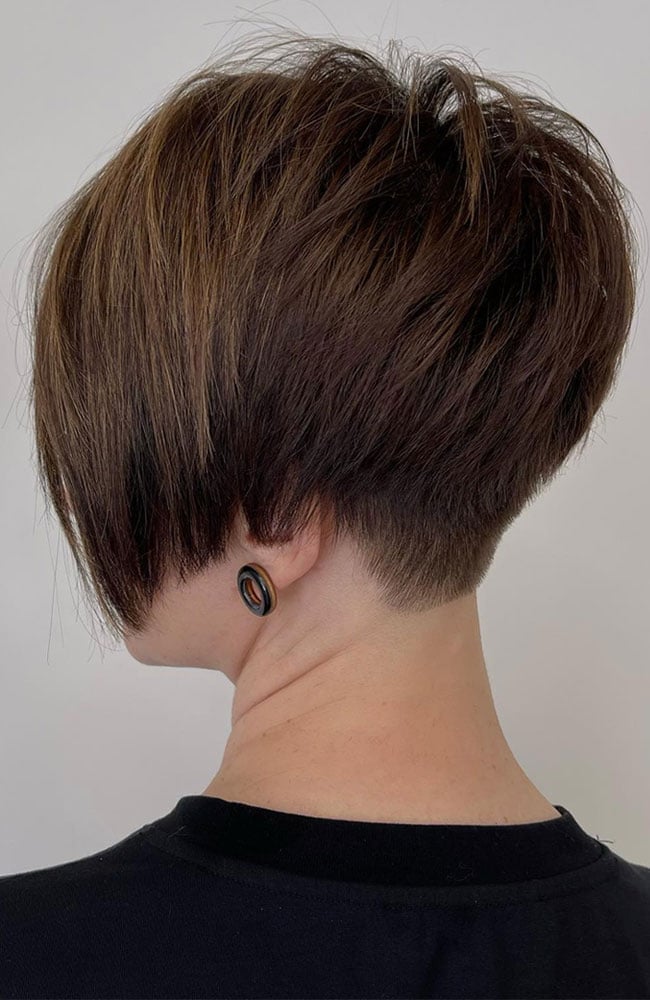
A stacked pixie bob builds volume at the crown, while an undercut at the nape removes it completely, two opposite techniques that balance each other. This ear-length version on fine, straight dark brown hair with subtle lighter highlights uses the undercut to keep the shape cool in warm weather. Ask your stylist for: ear-length stacked pixie bob, undercut nape, layered styling. The undercut needs a barber every three to four weeks to stay sharp, but the top layers only need trimming every six weeks. That part is a salon job; the undercut can be refreshed at a barber.
11. Stacked Bob With Side-Swept Bangs
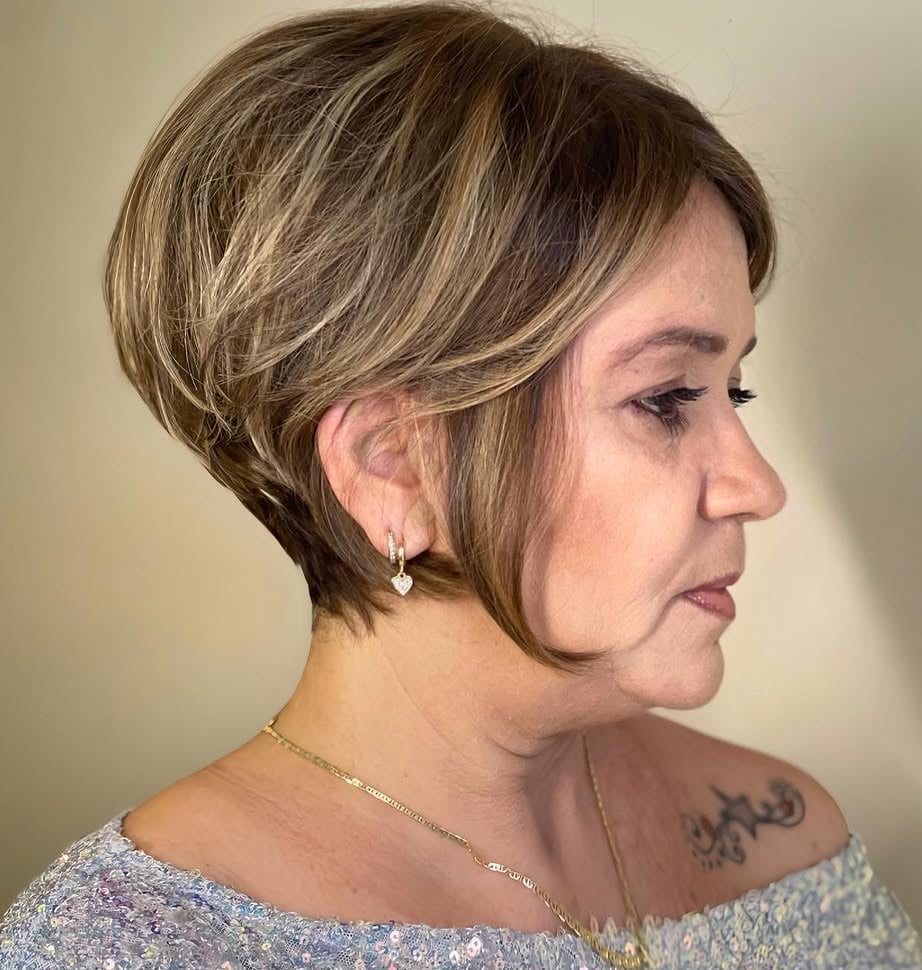
A stacked back is a structural choice: the layers at the nape are cut shorter than the ear-length front, which is why the silhouette holds its shape instead of collapsing flat. That geometry is also why a blowout matters here. Fine, straight hair needs a round brush at the back to build the volume the cut is designed to show, and skipping that step leaves the stack looking like an unfinished bob. Side-swept bangs soften the transition at the temple, though they need a directional blow-dry to sit right. Ask your stylist for: ear-length stacked bob, side-swept bangs. The honest trade-off is time: five to ten minutes of round-brush work on damp hair, plus a trim every six to eight weeks to keep the stacked layers from growing into each other.
12. Sleek Inverted Dark Brown Bob
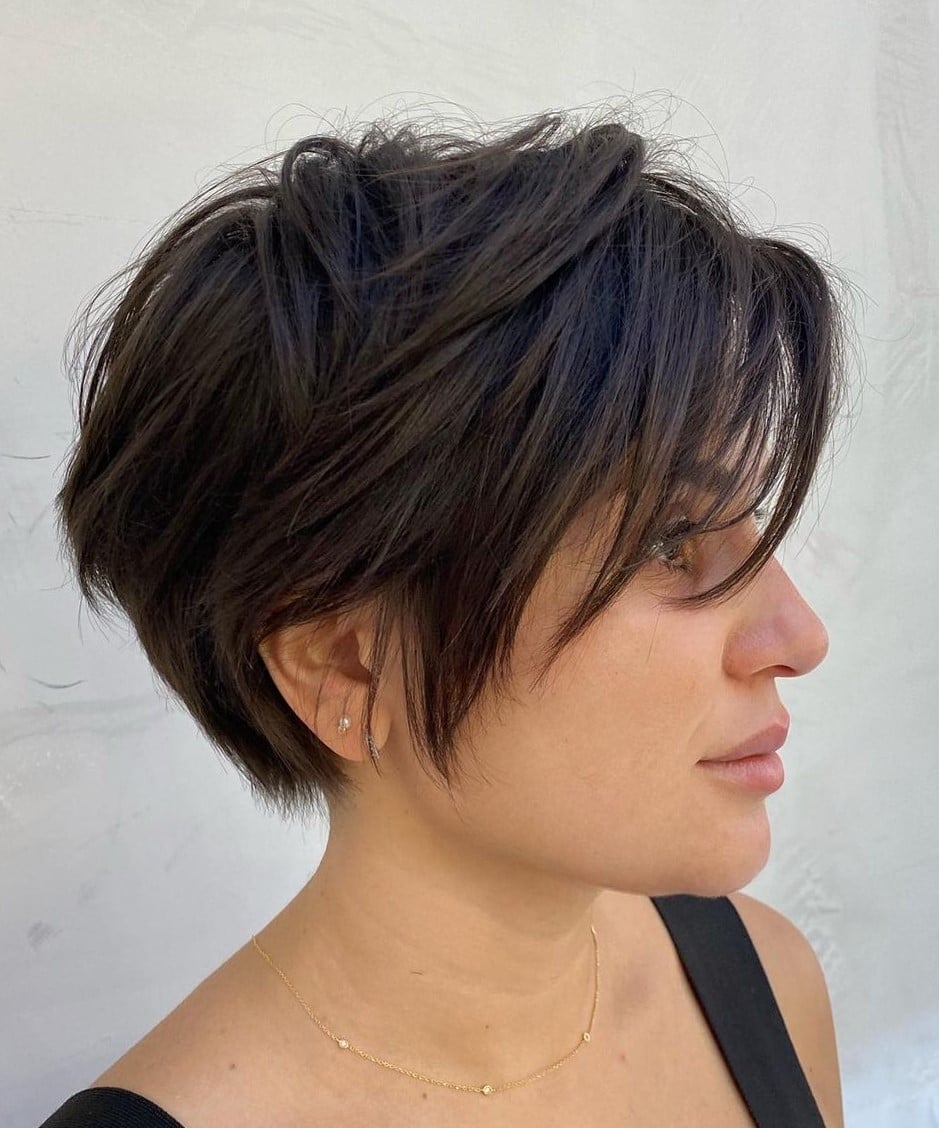
The inverted pixie bob is defined by a stacked nape that sits close to the neck while the front stays longer, and in solid dark brown that contrast reads as a clean diagonal line. Straight, thick hair is the ideal starting point: the density gives the stacked finish something to hold, and the smooth blowout keeps the shape sharp from behind. This is a summer cut that behaves like a winter one, in the sense that it stays polished without much fighting. Warm weather makes a neck-length cut practical, and the inverted angle keeps it from looking like a standard short bob.
Ask your stylist for: neck-length inverted bob, stacked nape, smooth finish. There are no bangs to manage, which simplifies the morning routine, but the nape needs a trim every six weeks to preserve the stacked line. Angular faces carry the inverted shape well. A flat iron run through the back keeps the finish sleek on humid days, and the dark brown base shows the cut’s lines without highlights pulling focus.
13. Sharp Chin-Length Blonde Bob

What separates a sharp bob from a soft one? The perimeter line, mostly. A chin-length cut with a precise, blunt edge and a middle part creates clean geometry, and fine, straight hair is the texture that shows it best: there is no bulk to blur the line. A smooth blowout with the ends tucked under finishes the shape. The trick is asking for the line, not just the length. Ask your stylist for: chin-length sharp bob, smooth blowout, middle part. Say the words “sharp line” and “no layers through the perimeter” so the edge stays clean.
What to confirm before the first snip:
- Where the perimeter sits relative to the chin bone
- Whether any layers are wanted at the front
- How the middle part will fall once the hair is dry
This is a salon cut, not a kitchen-scissors job: the line has to be exact or the whole shape looks off. A round brush is the only styling tool required, and a trim every six weeks keeps the edge from softening.
14. Chin-Length Bob With Curtain Bangs

Curtain bangs split at the middle and sweep outward, which is why they work so well against a chin-length bob: the fringe adds movement at the forehead while the soft layers through the body keep the cut from reading as a solid block. Wavy, medium-density hair suits this style, since the natural bend gives the bangs their curve without coaxing. The warm brown base with subtle highlights shows the layers clearly. If your hair is very fine or very straight, the bangs will need more styling to hold the sweep; if it is very thick, ask for fewer layers so the shape does not bulk up.
Ask your stylist for: chin-length bob, soft layers, curtain bangs. Blow-dry the bangs with a large round brush, rolling them away from the face to set the curve, then let the remaining hair dry with a diffuser or air-dry for the wavy finish. Trims land every six to eight weeks, and the bangs may need a small tidy between appointments if they grow past the cheekbone.
15. Chin-Length Bob With Blunt Bangs, Dark Brown, Close-Up Take

The blunt bangs define this cut. A chin-length bob with a middle part and natural wavy texture becomes a different haircut when the fringe cuts straight across, because it shifts the focus from the length to the geometry. Wavy, medium-density hair at chin length is the right starting point; waves add softness against the bang’s hard edge. The drawback: blunt bangs need a trim every three to four weeks, not six. Let them grow past the brow and the whole shape loses its point.
16. Silver Pixie Bob With Side Part
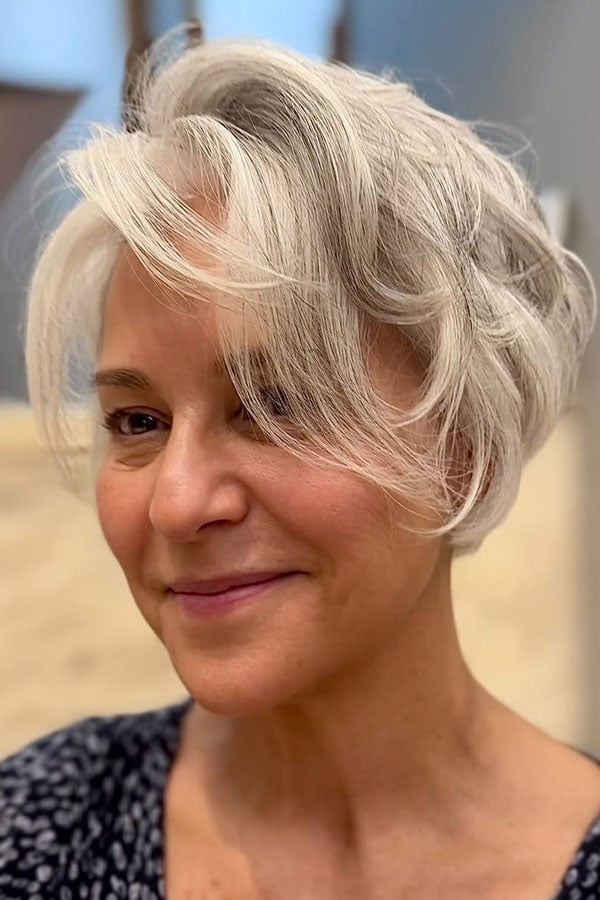
This is a chin-length silver pixie bob, but it is not trying to be subtle. The side-swept bangs and soft waves give fine, wavy hair a lift that a straight bob would not. A silver shade like this is a commitment. It demands regular toning to stay bright, unlike a natural dark brown. Ask your stylist for: chin-length silver pixie bob, soft waves, side-swept bangs. Fine hair gains volume from the wavy blowout, and the side part keeps the shape from looking too round.
Who it suits: fine, wavy hair at chin length that can handle a bold color. This is a fashion-forward choice, not a low-maintenance one. A purple shampoo is your friend here to keep the silver from turning brassy. Trim every six weeks to keep the pixie bob shape crisp and the side-swept bangs at the right length.
17. Ash Blonde Pixie Bob With Curtain Bangs

A chin-length pixie bob with feathered ends has a deliberately undone finish. The ash blonde base with lighter highlights gives the wavy, fine texture dimension, and the curtain bangs frame the face without demanding a precise center part. Ask your stylist for: chin-length pixie bob, ash blonde, feathered ends, curtain bangs. The piecey styling is the point. It is not a polished blowout.
Fine, wavy hair at chin length works well with this cut; curtain bangs soften the face. Achieving that piecey finish at home takes a bit of practice. Blow-dry the curtain bangs with a round brush for shape, then use a texture spray to separate the ends. A salon cut is essential for the feathered ends to look clean, not frayed. Trim every six weeks.
18. Short Dark Brown Bob With Curtain Bangs

Curtain bangs on wavy hair need daily attention. A texturizing spray helps the lived-in wave look planned, but a humid day will do what it wants. Trim every six to eight weeks. This is a cut that works best if you are comfortable with a little unpredictability.
19. Soft Grey Bob With Side-Swept Bangs
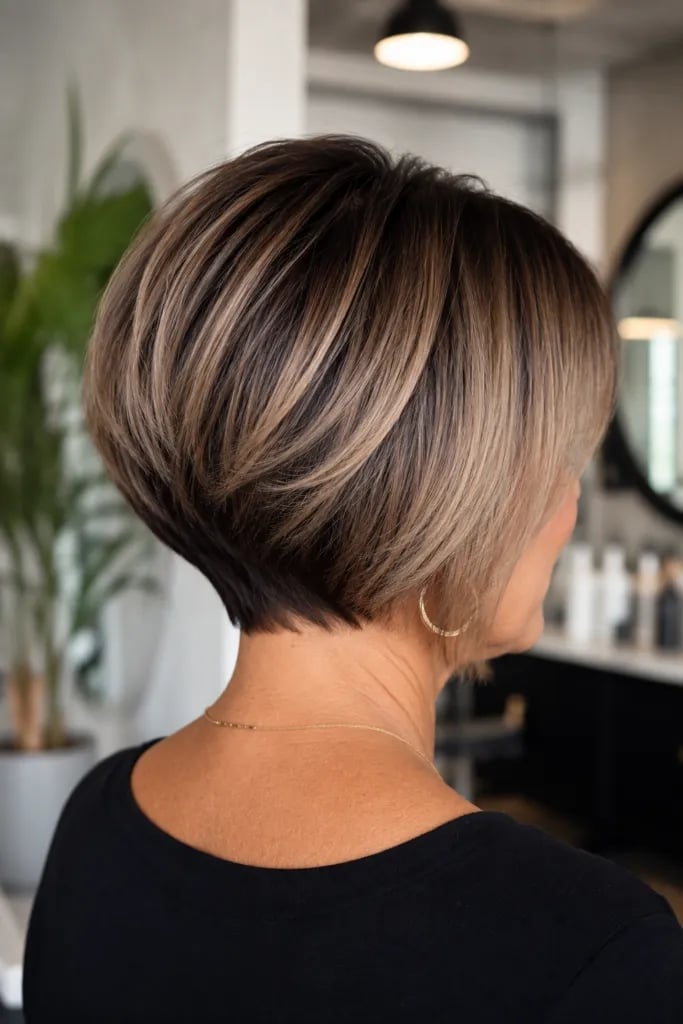
This chin-length bob suits fine, wavy hair. The soft layers and waves add movement, making the hair look fuller than it is. A mild shampoo and conditioner protect the grey tone from becoming dull. This cut does not demand a strict routine. The waves work with natural texture. Trim every six weeks to maintain the shape.
20. Sharp Black Micro Bob With Blunt Fringe
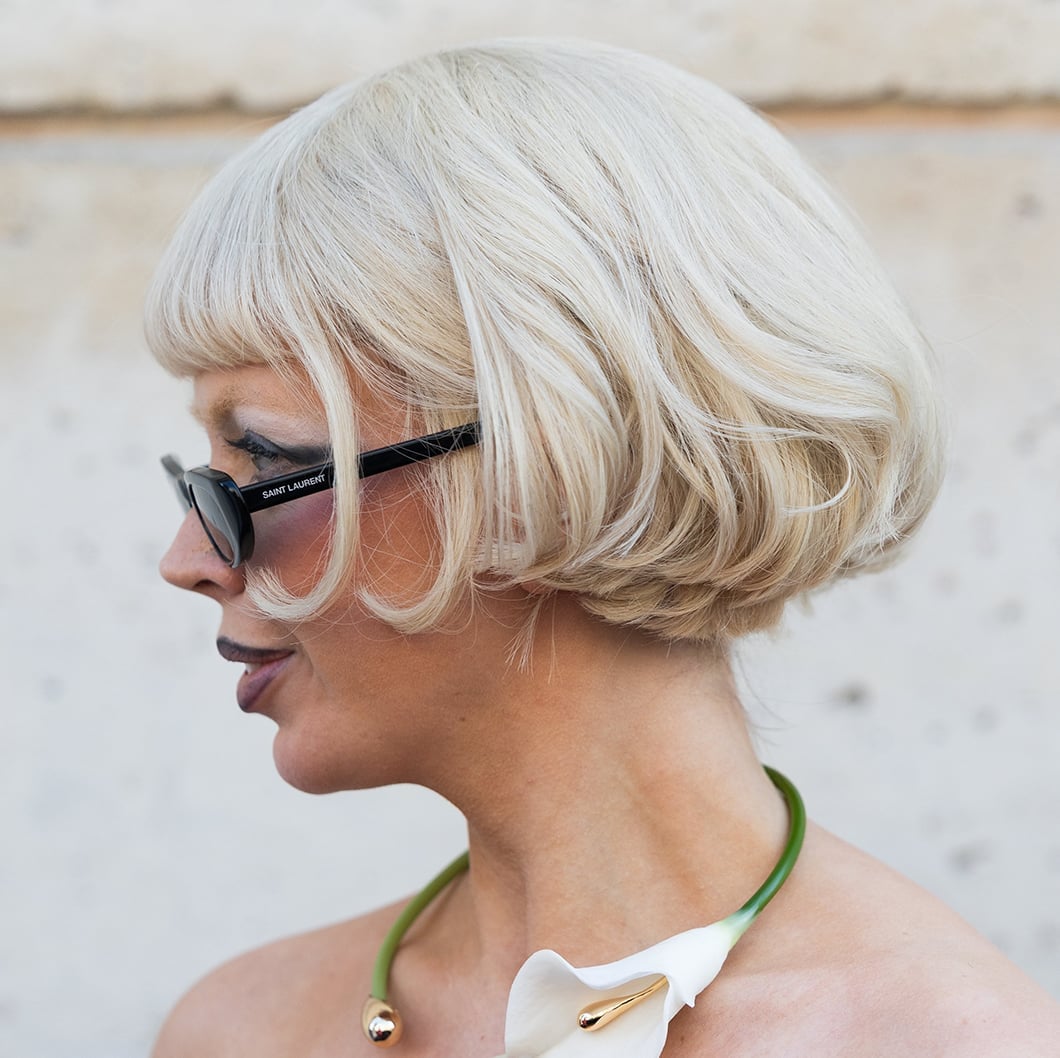
This micro bob suits fine, straight hair at chin length. The micro fringe needs precise cutting and daily styling with a flat iron to keep the sleek finish. A middle parting emphasizes the symmetry. Trim every four weeks to maintain the blunt edge and the fringe length. This cut requires regular upkeep.
21. Layered Blonde Bob With Stacked Back
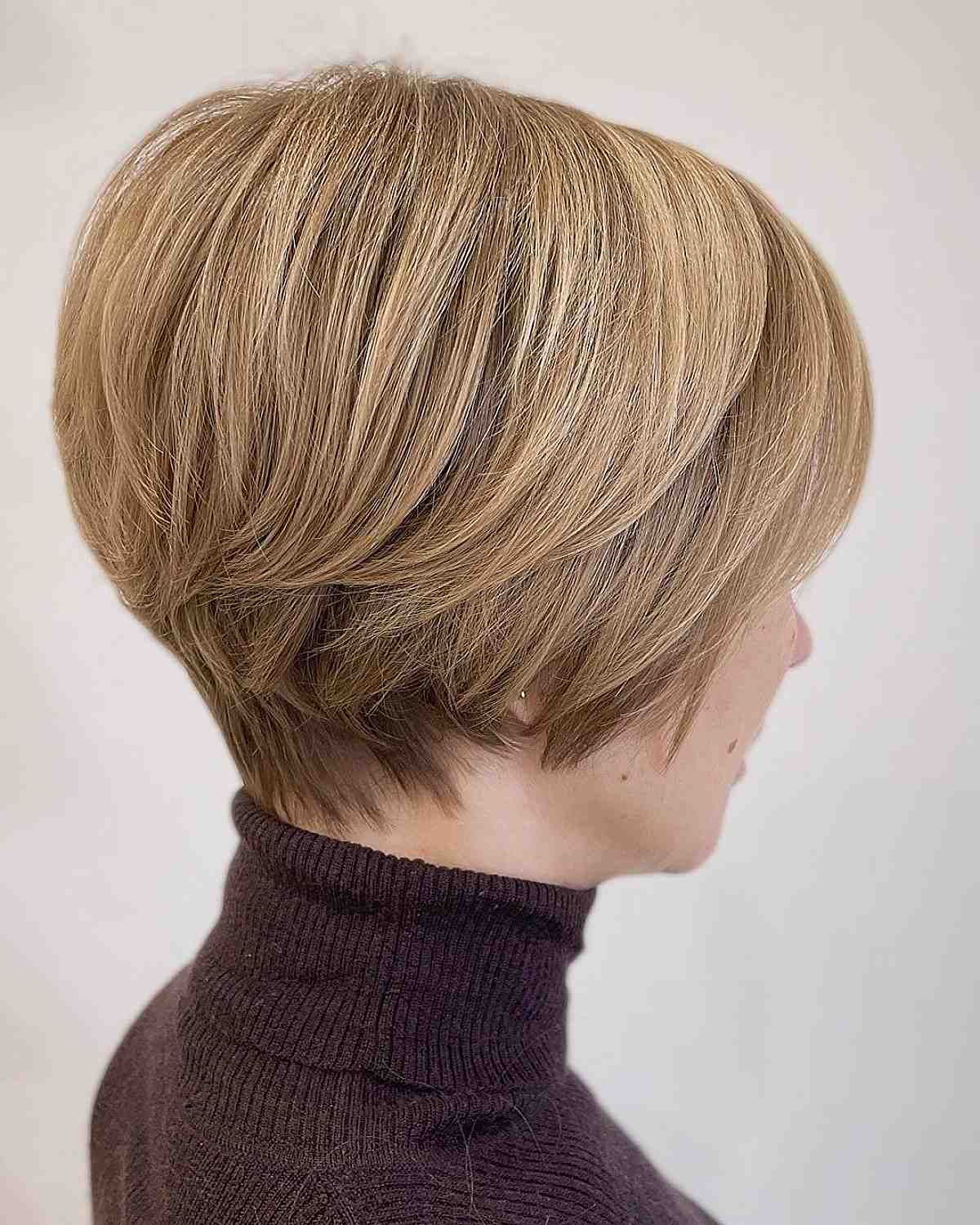
Straight, thick hair holds the stacked back best, since the volume comes from the cut itself. Ask your stylist for: collarbone layered bob, stacked back, blonde highlights. A root lift product before blow-drying keeps the shape from collapsing, and a trim every six to eight weeks preserves the stacked line.
22. Tousled Dark Brown Bob With Highlights
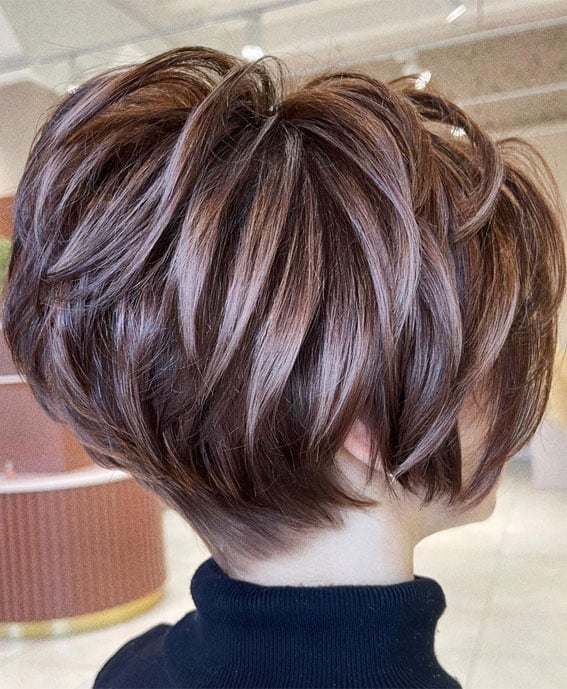
How long does a stacked back actually hold its shape? On thick, wavy hair, the answer depends on how often you sit in the chair. The cut reaches the collarbone, with a dark brown base and lighter blonde highlights adding dimension through the layers, and the nape carries most of the volume. Styled tousled, it looks lived-in from the start.
Ask your stylist for: collarbone stacked bob, dark brown with blonde highlights, tousled finish. A texturizing spray worked through the hair keeps the wavy pieces separated. The drawback is maintenance: stacked layers grow out of shape faster than a blunt line, so book a trim every six to eight weeks, and expect the highlights to need refreshing as the dark base grows in.
23. Layered Ash Blonde Bob With Dark Roots
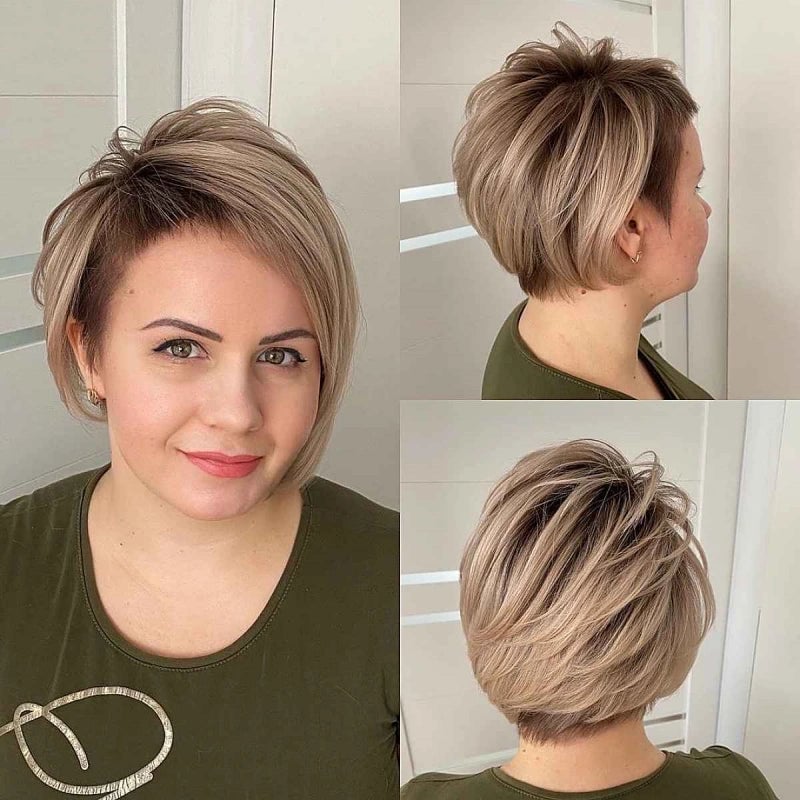
- stacked layers through the back
- soft, feathered ends
- side-swept bangs that clear the brow
- an ash blonde tone with the root left dark
This is salon work, not a bathroom project, since the stacked layers and the root line both need a trained eye. Use a round brush to keep the layers defined, and book a trim every six to eight weeks.
24. Final Thoughts
Pick by density first. Fine hair: keep one blunt baseline and skip heavy layering, since too much texture thins the ends. Thick or coily hair: go for more pronounced layers to take out weight. Round faces do better with length falling below the chin; square jaws soften with layers around the jawline.
- Trim the baseline every six to eight weeks to hold the shape.
- Refresh color with a gloss or toner every four to six weeks.
- Work a texturizing spray into damp hair before styling.
- Mist fine hair with a lightweight heat protectant before blow-drying.
The pixie bob is a canvas for personalization.

