
Purple Hair Color covers a wide spectrum, from a deep plum that reads almost black indoors to a vivid violet that announces itself from across the street. The current version leans lived-in: soft face-framing layers, curtain bangs and glossy natural texture carry the shade better than a flat-ironed finish.
Here are 20 purple ideas that run from low-upkeep highlights on a dark base to full uniform saturation, on lengths from a chin-length bob to mid-back waves. It is built for anyone who has watched a violet fade to gray in three weeks, or whose fine hair collapses under a heavy color load. Pick a tone, pick a technique, and let the grow-out line work for you.
1. Collarbone Layers With Vibrant Purple Highlights
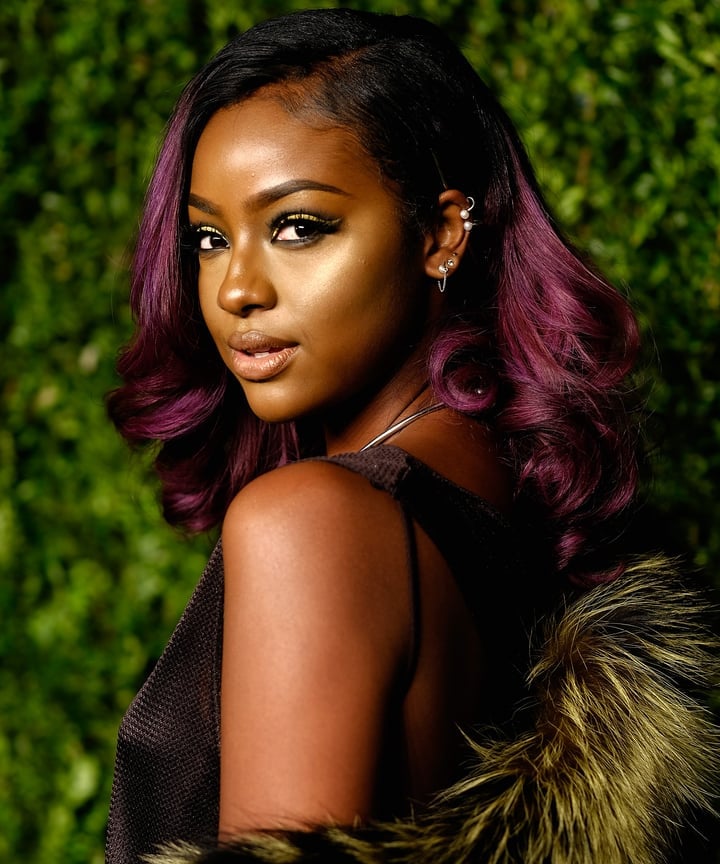
A side part and a blowout give collarbone-length layers the lift they need to show off every strand of vibrant purple. The dark base keeps the overall look grounded, while the purple highlights are placed to catch light and movement rather than sit flat. Thick, wavy hair starting at this length handles the contrast well; the layers also soften square and oval faces. Ask your colorist for: collarbone layers with vibrant purple highlights. A texturizing spray at the roots will keep the waves from falling flat by midday, and a trim every six to eight weeks maintains the shape.
2. Chin Length Bob With Subtle Purple Tones
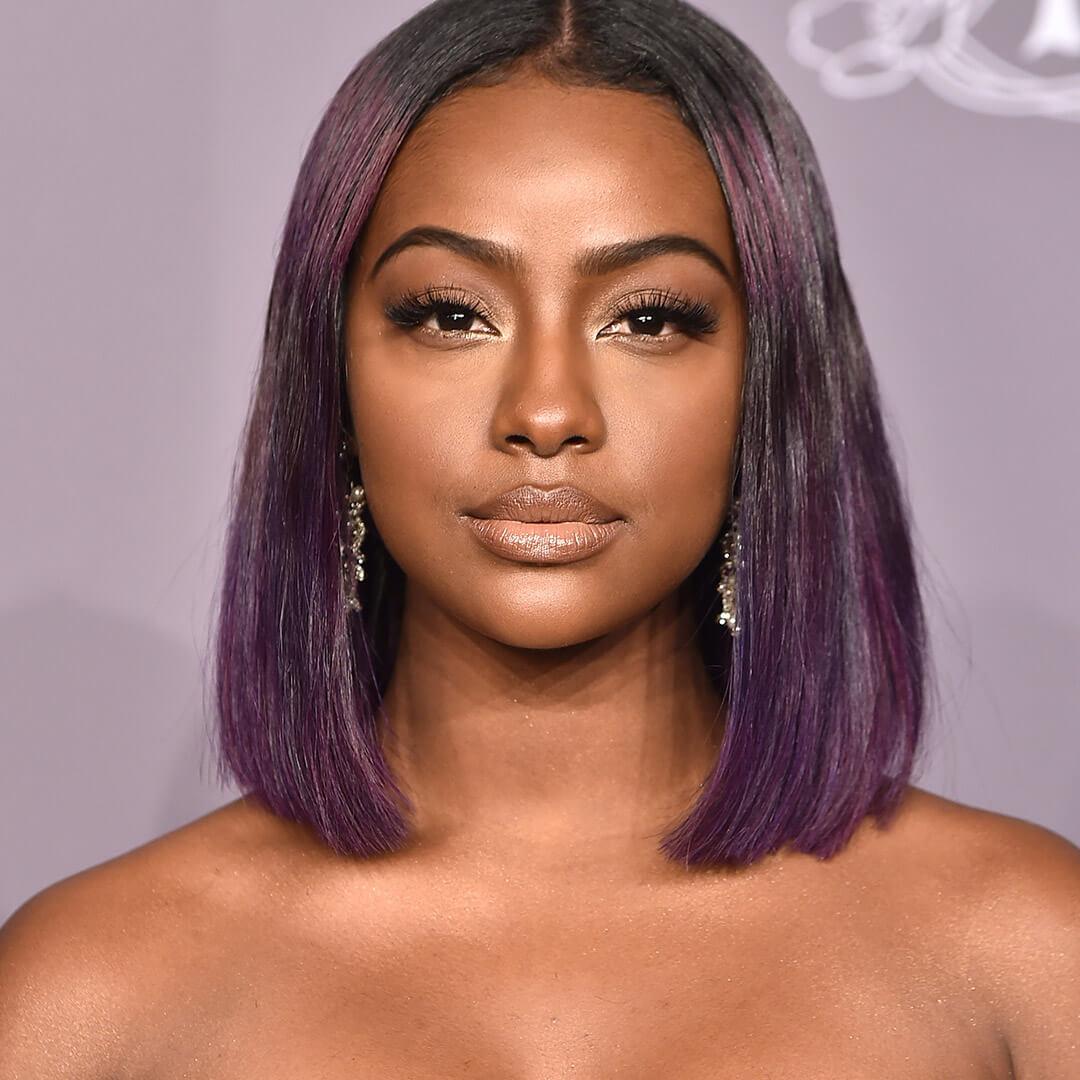
Can fine, straight hair carry purple without looking weighed down? A chin-length bob with a middle part proves yes, as long as the purple stays subtle and blended. The dark base hides any root regrowth, while the purple and pink tones read as a soft sheen rather than a block of color. The bob’s clean line and straight texture work well for elongating round faces. Ask your colorist for: chin length bob with subtle purple and pink tones. A smoothing serum keeps the ends polished, and a trim every six to eight weeks keeps the line sharp.
3. Shoulder Length Shag With Ash Purple
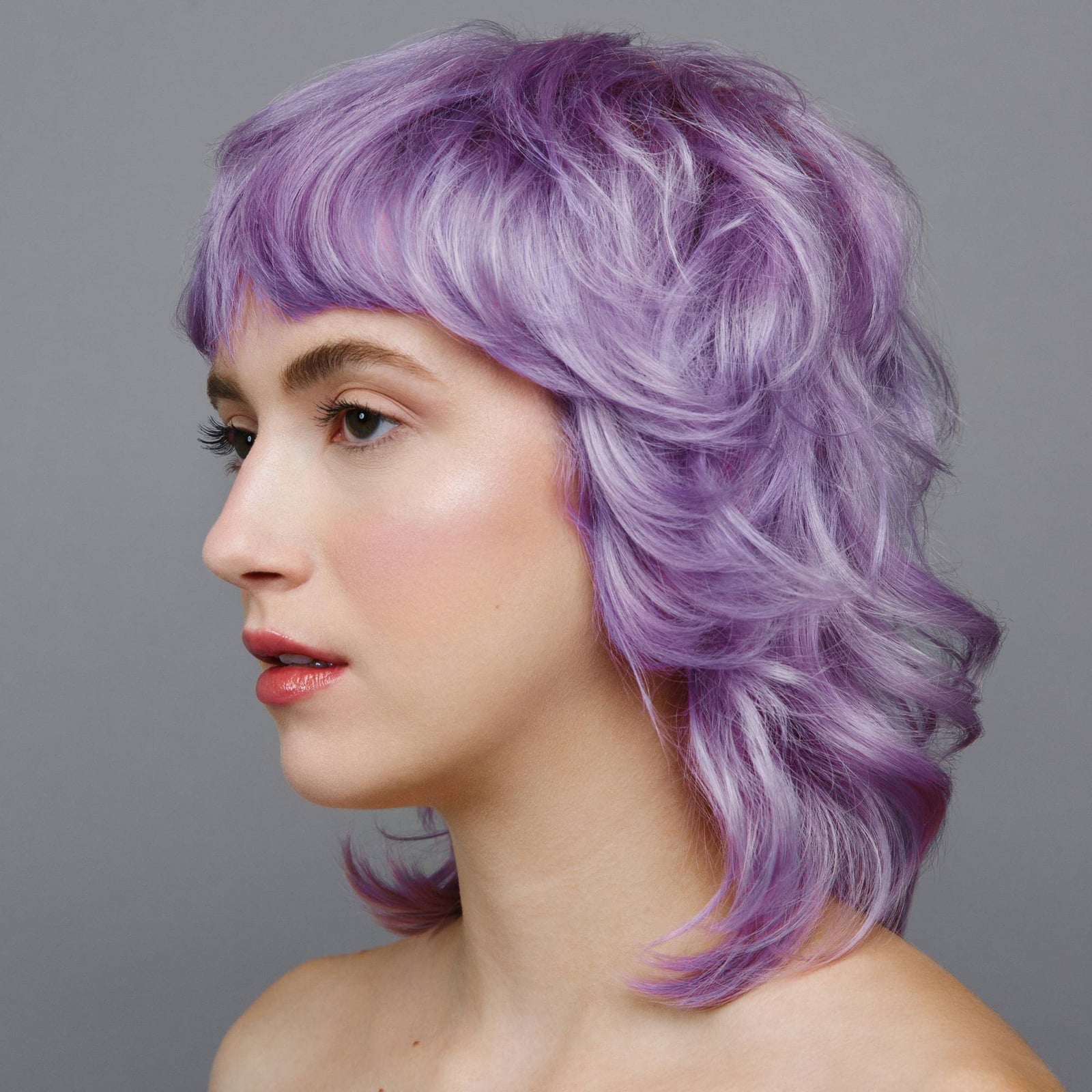
A vibrant purple shouts; an ash purple speaks in a lower register. This shoulder-length shag uses an ash purple base with lighter purple highlights, giving the cut dimension without the brightness of a true violet. The curtain bangs and soft waves keep the shag from reading as retro, while the ashy tone cools down the overall color. Medium-density, wavy hair of shoulder length works well for this cut; the curtain bangs also soften square and heart faces. Ask your colorist for: shoulder length shag with ash purple and curtain bangs. Air drying with a sea salt spray preserves the natural wave, and the shag needs a trim every eight to ten weeks.
4. Mid-Back Braids With Purple Strands
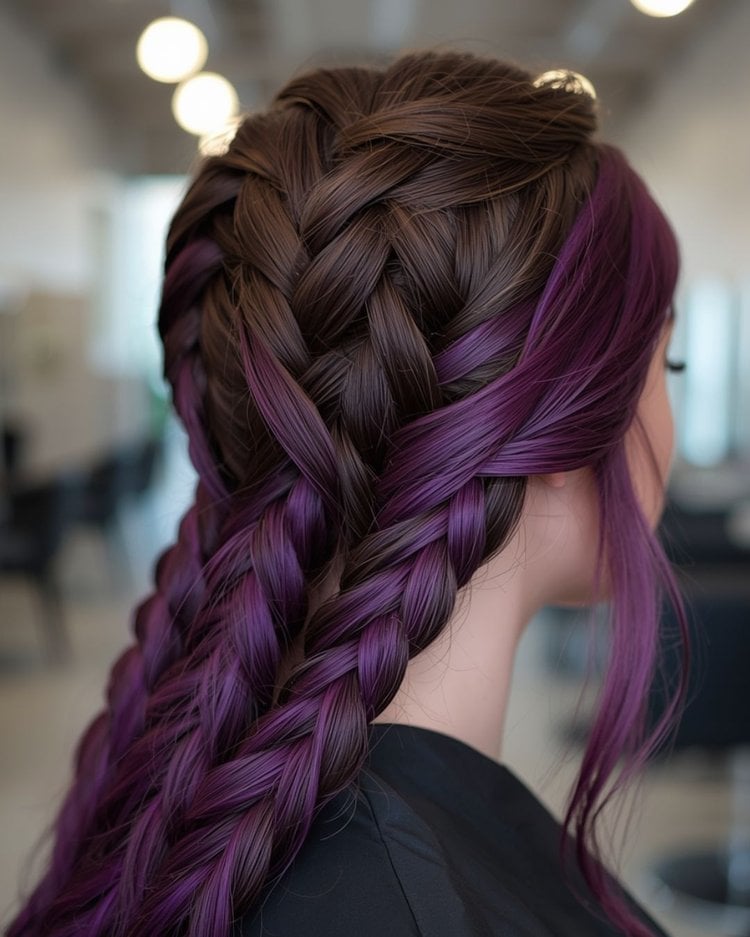
Intricate braids hide the purple until the hair moves, then the strands appear like a deliberate reveal. The dark brown base fades into the background, letting the vibrant purple woven through the braids and visible at the ends do the work. Thick, straight hair reaching mid-back holds the braid pattern cleanly, and the technique works for all face shapes. Ask your colorist for: mid-back braids with purple strands. When booking, specify that you want the color placed so it shows inside the braid, not just at the scalp. A light hairspray keeps flyaways down, and unraveling the braids carefully protects the hair from breakage.
5. Collarbone Wavy Blowout In Deep Purple
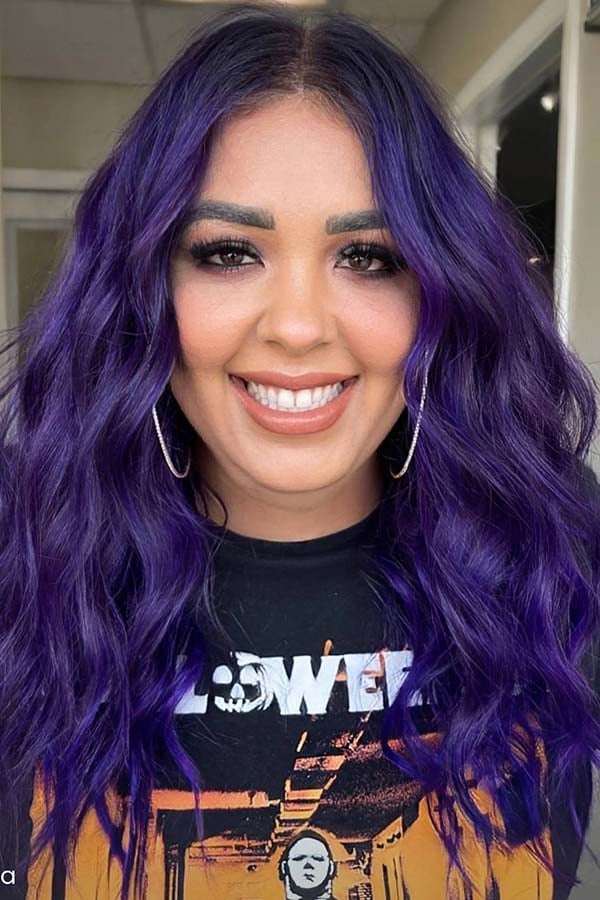
A deep purple hue with subtle lighter tones reads as rich rather than flat, especially on a wavy blowout at collarbone length. The middle part and soft waves break up the color evenly, so the lighter tones catch light without looking streaky. Thick, wavy hair at this length holds the wave pattern well, and the deep shade hides root growth for about three weeks before the contrast becomes noticeable. Ask your colorist for: collarbone wavy blowout in deep purple. A volumizing mousse before blow-drying gives the roots lift, and a trim every six to eight weeks keeps the ends healthy.
6. Collarbone Bob With Vivid Purple And Pink
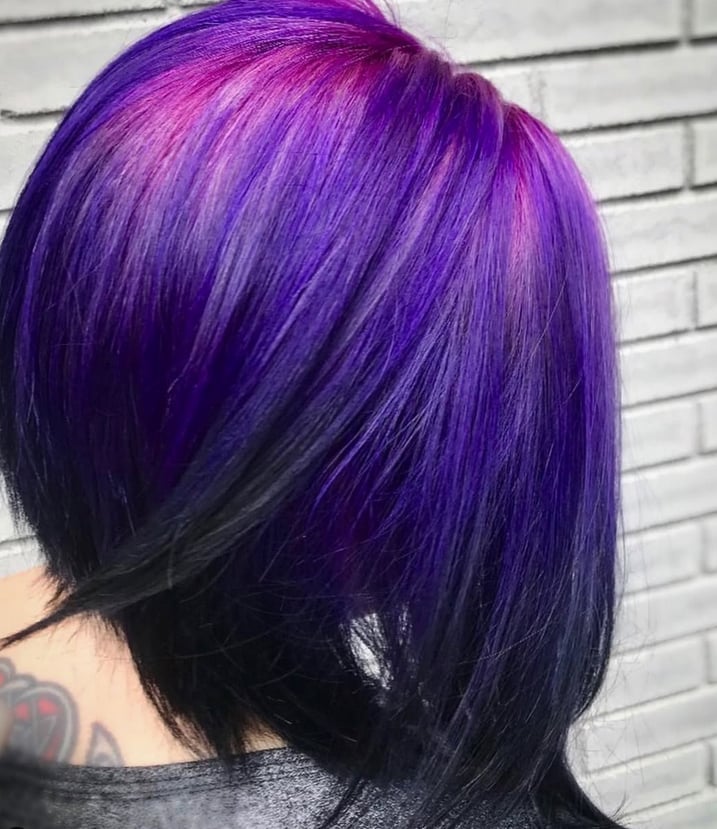
Can a bob do vivid purple, pink highlights and black roots without looking like a costume? Yes, but it takes a colorist who understands placement. The back view here shows a collarbone bob cut on thick, straight hair, with the pink concentrated near the crown so it adds dimension instead of sitting flat against the purple. Ask your colorist for: collarbone bob with vivid purple and pink highlights. Here is the trade-off: the pink will fade fastest, and the black roots need a touch-up every four to five weeks to keep the contrast sharp. Use a color-depositing conditioner weekly to stretch the vibrancy. A trim every six to eight weeks keeps the bob line clean.
7. Mid-Back Waves With Purple Money Piece
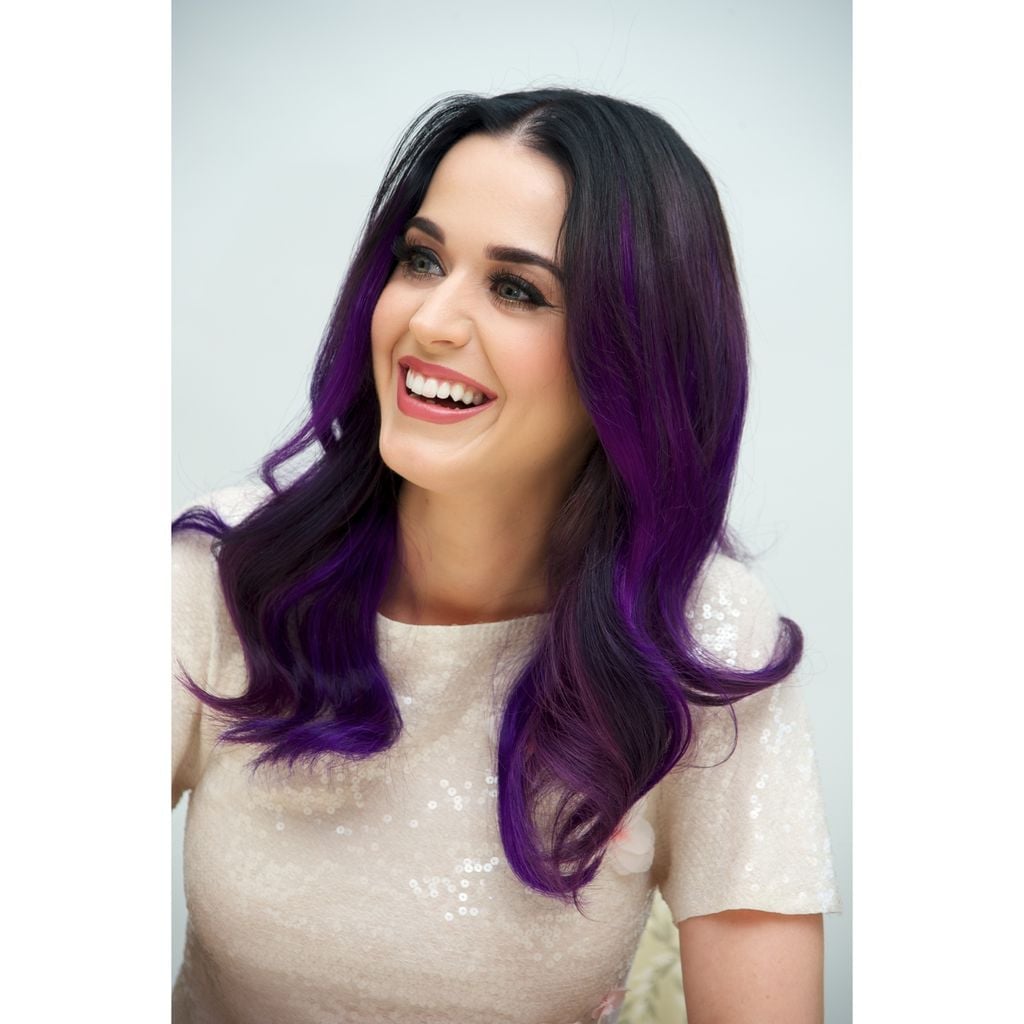
The money piece is the shortest distance between a dark base and a purple statement. Here the colorist painted freehand sections at the front hairline, then balayaged the violet into the mid-lengths, keeping the back subtler. Thick, wavy hair at mid-back length holds that separation well; a side part lets the money piece fall where it catches the most light. Ask your colorist for: mid-back waves with purple highlights and money piece.
The technique relies on a dark base to anchor the vivid pieces, so the grow-out looks planned. The front sections will need a toning gloss every four to six weeks to stay cool-toned. A styling cream on damp hair defines the waves without weighing them down. Trim every eight to ten weeks.
8. Mid-Back Wavy Blowout In Uniform Vivid Purple
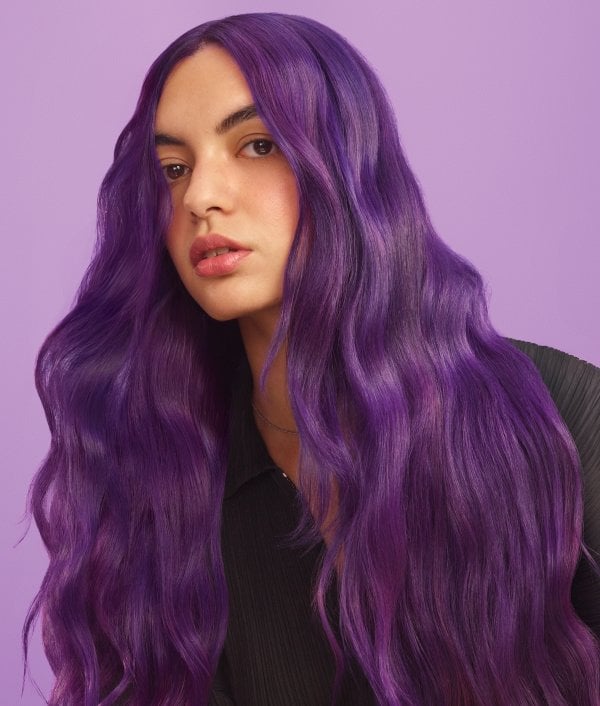
Uniform vivid purple on thick, wavy hair is a commitment: every strand is the same shade, so the condition has to be consistent from root to tip. A middle part and a smooth blowout with soft waves let the color show a glossy finish. Ask your colorist for: mid-back uniform vivid purple blowout.
This density of color works best on hair that has been pre-lightened to a pale blonde, then filled with violet pigment. The payoff is a saturated, mirror-like shine that thin hair or porous ends cannot produce. Use a color-safe shampoo and conditioner; hot water strips the tone fastest. Trim every eight to ten weeks to prevent the ends from looking washed out.
9. Shoulder Length Curls With Purple Tips
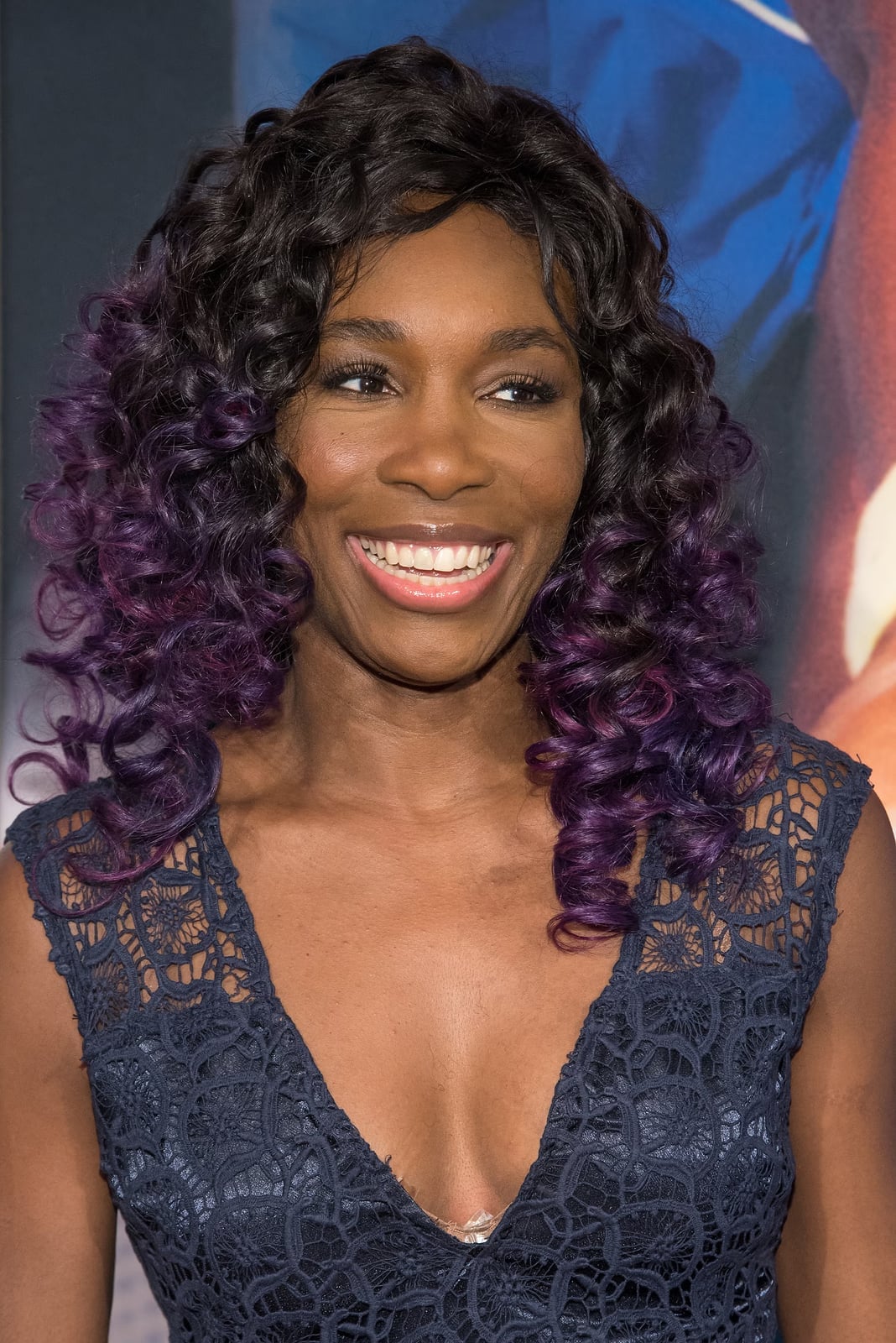
When is a dip-dye not a throwback? When the base is a deep, cool dark purple and the ends lift to a lighter violet that catches the curl pattern. The transition here starts around the chin, leaving the roots dimensional and the tips playful. Thick, wavy hair at shoulder length gives the color enough room to travel through the spiral. Ask your colorist for: shoulder length curls with purple tips. This is a solid choice for festival season or a casual summer wedding where you want color without a full-head lift. A curl-defining cream on damp hair encourages the shape. Trim every six to eight weeks.
10. Shoulder Curls With Dark Purple And Lighter Streaks
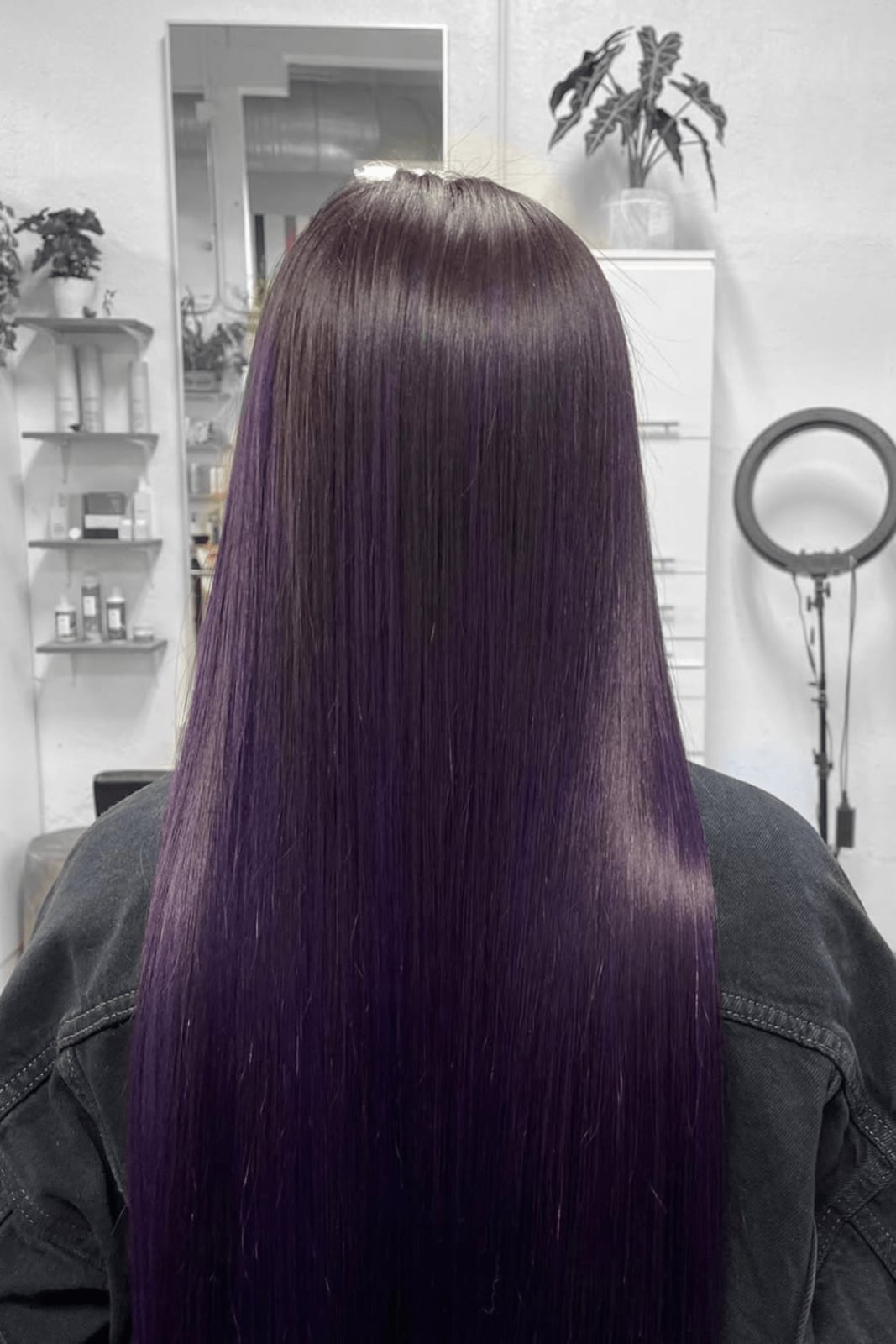
On shoulder-length curls, those lighter pieces create visible dimension from different angles, so the color appears layered even when the hair is dry. Thick, wavy texture helps the streaks sit naturally without looking painted on. Ask your colorist for: shoulder length curls with dark purple and lighter streaks. The darker base means the grow-out is soft, not stripey. A curl-defining cream and low heat preserve the shape. Trim every six to eight weeks to keep the ends looking neat.
11. Shoulder Wavy Style With Purple And Red
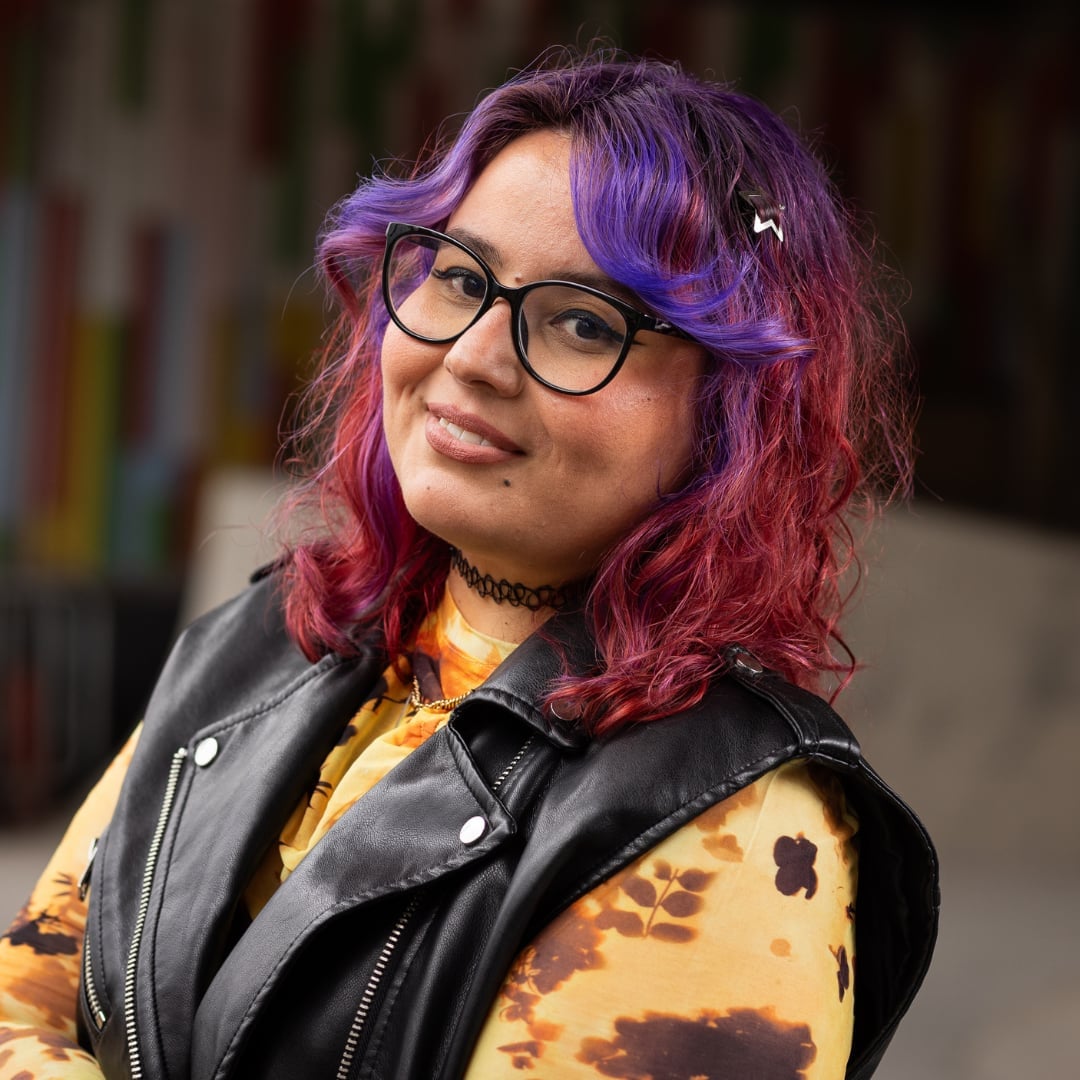
Purple and red together can look bold, but a side part and dark roots keep this shoulder-length wavy blend grounded. The vivid purple sits on top, while the red takes over toward the ends, creating a gradient that works better on medium-density wavy hair than on anything fine. Side-parted waves soften angular faces, which is useful since the color already does enough work. Ask your colorist for: shoulder length wavy style with purple and red blend. A color-safe shampoo and conditioner are essential here; plan on a trim every six to eight weeks to keep the shape clean while the color does the talking.
This version avoids the flat look that a single tone can give shoulder-length hair. The two shades add depth, and the visible regrowth looks natural rather than neglected. The dark roots buy you a few extra weeks between touch-ups.
12. Mid-Back Air Dried With Pink And Purple Highlights
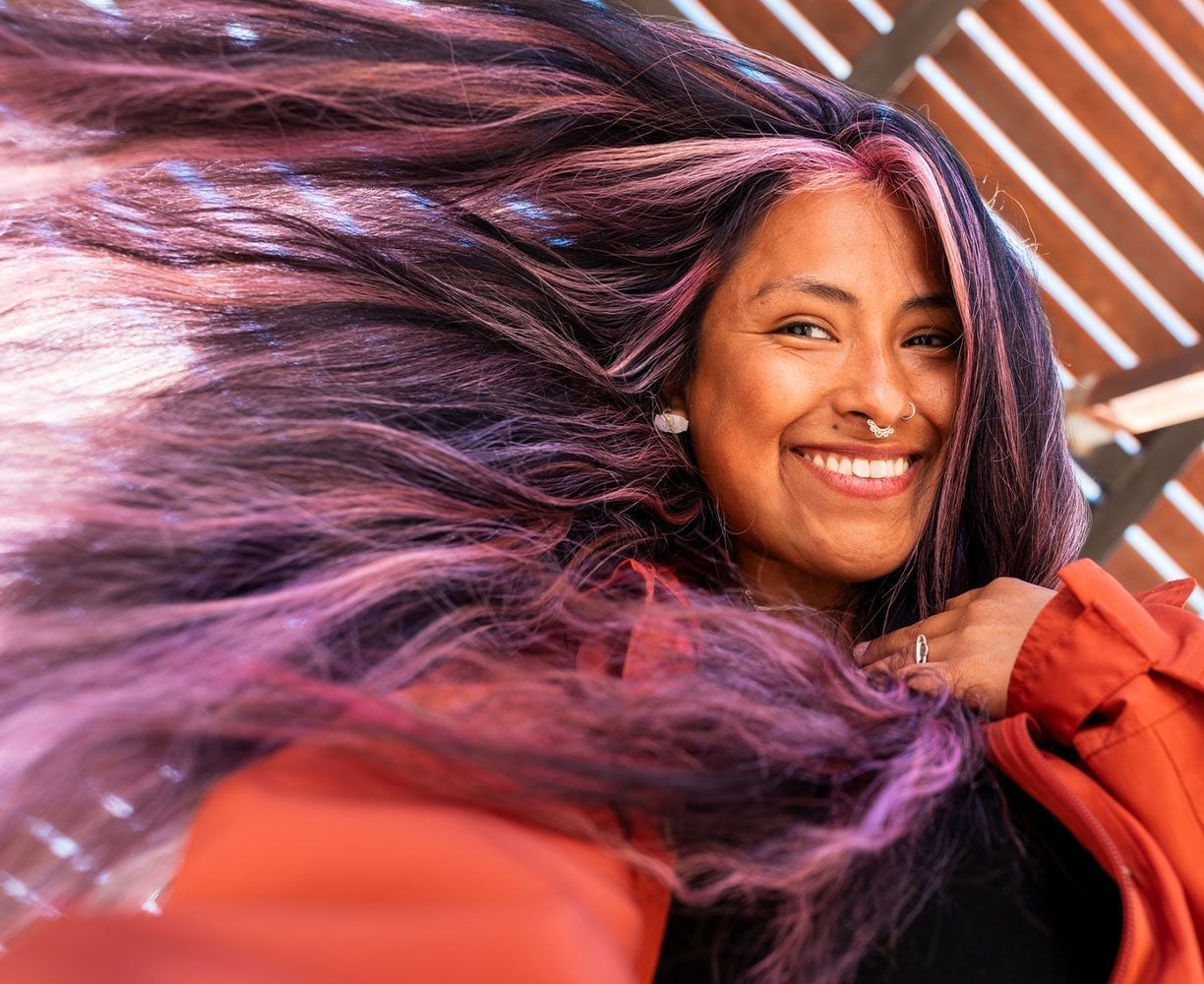
Pink and purple highlights on a dark base need a specific kind of neglect to look right, and air-dried texture provides it. The mid-back length is thick and wavy, with a middle part that lets the vibrant strands fall naturally. This style suits anyone with thick, wavy hair who wants a low-heat routine; the highlights pop against the dark base without requiring a blowout. Ask your colorist for: mid-back air dried with pink and purple highlights. A leave-in conditioner encourages the natural wave pattern, and a trim every eight to ten weeks prevents the ends from looking stringy against the dark base.
Upkeep is about refreshing the highlights, not the roots. The dark base grows out invisibly, which makes this a realistic choice for someone who doesn’t want to live in the salon chair. Just be prepared for the pink and purple to fade faster than the base, so a color-depositing shampoo is a useful addition to the routine.
13. Mid-Back Loose Waves With Pastel Blend
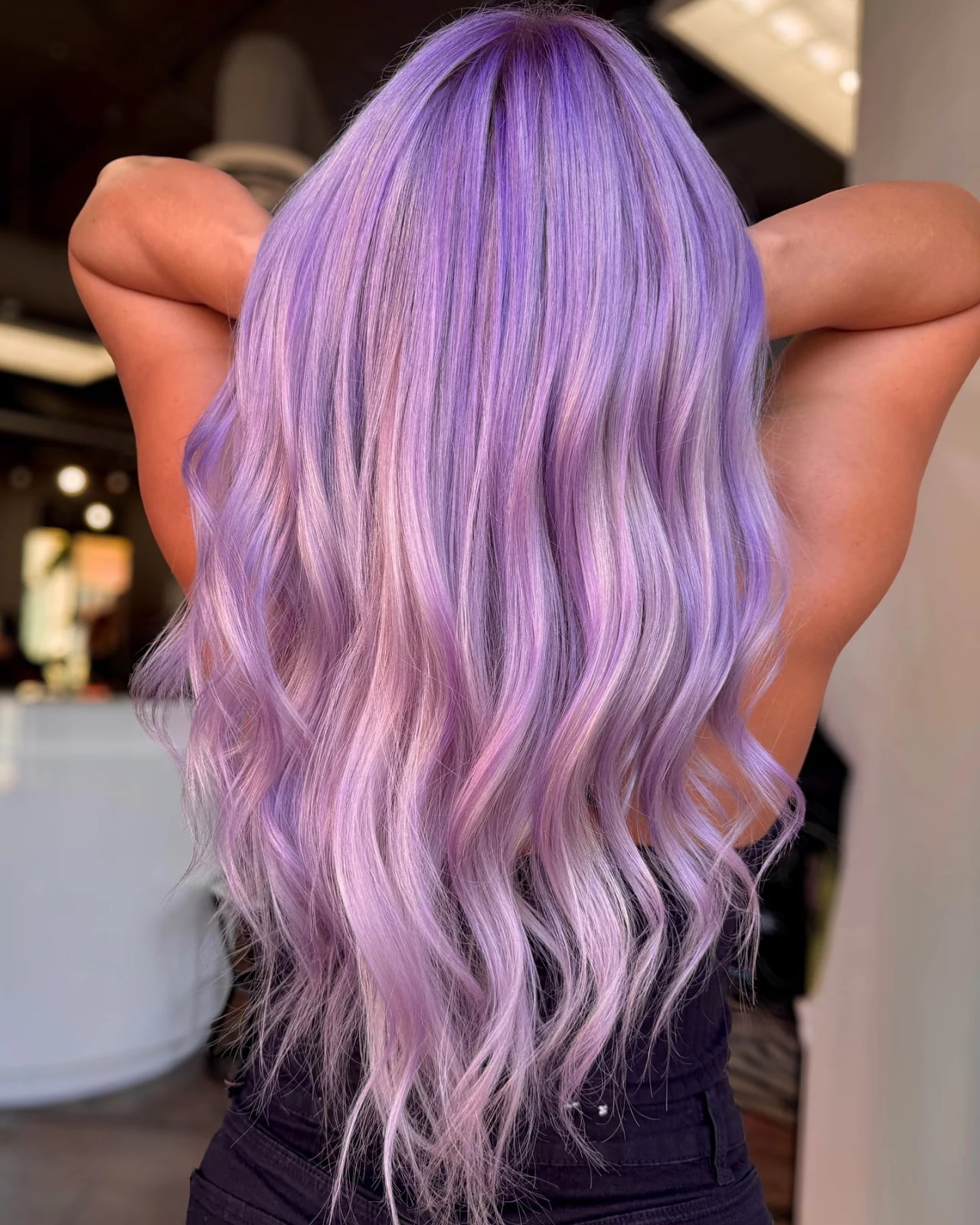
A light blonde base is the only reliable canvas for a pastel lavender and pink blend, and this mid-back length proves why. The fine, wavy texture takes the loose waves well, with a middle part that lets the subtle tones shift from lavender at the root to pink through the mid-lengths. The technique requires lifting the hair to a very pale blonde before applying the pastel shades, which means a full day in the salon. Ask your colorist for: mid-back loose waves with pastel lavender and pink blend. This works best on fine to medium wavy hair that can hold a wave without heavy product; the pastel tones are delicate, so a purple-toned shampoo is necessary every second wash to keep brassiness away. A texturizing spray adds grip without weighing down the fine strands.
14. Collarbone Layers With Purple Magenta Balayage
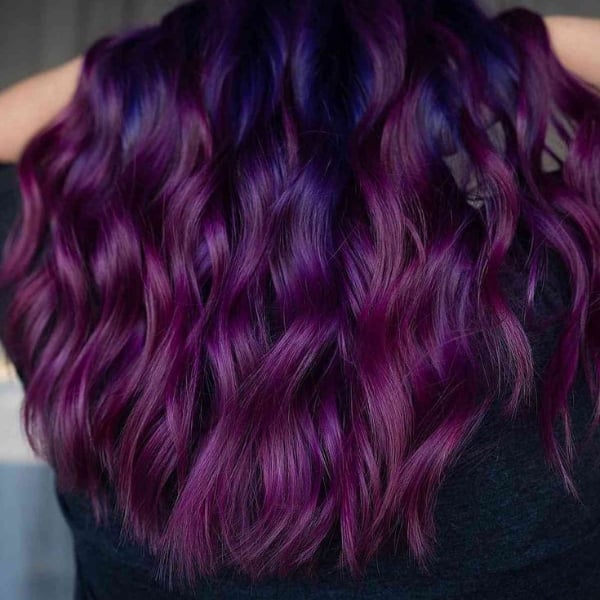
How do you ask for a color that shifts from dark roots to vivid purple and magenta without looking like a Halloween wig? The answer is balayage, which paints the lighter tones onto the surface of the hair instead of saturating every strand. This collarbone-length cut uses soft, wavy layers and a middle part to show off the gradient, and the thick texture keeps the vivid tones from looking flat. Ask your colorist for: collarbone layers with purple and magenta balayage. The dark roots create depth and make the grow-out period longer than a root-to-end application would. A sulfate-free shampoo preserves the balayage, and a trim every six to eight weeks maintains the layered shape that lets the color breathe. The technique works best on thick, wavy hair with enough density to carry the transition.
15. Mid-Back Waves In Rich Multi-Dimensional Purple
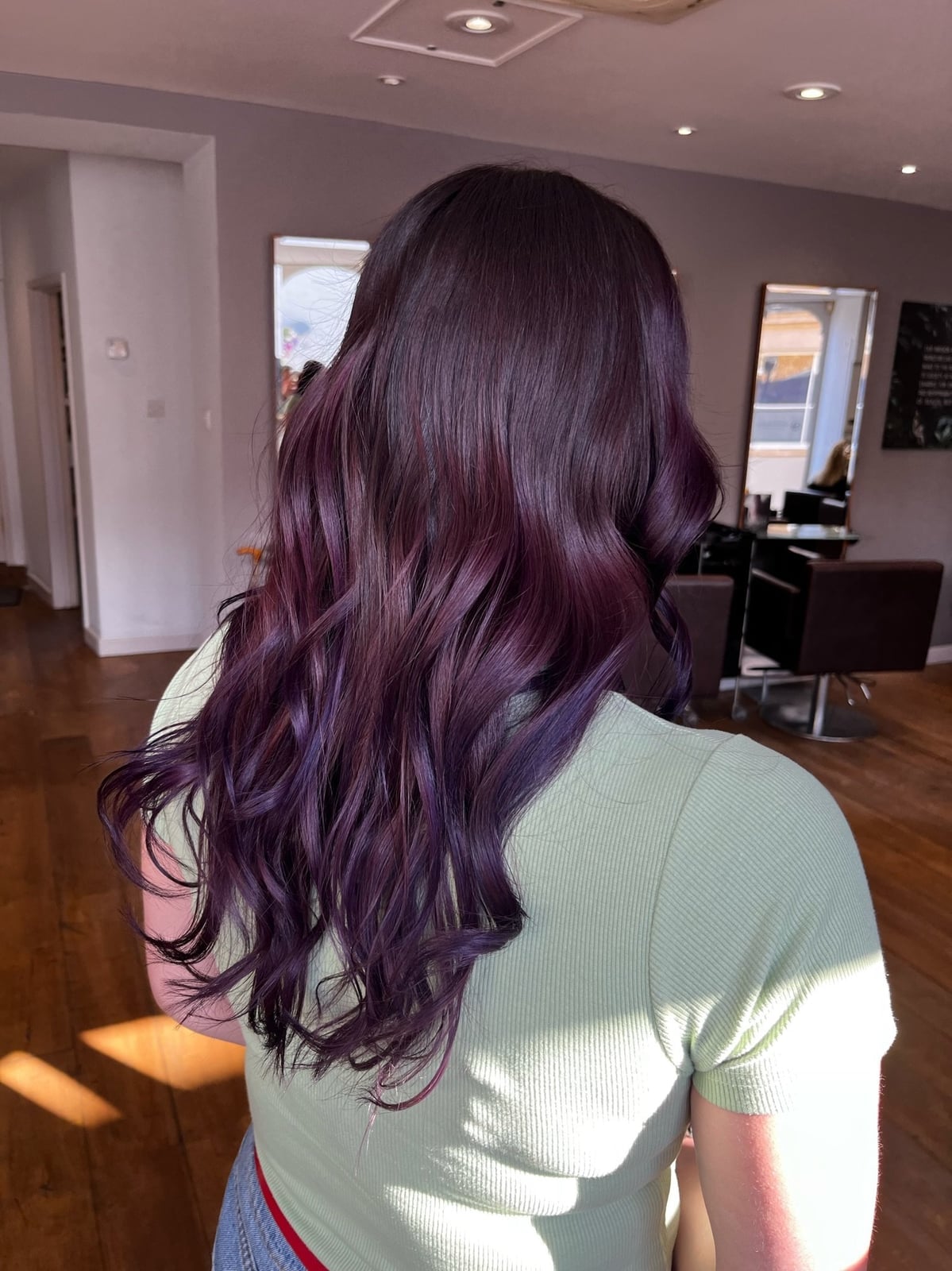
Multi-dimensional purple is a color technique where violet highlights catch light differently than the deep base. This mid-back length uses a dark root that graduates into rich purple tones, with lighter violet pieces scattered through the ends. The thick, wavy texture and loose waves give the color somewhere to live, and a middle part keeps the distribution even. Ask your colorist for: mid-back waves in rich multi-dimensional purple. Multi-dimensional color fades unevenly: the violet highlights go first, leaving the deeper purple as the dominant shade. A weekly color-depositing mask helps, but anyone who wants a uniform fade should pick a single tone instead. A trim every eight to ten weeks keeps the ends healthy enough to hold the lighter pieces without looking frayed.
16. Mid-Back Straight Blowout With Plum Gradient
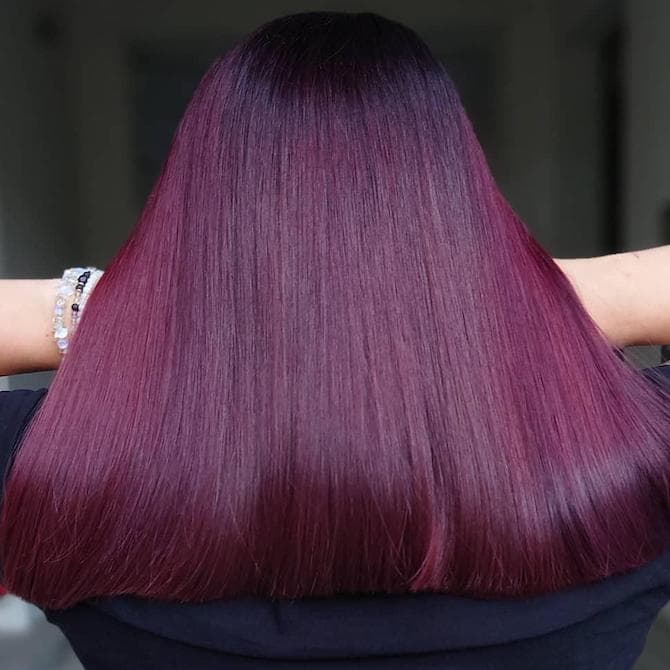
A gradient that starts dark at the roots and lands somewhere between plum and burgundy does two jobs at once: it hides the root line and gives mid-back length a depth that a single flat shade cannot. On thick, straight hair the color is a smooth vertical wash, and a middle part splits it cleanly down the back.
Ask your colorist for: mid-back straight blowout with plum to burgundy gradient. The grow-out is the part nobody warns you about. Dark roots stretch the life of the shade by about six weeks, then the plum fades first and the burgundy hangs on, so the ends drift warmer than the mid-lengths. A gloss treatment every six to eight weeks pulls them back together. A shine serum on damp hair keeps the blowout glossy, and a trim every eight to ten weeks stops thin ends from breaking the line.
17. Mid-Back Wavy Style With Lavender Pink Gradient
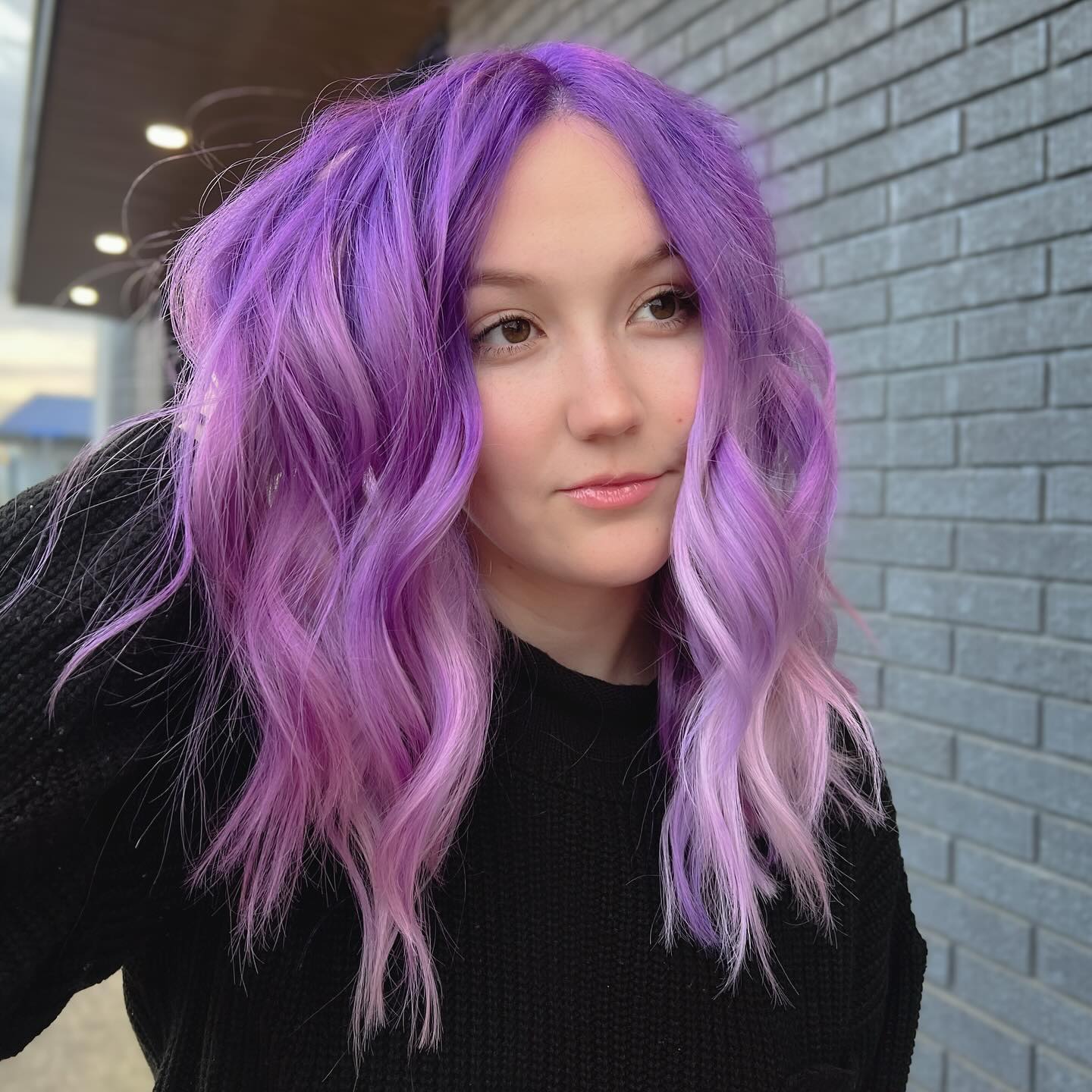
Can a pastel gradient survive a humid July? Outdoors, yes, with the right routine. Lavender at the roots melting into soft pink at the ends is the kind of color that suits spring and summer light, and loose waves on mid-back length keep the transition visible instead of hidden in a straight fall.
Ask your colorist for: mid-back wavy style with lavender to pink gradient. Medium-density waves hold the shape without looking set, which makes this a good fit for warm-weather events and long days outside. Pastels are the first thing sun and chlorine strip, so a color-safe wash and a hat at the pool buy you time between appointments. A texturizing spray on damp hair gives the waves grip, and a trim every eight to ten weeks keeps the pink ends from looking frayed.
18. Mid-Back Wavy Hair With Rainbow Streaks
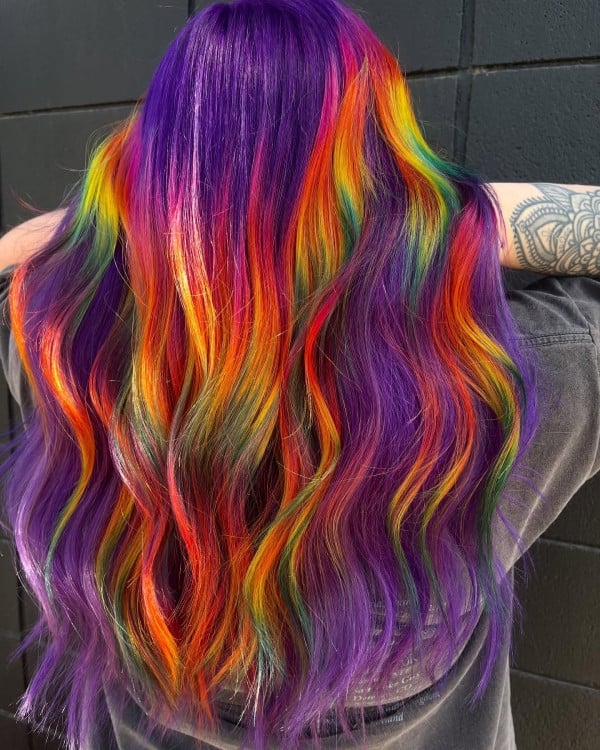
Rainbow streaks on a purple base are a placement problem before they are a color problem. Each streak is sectioned and lightened on its own, then toned separately, because yellow, green and blue need different lift levels to sit cleanly against purple. On thick, wavy mid-back hair the streaks scatter through the layers and only show in full when the hair moves.
Ask your colorist for: mid-back wavy hair with rainbow streaks. Book a long appointment: this is slow, detailed work, and the purple base has to be laid in first so the streaks stay distinct.
19. Mid-Back Waves With Ombré Pastel Purple
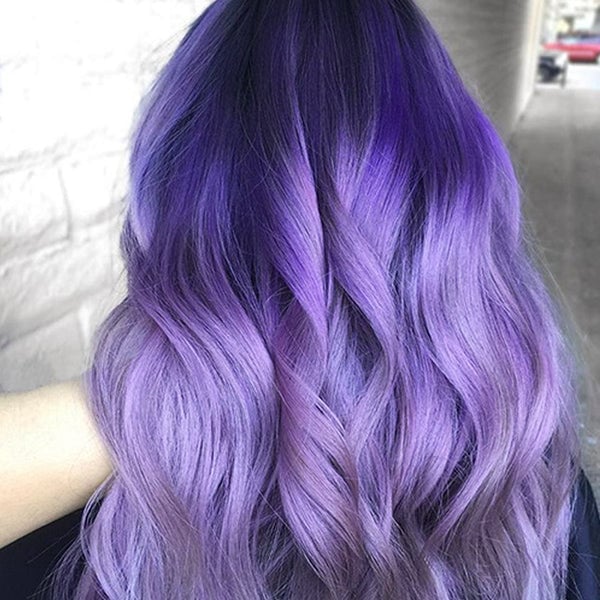
An ombré that runs from dark purple at the roots to a pastel purple through the ends needs density to work. On thick, wavy mid-back hair the layers separate the two tones, so the gradient shows in every bend instead of pooling into one flat block of color. Fine hair tends to lose the soft end of the pastel entirely, and the whole thing collapses into a single mid-tone.
Ask your colorist for: mid-back waves with pastel purple ombré. Straight, blunt cuts are the other poor match: without layers, the ombré turns into a hard horizontal band. Wavy texture does the blending for you. A color-depositing mask once a week keeps the pastel from sliding toward gray, and a trim every eight to ten weeks holds the shape the gradient depends on.
20. Edgy Buzz Cut With Vibrant Purple And Glitter
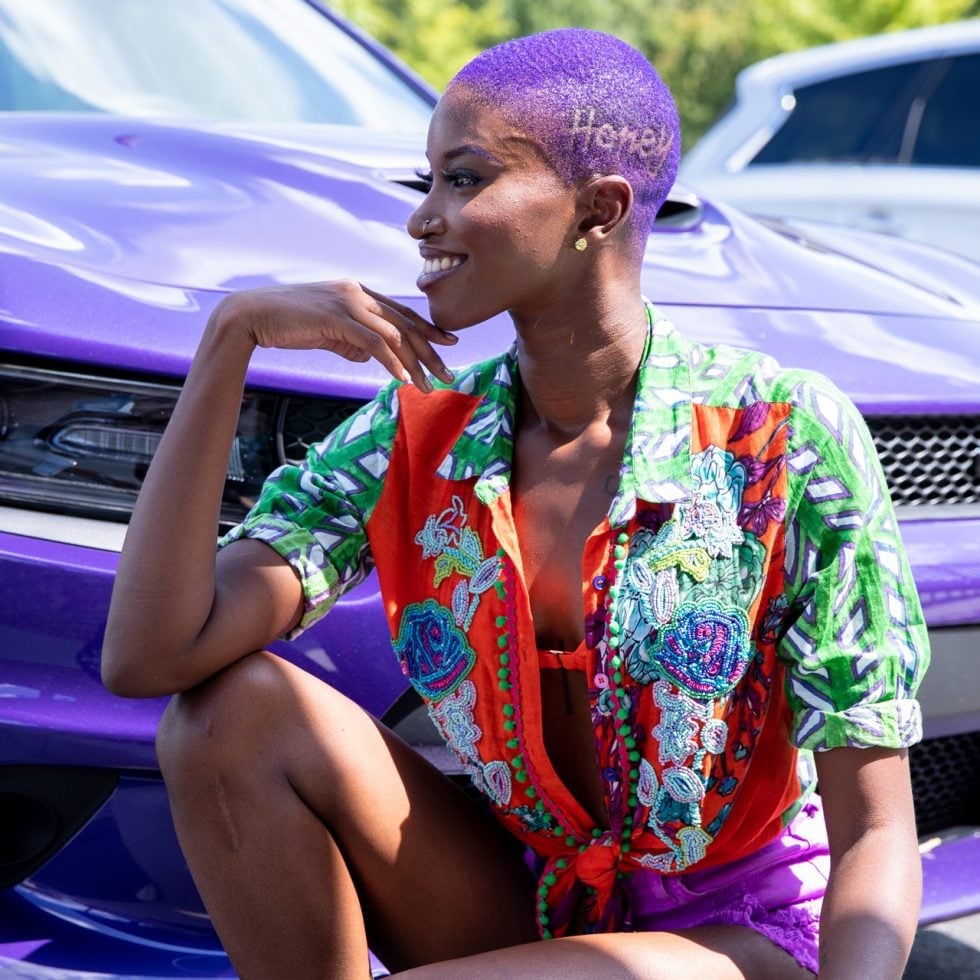
Can you get vibrant purple with glitter at home? The glitter, yes. The purple, only if the cut is already lightened and you are refreshing a shade that is already there. A buzz cut is short enough that a direct dye takes fast and shows every patchy spot, so a first full application belongs in a salon. Ask your colorist for: vibrant purple buzz cut with glitter. At home, slick it back with strong hold gel and press fine glitter into the top while it is still tacky. Plan on a touch-up every two to four weeks.
21. Final Thoughts
For a low-maintenance purple, ask for subtle highlights or a balayage on a dark base: the root line stays soft and the tone fades without a hard edge. For high impact, go vivid and uniform, and budget the toning appointments that keep it there. Fine hair holds a single-process shade better than stacked layers. Round faces do well with length below the chin and a middle part; square faces soften with layers around the jaw.
- Use a color-depositing conditioner every one to two weeks.
- Wash with color-safe shampoo and cool water.
- Limit heat styling and always use a heat protectant.
- Book a root touch-up every four to eight weeks.
- Tone at week six, not week ten.
Find your perfect purple hue and wear it with confidence.

