
Copper is having a moment, and the modern version is richer and more dimensional than the flat ginger of seasons past. The shift shows up in lived-in color, soft face-framing layers and curtain bangs that move with the hair instead of sitting on top of it.
What follows is 16 takes on Trendy Copper Hair, from chin-length bobs to mid-back balayage, with color techniques that range from all-over gloss to subtle highlights blended into a darker base. Fine hair that falls flat, a grow-out line you can see from across the room, a fringe that refuses to sit: each one gets a concrete fix here, plus who the shade and shape actually suit.
1. Textured Copper Lob With Balayage Highlights
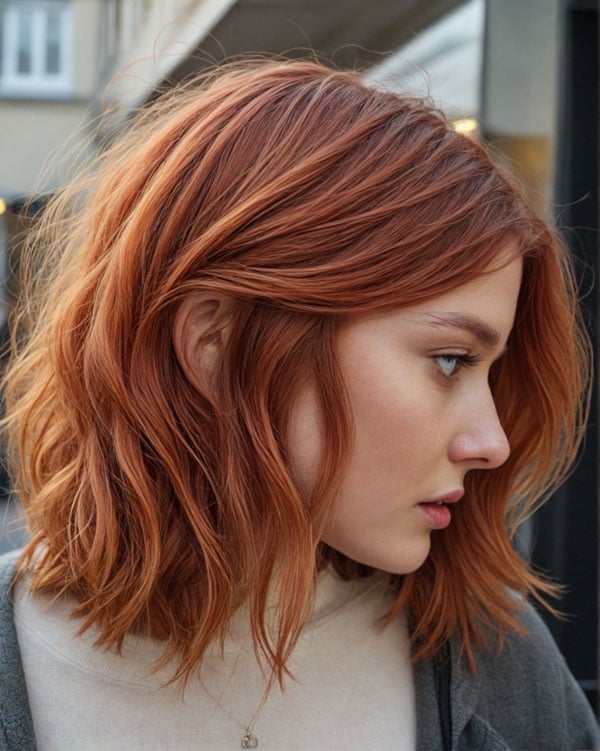
The clever part of this lob is how the balayage does the work without announcing itself. A vibrant copper base gets lighter copper pieces painted through the ends, so the color shifts subtly as the air-dried waves move. This is a lived-in effect that grows out soft, which makes it a forgiving choice for anyone who does not live at the salon. Ask your colorist for a collarbone length lob, vibrant copper with lighter copper balayage, textured and air-dried finish. Medium density hair takes the wave best, and the side parting keeps the weight off the face. A sea salt spray encourages the tousle, and a trim every six to eight weeks keeps the ends from splitting.
2. Collarbone Copper With Soft Curtain Bangs

Wondering if copper works on fine, straight hair? It does, provided the cut gives the color room to shine. This collarbone length cut uses a uniform copper shade that reflects light evenly, and the smooth blowout makes the most of a fine texture that can fall flat. The soft curtain bangs, parted in the middle, break up the length without sacrificing the sleek finish.
This color reads polished with zero effort, which is the point. Ask your colorist for collarbone length copper, soft curtain bangs, middle part. The bangs frame most face shapes, though round faces get the most elongation from the center part. A round brush directs the bangs forward while drying, and a trim every six weeks keeps the shape honest.
3. Chin Length Bob With Wispy Bangs In Copper

The chin length bob gets a modern update with short, wispy bangs that let the vibrant copper shade do the talking. The middle part and glossy finish emphasize the color, which is a true, intense copper with no hint of brown. Ask your colorist for: a chin length bob, vibrant copper all-over, short wispy bangs. This cut suits fine hair that can hold a soft wave, and the wispy bangs soften the angles of a square or oval face. The bangs are the part that needs attention: a smoothing serum tames flyaways, and a trim every four to six weeks keeps them a defined shape.
4. Copper Bob With Blunt Bangs
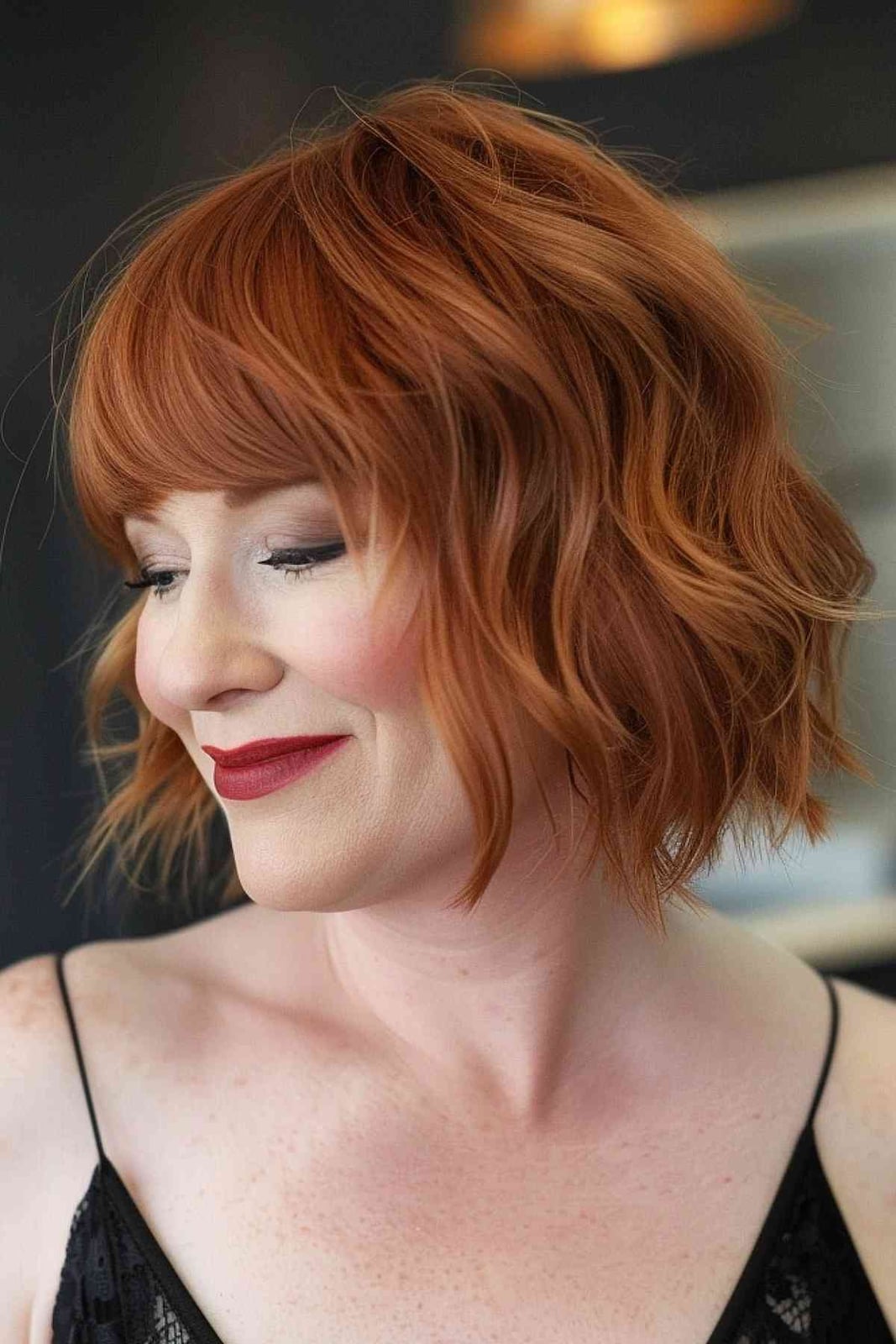
Where a wispy bang whispers, a blunt bang states its business. This chin length bob pairs a rich, uniform copper with blunt bangs that cut straight across, and the soft waves keep it from feeling severe. It is the bolder cousin of the softer styles, and it suits medium density hair that can carry the weight of the cut. Ask your colorist for a chin length bob, blunt bangs, rich copper. Oval and heart shaped faces take the blunt bang best, since it balances a narrower chin. The waves need a texturizing spray to hold their shape, and a trim every four to six weeks is non-negotiable, because blunt bangs show every millimeter of grow-out.
5. Ginger Copper Lob With Curtain Bangs
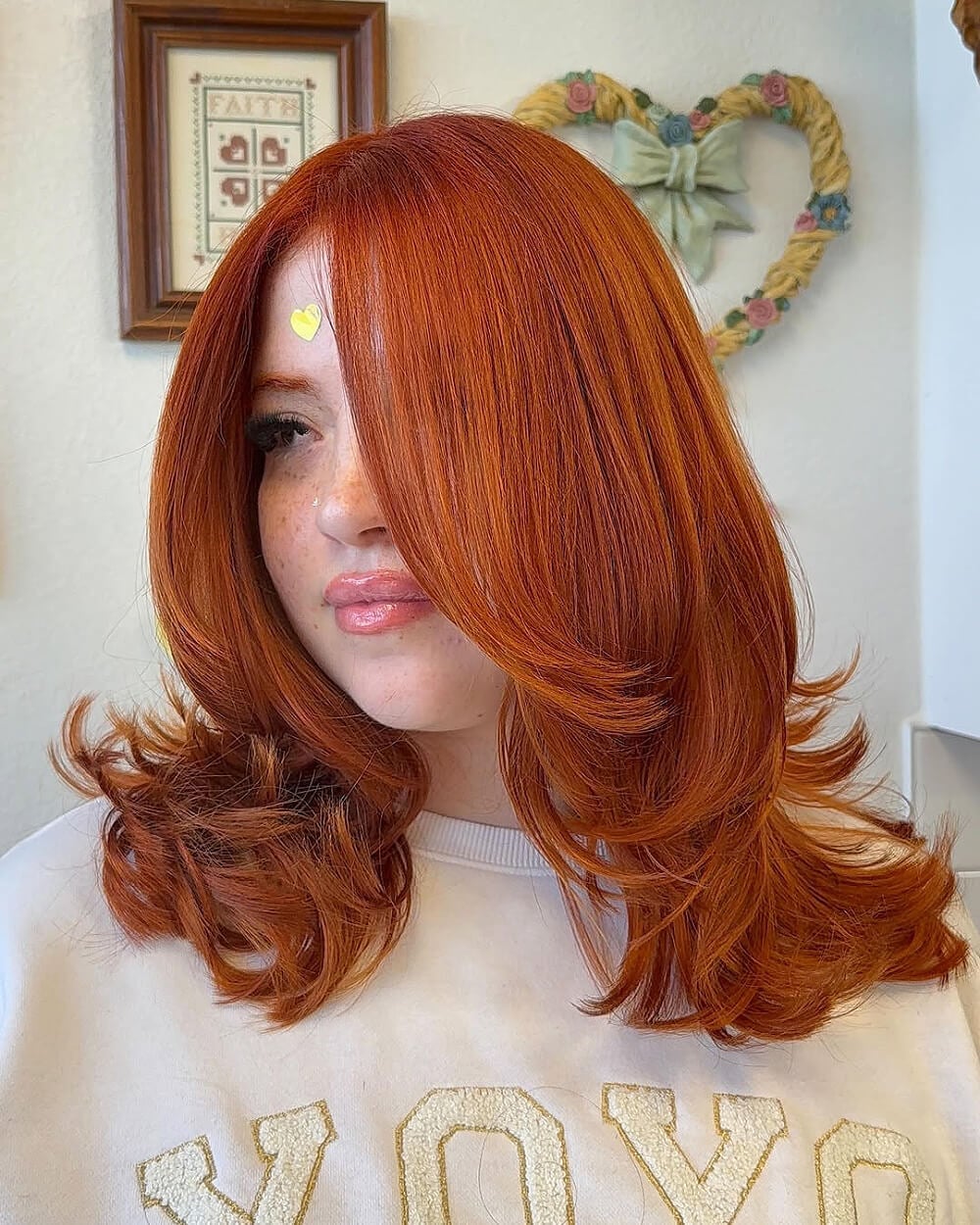
The ginger copper shade here is warmer and more red than a classic copper, and on fine, wavy hair it lands somewhere between lived-in and deliberate. The collarbone length layers are cut to move, and the curtain bangs frame the face without demanding a daily flat iron. This is a wash-and-go color if you let it air dry, but the waves need a texturizing spray to keep their shape past lunch.
The honest drawback: ginger copper fades faster than deeper coppers, so a color-depositing conditioner every few washes helps between salon visits. Ask your colorist for a collarbone length layered cut, ginger copper, curtain bangs. The curtain bangs soften round and square faces, and a trim every four weeks keeps them from grazing your cheekbones in a way you did not plan.
6. Copper And Blonde Highlighted Lob

A collarbone lob with face-framing layers gets its depth from two colors placed in sequence, not blended into one flat mix. The stylist lays a copper base first, then weaves blonde highlights through the top and front so the lighter pieces land where the layers move. That order matters: blonde over copper reads warmer than blonde placed on its own, and the contrast shows most on a blowout with loose waves. Ask your colorist for: copper and blonde highlights, collarbone layered cut. Medium density hair holds the distinction between the two tones without either one swallowing the other. Tone the highlights every eight weeks, because blonde on a warm base drifts brassy faster than a single-process copper. The layering keeps the grow-out soft, so a cut every ten weeks is enough to keep the collarbone line sharp.
7. Collarbone Copper Bob With Lighter Highlights
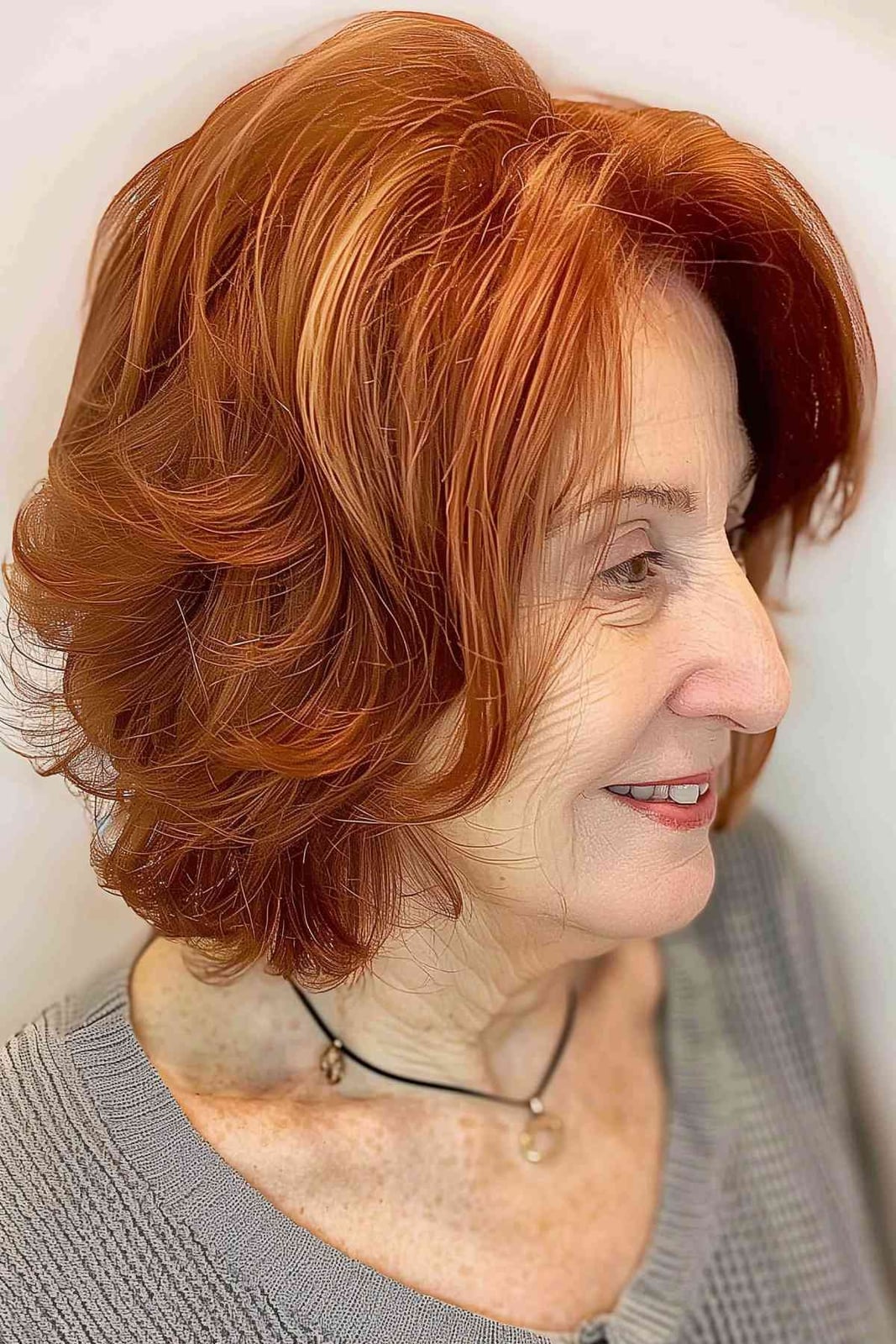
How long does a copper bob with highlights actually hold before it needs work? Plan on two to three hours in the chair for the initial color and cut, then a return visit every six to eight weeks. The lighter copper pieces sit close to the base shade, so the root line stays forgiving and the grow-out looks intentional for the first month. Thick, wavy hair at collarbone length carries the subtle dimension without the highlights reading as stripes, and a side part lets the front pieces do the work. Ask your colorist for: subtle lighter copper highlights, side part. A round-brush blowout smooths the wave into soft bends, and a trim every six to eight weeks keeps the bob from collapsing into a mushroom at the ends. The lighter pieces fade first, so a gloss between color appointments keeps the tone even.
8. Shoulder Length Natural Copper

Skip it if your texture is very curly and you wear it defined, since a single copper tone on tight coils can look heavier than the same shade broken up with highlights. The upkeep is the easy part: a leave-in conditioner for shine, a trim every eight weeks, and a gloss every six to eight weeks to keep the copper from sliding toward orange. Air drying takes the styling time down to a few minutes with a towel and a leave-in, no round brush required.
9. Shoulder Length Shag With Curly Bangs
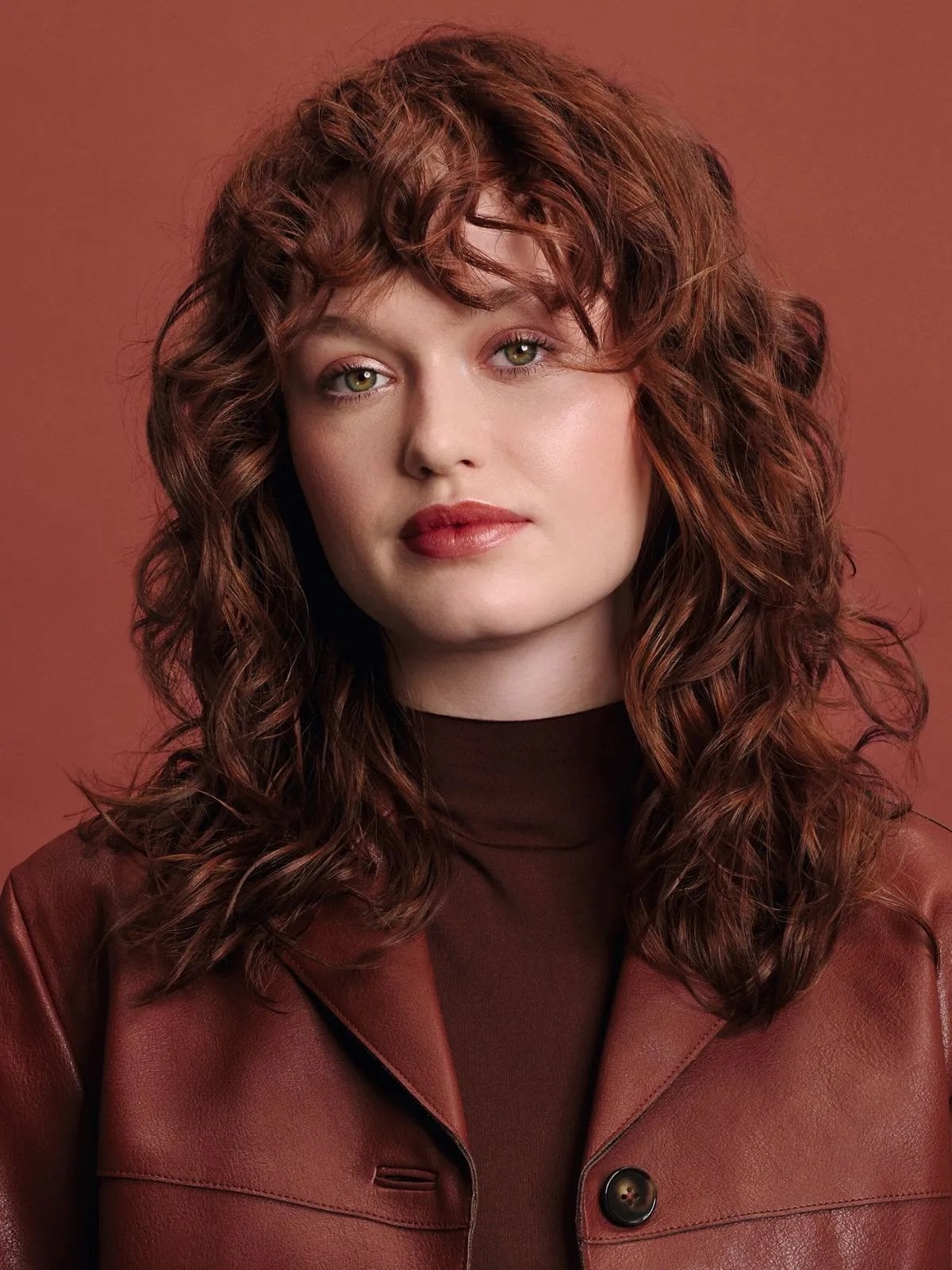
What does a curly shag want from the calendar? Cooler months, mostly, when the defined curls and curly bangs hold their shape without humidity turning them into a cloud. The shoulder-length cut with layers through the crown and sides gives medium-density curls room to spring, and the warm copper tone reads richer against winter light than it does in July. Ask your stylist for: shoulder length shag, defined curls, curly bangs. Curly bangs suit most face shapes because they sit soft and broken rather than flat across the forehead. A curl cream and a diffuser get the definition, and a trim every six to eight weeks keeps the shag from growing into a pyramid. It works for a party, a show, or any setting where the hair is meant to be noticed before you say a word.
10. Shoulder Curly Hair With Copper Highlights
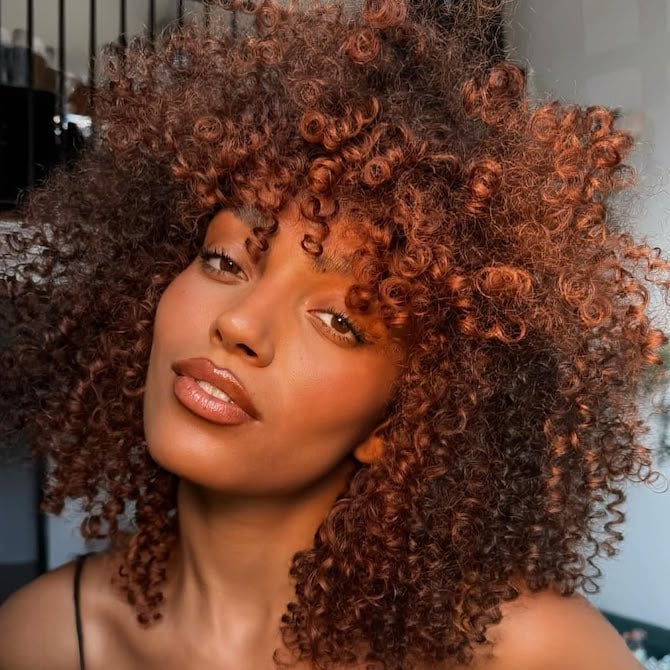
A dark brown base with copper highlights through shoulder-length curls is the most DIY-friendly version on this list, and also the one most likely to go wrong in a bathroom. The technique is a highlight, not a full color, so the copper sits on selected curls while the dark base stays put. On thick, curly hair, that means painting individual sections and hoping your placement matches how the curls actually clump. Ask your colorist for: dark brown base with copper highlights, short curly bangs. The drawback is real: a home kit cannot predict where your curl pattern will separate, so the highlights can land in patches that only show when the hair is dry. Short curly bangs need a trim every eight to ten weeks, and the copper pieces fade faster than the base, so a gloss every six weeks keeps the contrast crisp.
11. Long Layered Hair With Full Bangs
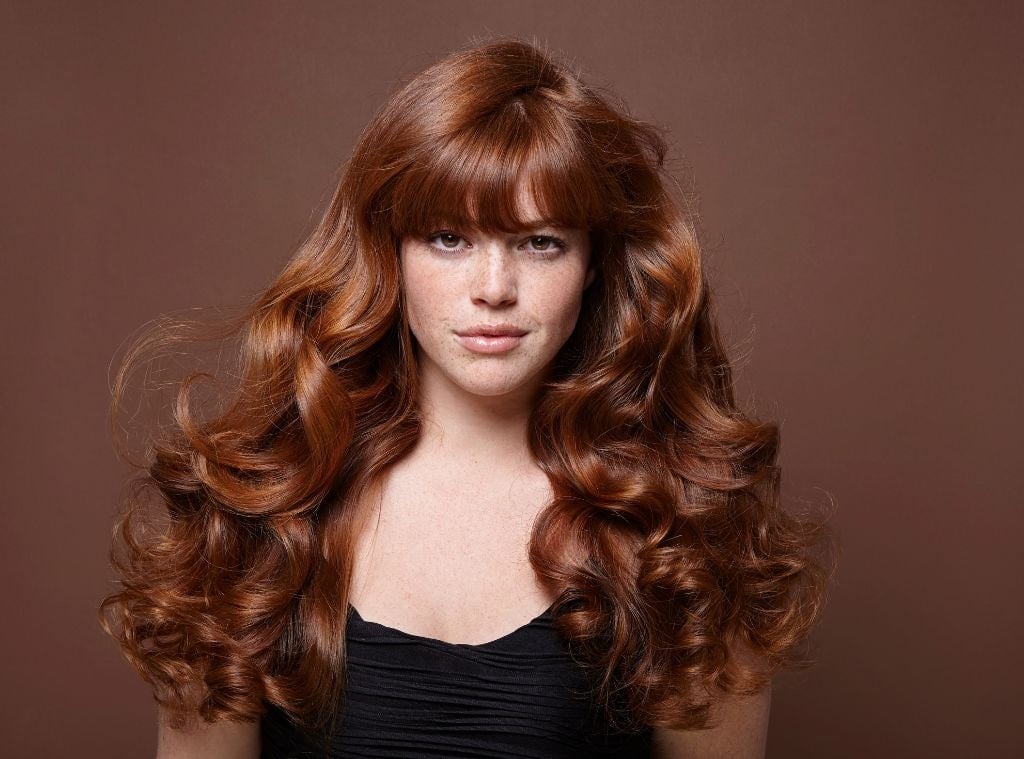
A full fringe with long layers is a design commitment, and vibrant copper only doubles it. The cut keeps the length at mid-back, with layers cut through the body to prevent the weight from pulling the bangs flat. Defined curls add volume and show the rich copper tone from root to tip. Thick, naturally curly hair of mid-back length is the ideal starting point. Full bangs can suit oval and round faces, but they require regular trims to keep the shape. Ask your colorist for: vibrant copper, full bangs, defined curls. A curl-defining mousse and diffuser are the main tools, and the bangs need a trim every three to four weeks to stay sharp.
The one real drawback is the grow-out. Full bangs need frequent attention, and copper needs a gloss every six to eight weeks to keep the color from shifting brassy. If you can commit to the rhythm, this is a striking, polished look.
12. Mid-Back Copper Balayage In Loose Waves
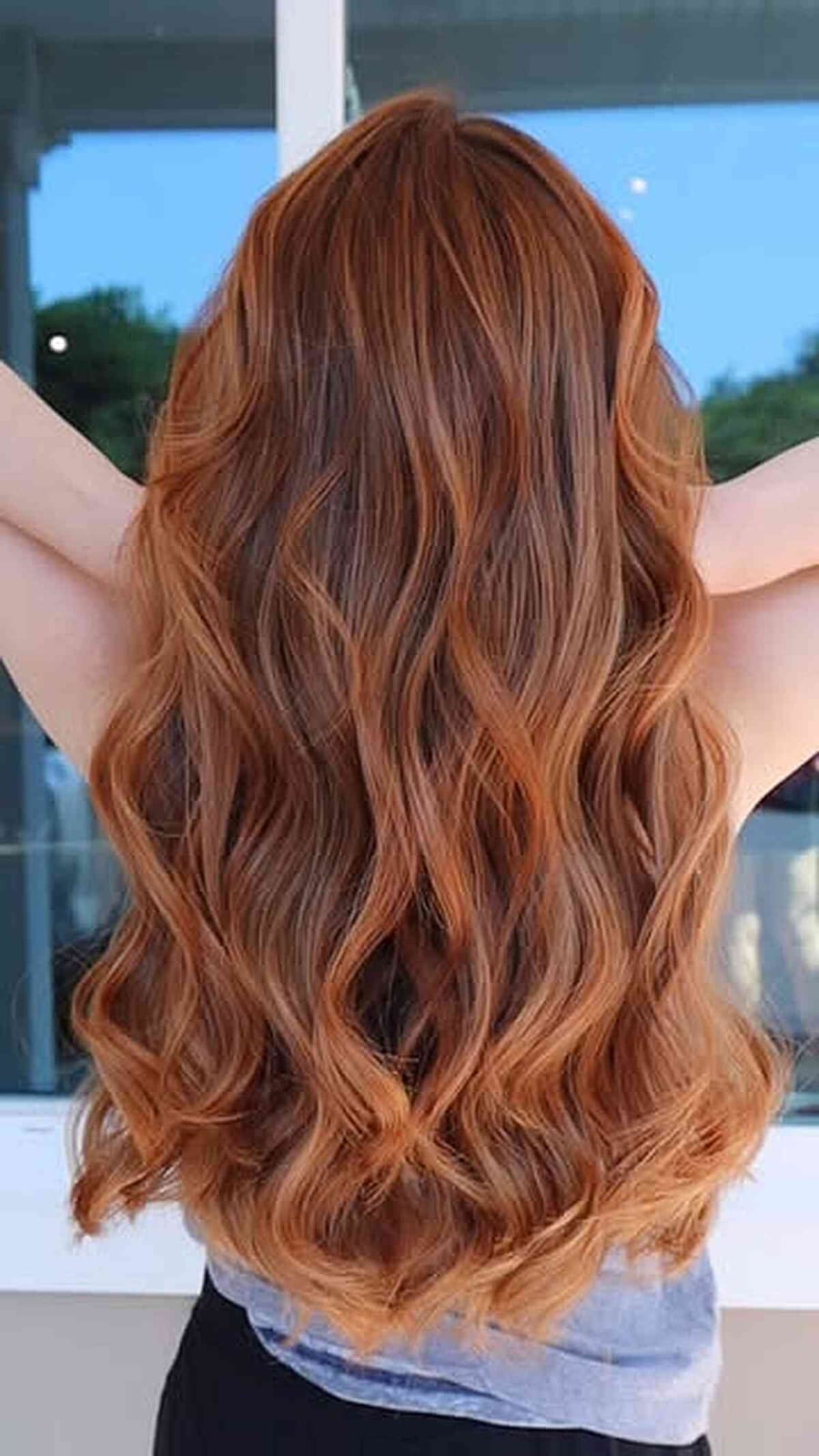
This balayage uses lighter copper tones painted freehand onto a deeper copper base, creating a dimensional effect that starts below the ears and intensifies toward the ends. The mid-back length and long layers allow the color to move naturally, and the loose waves show the blend without looking stripy. It suits thick, wavy hair of mid-back length, where the texture can carry the soft transition. The grow-out is low-maintenance: no harsh root line to chase. Ask your colorist for: mid-back copper balayage, loose waves. A smoothing serum helps keep the waves defined. A toning appointment every ten to twelve weeks keeps the copper from drifting orange.
This technique works on medium to thick density best. Fine hair may not hold the visible contrast between the base and the lighter pieces.
13. Ginger Copper With Lighter Highlights
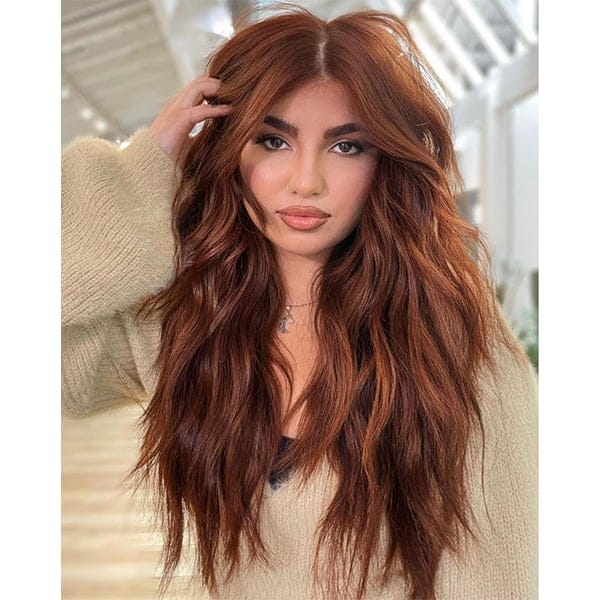
A ginger copper base reads warm and grounded, but the lighter copper highlights prevent it from sitting flat. The mid-back length is cut with layers that give the blowout volume, and the wavy texture catches the lighter pieces at different angles. Thick, wavy hair is the natural partner here; the highlights add dimension without needing heavy processing. The one real drawback: the lighter highlights need a touch-up every eight to ten weeks, and ginger copper can pull brassy on the warmer side if the toner fades.
The waves hold their shape with a light styling product, and a middle parting shows the blend evenly. Ask your colorist for: ginger copper with lighter highlights, voluminous blowout.
14. Copper Brown With Lighter Copper Highlights
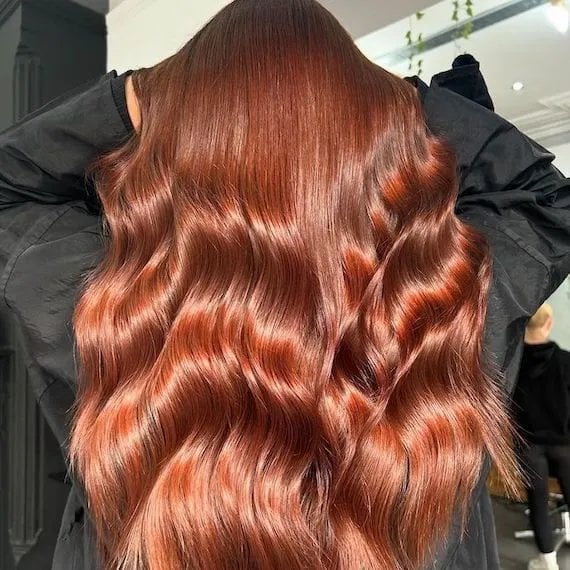
How do you ask for a copper that reads subtle rather than loud? Start with a copper brown base and add lighter copper highlights through the ends. The dimensional brown shifts warm in natural light. Long layers and a middle parting let the highlights peek through the waves. Thick, wavy hair of mid-back length carries this blend best, as the texture keeps the color from looking flat. Ask your colorist for: copper brown base with lighter copper highlights, long layers. The highlight placement is key: ask for finer pieces around the face to brighten without a full money piece. A shine serum on the finished waves helps the copper tones reflect evenly.
This is a good option if you want copper but need it to grow out gently. The brown base hides new growth for about six weeks longer than a solid copper would.
15. Mid-Back Copper Apricot In A Blowout
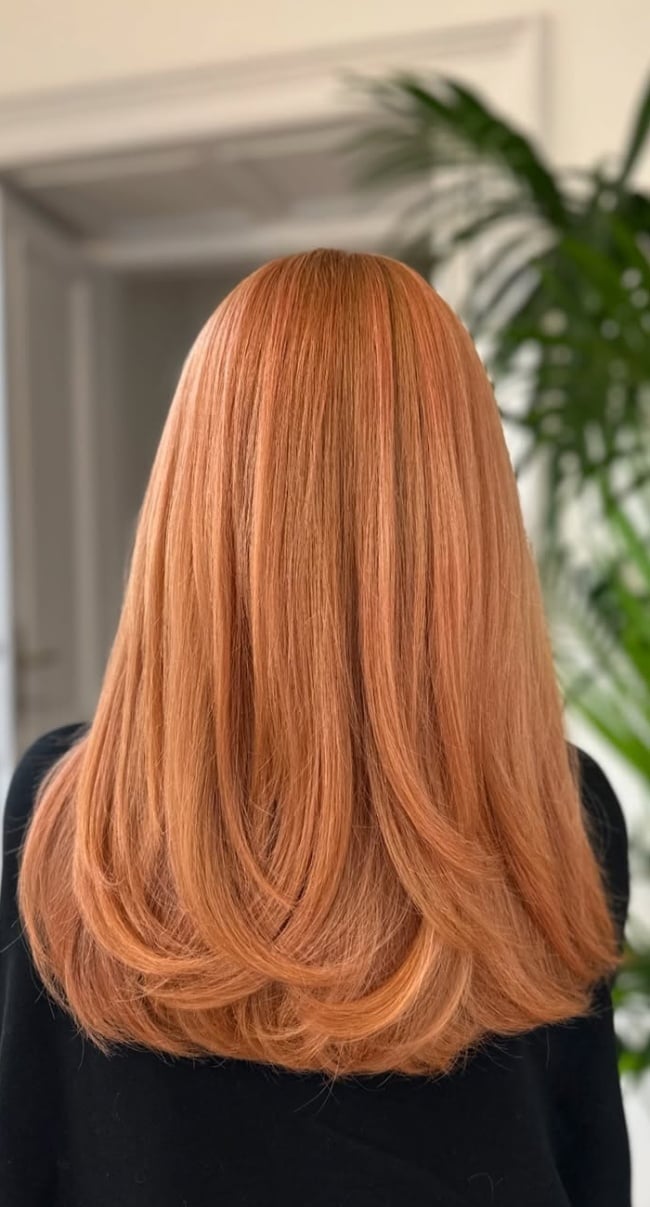
Copper apricot lands somewhere between a true copper and a peachy blonde, and on straight, thick hair it reads as thoroughly polished. The mid-back length is cut with long layers that give the blowout lift at the crown without removing bulk. Straight, thick texture is the ideal canvas: the color sits evenly and the blowout holds its shape. This shade works particularly well for spring and summer, when lighter, fruit-toned coppers feel fresh against brighter days. Ask your colorist for: copper apricot, long layers, voluminous blowout. A volumizing spray at the roots and a round brush are the tools for the blowout.
The downside is that apricot fades faster than deeper copper shades. Expect a toning gloss every six to eight weeks to keep the peach notes from washing out to plain blonde.
16. Orange-Copper With Peach Tones Gradient
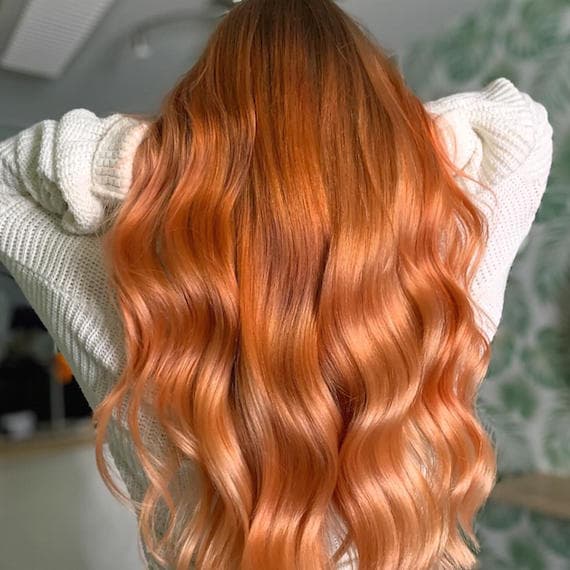
A gradient that runs from vibrant orange-copper at the roots to lighter peach through the ends asks a lot of a single color service, and the payoff is a mid-back length that shifts as it moves. Long layers and a middle parting keep the shape clean so the color does the talking, and thick wavy texture gives those peach ends somewhere to sit. Ask your colorist for: orange-copper to peach gradient, long layers.
Here is the trade-off: peach is the first thing to go. That lighter end sits closest to the oldest, most porous hair, so it fades faster than the root color and can drift brassy within a few weeks. A color-safe wash and conditioner slow the slide, and a toning appointment every eight to twelve weeks keeps the gradient from turning into a two-tone stripe. Worth the upkeep if you love the shift; skip it if you want a shade you can ignore for months.
17. Final Thoughts
Match the color to your patience as much as your taste. All-over vibrant copper needs a root touch-up or gloss every six to eight weeks, while highlights blended into a darker base stretch closer to ten. Fine hair does best with one blunt baseline and light layers; round faces get more from length below the chin than from volume at the sides.
- Run a color-depositing conditioner through every two weeks.
- Switch to a sulfate-free shampoo to slow the fade.
- Book a root touch-up or gloss at week six to eight.
- Apply a thermal spray before any hot tool.
Find your perfect copper. This versatile shade offers warmth for everyone.

