
A good haircut on an oval face is never a compromise. It’s a choice. Long layers, curtain bangs, and blunt bobs are all in rotation through 2028, with textured waves replacing super-sleek finishes as the default.
This collection of 20 Trendy Oval Face Haircuts spans mid-back lengths to pixie crops, balancing low-upkeep cuts with styles that need a salon refresh every four to eight weeks. Whether your hair is fine and falls flat or you need a fringe that actually sits, each option here solves one specific problem: the grow-out line, the blunt edge that goes fuzzy, or the layer that refuses to curl.
1. Voluminous Mid-Back Cut With Long Layers
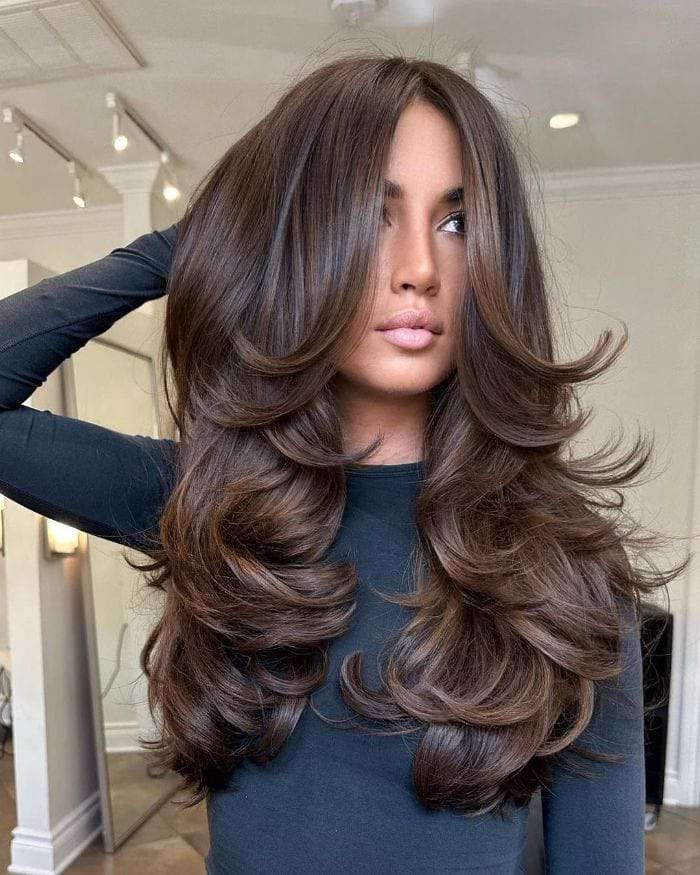
There’s a reason this cut opens the lineup: the long layers are cut to blend, so the hair moves as one soft curtain of volume instead of stacking into visible steps. The rich brown base with subtle lighter highlights gives the mid-back length depth without demanding a complex color routine. Thick, wavy hair starting at mid-back is the ideal candidate, and the movement suits oval faces by adding gentle width where the face is longest.
Ask your stylist for: mid-back length with long layers and a voluminous blowout. Styling it is a salon-grade affair: a large round brush and a blow dryer, working each section from the roots to the curled ends, gets you that smooth, bouncy finish. Plan on a trim every eight to ten weeks to keep the layers from turning into an unintentional triangle.
2. Shoulder Length Shag With Curtain Bangs
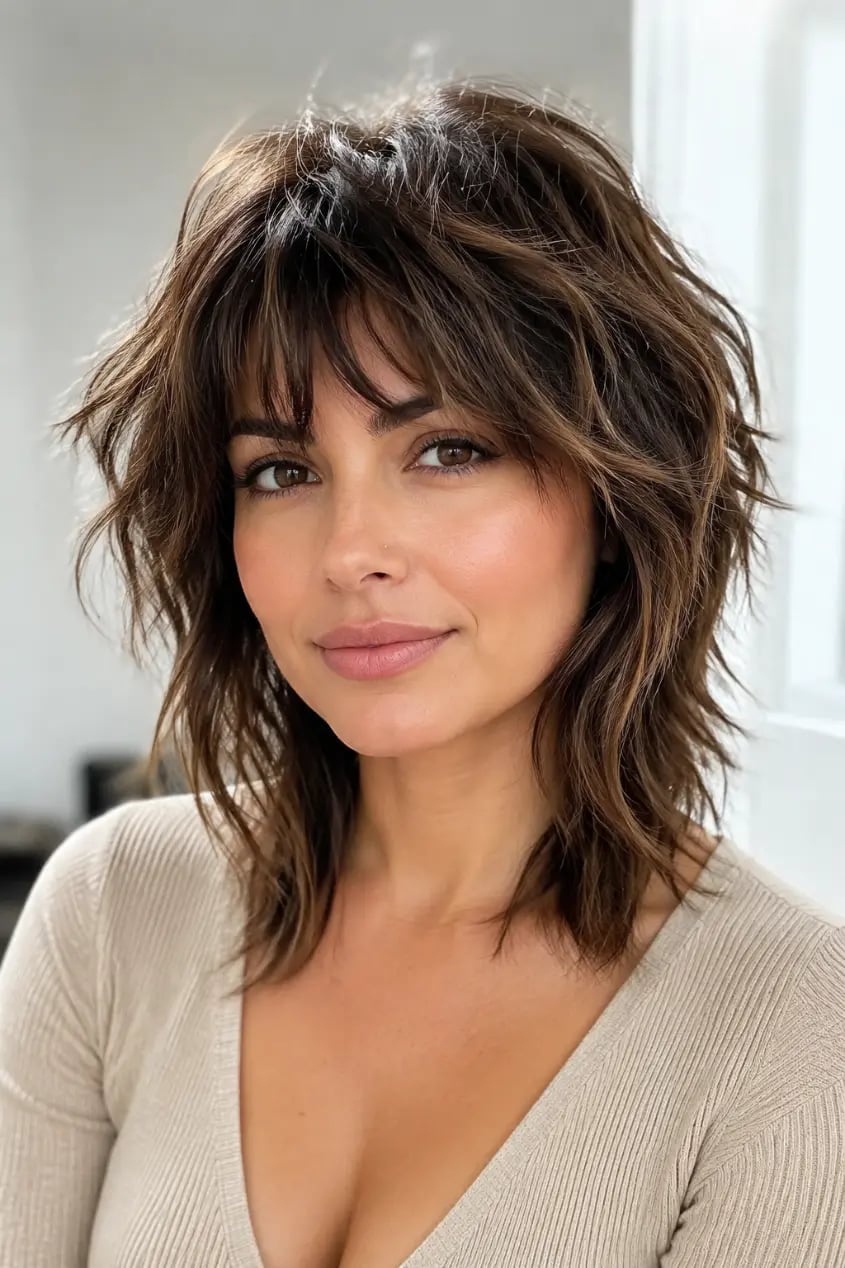
Wondering how a shag stays soft instead of shaggy? The curtain bangs are the trick, sweeping away from the face to create a lived-in frame rather than a blunt statement. On thick, wavy hair at shoulder length, the shaggy layers provide structure, while subtle highlights add dimension to the dark brown base. The middle part and tousled finish keep it casual, a bohemian-leaning look that suits oval faces by echoing their balanced proportions without adding bulk. Ask your stylist for: shoulder length shag with shaggy layers and curtain bangs. This one thrives on a quick tousle and a bit of sea salt spray for that just-rolled-out-of-bed texture, and it reads as fashion-forward for weekend outings or a laid-back office.
3. Mid-Back Long Layers With Curtain Bangs
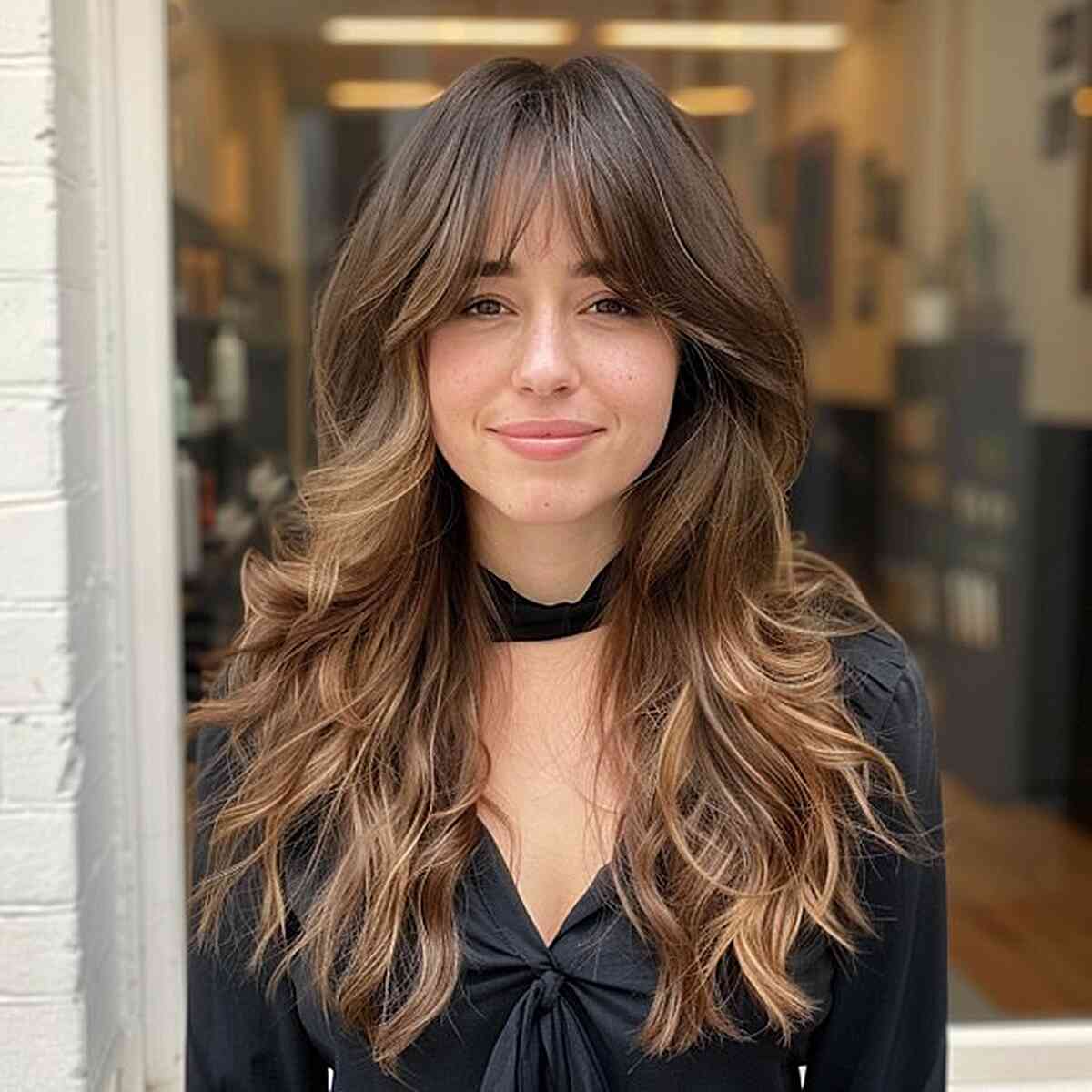
Here’s a concrete fact: the curtain bangs are cut to graze the cheekbones, and the long layers start just below the chin, so the whole cut frames the face without sacrificing length. On medium-density wavy hair, the brunette base with blonde balayage creates a soft gradient that moves with the loose waves. Curtain bangs suit oval faces by drawing the eye outward, and the length keeps the style versatile for work or daily wear. Ask your stylist for: long layers with curtain bangs and balayage. When you are in the chair, be specific about the bangs: you want them long enough to tuck behind the ears, with a center part that lets them fall naturally. The layers should be cut to blend, not to create harsh angles, and the balayage should start a few inches from the roots for a low-maintenance grow-out.
4. Collarbone Layered Bob With Curtain Bangs

Set this layered bob against a blunt bob and the difference is immediate: the blunt version sits heavy and still, while this one moves with every turn of the head. The collarbone length and loose waves give it a relaxed finish, and the curtain bangs soften the forehead without committing to a full fringe. On medium-density wavy hair, the blonde balayage adds dimension that a solid color would flatten. This cut suits oval faces by echoing their balanced proportions, and it works for someone who wants a salon finish but is willing to air dry with a texturizing spray for a more casual day. Ask your stylist for: collarbone layered bob with curtain bangs and balayage. The grow-out is the main consideration: layers need a trim every six to eight weeks, and the curtain bangs will need attention sooner if you let them drift toward your eyes.
5. Ear Length Bob With Heavy Straight Bangs

Heavy bangs are a commitment, and this ear-length bob makes that clear from the first glance. The sleek, dark brown hair is cut straight across, with the full fringe sitting just above the brows, and the middle part keeps the whole thing symmetrical. On fine, straight hair, the blunt cut holds its shape, but it requires a flat iron to keep the sleek finish from turning wavy. The heavy bangs will need a trim every three to four weeks to stay out of your eyes, and the bob itself every six to eight. Ask your stylist for: ear length bob with heavy straight-across bangs. It’s a bold, fashion-forward statement that suits oval faces, but it’s not a wash-and-go cut. If you’re not prepared for the upkeep, this one will feel dated fast.
6. Chin Length Blunt Bob With Wispy Bangs

A blunt bob at the chin with short, wispy bangs is one of those cuts that looks better in theory than it behaves in practice. The straight, fine texture shown here is your best bet for keeping the clean line from collapsing. Ask your stylist for: chin length blunt bob with short wispy bangs and balayage. The real drawback with fine hair is that a blunt cut removes interior weight, so the shape can look flat by midday unless you use a round brush and blow dryer for that inward curl. Trim the baseline every six to eight weeks or the precision vanishes.
7. Chin Length Textured Bob With Side Swept Bangs

Who actually benefits from a textured bob at chin length? Anyone with fine, wavy hair who wants movement without losing density. The side-swept bangs here soften the perimeter and balance an oval shape naturally. Ash blonde highlights add dimension so the waves read as intentional texture. Ask your stylist for: chin length textured bob with side swept bangs. Work a texturizing paste through the ends to define the piecey finish. A trim every six to eight weeks keeps the bob sharp and structured.
8. Chin Length Textured Blunt Bob With Side Part, Ash Blonde
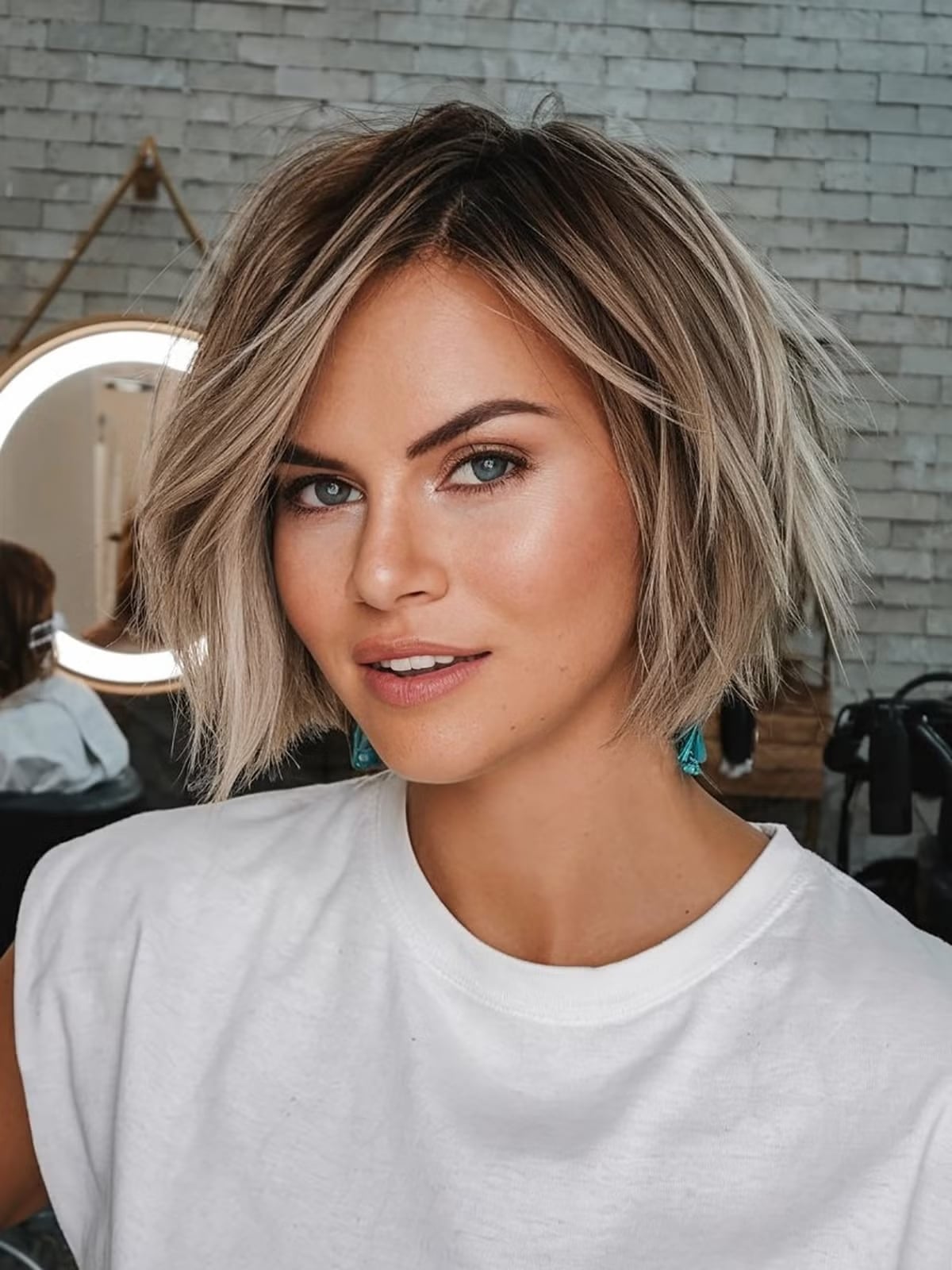
A textured blunt bob sounds like a contradiction until you see how layers break up the solid line without losing the weight. The common mistake is asking for a blunt cut and getting a block. This version keeps the chin-length perimeter while adding soft, wavy texture through the interior. Ask your stylist for: chin length textured blunt bob with no bangs. The ash blonde base with a visible root shadow grows out gracefully, saving you from the stark regrowth line. A texturizing spray gives that slightly messy blowout finish. Trim every six to eight weeks to maintain the shape.
9. Classic Chin Length Bob With Soft Waves
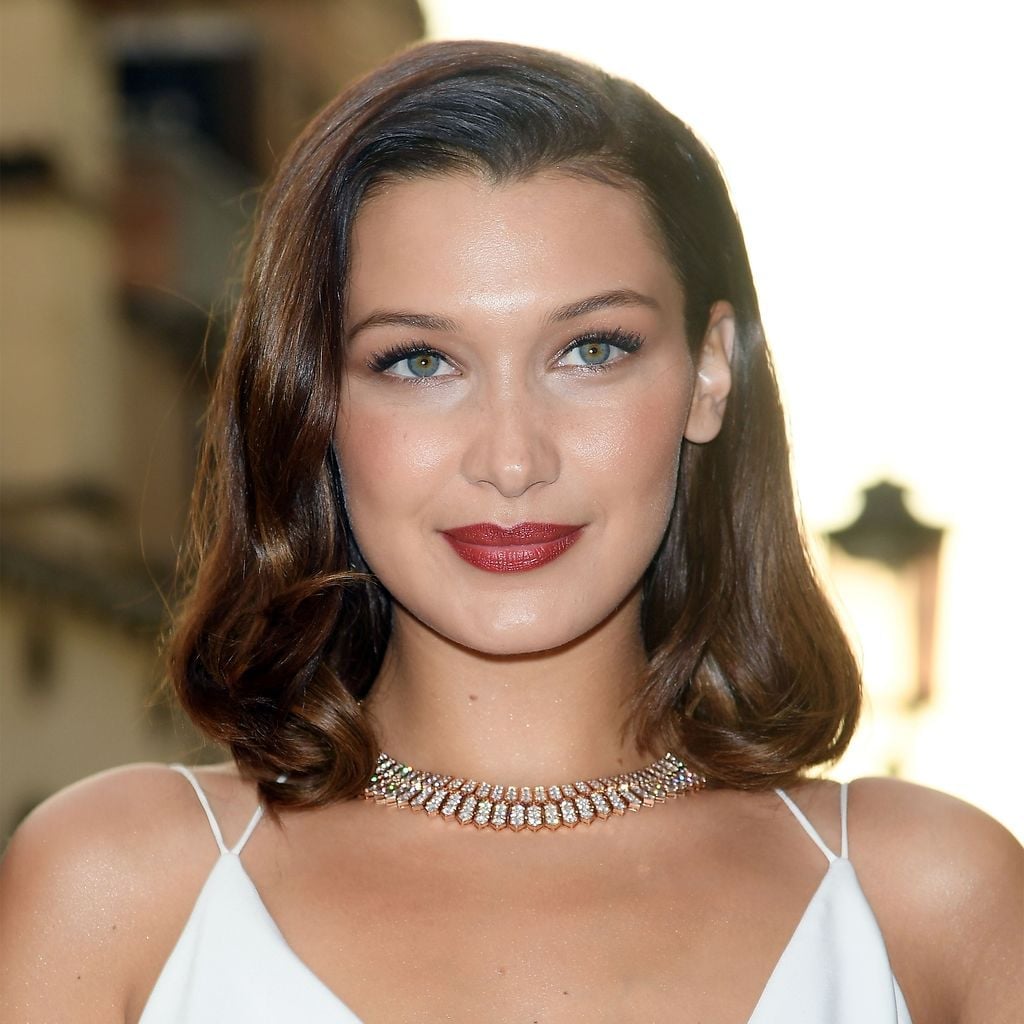
This bob bridges summer and fall. The chin length keeps it cool enough for humid days, while the dark brown base and soft waves add warmth for cooler weather. Medium density wavy hair holds this shape best. The gentle wave pattern gives volume without requiring a curling iron. Ask your stylist for: chin length bob with soft waves and a side part. A sea salt spray enhances the natural wave and saves you from heat damage. Trim every six to eight weeks to prevent the ends from looking straggly.
10. Textured Black Pixie With Side Swept Bangs
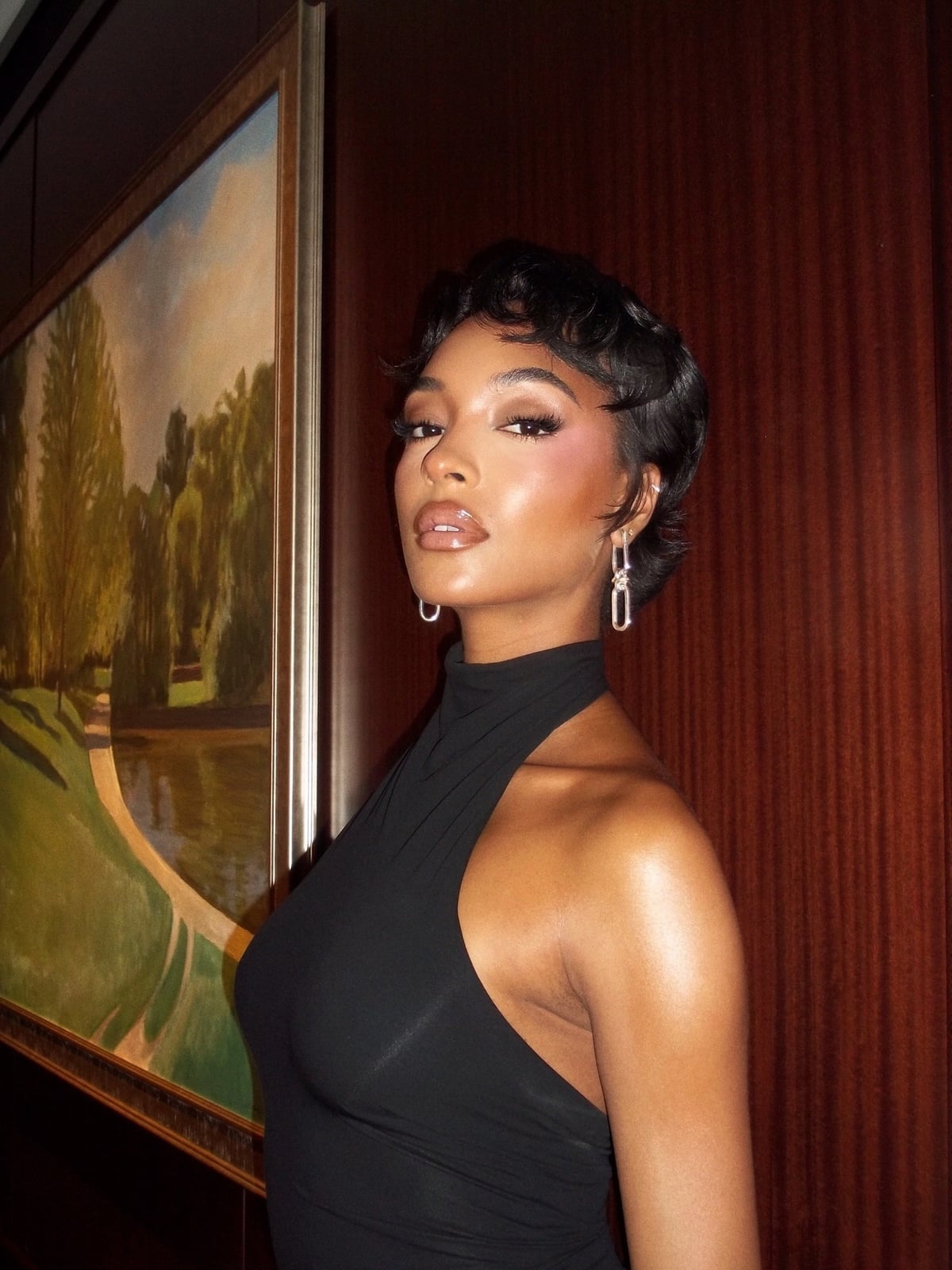
Can you style a pixie cut at home without looking like you lost a fight with clippers? Yes, if you start with the right product. For fine, wavy hair at ear length, the key is a lightweight cream or paste worked through damp hair, then tousled with fingers. Ask your stylist for: short textured pixie with side swept bangs. The deep side part and swept bangs add asymmetry that flatters an oval face.
The salon visit is required every four to six weeks because even a week of growth throws off the silhouette. That rhythm is the real cost of a pixie, not the styling time, which is under five minutes.
11. Ash Blonde Pixie With Tousled Bangs
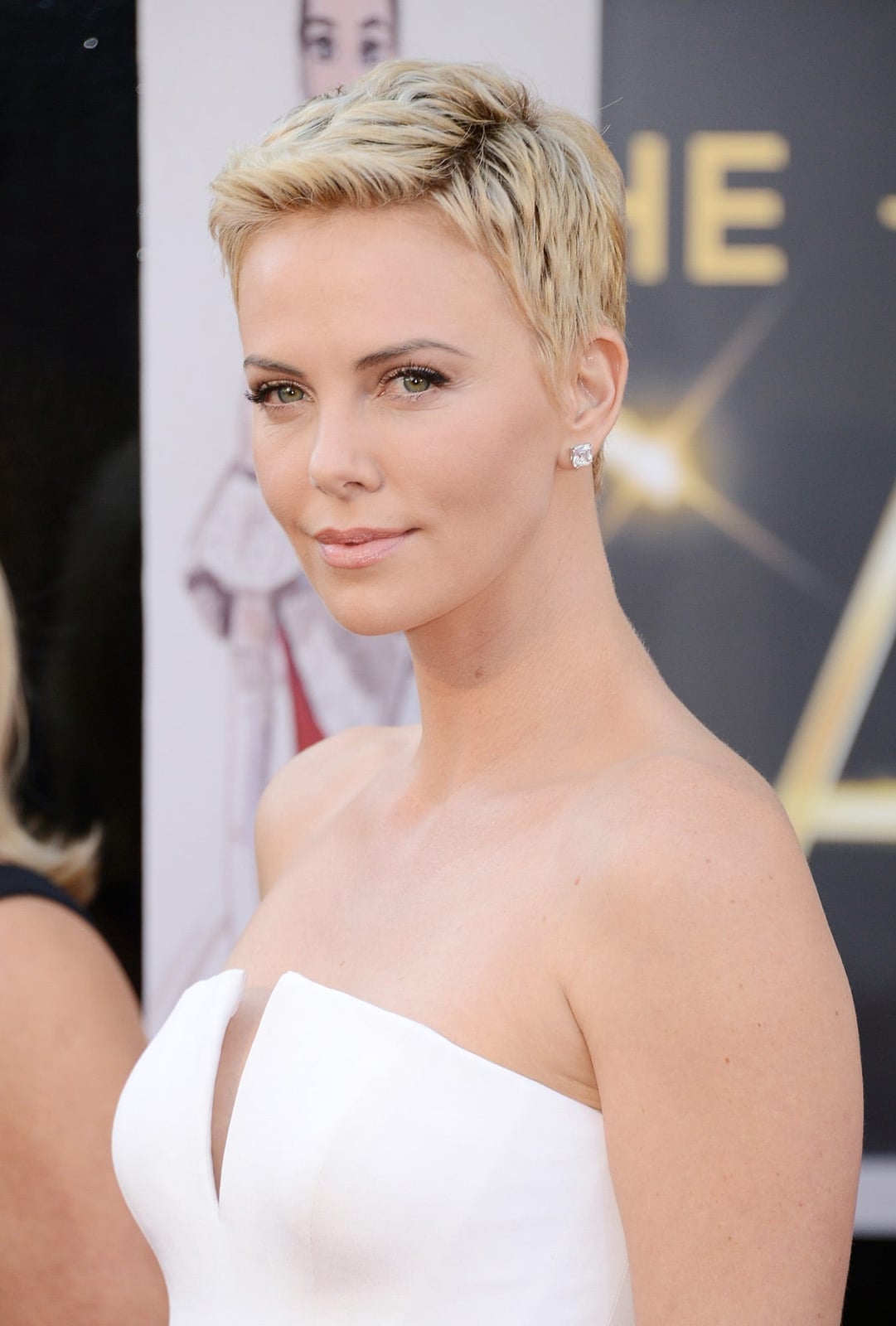
A cropped pixie trades the weight of a bob for ear length and a short textured top, and it asks more of your mornings. Fine, straight hair suits this cut best because the layers do the volume work. Ask your stylist for: short pixie cut with short tousled bangs. The tousled finish is a styling choice, not a setting: a matte wax or paste scrunched through damp hair keeps the side swept bangs looking messy on purpose. Salon trims land every four to six weeks, since an ear length pixie loses its shape quickly.
12. Shoulder Length Shag With Blunt Bangs, Wavy

That is the design logic behind this shoulder length shag: layers through the body, blunt bangs up front, and textured waves carrying dark blonde with lighter highlights. Medium density wavy hair holds the shape without fighting it. Ask your stylist for: shoulder length shag with blunt bangs. It earns its keep in fall and winter, when a heavier fringe reads deliberate against a coat collar. If you have a short forehead or cowlick right at the hairline, pass on the blunt line and keep the shag.
13. Collarbone Layers With Curtain Bangs

The collarbone length is doing quiet work here: long layers start below the jaw, and the curtain bangs split from a side part to frame the cheekbones. The base is dark brown with subtle lighter pieces, so the soft waves pick up dimension without stripes. Ask your stylist for: collarbone length with long layers and curtain bangs.
For the blowout, rough dry to eighty percent, then build the shape in steps:
- Wrap each curtain bang section around a round brush away from the face.
- Roll the long layers under at the collarbone for that soft bend.
- Set with a light hold spray and let the waves cool before you touch them.
14. Collarbone Lob With Face Framing Layers
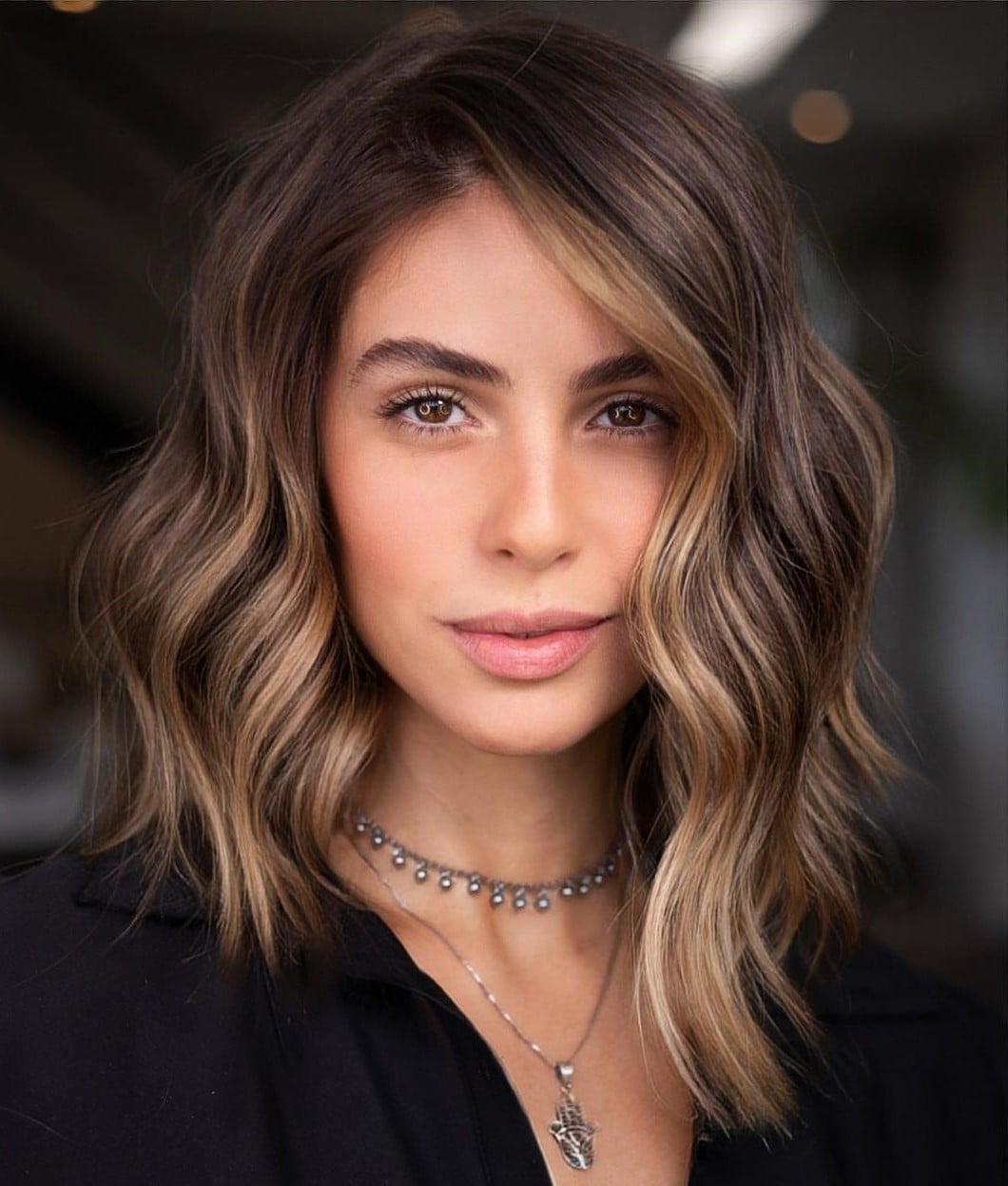
This collarbone lob is a fair trade: less daily styling than a bob, more shaping than a one length cut. The face framing layers start at the cheek and blend into the length, and the dark blonde with lighter highlights gives the soft waves something to catch. Medium density wavy hair is the right starting point. Ask your stylist for: collarbone length lob with face framing layers.
No bangs means no fringe trims, but the layers still need attention every eight to ten weeks or they grow into a single blunt edge. Air drying with a texturizing cream works on a good day; on a humid one, medium density waves can fall flat without a little product scrunched through damp ends. If you want a wash-and-go cut with zero intervention, this is not it. The upkeep is the price of the shape, and the shape is the point.
15. Mid-Back Air Dried Waves With Face Framing
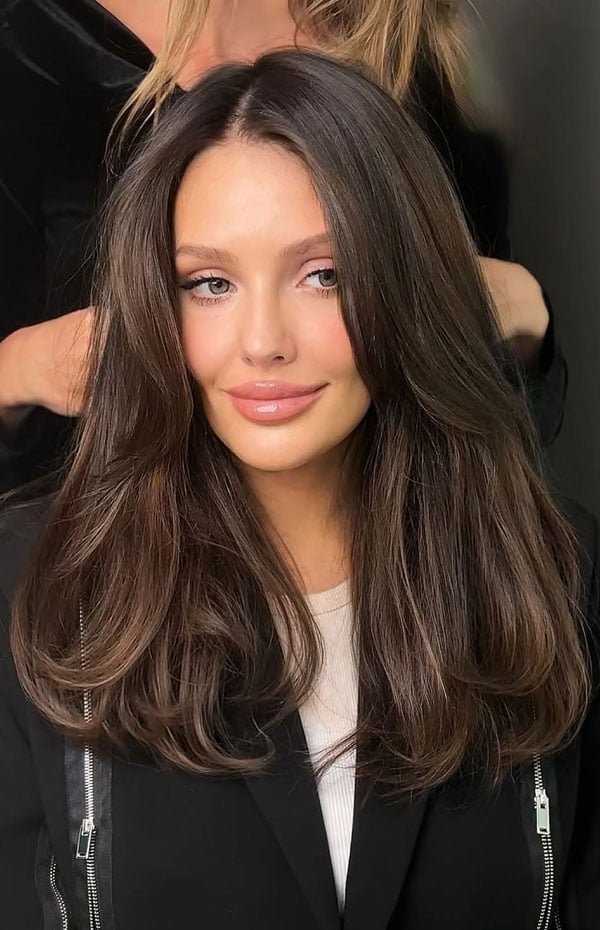
Can you get this finish without a round brush? With thick, wavy hair at mid-back, mostly yes. The cut does the work here: long layers through the length and face framing pieces cut to sit around the cheek, all on dark brown hair with a middle part. Ask your stylist for: mid-back length with long face framing layers.
At home, start on soaking wet hair. Apply a leave-in conditioner from mid-length to ends, then scrunch upward and let it dry untouched, since hands in damp waves break the pattern. Twirl the face framing sections around a finger so they dry with a bend instead of hanging straight. The salon version costs a blowout and a round brush; the home version costs patience and about two hours of drying time. Trim every ten to twelve weeks to keep the layers from collapsing into one weight.
16. Mid-Back Air Dried Waves With Face Framing Layers, Close-Up Take

Set this against the high-contrast version of long layers, the one with bright blonde slices running through dark hair, and the difference is restraint. Here the base is dark brown with subtle highlights, mid-back length, long layers, face framing pieces that start around the cheekbone, and a middle part. Thick, wavy hair does most of the work: the soft waves are air dried, which means the cut has to hold its shape without a round brush. Fine hair will fall flat in this exact version, so ask for more layers through the interior if density is low. Ask your stylist for: mid-back length with face framing layers, air dried waves. On wash days, use low heat to keep the wave pattern intact.
17. Mid-Back Layers With Side Swept Bangs
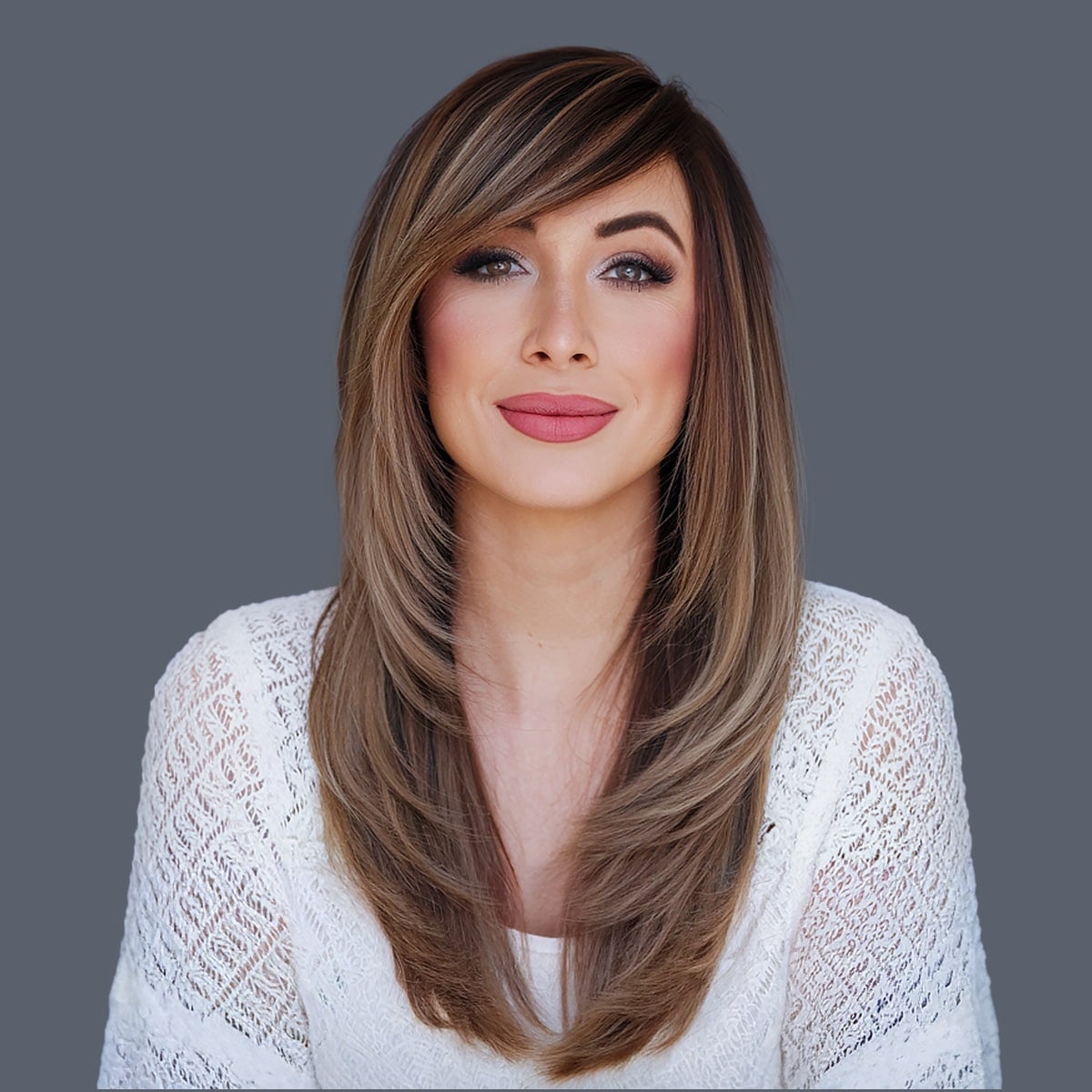
A side part plus side-swept bangs is the oldest trick for breaking up a long, heavy curtain of hair, and it still works because it changes the line of the cut without touching the length. This version sits at mid-back with long layers and a brown base carrying blonde highlights, blown out smooth on thick, straight texture. The bangs sweep across the forehead and blend into face-framing layers, so the grow-out is gradual instead of a hard line at the brow.
Who it suits: thick, straight hair that reaches mid-back already. If your hair is fine or has a strong cowlick at the front, a side sweep needs daily blow-drying to sit right, and a stylist should check the natural fall before cutting. Oval faces carry the asymmetry easily; a round face gets more from a longer sweep that ends past the cheekbone. Ask your stylist for: mid-back length with long layers and side swept bangs. A round brush keeps the finish smooth, and trims land every ten to twelve weeks.
18. Mid-Back Layers With Wispy Bangs
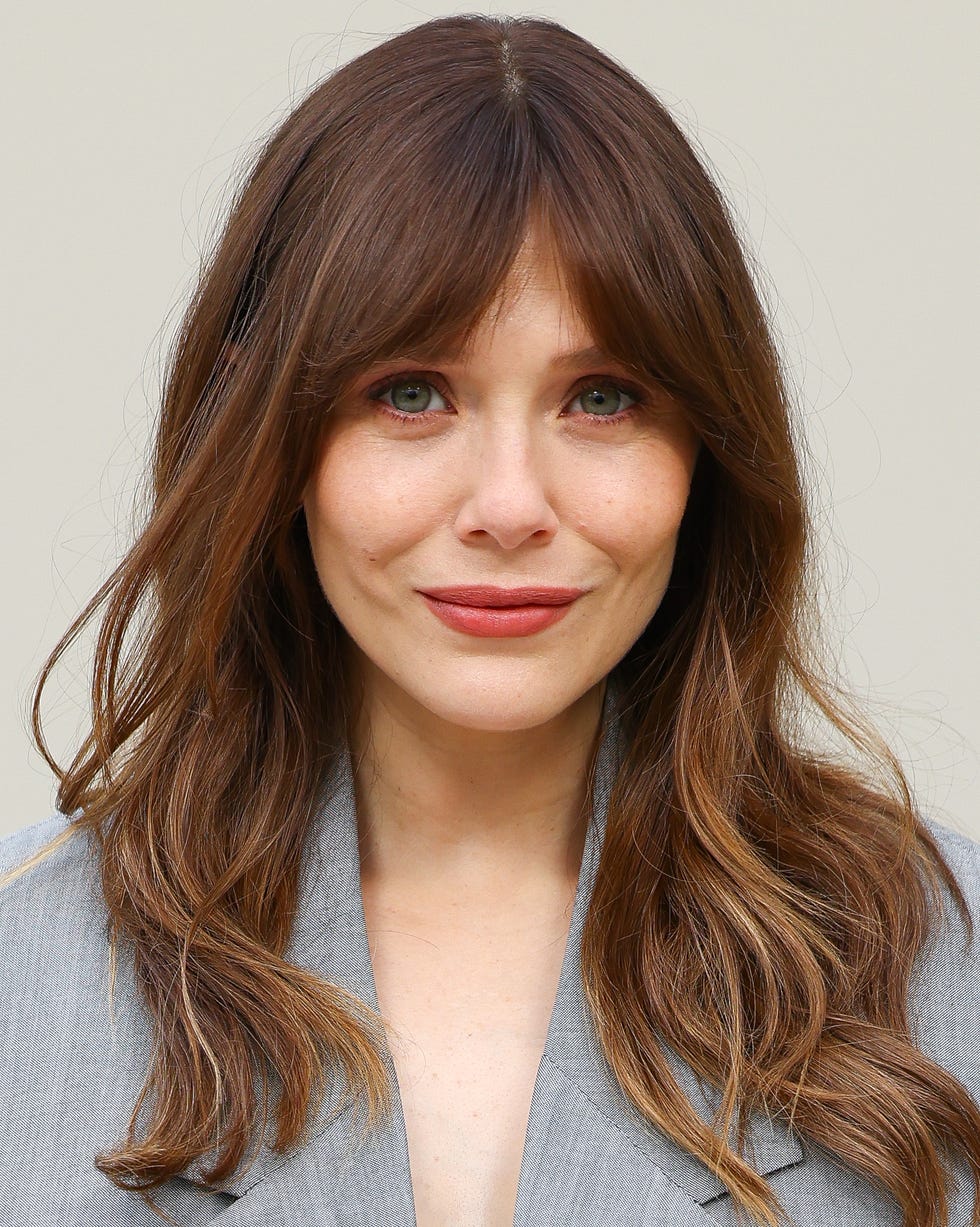
In daily wear, this cut wants a middle part and a loose, air-dried finish. Wavy, thick texture holds the shape without much coaxing, though the bangs need a quick blow-dry on a small round brush or they curl up instead of falling straight. Ask your stylist for: mid-back length long layers with wispy bangs and balayage. A texturizing spray through the lengths gives the waves something to grip. Trims every ten to twelve weeks keep the layers from collapsing into a single heavy curtain, and balayage usually needs a refresh twice a year.
19. Mid-Back Long Layered Hair With Face Framing
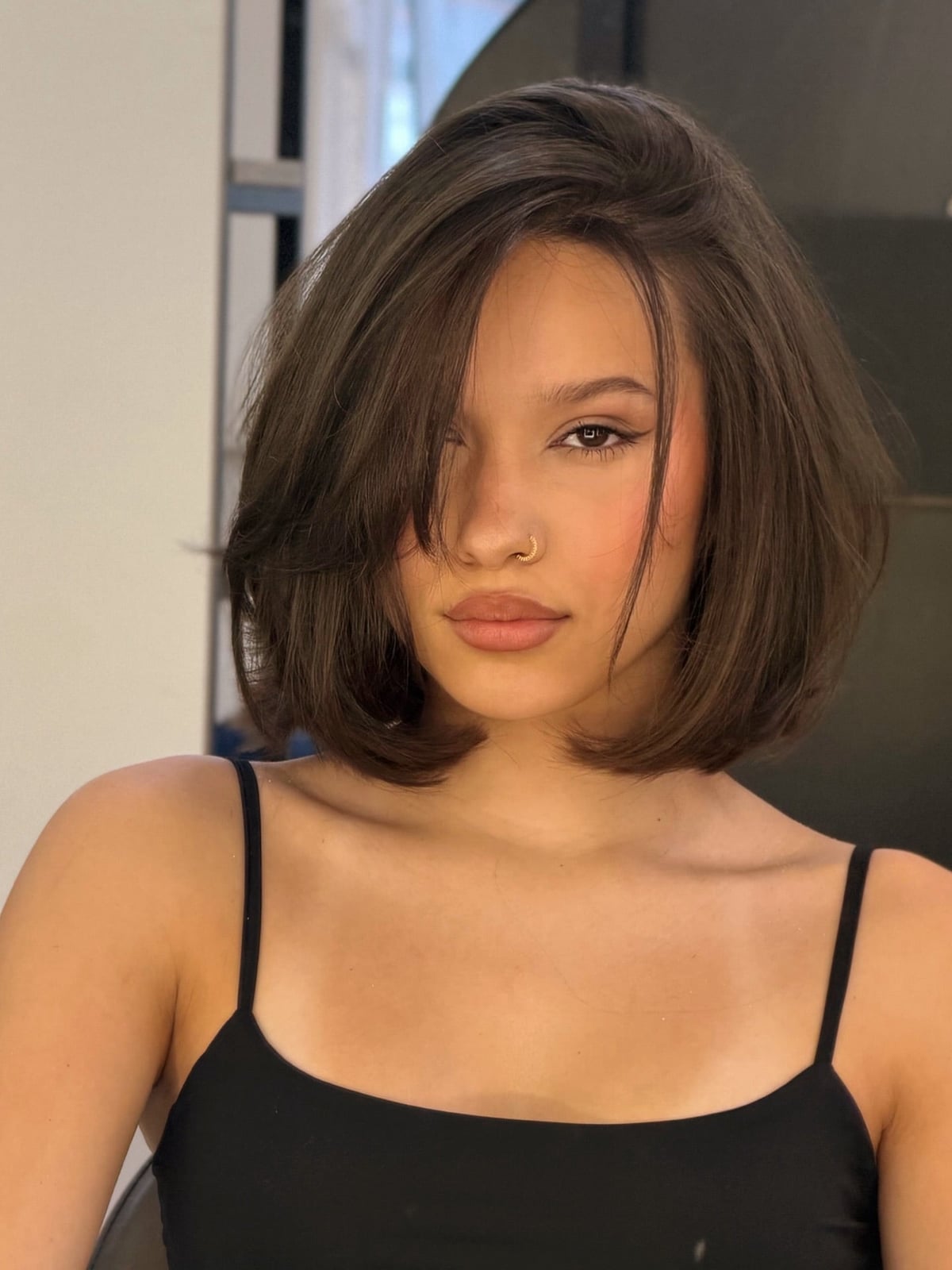
What separates long layers that move from long layers that just hang there? The angle of the cut. A stylist works from the shortest face-framing piece near the cheekbone and drops each subsequent section lower, over-directing toward the back so the layers connect without a visible step. On thick, wavy hair at mid-back, that technique is what lets loose waves swing instead of sitting as one solid mass.
The color supports it: dark brown with blonde highlights, placed so the lighter pieces land where the layers break. Ask your stylist for: mid-back length long layered hair with face framing layers and highlights. This is a salon-leaning cut, and worth the appointment for the blending alone. For everyday wear, a curl-defining cream scrunched through damp hair and left to dry gives the waves their shape. It suits spring and summer especially, when air drying is realistic, and trims every ten to twelve weeks hold the shape.
20. Collarbone Layers With Wavy Blowout
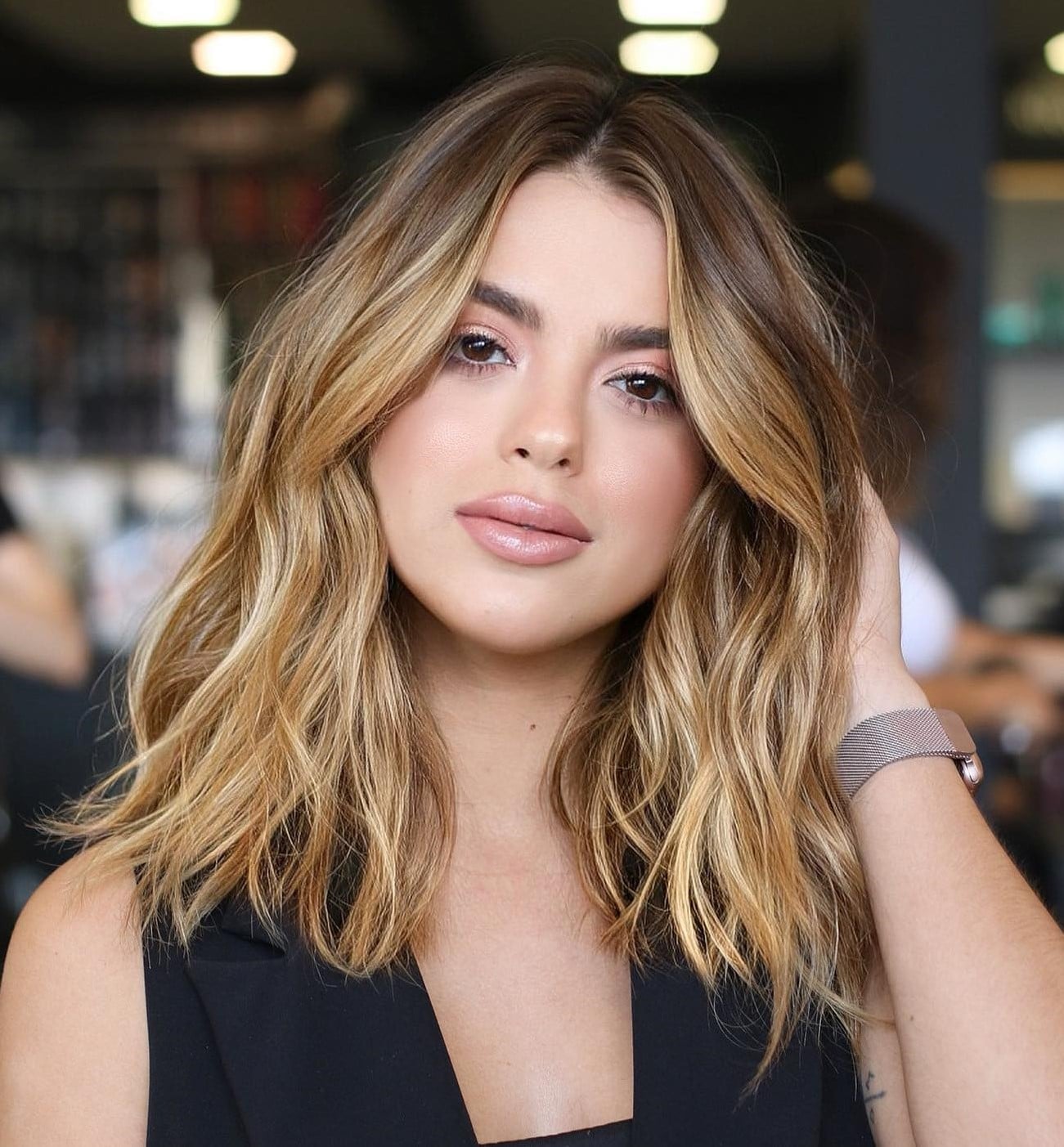
This cut pairs long layers with a middle part, dark blonde balayage, and a wavy blowout on medium-density hair, so the bend at the collarbone does the framing work. Ask your stylist for: collarbone length with long layers, curtain bangs, and a wavy blowout. Be specific about where the bangs land, whether that is the cheekbone or the jaw, and which way they sweep, because curtain bangs cut too short cannot be talked back down. A round brush and blow dryer rebuild the shape between appointments, and trims every six to eight weeks keep the ends from weighing the whole cut down.
21. Final Thoughts
For an oval face, the rule is simple: choose a cut that adds width at the jaw or cheekbones if you want to balance length, or keep a blunt baseline if your hair is fine and needs density. Bangs adapt to any length, so test a curtain or side-swept fringe before committing to heavy.
- Trim blunt bobs and straight-across bangs every 4-6 weeks to maintain sharp lines.
- Refresh long layers and balayage tones every 8-10 weeks, depending on grow-out.
- Use a heat protectant spray before styling with blowouts or curling irons.
- Wash and condition regularly, focusing on moisture for wavy textures.
Find the cut that makes you feel most confident.

