
Senegalese twists are a protective style that builds on a two-strand rotation, creating a rope-like texture that holds its shape for weeks. By 2027, the trend has moved toward softer finishes, with wavy and curled ends replacing the uniform straight look of past seasons.
These 20 ideas range from intricate updos to loose, everyday styles, covering every length and texture. Whether your hair is fine or thick, or you want a style that lasts without constant fuss, Trendy Senegalese Twists offer a practical solution for anyone tired of styles that lose their shape by midweek.
1. Intricate Updo With Geometric Twists and Coils
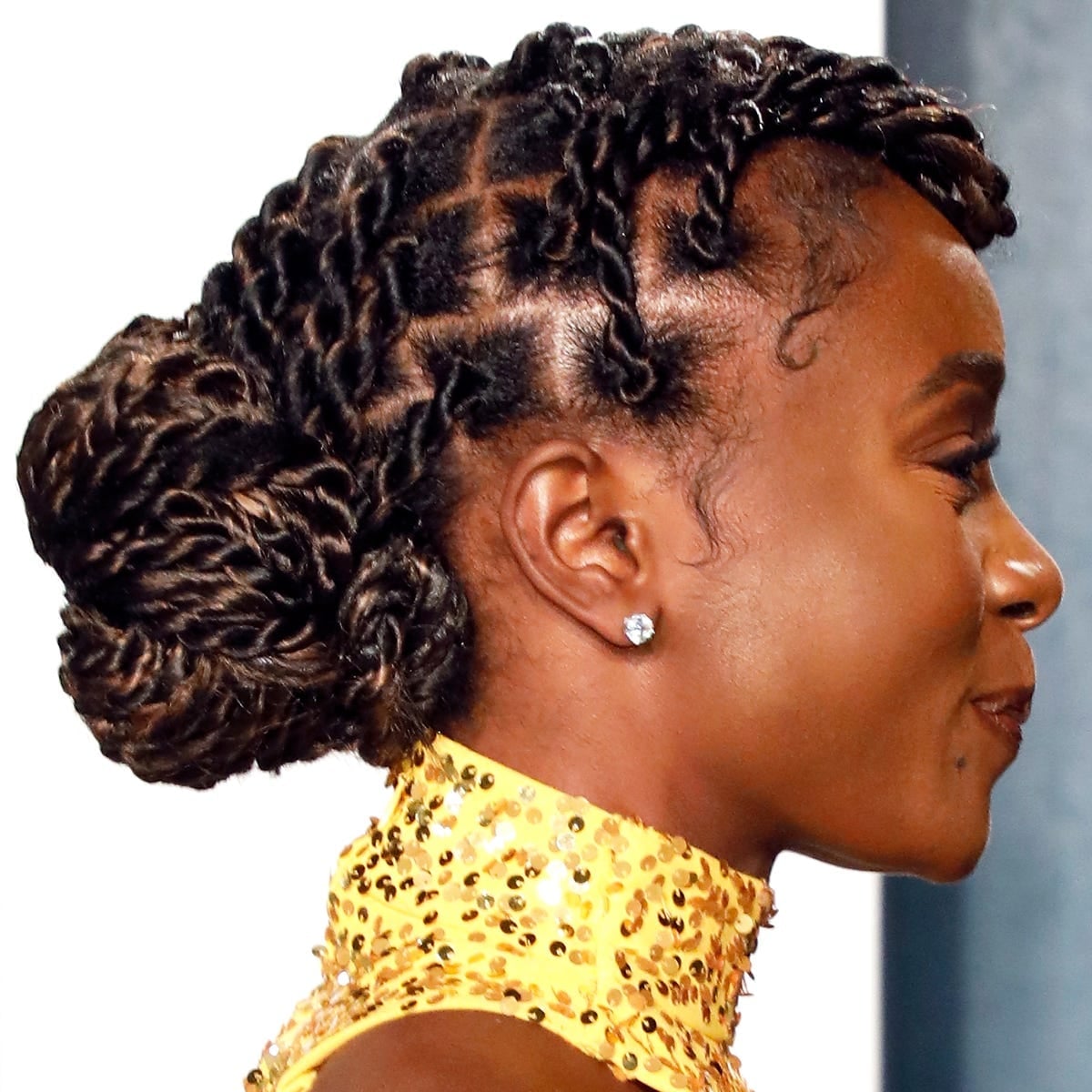
The scalp work is the point: Senegalese twists routed into geometric patterns that meet at the back, with coiled sections packed between them and a large bun resting at the nape. Brown highlights run through the black, so the pattern shows even from the side. This is a geometric Senegalese twist updo built in layers, twists first, coils second, bun last, and the order matters because the coils need clean channels to sit in. Medium to thick hair gives the bun enough mass to hold its shape; fine hair needs more twists per section to fake that density. Ask your stylist for: geometric twist updo with coils and a nape bun. Book it for a formal event and expect a long appointment, since the parting alone takes real time. Between wears, the bun is what needs attention first: reshape it with a light mist and a scarf at night, and it will keep its line for the week.
2. Mid-Back Length Loose Senegalese Twists
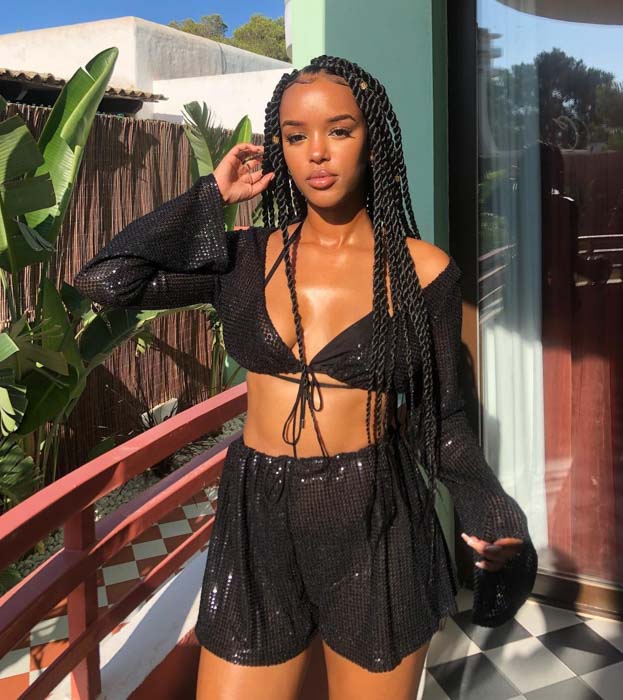
What length actually earns the name mid-back? These fall to the shoulder blades, parted down the middle and left loose so each thick black twist hangs separately instead of clumping. That separation is the whole look, and it depends on installation tension more than on any product.
On suitability: a middle part with length below the chin draws a round face longer, and the straight fall of loose twists flatters a long face without adding width at the sides. A square jaw gets softness from the movement around it. Fine hair can carry this length if the twists are installed small enough to avoid weight at the root; high density handles thicker sections with ease. You need a solid starting length, roughly armpit or longer, for the finished twists to reach mid-back. Ask your stylist for: mid-back length loose Senegalese twists. For upkeep, mist the scalp daily and have the roots re-twisted every four to six weeks, which keeps the part clean and the definition sharp between full appointments.
3. Shoulder Length Twists With Decorative Clips
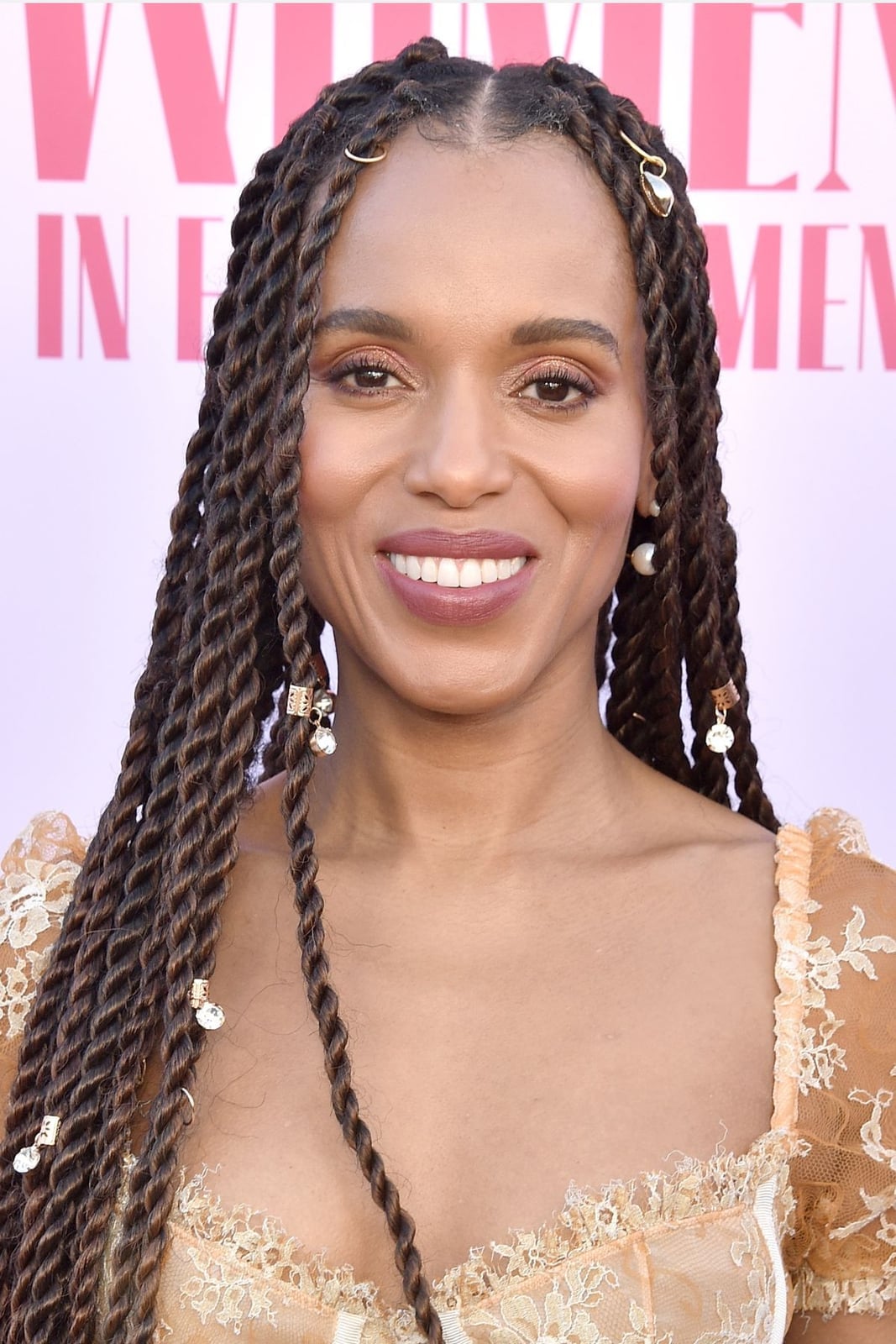
Shoulder length twists with clips do the work of an accessory without a single earring, and the clips sit best where the middle part meets the front hairline. Ask your stylist for: shoulder length twists with decorative clips, and be specific about the details:
- Dark brown twists, medium thickness, ending at the shoulder
- A clean middle part with wavy texture through the lengths
- Small clips placed at the front, spaced evenly on both sides
Bring your own clips to the appointment to achieve a particular finish, since placement is easier to set while the twists are fresh.
4. Mid-Back Twists With Loose Curly Ends
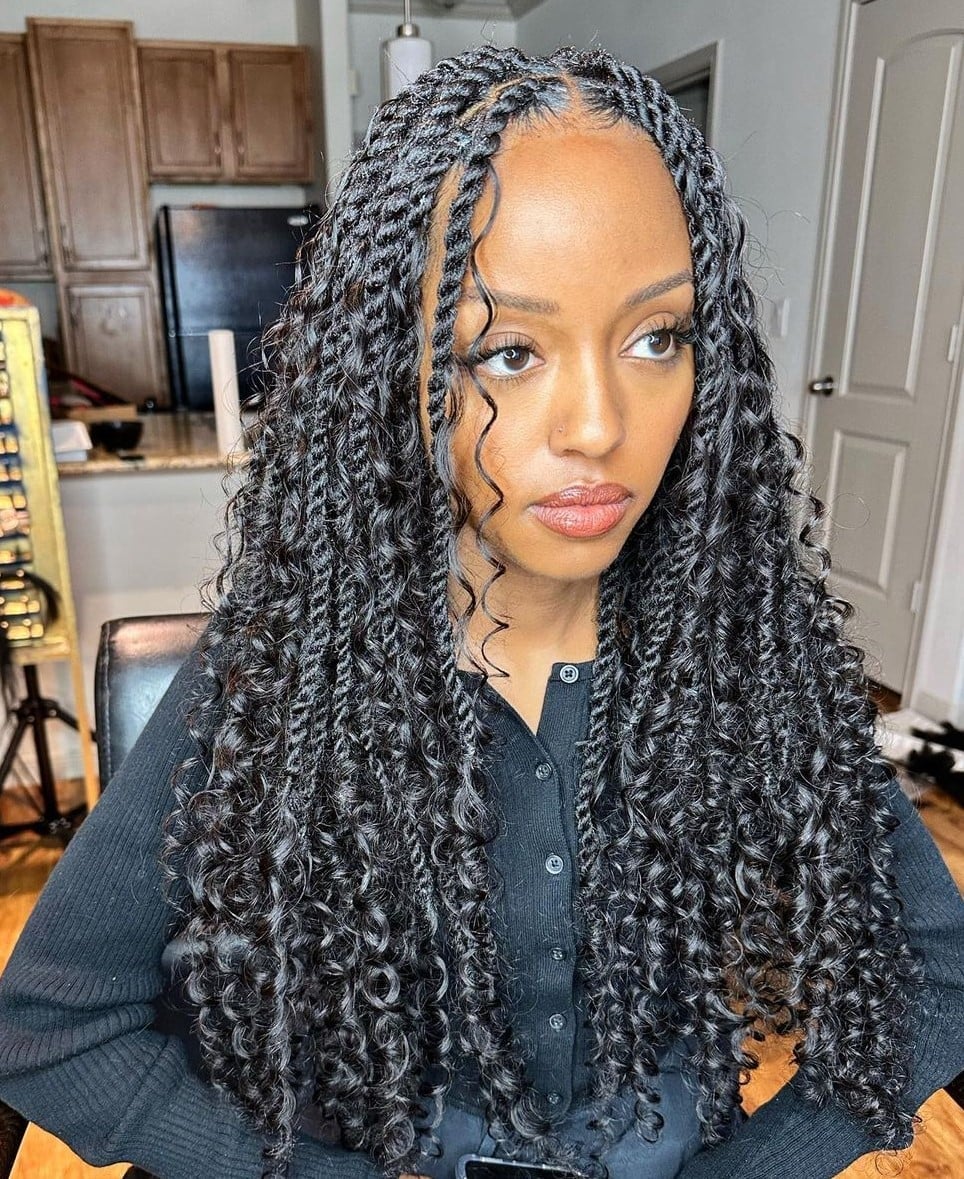
The transition is the design: tight black twists run to mid-back, then let go into loose, thick curls that add real volume at the ends. A middle part keeps the top flat so the bottom can do the shouting.
Curly ends behave differently from straight ones over time. They clump in humidity, flatten against the back after a night’s sleep, and lose their bounce before the twists above them show any wear. Finger-comb them apart in the morning and mist with a light spray to bring the curl back; a heavy product will weigh the ends down and pull the pattern out. Expect the curls to need refreshing more often than the twists do, roughly every few days, while the twists themselves hold their shape for weeks. This finish earns its keep at daytime events and nights out, where the volume reads from across a room. Ask your stylist for: mid-back Senegalese twists with loose curly ends. Medium to thick hair gives the curls enough body to stay separated instead of collapsing into one mass.
5. Mid-Back Twists Adorned With Gold Beads
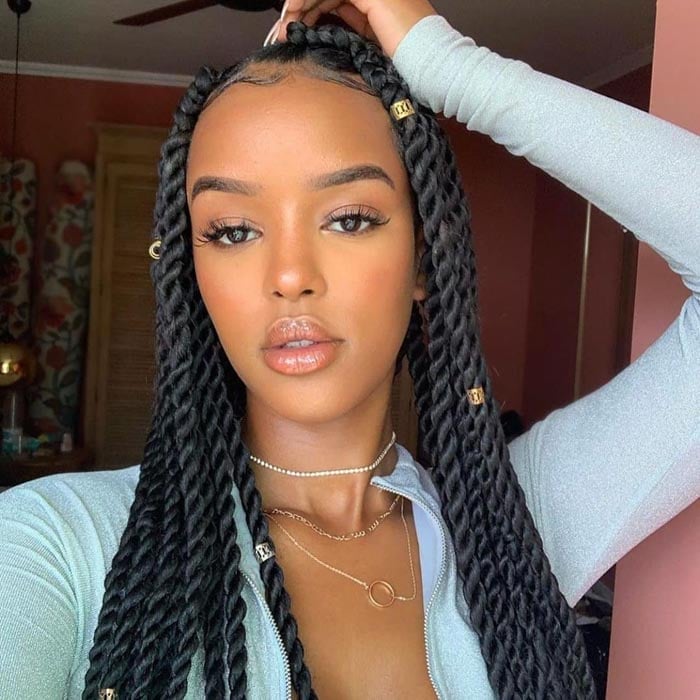
With mid-back twists, placement matters more than length: small gold beads are woven into selected twists rather than scattered across all of them, so the shine lands in a few spots and the black does the rest. A middle part keeps the front quiet while the beads draw the eye lower down.
Beaded twists work for medium to thick hair and add polish at parties and festivals without changing the install itself. The comparison worth making is with clips: clips sit on the surface and can be moved or removed on a whim, while beads are threaded in during installation and stay put. That makes beads the lower-maintenance choice once the appointment is done, provided each one is secured properly at the fold. Ask your stylist for: mid-back Senegalese twists with gold beads. For upkeep, check the beads weekly for looseness, and remove them gently when you take the style down so they do not snag the twists on the way out.
6. Elegant Braided Updo With Twists
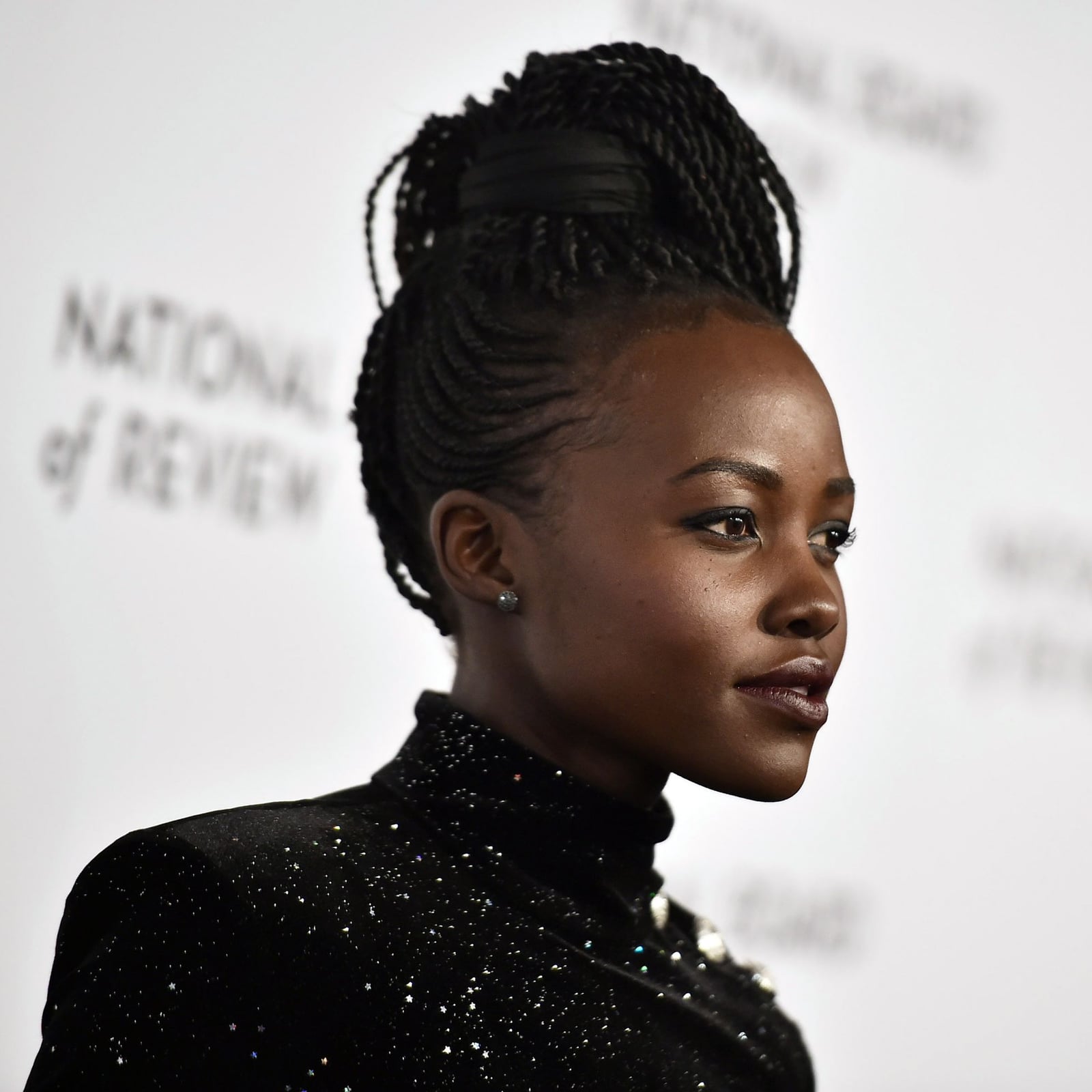
Every twist has a job here, and none of them is decorative. The braided updo is built from a middle part, with each section of wavy hair wrapped into the structure rather than pinned on top. Ask your stylist for: elegant braided twist updo. The technique demands a salon visit: the base needs to be stable enough that the updo holds its shape for a full evening without slipping. A light-hold hairspray misted over the finished style keeps flyaways in check without making the twists feel stiff.
7. Collarbone Length Twists With Curled Ends
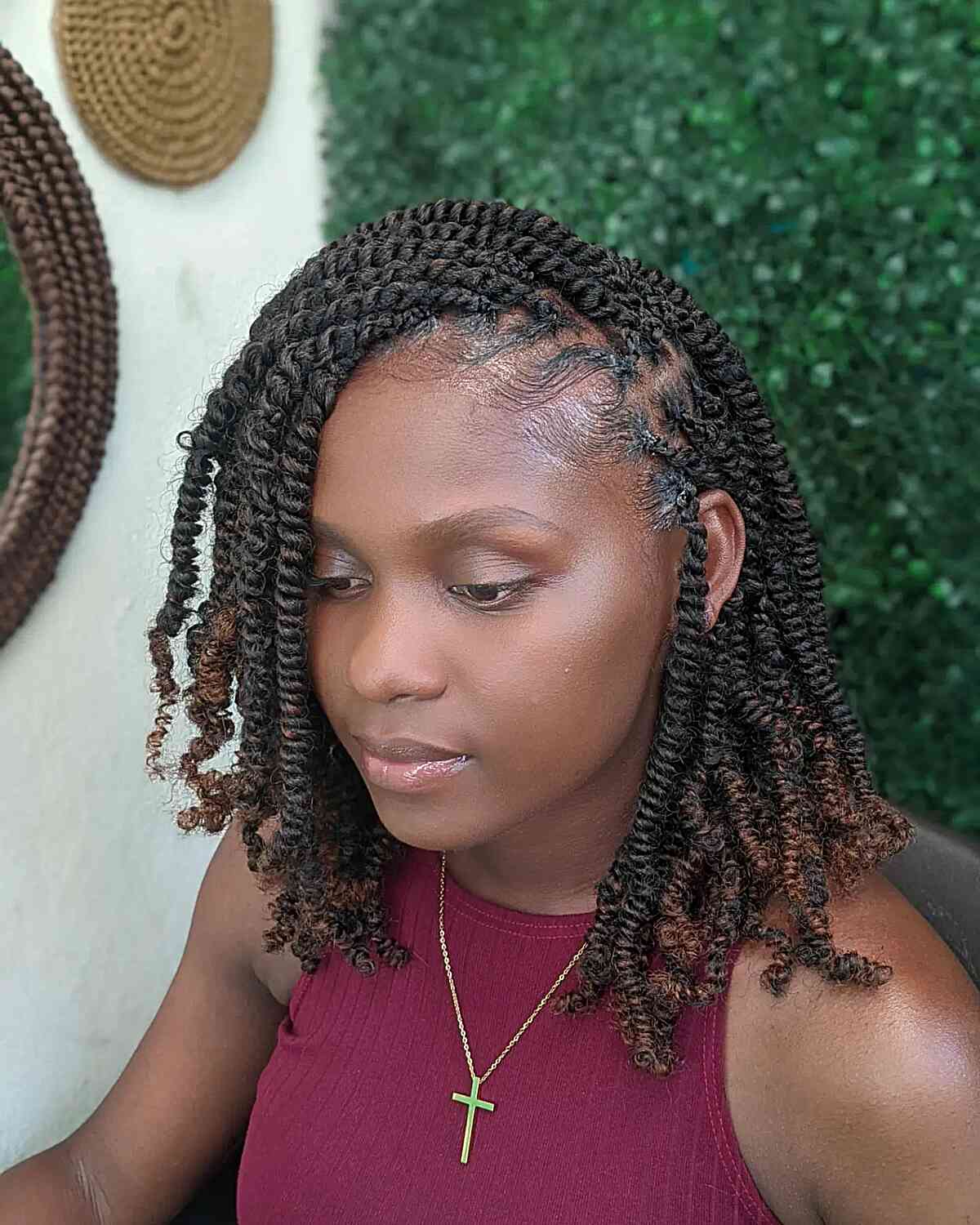
Does dimensional color work year-round? With a dark brown base and auburn highlights, this collarbone-length style lands in both camps: the brown keeps it grounded for fall and winter, while the lighter pieces stand out in spring. Ask your colorist for: collarbone length twists with curled ends and auburn highlights. The curled ends add volume and movement, and the auburn highlights need a toning gloss every six to eight weeks to keep the warmth from shifting brassy. That is the real drawback: the upkeep is regular, not optional.
8. Long Dark Brown Twists With Wavy Ends
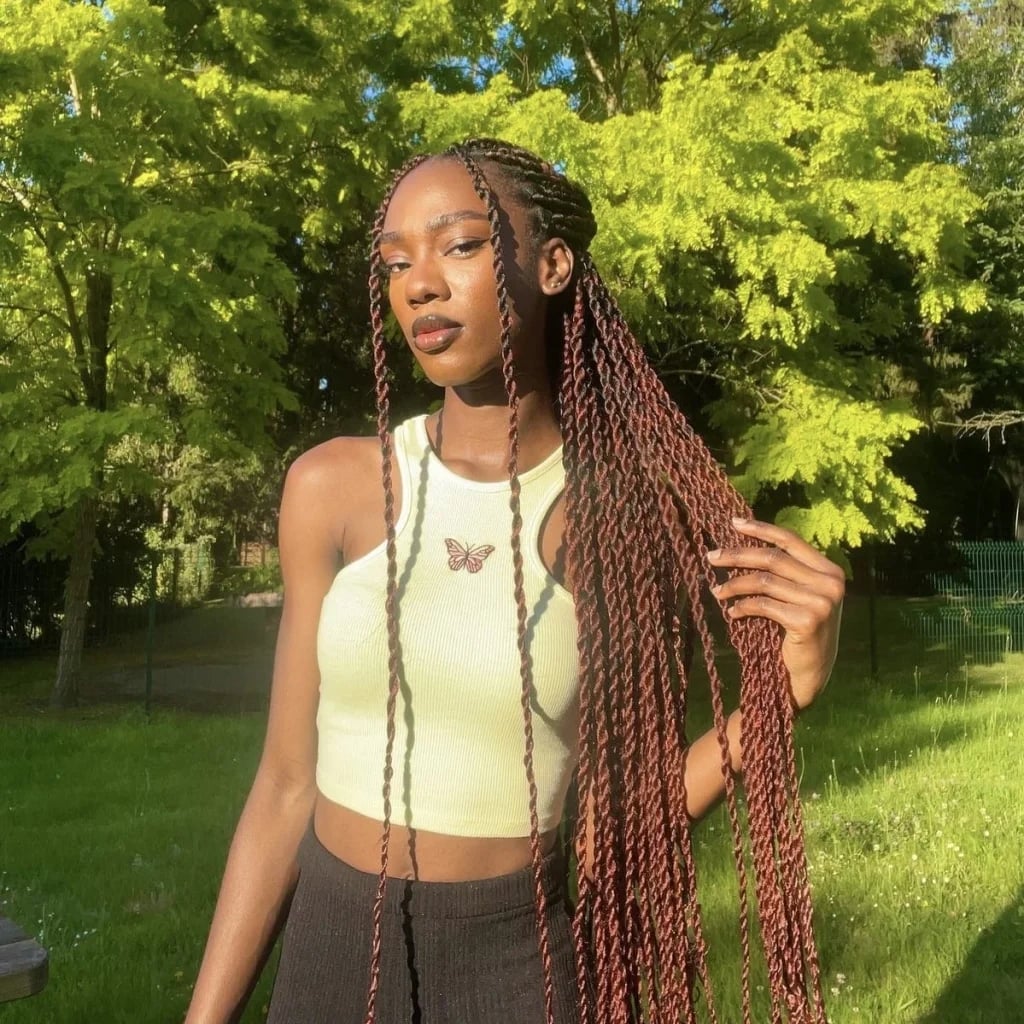
Mid-back length with a middle part and wavy ends: this is the version that keeps long hair out of the way without sacrificing movement. The dark brown color reads as solid from the front, but the wavy texture at the ends stops the length from falling flat. Ask your stylist for: long dark brown Senegalese twists with wavy ends. A satin scarf at night preserves the wave pattern so you are not re-curling every morning. The thick texture holds the shape well for about four weeks before the roots need attention, and the ends benefit from a trim every eight weeks to keep the wave defined.
9. Updo With Twists and High Afro Puff
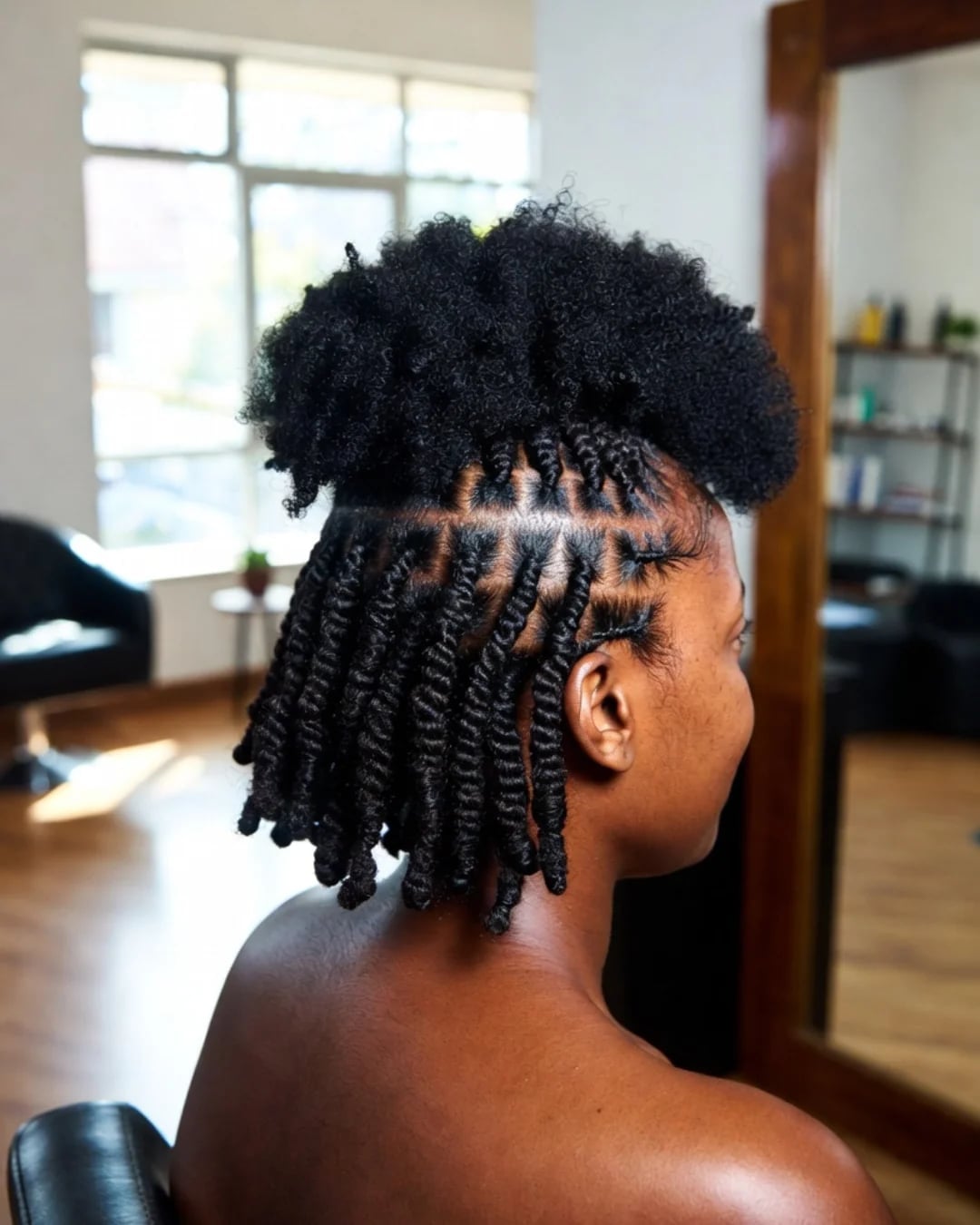
The contrast is the point: smooth Senegalese twists on the sides and a high puff of natural afro-textured hair on top. A middle part keeps the two textures balanced rather than fighting each other. Ask your stylist for: Senegalese twists with a high afro puff. This combination suits medium to thick hair because the puff needs enough density to stand on its own. For face shapes, the height at the crown adds length to a rounder face, while the twists along the sides draw the eye vertically. A side view shows the full silhouette, so the puff needs to be set firmly at the crown to keep its shape through the day.
10. Cornrows Transitioning to Twists With Curls
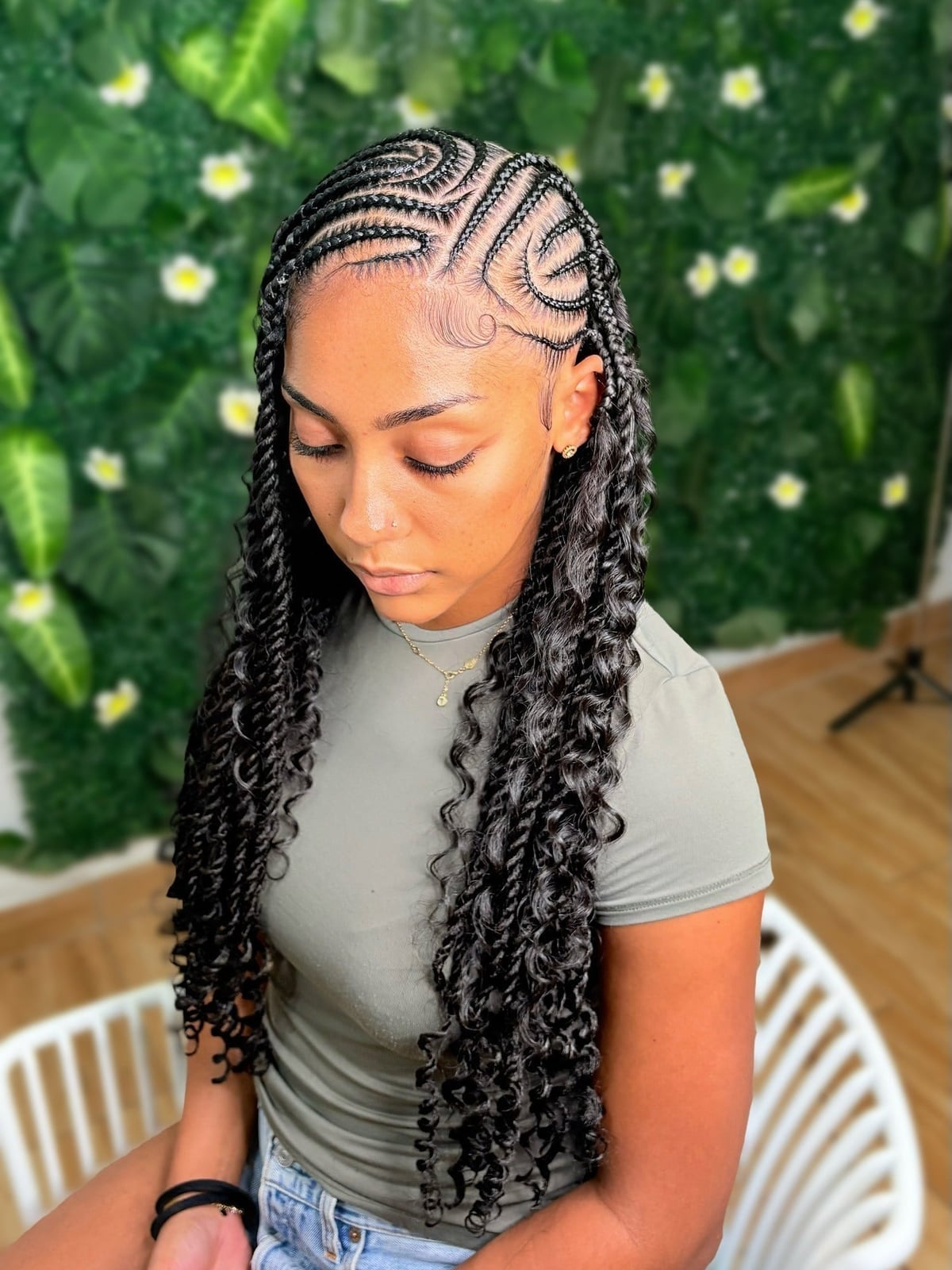
The scalp work is the foundation. Intricate cornrows run from the hairline to the mid-length, then transition into long, thick Senegalese twists that end in loose, defined curls. Ask your stylist for: cornrows transitioning to long twists with curly ends. The cornrows protect the new growth and create a clean part line down the middle. The curls at the ends are not a last-minute addition; they are built into the twist technique by leaving the last few inches of extension hair un-twisted. This is a salon-only job: the transition point needs to be precise so the cornrow feed stays consistent into the twist.
11. Long Uniform Wavy Senegalese Twists
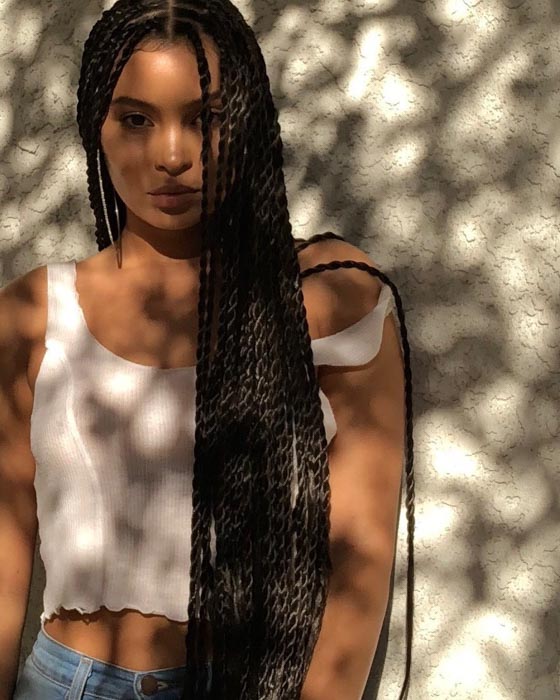
The appeal of uniform wavy Senegalese twists is that every single twist matches its neighbor, creating a sleek, almost machine-like precision from root to tip. At mid-back length with a middle part, the thick wavy texture creates a deliberate finish. The catch is that uniformity demands maintenance: one frizzy twist stands out like a sore thumb. Ask your stylist for: long uniform wavy Senegalese twists. This look suits those with medium to thick hair who are willing to commit to regular root retwists to maintain the crisp line.
To maintain the uniform finish, a light serum applied sparingly to the mid-lengths helps control flyaways without weighing the twists down. Any variation in tension during installation shows immediately, so a skilled stylist is required. Skip this if you prefer a more relaxed, lived-in texture.
12. Dark Brown Twists Styled Into a Top Knot
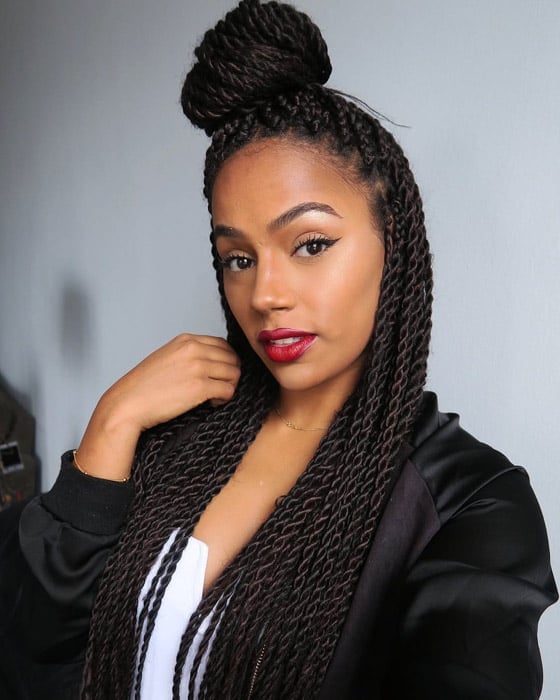
Want the polish of an updo without committing to a full slicked-back look? Dark brown Senegalese twists twisted into a high top knot with a few face-framing strands left loose is the answer. Ask your stylist for: dark brown twists into a top knot with loose strands. The middle part keeps the scalp neat, while the loose pieces soften the silhouette. Secure the bun tightly with a hair tie, then mist the loose strands with a light hold spray so they stay where you put them. This works best on medium to thick hair that can hold the knot’s volume without slipping.
13. Cornrows Into a High Top Knot With Loose Strands
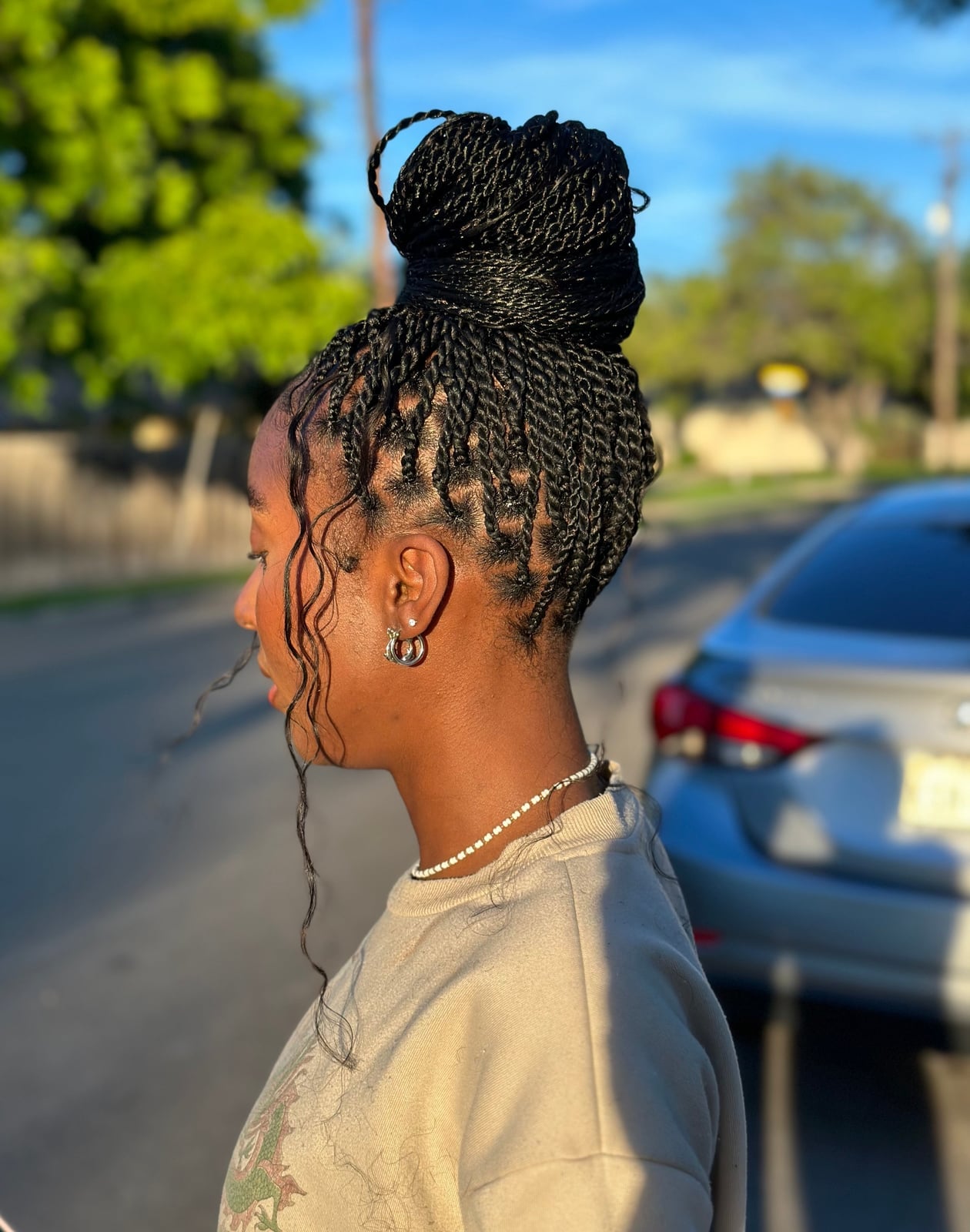
The common mistake here is assuming you can achieve this cornrows-to-top-knot transition at home with passable results. Neat scalp braids require even tension and a steady hand, especially when the cornrows feed directly into a high top knot made of twists. Ask your stylist for: cornrows into a high top knot with loose strands. This is strictly a salon project: the cornrows need to be tight and uniform to support the weight of the top knot, and the loose strands around the face and neck require precise placement. A side profile shows the clean line from scalp to knot, which a DIY attempt rarely delivers.
14. Mid-Back Twists With Side Parting
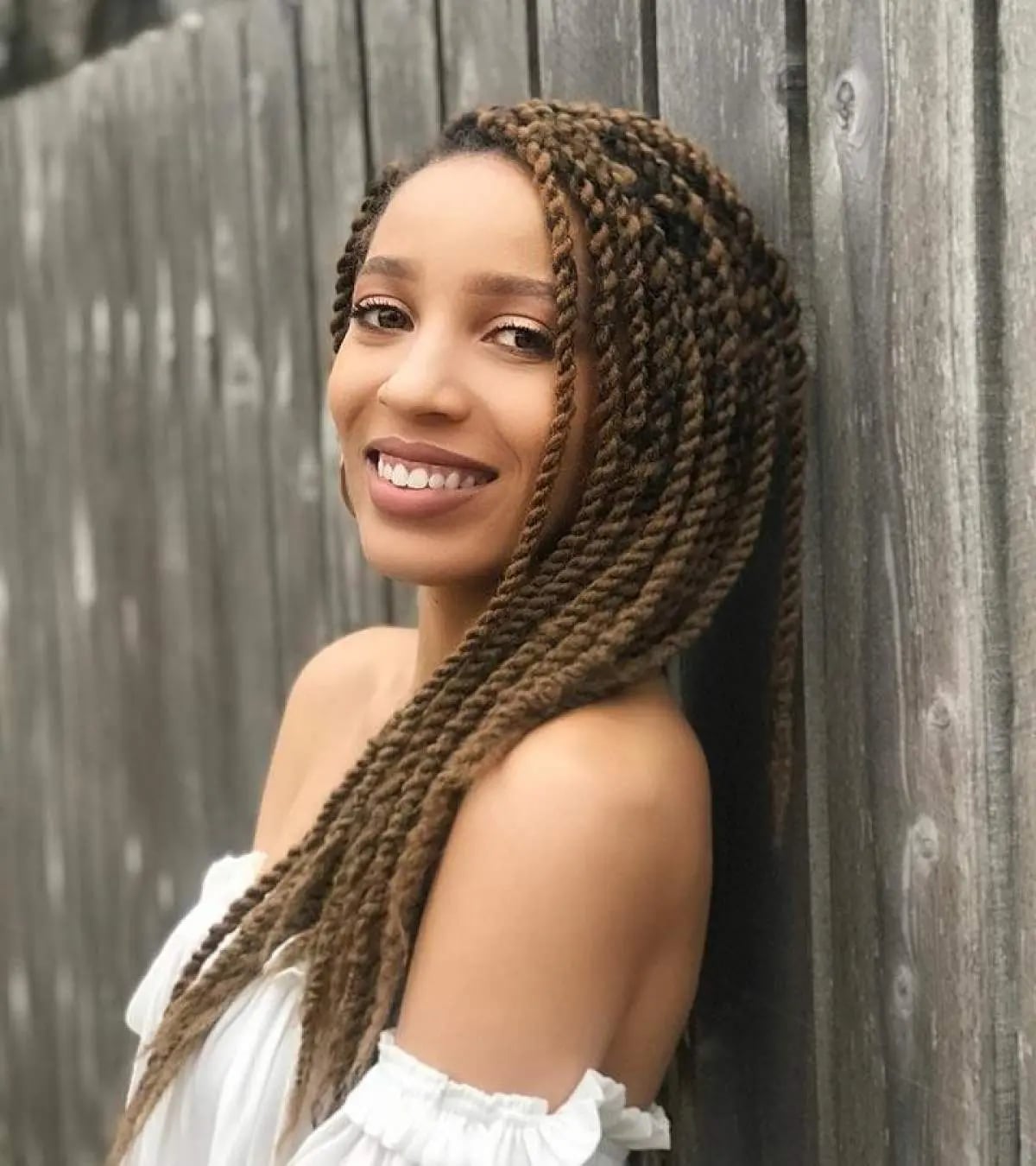
A side parting on mid-back Senegalese twists changes the entire silhouette compared to a center part. The rich brown color appears deeper on one side, and the asymmetry draws the eye across the width of the hair. Ask your stylist for: mid-back length rich brown twists with a side part. This suits those who want to add volume on one side without adding actual bulk. The wavy texture benefits from the diagonal line of the part, which breaks up the uniformity and makes the twists look more organic.
Compared to a middle part, which elongates a round face, a deep side part softens a square jawline and adds movement to the overall shape. Experiment with how deep you take the part: a dramatic sweep closer to the temple creates more drama, while a subtle shift maintains a professional feel. The hold is the same as any twist style, but the parting itself needs occasional adjustment to stay clean.
15. Mid-Back Twists in Two Low Ponytails
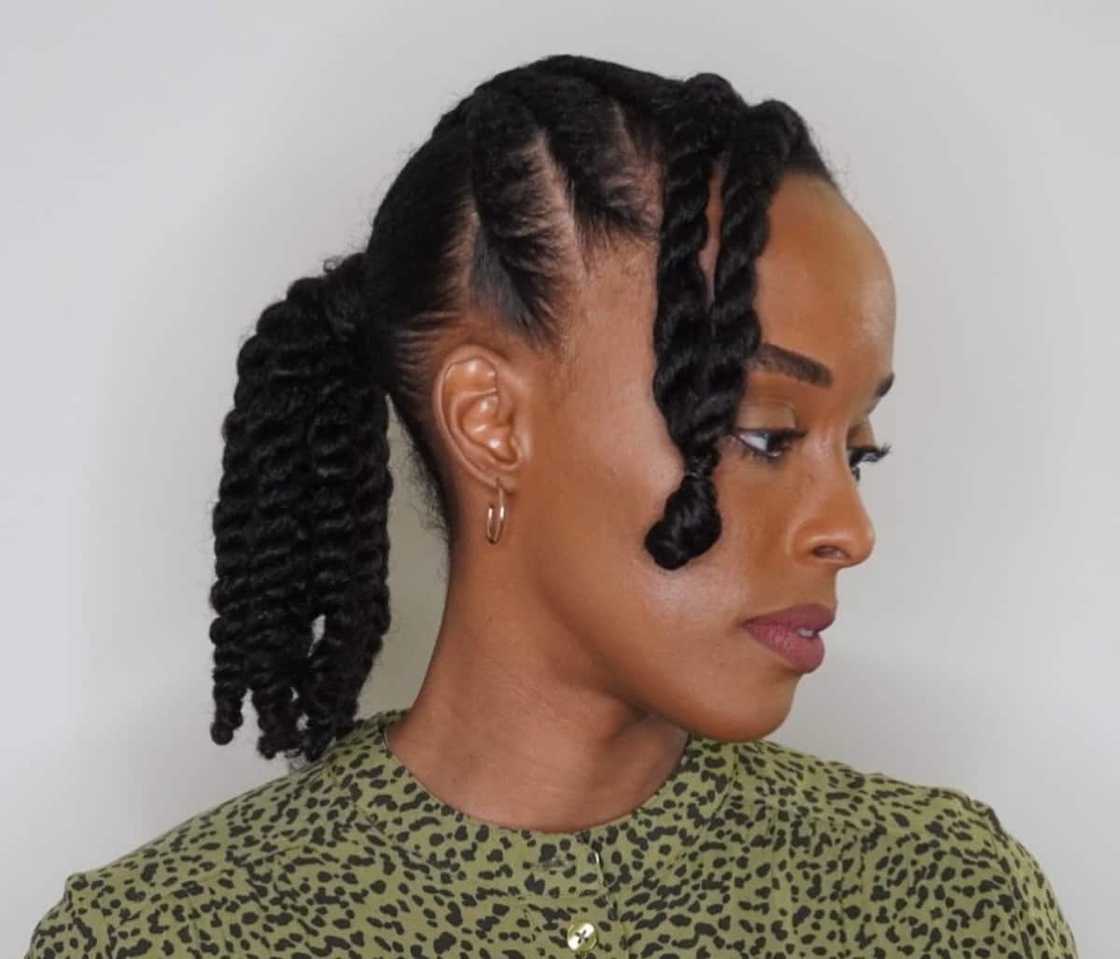
How do you keep two low ponytails from looking like an afterthought? The trick is in the sectioning. Thick, coily textured two-strand twists parted down the middle and gathered into two low ponytails at mid-back give the look a playful, deliberate finish. Ask your stylist for: mid-back two-strand twists in two low ponytails. The hold depends on how you secure the ends: snag-free bands placed at the nape keep the ponytails from shifting during the day. Moisturize the scalp every few days, since the tension from the bands can dry out the roots faster than a single ponytail would. This style holds well for a full week before the bands start to loosen, at which point a quick retie refreshes the look.
16. Mid-Back Box Braids With Loose Curly Ends, Black
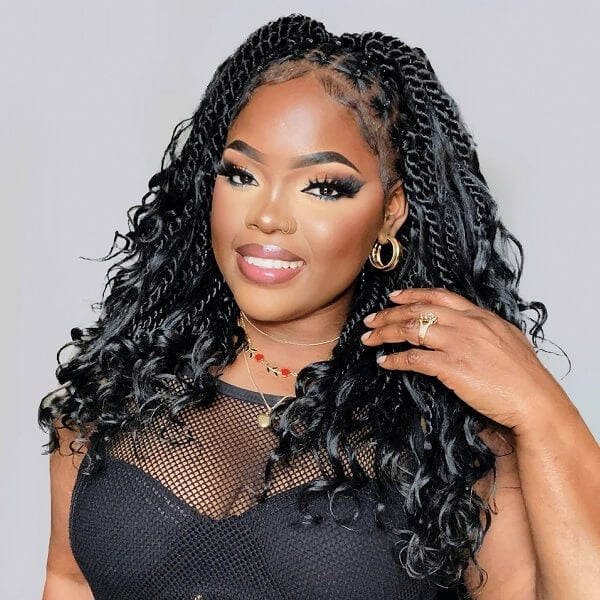
Box braids with loose curly ends split the difference between structure and swing, giving you the neatness of a braid with the movement of a curl. The black, wavy ends fall to mid-back and the middle part keeps the flow even on both sides. This style suits medium to thick hair best, since the braids need some weight to hang properly and the curly ends need density to keep their shape. Ask your stylist for: mid-back box braids with loose curly ends. To keep the curls defined, separate them gently with your fingers and work a light leave-in conditioner through the ends.
17. Mid-Back Senegalese Twists With Intricate Parting, Black
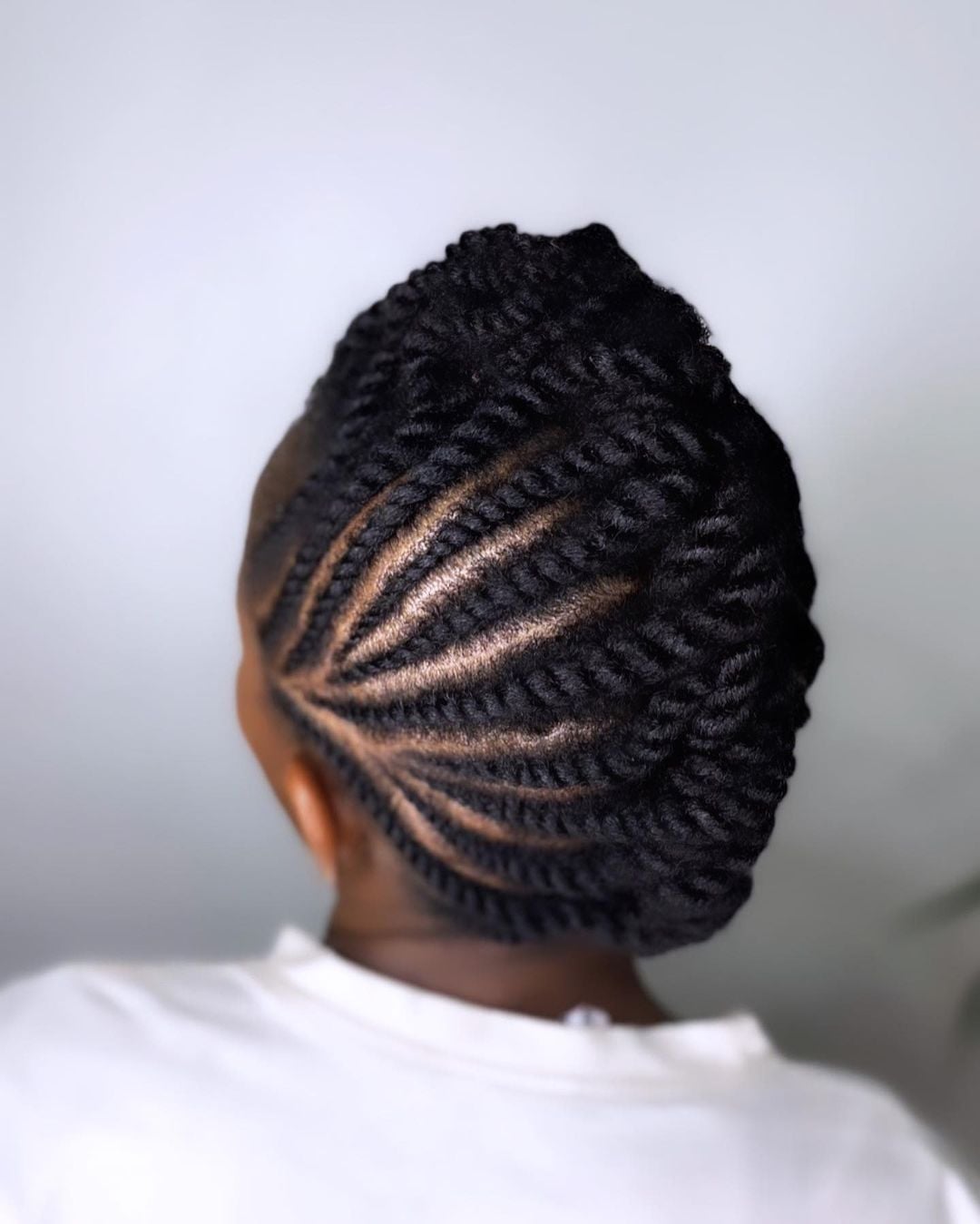
The intricate parting is the quiet star here, turning the scalp into a pattern that looks deliberate before you even notice the twists themselves. Neat, defined twists fall to mid-back in black, with a wavy, thick texture that gives the style body without bulk. The back view shows off the geometric scalp work, so this is a look for anyone who spends time with their hair up or in a ponytail.
Ask your stylist for: mid-back Senegalese twists with intricate parting. The parting stays crisp only if the scalp gets regular moisture and gentle cleansing, so plan to refresh the roots every couple of weeks. Medium to thick hair carries the weight of these twists best, keeping the line clean from root to end.
18. Long Wavy Thick Black Twists
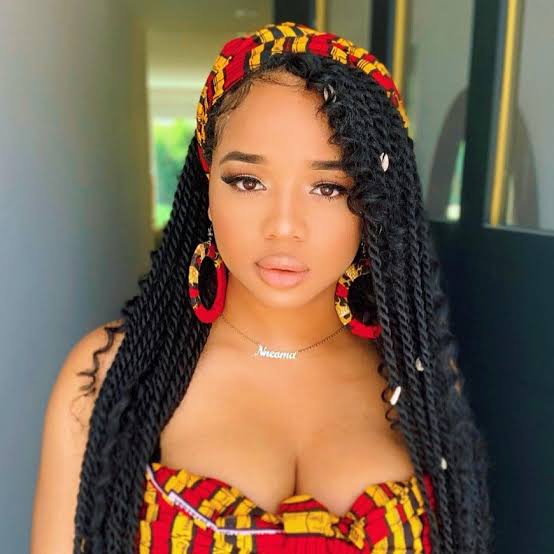
Long wavy thick twists offer the movement of loose waves without a curling iron. The black, mid-back length twists are styled loosely with a middle part, so they move like natural hair but hold their shape for weeks. For summer, leave them down and let the breeze do the work; for fall, a low ponytail shows off the wave pattern without tangling.
Ask your stylist for: long wavy thick black twists. The texture is the selling point, so keep it hydrated with a light serum on the ends. A wide-tooth comb is your friend for detangling, but only when the twists are dry. This is a salon style through and through, but it pays off in low daily effort.
19. Mid-Back Length and Volume Twists, Black
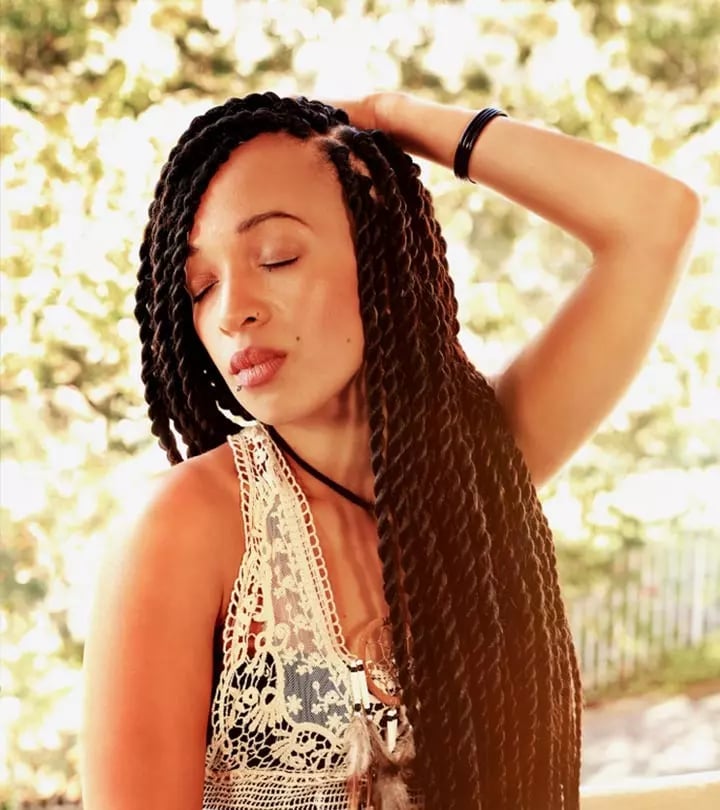
Length and volume are a package deal here, and the side view proves it: thick black twists cascade to mid-back with a wavy texture that fills out every row. The middle part keeps the volume balanced, so the style looks full without being heavy. Ask your stylist for: mid-back length Senegalese twists with volume. To keep the body, shake the twists at the roots each morning and use a dry shampoo if the scalp gets oily. The real drawback is the weight: all that length and thickness pulls on the roots, so you will want to switch to a looser style after about eight weeks to give your edges a break.
20. Shoulder Length Twists With Geometric Sections
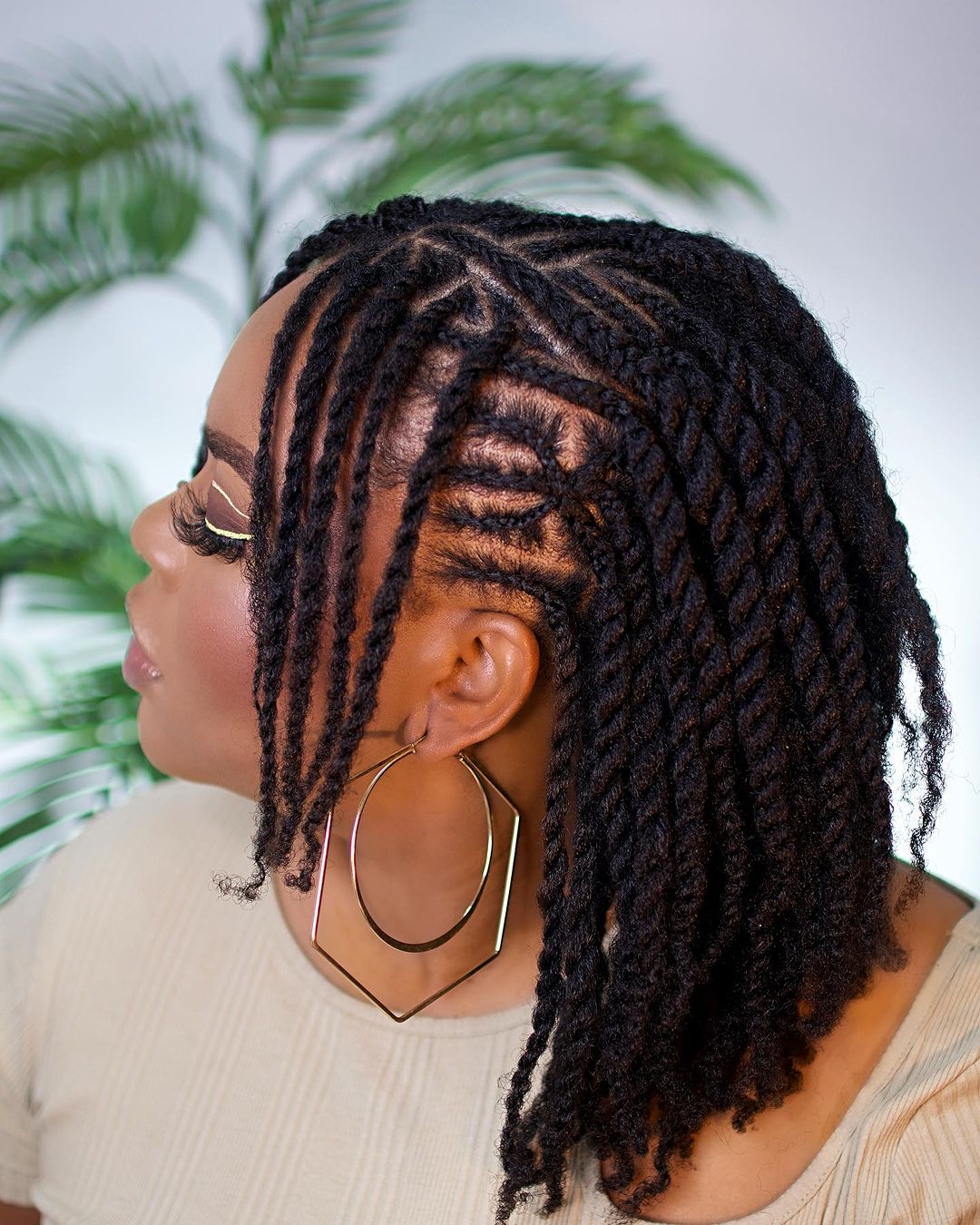
Wondering if you can get the geometric look without the long commitment? Shoulder length twists with geometric crown sections stop around the collarbone, so you get the scalp art without the weight. The black, wavy twists are thick and styled with a middle part, and the geometric sections at the crown add structure that a shorter style usually lacks. Ask your stylist for: shoulder length twists with geometric crown sections. This one flatters medium hair best, since too much density can overwhelm the shorter length. A light styling gel on the crown keeps the sections defined between visits, which you will want about every six weeks.
21. Final Thoughts
For maximum longevity and neatness, opt for salon-installed twists. For a softer, more casual look that allows for more texture variation, consider styles with wavy or curly ends.
- Moisturize twists regularly with a light oil or spray to prevent dryness.
- Sleep with a silk or satin bonnet to protect twists from friction.
- Re-twist roots every 4-6 weeks for a neat appearance.
- Gently detangle ends with a wide-tooth comb if needed, especially if they are curly.
Senegalese twists offer endless possibilities for style and adornment.

